Build this if
Build when recurring podcasters will pay to replace several post-production handoffs with one reviewed episode asset package.
A production workspace for podcasters to transcribe an episode, create consented voice assets, select clip moments, and review channel-ready copy in one run.
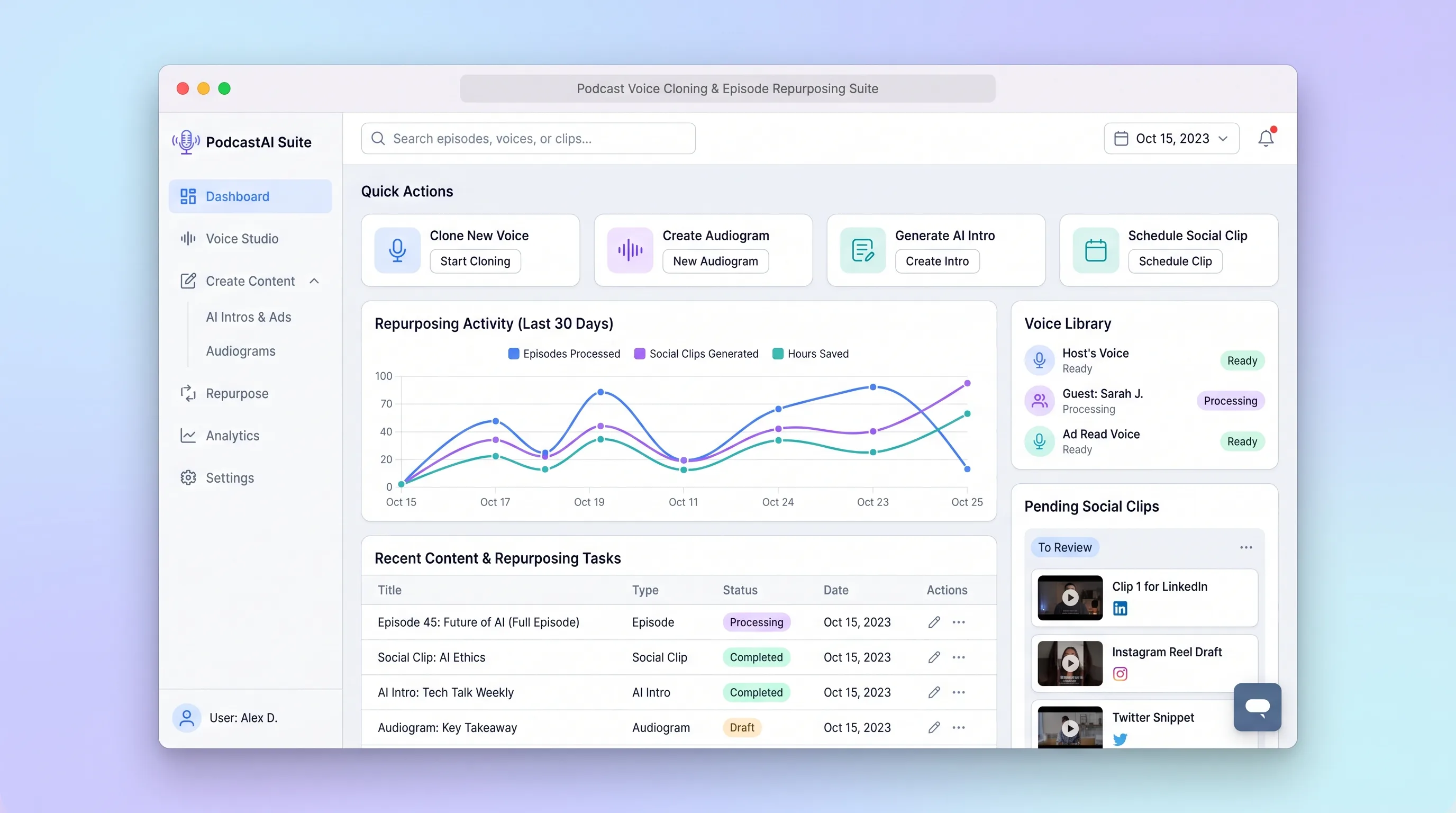
Decision snapshot
Build when recurring podcasters will pay to replace several post-production handoffs with one reviewed episode asset package.
Avoid the MVP if the buyer expects unattended publishing, multi-speaker cloning, or a full video editor from day one.
Give five podcasters one 45-minute episode each and measure whether they can approve and export the required asset set with fewer external handoffs than their current process.
Problem and target customer
Independent podcasters lose hours moving one recording through transcription, voiceover, clip selection, show notes, and newsletter tools. The handoffs fragment revisions and make it hard to know which asset matches the approved episode.
Independent podcasters and small podcast teams that publish recurring long-form episodes and personally approve every derivative asset.
Monthly subscription with processing allowances based on source audio minutes.
Editorial note
The first release should behave like an episode production ledger, not a magic publish button. Every derivative needs a visible source transcript revision, its own status, and an approval decision so a producer can recover from one bad output without restarting the recording.
Voice cloning changes the risk boundary. Consent cannot be a checkbox buried in settings: synthesis must depend on an active profile, revocation must block new jobs, and exported audio must remain attributable to the script and voice version that produced it.
The useful validation is operational. Ask podcasters to process real episodes and watch where they leave the product—transcript correction, audio preview, clip selection, or export. Those exits identify the next integration more reliably than adding more generation formats.
Choose your next step
Evaluate the operating tradeoffs quickly, or inspect how to build the MVP.
Compare the three operating paths at the default workload before opening the full calculator.
See cost preview Build this ideaInspect the build blueprintReview MVP scope, workflow, states, data rules, architecture, and acceptance criteria.
Open blueprintEvaluation preview
Directional infrastructure estimates for the current 600 source audio minutes assumption. Open the full calculator when you are ready to change it.
A managed app, PostgreSQL database, backups, and observability sized for audio processing jobs and reviewed episode assets.
Lowest operating effortOne small cloud server for the application, database, worker, and scheduled backups serving audio processing jobs and reviewed episode assets.
Lowest baseline costSeparate web, data, worker, and monitoring capacity with more headroom for audio processing jobs and reviewed episode assets.
Most separation and controlBuild blueprint
Product goal
MVP scope
UX and user flow
Record consent, upload a clean sample, and see whether the voice profile is usable.
Upload audio and define the episode title, audience, and desired derivative assets.
Show transcription, copy generation, voice synthesis, and rendering as separate retryable stages.
Edit transcript-linked drafts, preview cloned audio, choose clip ranges, and approve versions.
Download approved audio, audiograms, text files, and a manifest that identifies their versions.
Core entity outline
Stores the owner, provider voice identifier, consent status, sample reference, and revocation time.
Represents one source recording and its processing lifecycle.
Keeps editable timestamped speech used to select clips and ground written assets.
Versions a voice track, text draft, clip selection, or audiogram.
Records stage attempts, provider request ids, errors, and retry eligibility.
Freezes the approved asset versions delivered to the producer.
Architecture and data flow
Handles authenticated intake, transcript editing, review states, and export requests.
Runs transcription, copy generation, voice synthesis, and rendering as independent idempotent stages.
Builds waveform audiograms and export archives away from interactive requests.
Stores episode state, transcript revisions, consent metadata, asset versions, and job attempts.
Holds source audio and generated files behind signed, expiring URLs.
Deliverables and acceptance
Recommended stack
Supports authenticated review screens and server actions without putting provider credentials in the browser.
Keeps consent, transcript revisions, assets, jobs, and approvals transactionally consistent.
Separates long transcription, synthesis, rendering, and export tasks with retry state.
Renders waveform clips, captions, audio mixes, and archive-ready outputs deterministically.
Stores large private audio and generated media using signed access.
Provides transcription and consented voice output while the LLM creates transcript-grounded written derivatives.
The product is an asynchronous media pipeline with human approval between stages. Durable job state, versioned records, and private object storage matter more than real-time collaboration.
Copy the build prompt, model the operating cost, and choose where to deploy.
Execution
Once the blueprint is clear, use the prompt, cost model, and deployment options to start building.
Build prompt
Start with Lovable for the review-heavy web interface, then implement transcription, generation, and media rendering as server-side jobs on Railway.
Build prompt
Open the prompt pack whenever you are ready to take this blueprint into your builder.
Build prompt ready
Copy the prompt into your builder, then use the cost model below to choose how you want to run it.
Use the cost model to choose a deployment path that matches the build plan.
Cost calculator
A technical run-cost estimate for the first production version. Team, acquisition, payment fees, and business COGS are excluded.
$5.25-$15 per 60 source audio minutes
Low and high values allow for usage variance and plan headroom.
A managed app, PostgreSQL database, backups, and observability sized for audio processing jobs and reviewed episode assets.
3K source audio minutes included, then $6-$18 per 3K source audio minutesBatch transcription turns source audio into timestamped text before any derivative is generated.
0 included, then $0.22-$0.39 per 60 source audio minutesGenerates intros or ad reads from explicitly approved scripts using the owner's custom voice.
0 included, then $3-$6 per 60 source audio minutesCreates clip copy, show notes, captions, and newsletter drafts from the approved transcript.
600 source audio minutes x 250 input + 90 output tokensStores source audio, synthesized tracks, audiograms, and export archives outside the database.
Monthly allowance from this idea's operating profileThe estimate combines the selected infrastructure path, required operating modules, selected optional modules, and usage above included monthly allowances. Taxes and regional uplifts are excluded.
Deployment options
Choose based on operating preference, not only the headline price.
Deploy the web service, database, and background jobs for episode processing and reviewed media exports from one project.
Usage-based compute and storage need budget alerts.
Run the app, worker, and database on one small Vultr VPS with Docker Compose and explicit backups.
The operator owns patching, backups, monitoring, and recovery.
Separate application, worker, data, storage, and backup responsibilities as the workload grows.
More services increase setup and operational overhead.
Start building
Build the voice-consent setup, episode intake, processing timeline, asset review, and export screens around one uploaded recording.
Open Lovable 02AutomationAdd bounded operational handoffsAfter approval, use Make only to hand exported files and metadata to a newsletter draft folder or a social scheduling queue chosen by the operator.
Open Make 03DeployDeploy the working serviceRun the web app, media worker, job queue, database, and signed media storage with retryable processing jobs.
Open RailwayKeep exploring
AI ToolCreator Economy & Media
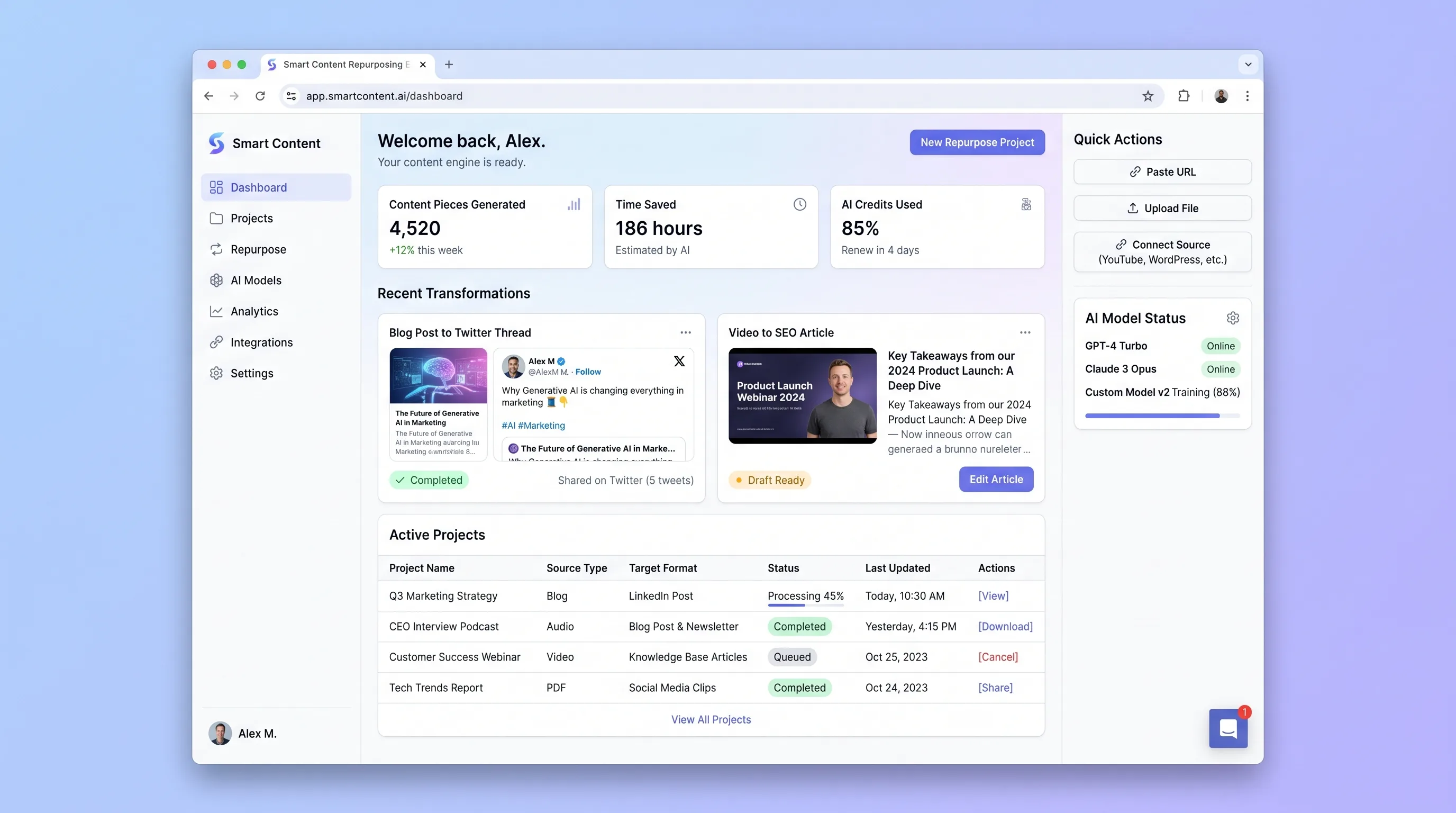
A review-first engine that analyzes an article, transcript, or video and produces editable channel-specific drafts linked to the original source.
AI ToolCreator Economy & Media
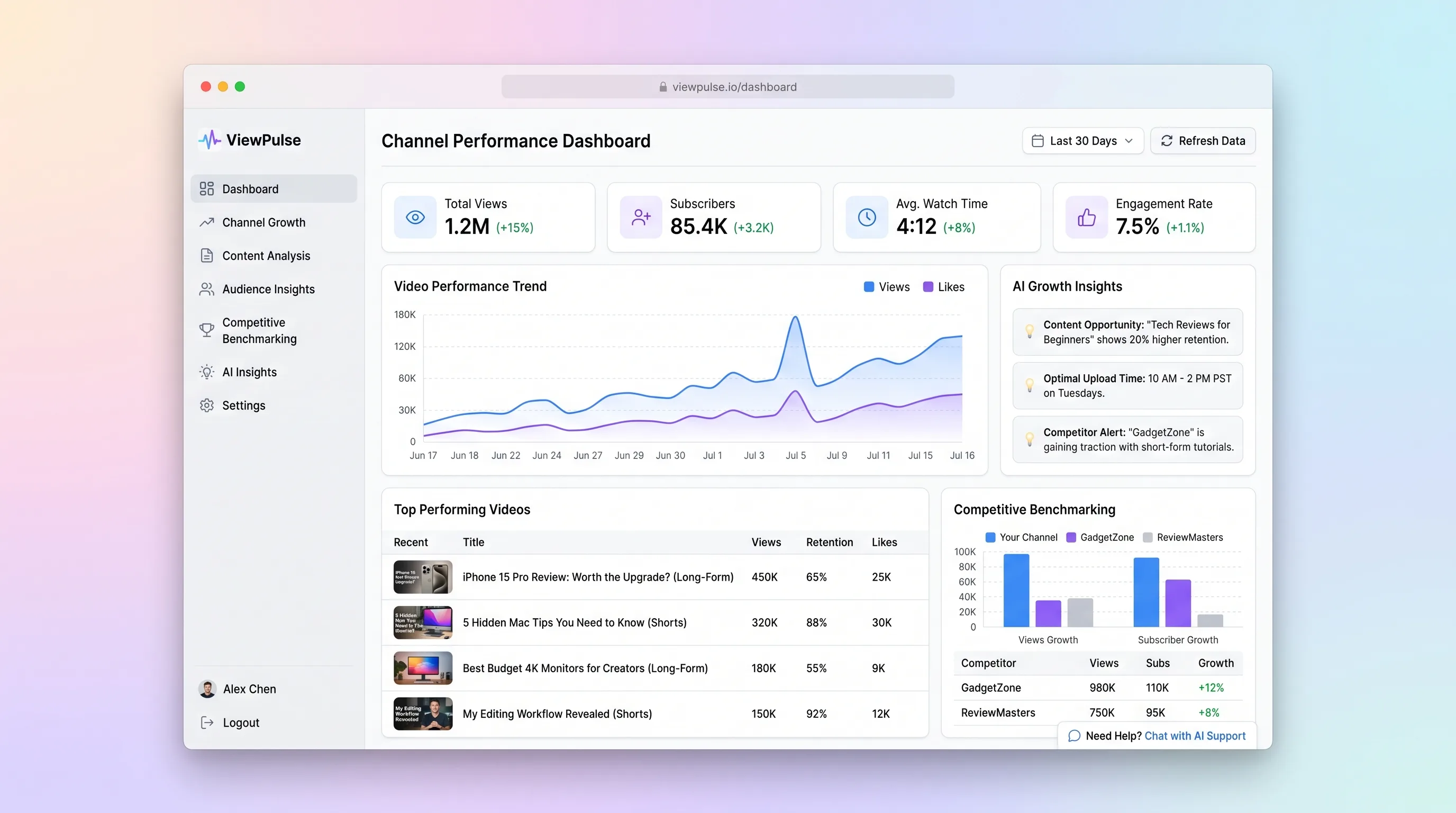
A weekly analysis workspace that groups YouTube videos by content pillar and format, benchmarks selected channels, and explains repeatable growth patterns.
AI ToolCreator Economy & Media
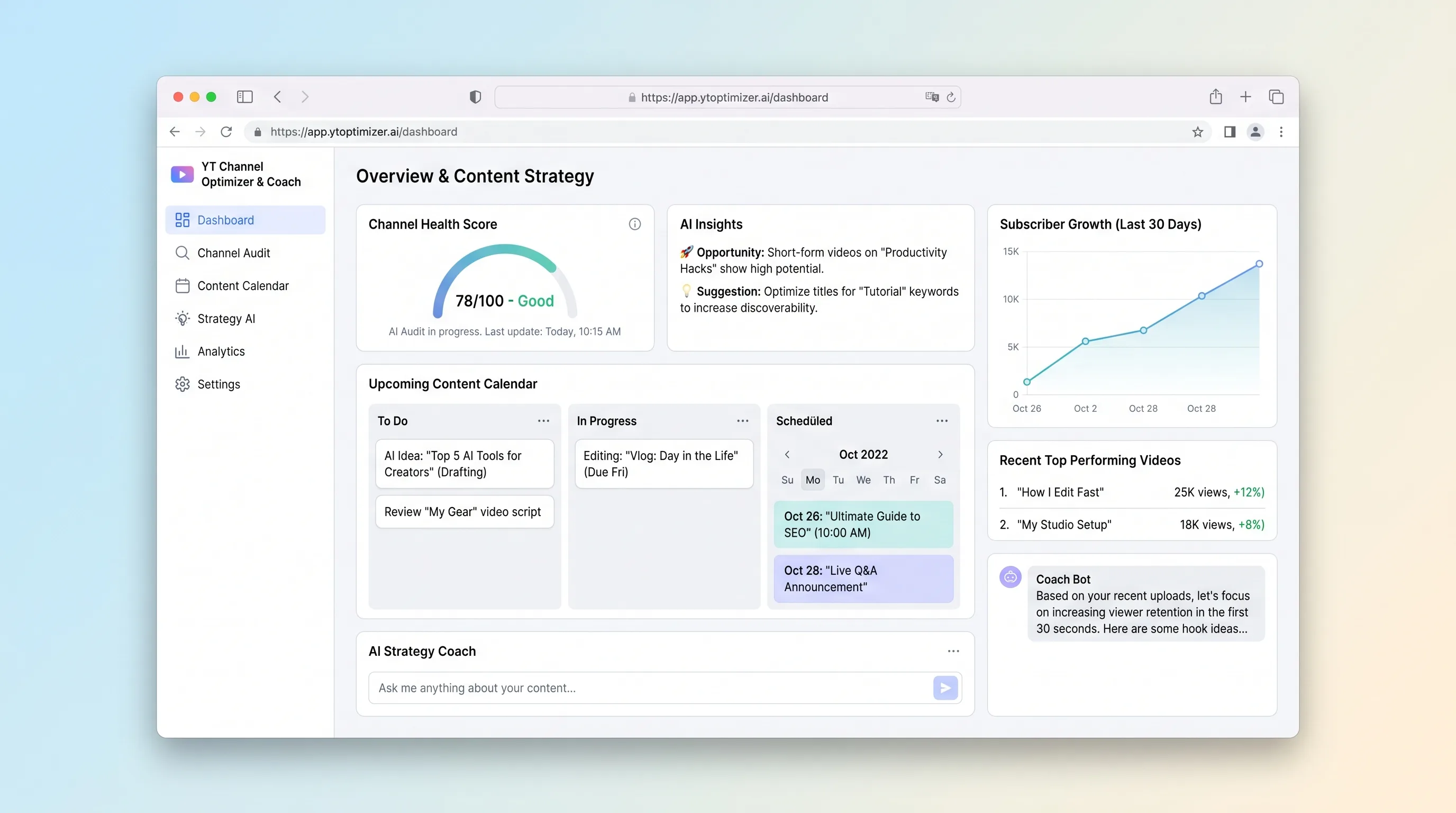
An AI-assisted channel audit that turns authorized YouTube data into a prioritized improvement plan, editable video ideas, and a four-week publishing calendar.
AI ToolCreator Economy & Media
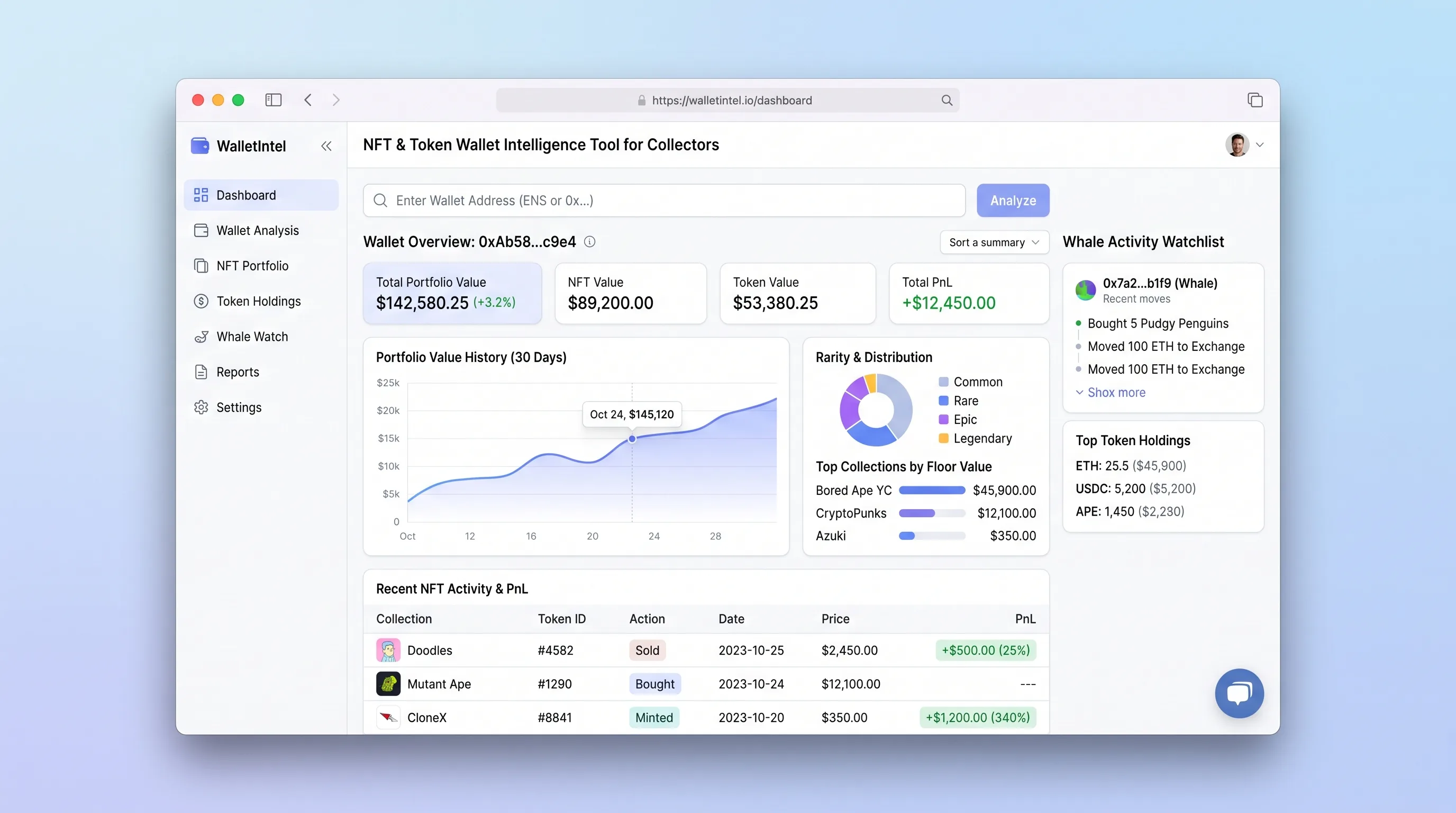
Paste any public wallet address and within seconds see a complete NFT and token breakdown—floor value, rarity, realized PnL, and whale activity—with no login required.
AI ToolBusiness Operations
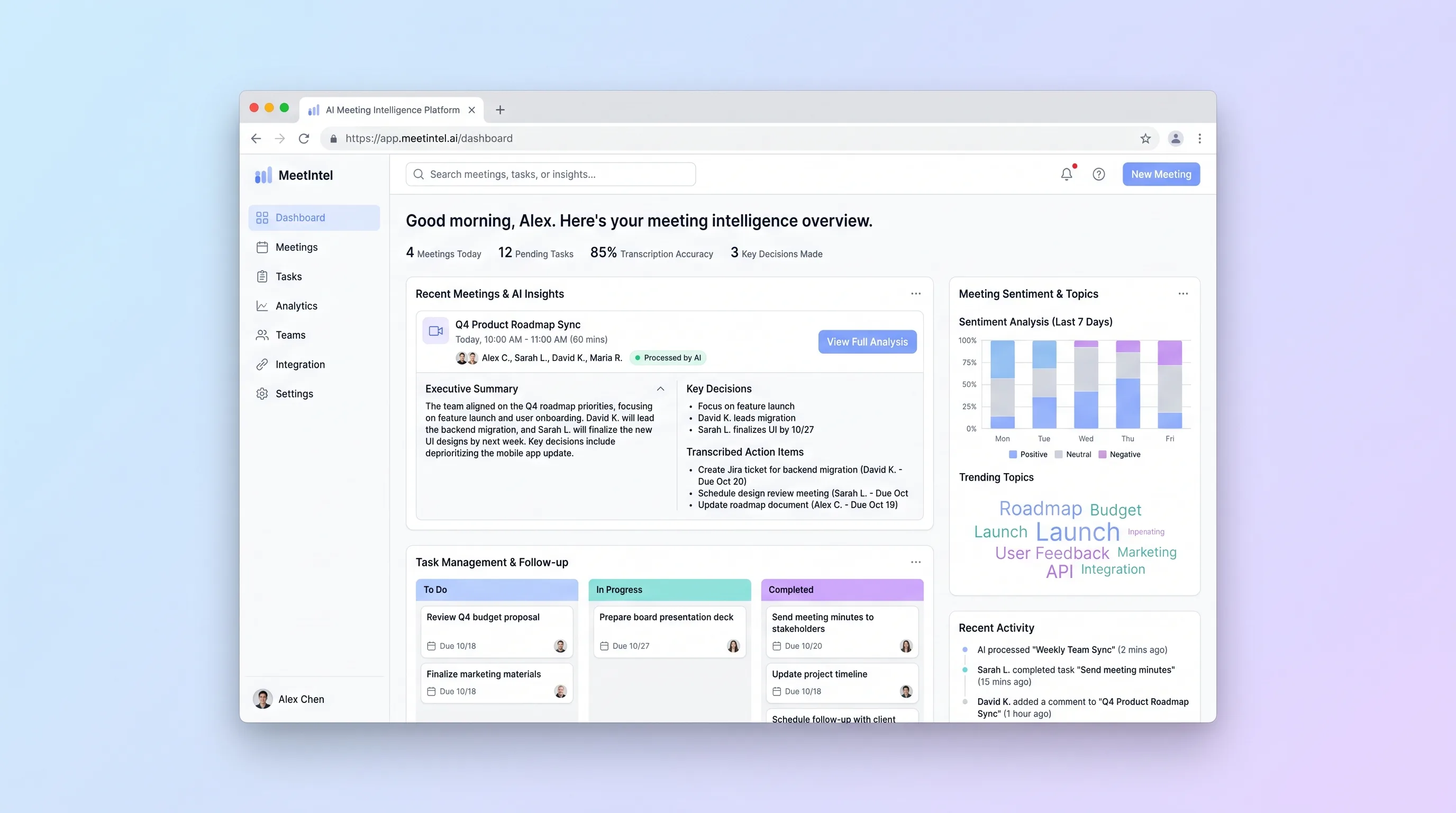
An upload-first processor for teams that need a dependable transcript, editable call summary, and assignable actions from a recorded video meeting.
AI ToolBusiness Operations
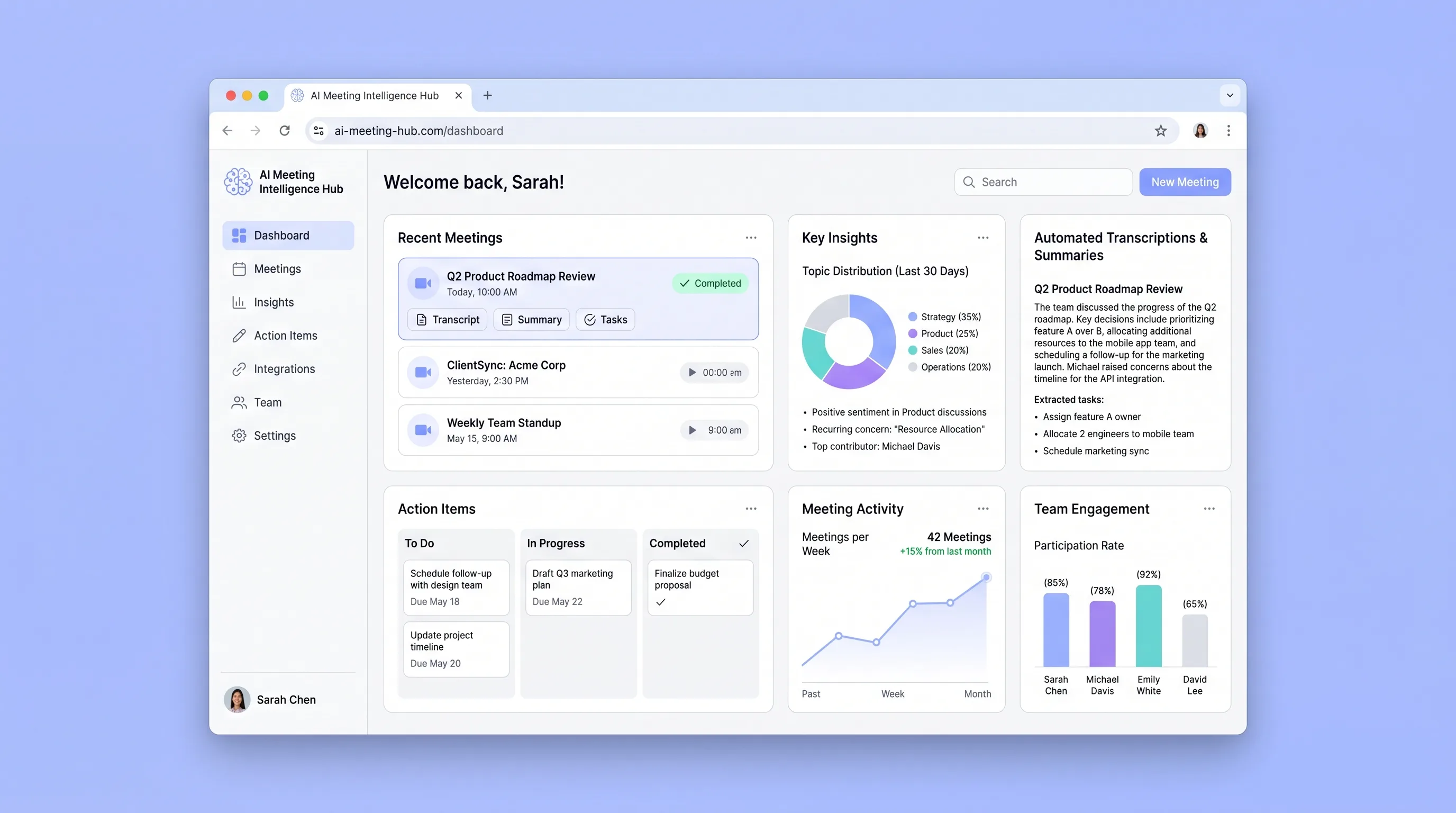
A connected team library that turns recurring meetings into searchable transcripts, cited summaries, and action items with clear ownership.