Build this if
Creators have a consistent publishing history and will change one content decision after a concise weekly pattern review.
A weekly analysis workspace that groups YouTube videos by content pillar and format, benchmarks selected channels, and explains repeatable growth patterns.
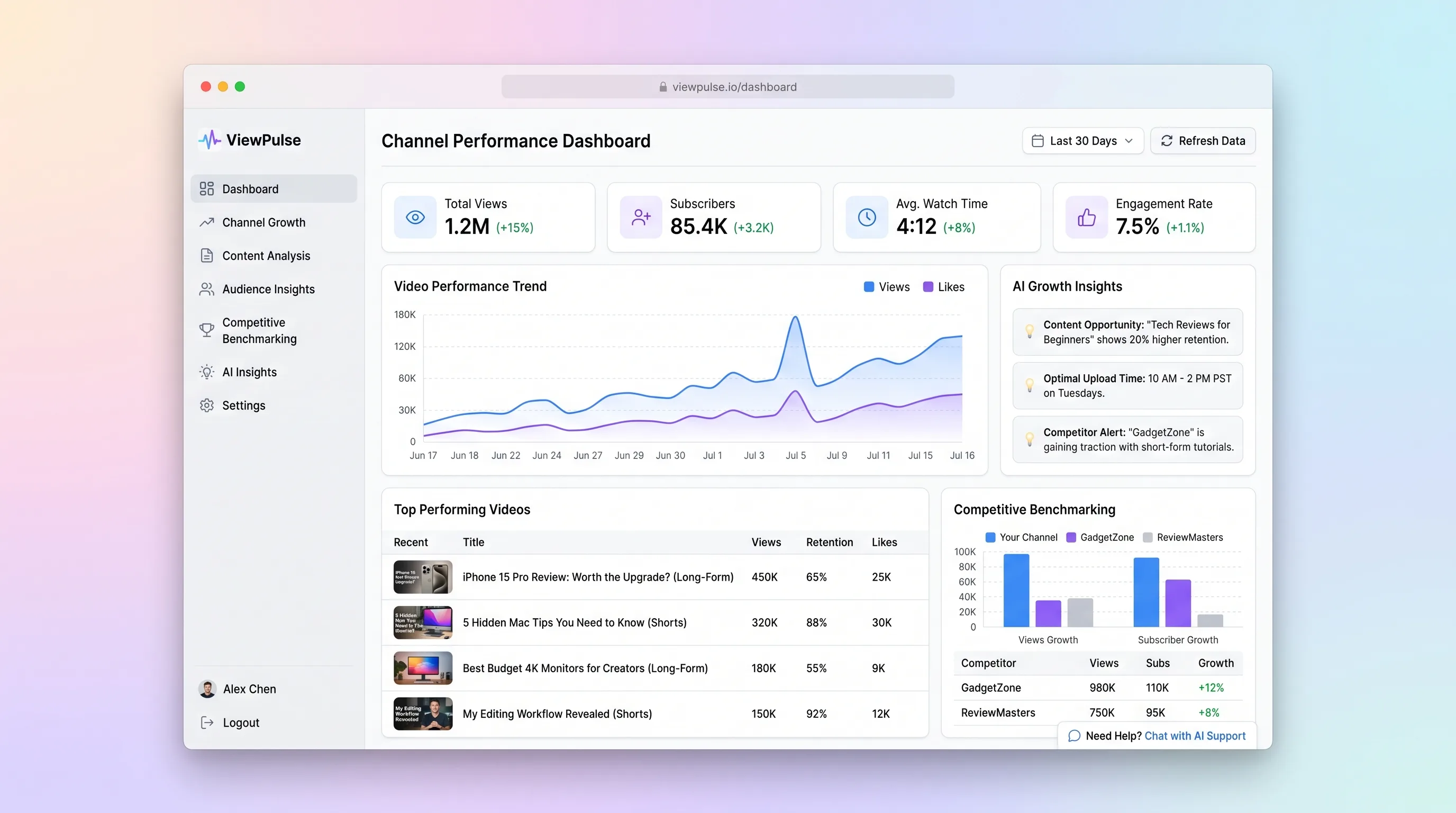
Decision snapshot
Creators have a consistent publishing history and will change one content decision after a concise weekly pattern review.
Users expect private competitor analytics, guaranteed growth, or comprehensive data from short-form platforms without supported APIs.
Connect ten YouTube channels for four weeks and verify that at least five creators make and record one topic, format, or scheduling decision from the weekly review.
Problem and target customer
Creators can see per-video metrics but still spend hours exporting data and guessing which topic, format, and publishing cadence explain growth across their catalog and competitors.
Established YouTube creators and small channel teams publishing often enough to make weekly performance patterns actionable.
Monthly subscription tiered by connected channels, tracked competitors, and refresh frequency.
Editorial note
This is a weekly decision instrument, not a wall of charts. The creator supplies the taxonomy that makes metrics comparable, and the model turns those bounded rows into hypotheses that remain inspectable.
YouTube is the supported MVP boundary. Treat broader short-form coverage as a separate data-access decision; scraping or pretending that public counts equal private retention analytics would undermine the product.
Choose your next step
Evaluate the operating tradeoffs quickly, or inspect how to build the MVP.
Compare the three operating paths at the default workload before opening the full calculator.
See cost preview Build this ideaInspect the build blueprintReview MVP scope, workflow, states, data rules, architecture, and acceptance criteria.
Open blueprintEvaluation preview
Directional infrastructure estimates for the current 200 channel refreshes assumption. Open the full calculator when you are ready to change it.
App, database, backups, and logs for YouTube metric snapshots and cited weekly analysis with minimal platform operations.
Lowest operating effortA small cloud server runs YouTube metric snapshots and cited weekly analysis, PostgreSQL, and scheduled backups.
Lowest baseline costSeparate web, data, and background capacity for YouTube metric snapshots and cited weekly analysis when operational isolation matters.
Most separation and controlBuild blueprint
Product goal
MVP scope
UX and user flow
Connect a channel, choose history, define pillars, and select competitors.
Compare dated metrics by pillar, format, and publishing window.
Review cited observations and record the next content experiment.
Core entity outline
Preserves dated public and authorized metrics for one video.
Assigns a creator-controlled pillar and format to a video.
Stores generated observations, evidence references, review state, and chosen experiment.
Architecture and data flow
Manage OAuth tokens, quota accounting, incremental fetches, and reauthorization.
Store normalized snapshots and compute weekly cohorts.
Send bounded aggregates to the model, validate citations, and hold output for creator review.
Deliverables and acceptance
Recommended stack
Supports OAuth, dense charts, classification controls, and weekly review.
Stores channels, videos, taxonomy, dated metrics, competitor snapshots, and decisions.
Provides authorized channel and public video metadata under documented quota limits.
Generates a bounded pattern brief from aggregated metric rows and returns cited record identifiers.
Metric snapshots and creator-defined classification provide the evidence layer. The model explains bounded aggregates; it does not invent unavailable competitor data or act as an autonomous content strategist.
Copy the build prompt, model the operating cost, and choose where to deploy.
Execution
Once the blueprint is clear, use the prompt, cost model, and deployment options to start building.
Build prompt
Use a TypeScript app plus scheduled workers and PostgreSQL; prototype charts in Lovable, then implement OAuth, quota accounting, and cited model output server-side.
Build prompt
Open the prompt pack whenever you are ready to take this blueprint into your builder.
Build prompt ready
Copy the prompt into your builder, then use the cost model below to choose how you want to run it.
Use the cost model to choose a deployment path that matches the build plan.
Cost calculator
A technical run-cost estimate for the first production version. Team, acquisition, payment fees, and business COGS are excluded.
$11-$34 per 100 channel refreshes
Low and high values allow for usage variance and plan headroom.
App, database, backups, and logs for YouTube metric snapshots and cited weekly analysis with minimal platform operations.
50K channel refreshes included, then $8-$20 per 50K channel refreshesExplains one channel refresh from bounded, aggregated metrics and returns source record references for human review.
200 channel refreshes x 7K input + 1.2K output tokensThe estimate combines the selected infrastructure path, required operating modules, selected optional modules, and usage above included monthly allowances. Taxes and regional uplifts are excluded.
Deployment options
Choose based on operating preference, not only the headline price.
Deploy the metric refresh pipeline and weekly insight workspace with managed services, environment variables, logs, and a short path from prototype to beta.
Usage-based compute needs budget alerts as activity grows.
Run the app, worker, and database on one small Vultr VPS with Docker Compose and explicit backups.
The operator owns database maintenance and incident response.
Separate application, worker, data, storage, and backup responsibilities as the workload grows.
More moving parts increase setup and observability work.
Start building
Design channel setup, taxonomy editing, pillar comparisons, competitor rows, and cited insight panels.
Open Lovable 02AutomationSend a ready-to-review signalUse Make only to notify a creator after the app finishes a refresh and saves a complete weekly brief.
Open Make 03DeployDeploy ingestion and analysisRun OAuth callbacks, scheduled refresh jobs, PostgreSQL, and model requests with quota and spend controls.
Open RailwayKeep exploring
AI ToolCreator Economy & Media
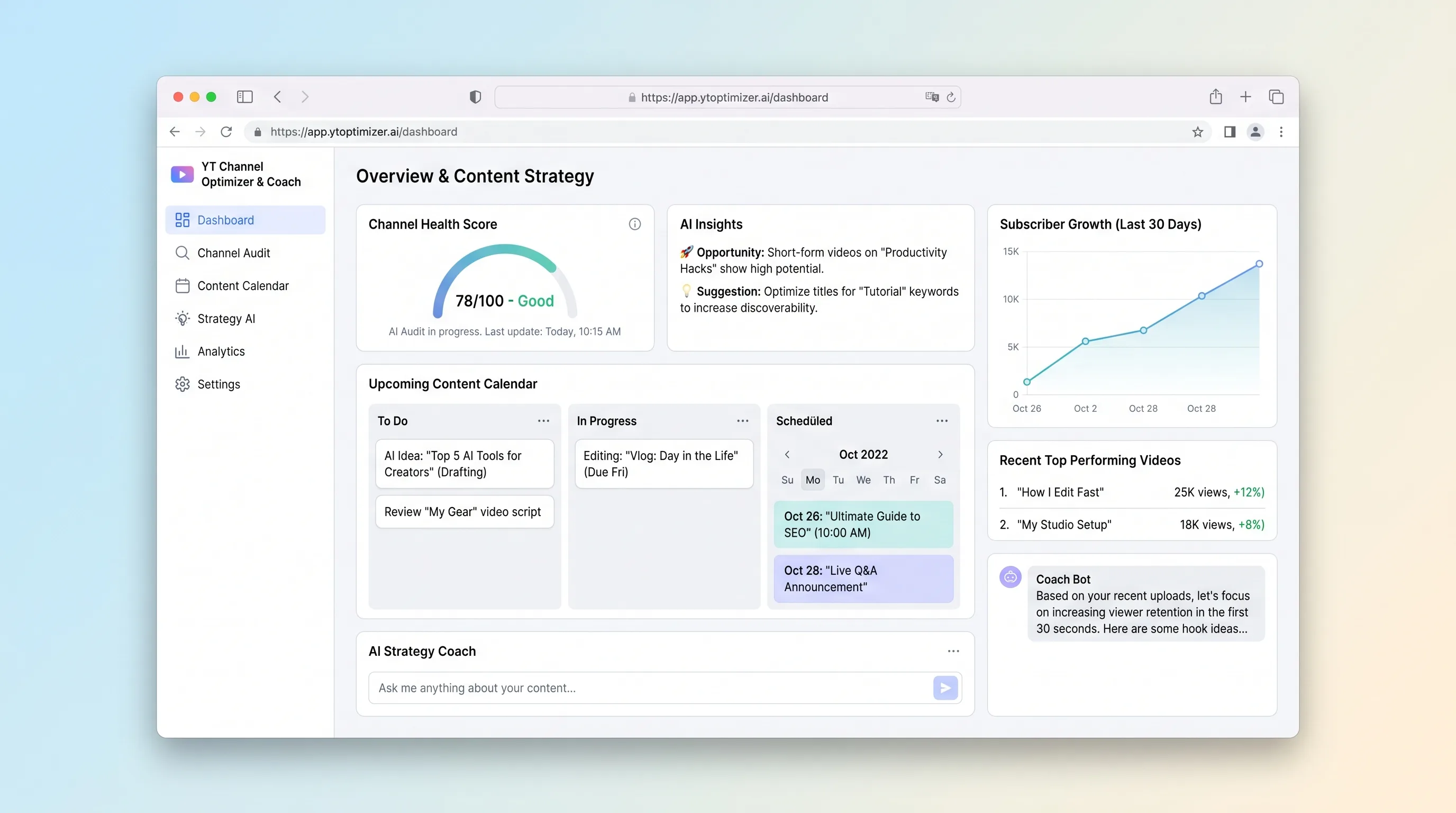
An AI-assisted channel audit that turns authorized YouTube data into a prioritized improvement plan, editable video ideas, and a four-week publishing calendar.
AI ToolCreator Economy & Media
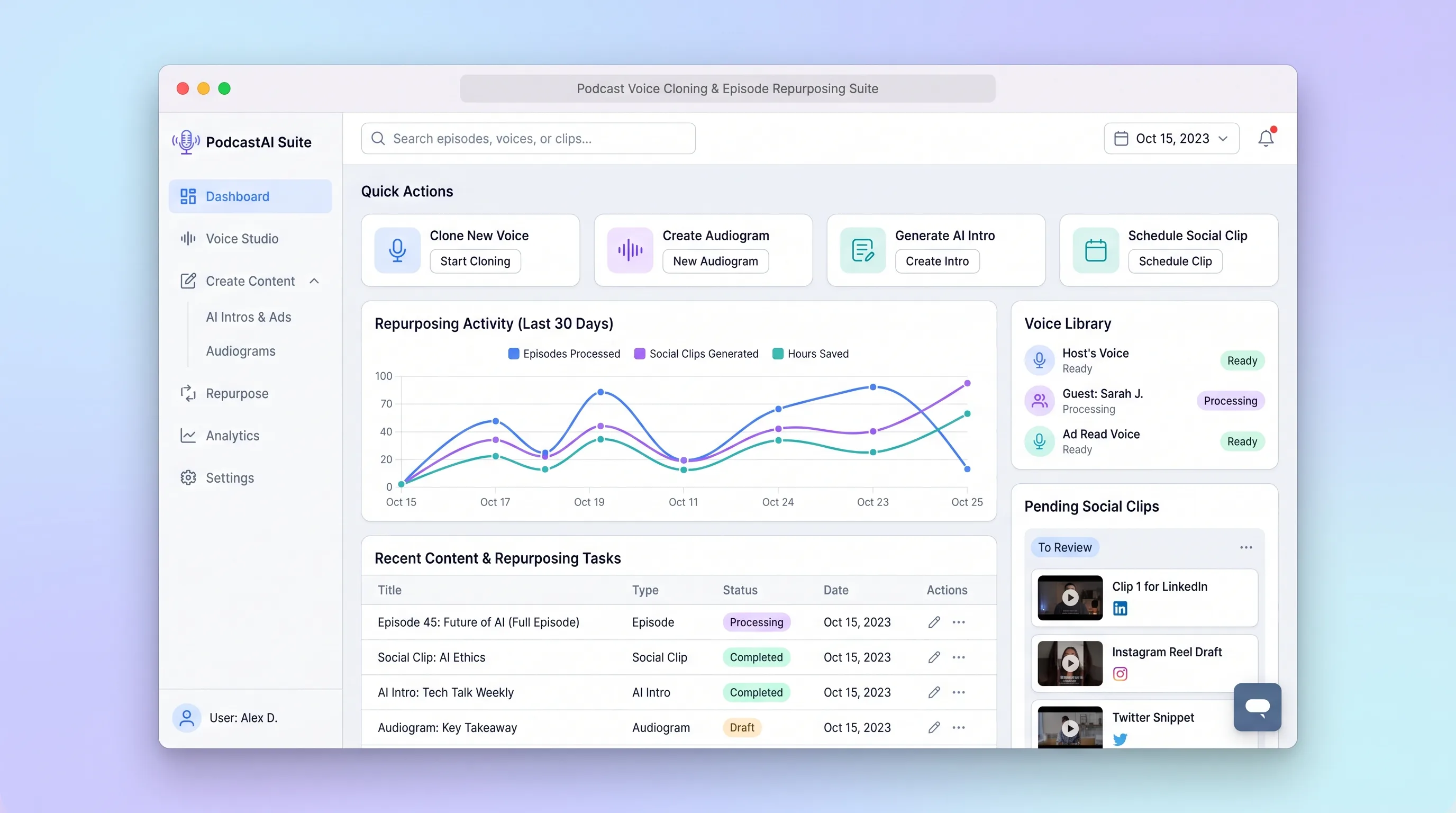
A production workspace for podcasters to transcribe an episode, create consented voice assets, select clip moments, and review channel-ready copy in one run.
AI ToolCreator Economy & Media
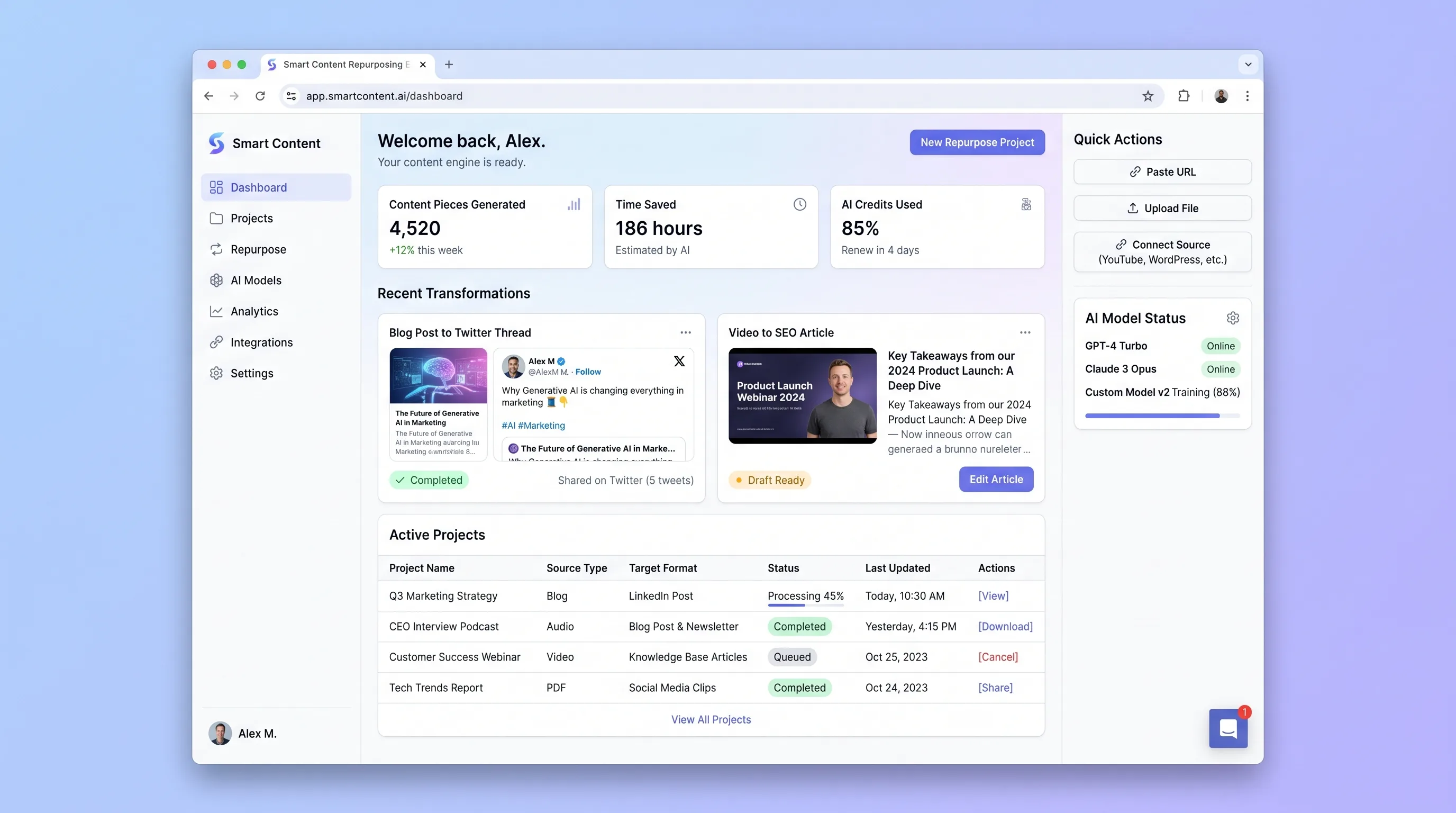
A review-first engine that analyzes an article, transcript, or video and produces editable channel-specific drafts linked to the original source.
AI ToolCreator Economy & Media
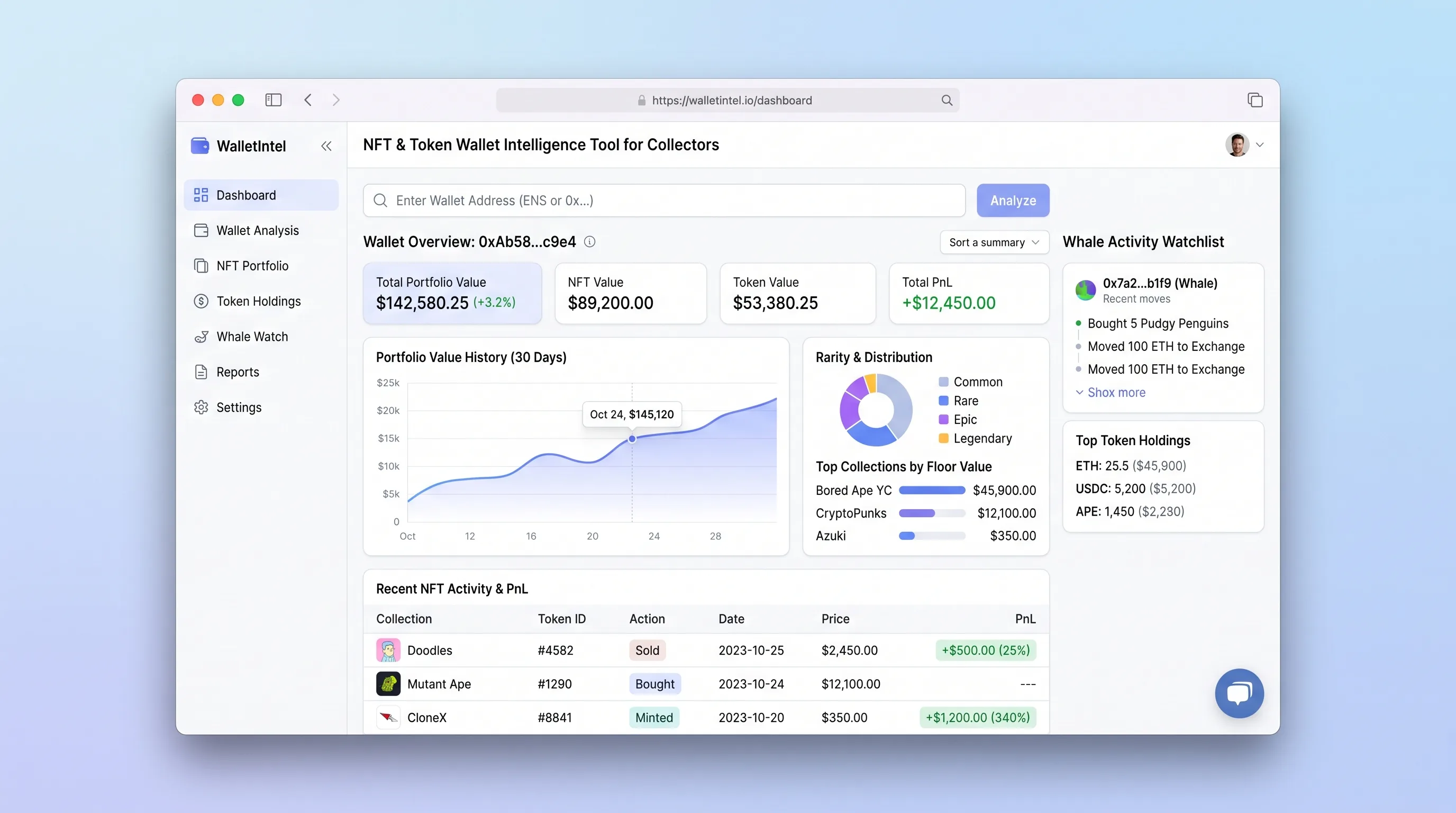
Paste any public wallet address and within seconds see a complete NFT and token breakdown—floor value, rarity, realized PnL, and whale activity—with no login required.
AI ToolBusiness Operations
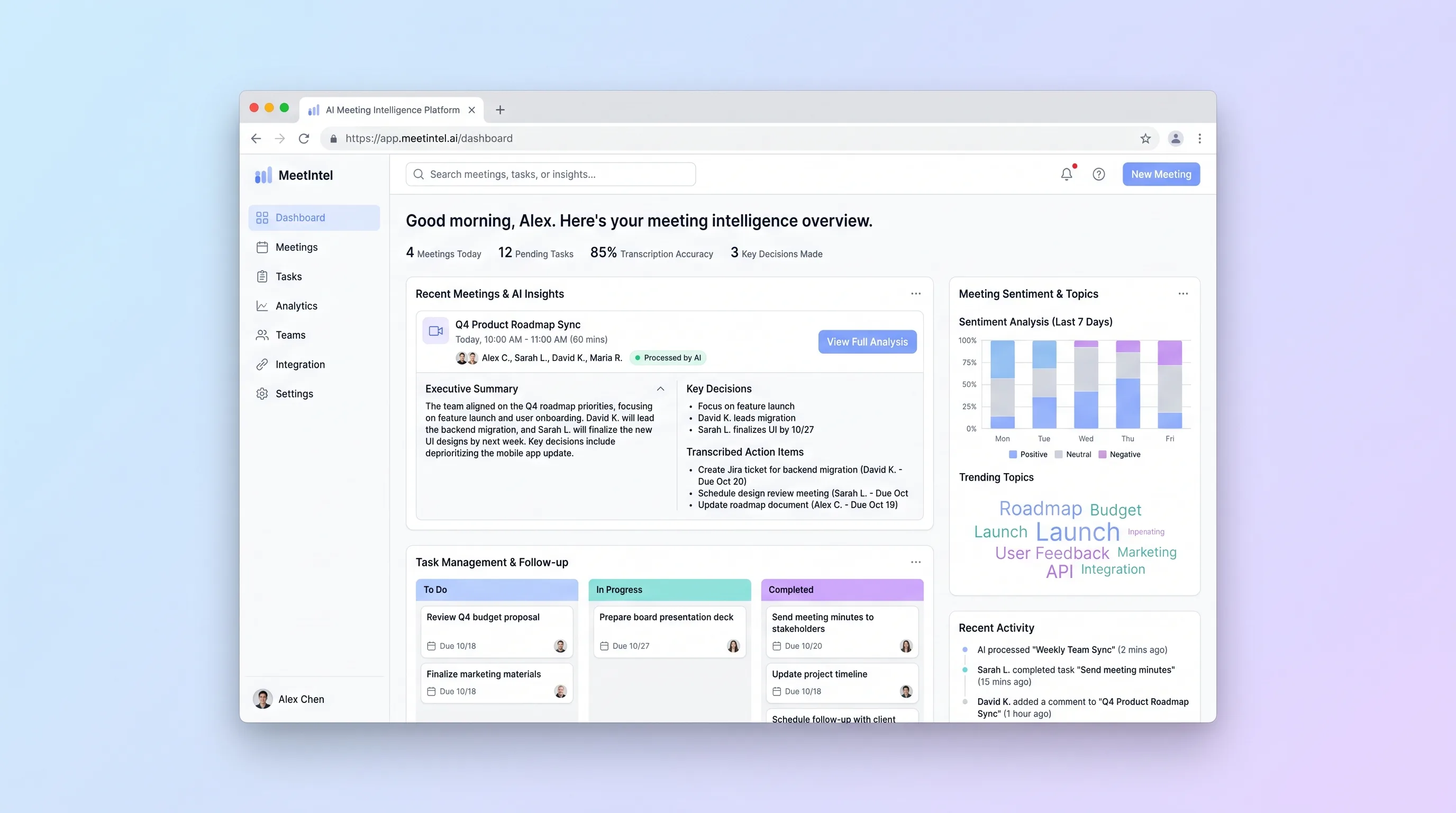
An upload-first processor for teams that need a dependable transcript, editable call summary, and assignable actions from a recorded video meeting.
SaaS WorkflowCreator Economy & Media
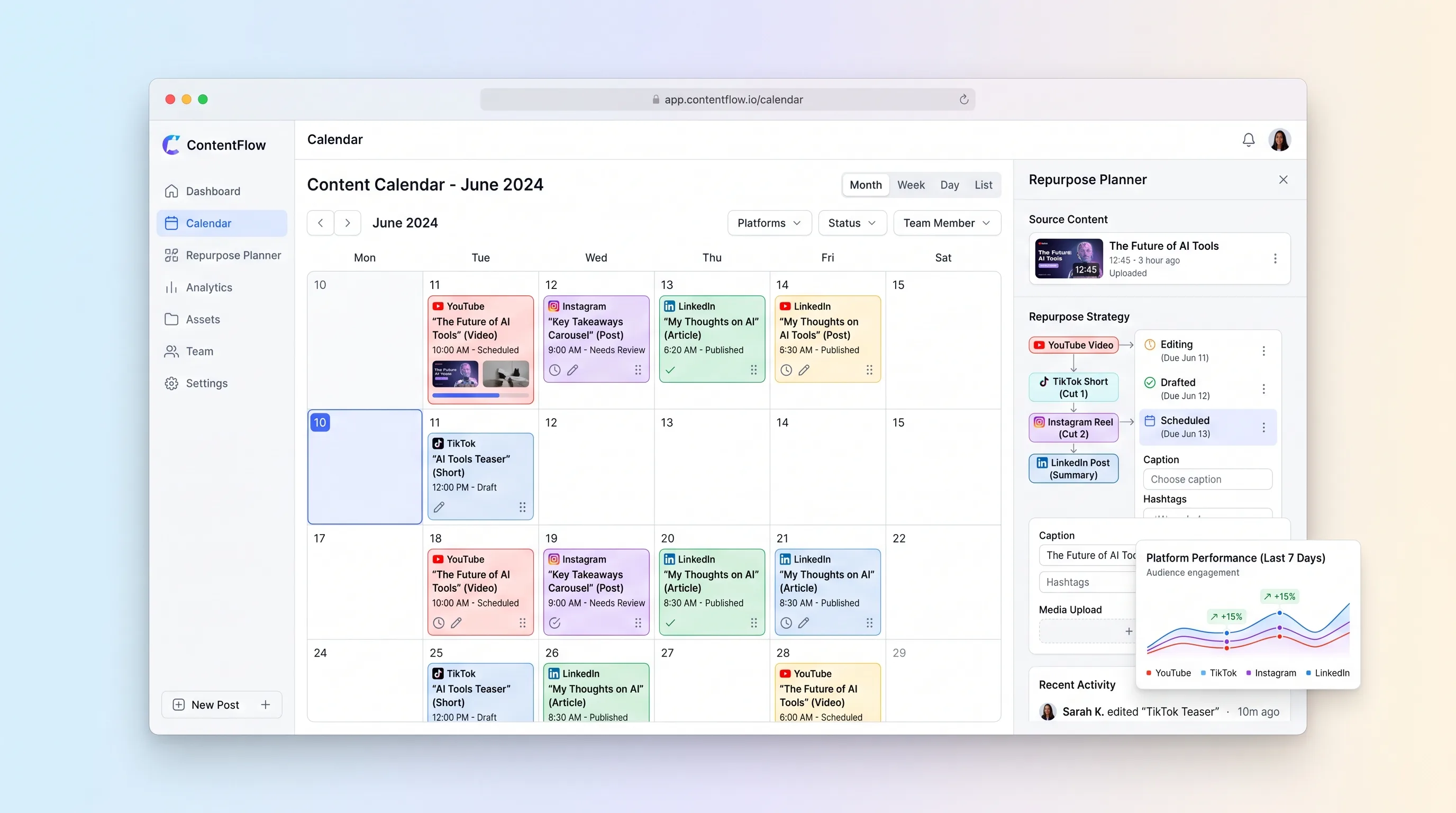
A visual planning workspace that connects each long-form asset to channel-specific derivatives, dates, owners, and publishing status.