
Start with the job
Why this workflow exists
Recruiters read CVs and notes repeatedly to compare candidates against a role brief.
Shortlists arrive late and inconsistent evidence makes client conversations harder.
A candidate profile is added to an active search.
Evidence and assumptions
What this playbook assumes
Recruiters read CVs and notes repeatedly to compare candidates against a role brief.
The recruiter already has access to the source system and can approve the output.
AI does not make the final customer, candidate, property, campaign, or client-facing decision.
Last reviewed: 2026-08-05
AI workflow
Where AI helps, and where a person decides
The workflow is useful because each automation step ends at a named human checkpoint.
Extract profile facts
Create a consistent candidate record.
- Input
- CV, profile, and recruiter notes
- AI action
- Extract experience, skills, location, and stated constraints.
- Human checkpoint
- Recruiter checks facts against the source.
- Output
- Structured candidate record
Compare to role
Surface evidence relevant to the role brief.
- Input
- Candidate record and role brief
- AI action
- Map evidence to requirements and flag missing information.
- Human checkpoint
- Recruiter rejects unsupported inferences.
- Output
- Evidence matrix
Prepare shortlist
Create a client-ready shortlist draft.
- Input
- Evidence matrix
- AI action
- Draft a neutral summary and follow-up questions.
- Human checkpoint
- Recruiter makes the shortlist decision.
- Output
- Shortlist packet
Choose with context
What should your team do next?
Answer three questions to find the most practical next step for your current system, capability, and strategic need.
Answer the questions to choose a path for this workflow.
Strengthen team capability
The team needs a safe pattern for structured extraction and review.
Trade-off: Requires careful role-specific schemas and human checks.
Open the capability routeUse an existing tool
Your ATS already supports structured screening workflows.
Trade-off: Vendor defaults may not match your evidence policy.
Check your current systemCreate a custom workflow
Your agency has repeatable searches and strict source traceability needs.
Trade-off: Higher responsibility around privacy, evaluation, and access control.
Review the custom workflow routeRecommended next move
Start with the capability map below. It connects the selected workflow step to a focused resource and a concrete deliverable.
Open the capability routeKeep your current system if it can preserve source context, expose missing data, allow human editing, and keep observed facts separate from generated interpretation.
Bullhorn · Recruitment operations platform
Compare Bullhorn for this workflow
- Best when
- Your current system cannot preserve the required workflow inputs, controls, or review states.
- Avoid when
- Your existing system already satisfies the workflow requirements and keeps the data in one place.
- Why it fits
- Compare Bullhorn when the current system fails one of the workflow requirements.
- Limitation
- Provider defaults may not match your fields, permissions, or review policy.
- Trade-off
- Faster setup with less control over vendor-specific workflow behavior.
Related template or use case: Open provider guidance
Alternative: Use the automation feature in your current platform · Last checked 2026-08-05
Create a custom workflow when the process is differentiated, integration-heavy, or sensitive enough to require ownership of data boundaries, approvals, and maintenance.
Make · Automation layer
Create this workflow with Make
- Best when
- The workflow repeats often enough to justify visible automation and an owned handoff.
- Avoid when
- The workflow is still changing or the team has not agreed on source ownership and human approval.
- Why it fits
- Make can support the workflow's explicit handoffs before a custom backend is justified.
- Limitation
- The team still owns configuration, monitoring, and the final human checkpoint.
- Trade-off
- More control than a fixed product, with more setup and maintenance responsibility.
Related template or use case: Open provider guidance
We may earn a commission if you sign up through this link.Alternative: Use the automation feature in your current platform · Last checked 2026-08-05
Railway · Application and infrastructure layer
Create this workflow with Railway
- Best when
- The workflow repeats often enough to justify visible automation and an owned handoff.
- Avoid when
- The workflow is still changing or the team has not agreed on source ownership and human approval.
- Why it fits
- Railway can support the workflow's explicit handoffs before a custom backend is justified.
- Limitation
- The team still owns configuration, monitoring, and the final human checkpoint.
- Trade-off
- More control than a fixed product, with more setup and maintenance responsibility.
Alternative: Use the automation feature in your current platform · Last checked 2026-08-05
Capability map
What does your team need to operate this workflow?
Choose a step and your current level to see the shortest route to a useful deliverable.
AI workflow design
The draft must summarize without inventing or scoring candidates.
Recommended learning route
Using AI in Make
Use the course to learn the automation mechanics, then apply a recruiter-owned evidence policy.
Ready-to-use artifact
Candidate evidence matrix
This is the complete operating template for the workflow: input contract, runbook, automation handoff, human review, escalation, and a test case.
Workflow template
Open the complete operating runbook
The full Markdown stays out of the page until you ask for it. Open it when you are ready to adapt this workflow to your team.
What happens next
- Extract profile factsExtract experience, skills, location, and stated constraints.
- Compare to roleMap evidence to requirements and flag missing information.
- Prepare shortlistDraft a neutral summary and follow-up questions.
Check before action
- Extract profile factsRecruiter checks facts against the source.
- Compare to roleRecruiter rejects unsupported inferences.
- Prepare shortlistRecruiter makes the shortlist decision.
Shortlist packet
Test the filled template on one real but non-sensitive example. Keep the source context and approval decision with the team that owns this workflow.
Implementation stack
What the workflow needs
Automation and AI usage
ATS subscription · Recruiter review time
Explore the product angle
Ideas connected to this workflow
Use this workflow inside an agency, or explore product ideas built around the same operational problem.
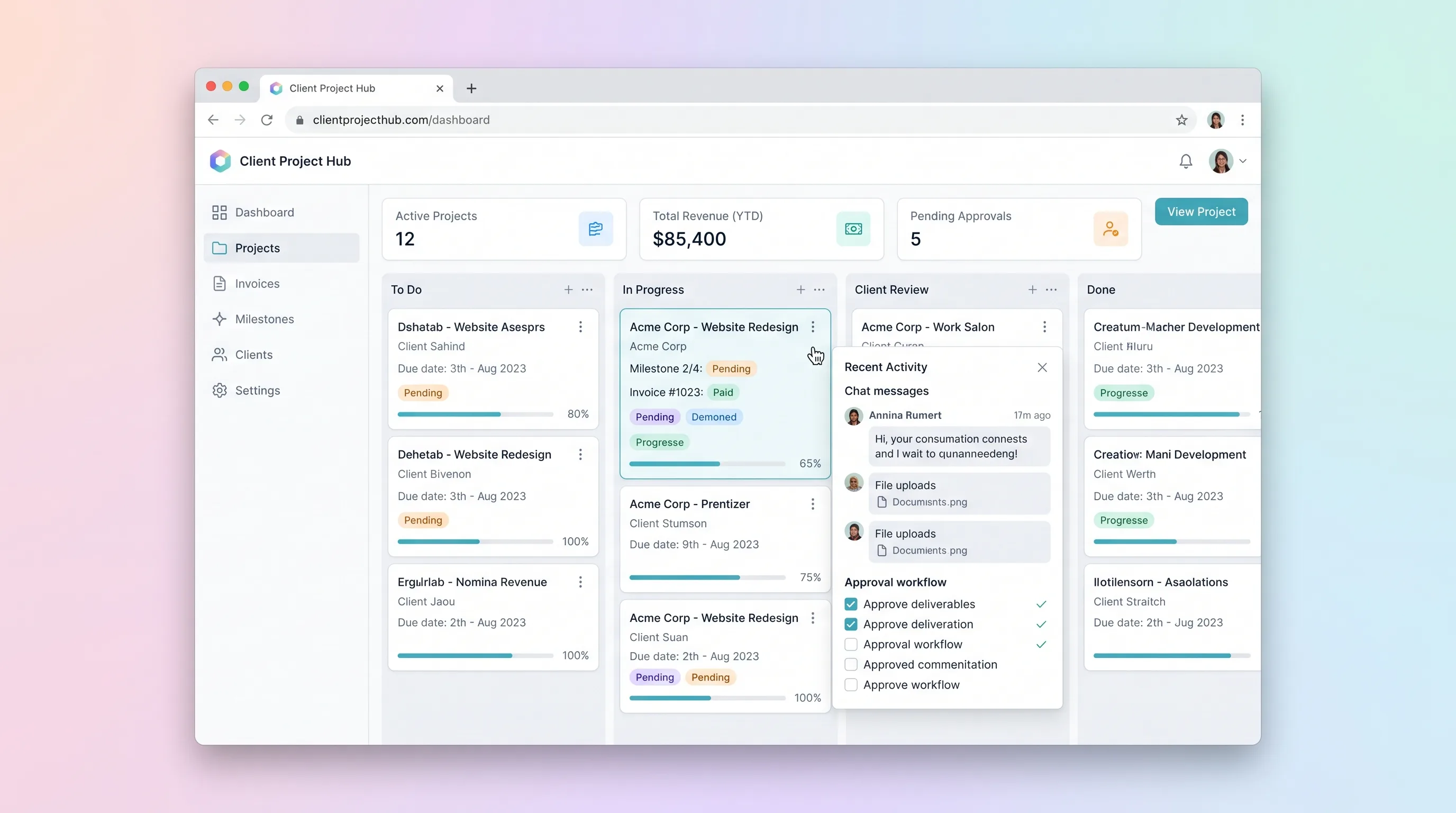
SaaS WorkflowProfessional Services
Client Project Hub with Invoice & Milestone Tracking
A kanban-driven workspace where freelancers and small agencies track client project milestones, route deliverables through an approval workflow, and auto-generate invoices upon approval.
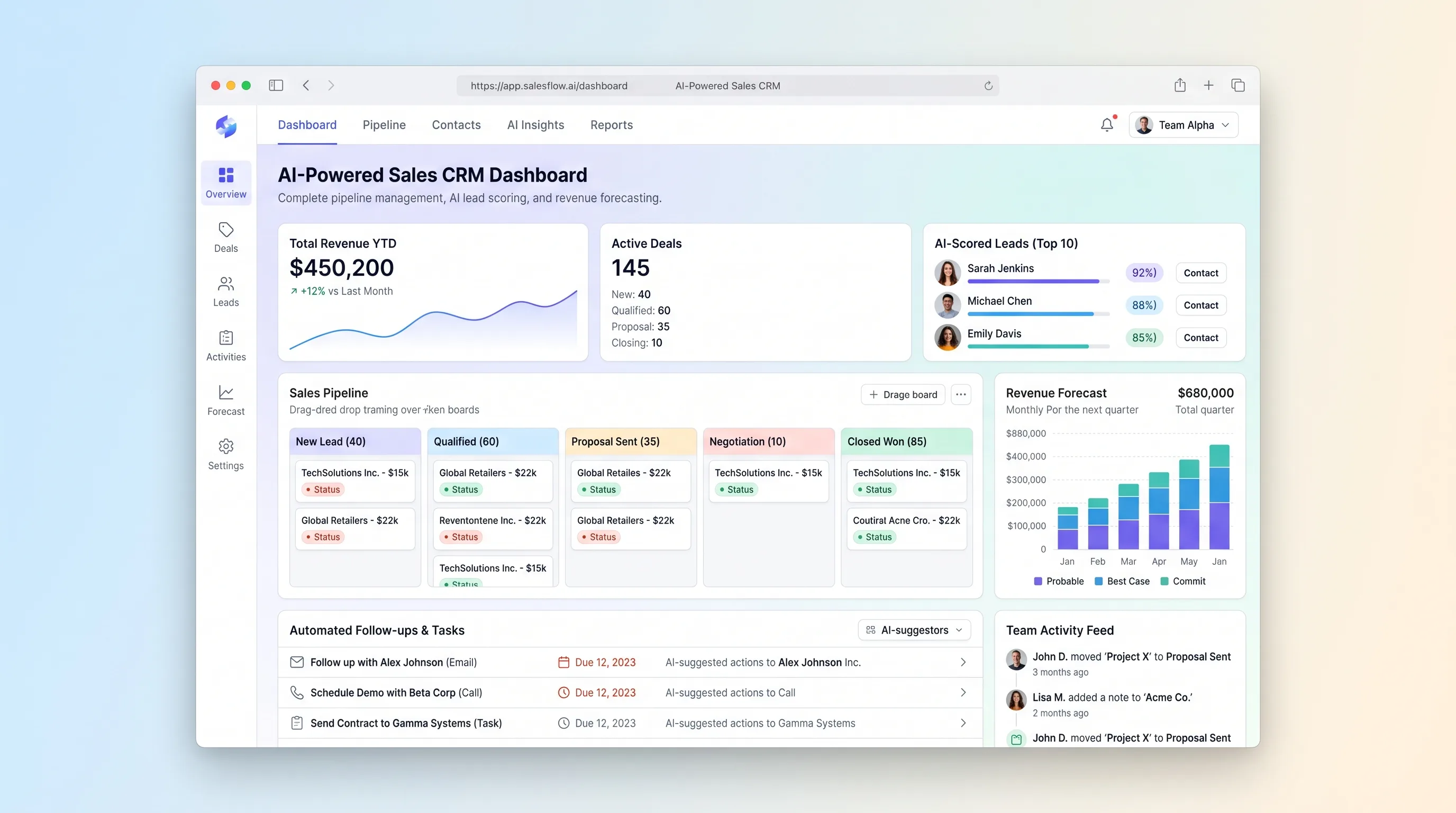
AI ToolSales & Marketing
AI Sales CRM Dashboard for Small Business Teams
A focused sales pipeline that explains lead priority, flags stalled deals, drafts the next follow-up, and rolls qualified opportunities into a transparent forecast.
Next workflows
Related playbooks

RecruitmentRecruitment agencies
Client candidate update reporting
Turn ATS activity into a concise client update with progress, blockers, and next actions made explicit.

RecruitmentRecruitment agencies
Recruiter outreach personalization
Prepare relevant outreach drafts from a role brief and candidate context, with recruiters approving every message.