Build this if
You manage 3 or more concurrent client projects with milestone-based billing and spend over 2 hours per week on status emails and manual invoicing.
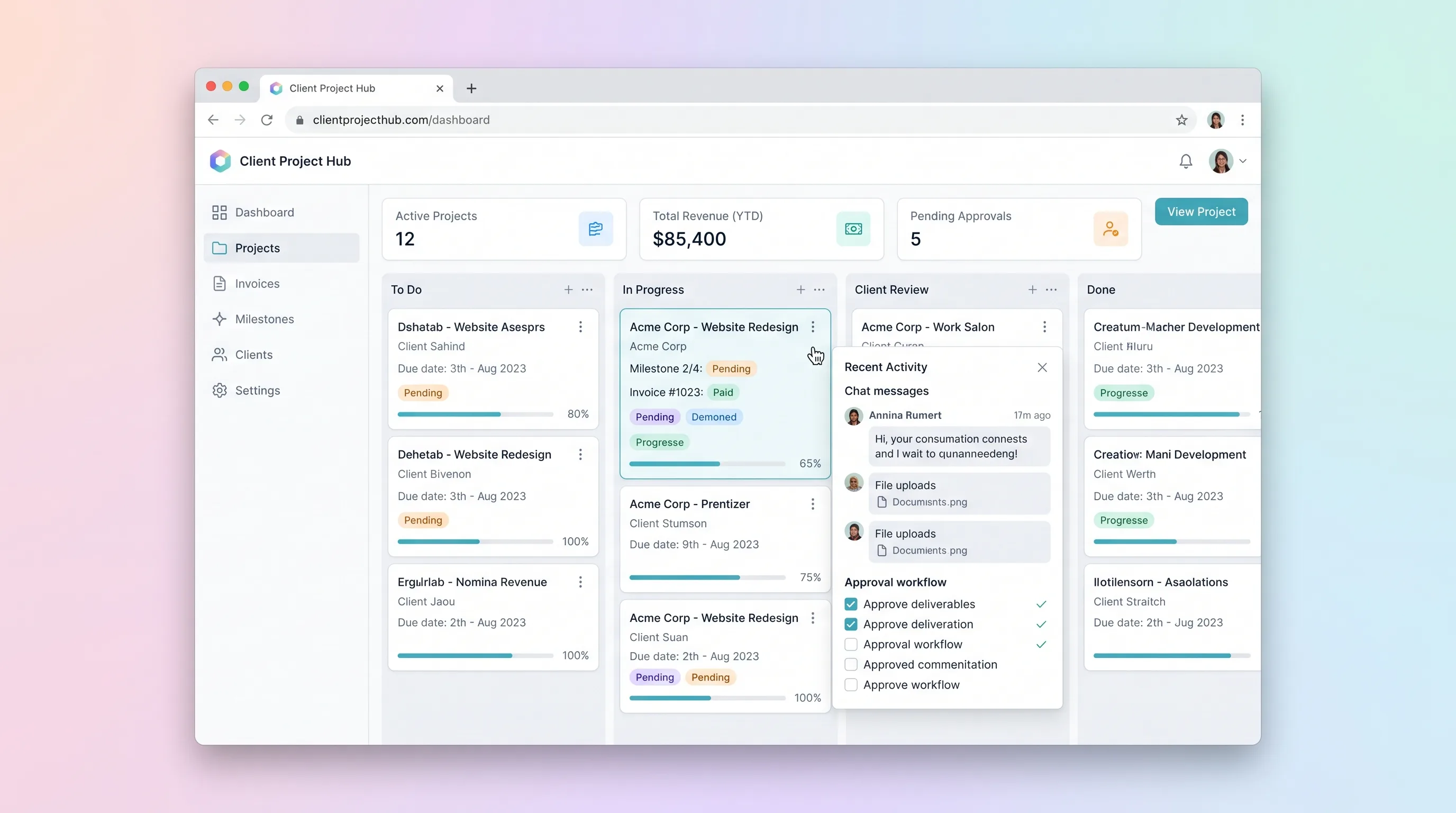
A kanban-driven workspace where freelancers and small agencies track client project milestones, route deliverables through an approval workflow, and auto-generate invoices upon approval.
Decision snapshot
You manage 3 or more concurrent client projects with milestone-based billing and spend over 2 hours per week on status emails and manual invoicing.
Your projects are one-off deliverables with no milestone structure or recurring billing needs.
Onboard 5 freelancers for 2 weeks; measure reduction in client follow-up emails and time spent generating invoices per milestone.
Problem and target customer
Freelancers and small agencies manage client projects across email, spreadsheets, and generic task tools. Milestone approvals, deliverable handoffs, and invoicing are disconnected, causing delayed payments, excessive client follow-up emails, and no audit trail of what was approved and when.
Freelancers and small agencies managing 3 to 15 concurrent client projects with milestone-based billing and deliverable approval cycles.
Monthly subscription with a paid workspace tier based on number of active projects and invoiced milestones per month.
Editorial note
Freelancers and small agencies lose billable hours coordinating project status across email threads, spreadsheets, and generic task tools. A dedicated client project hub consolidates milestone tracking, approval workflows, and invoicing into one workspace.
The MVP focuses on a single workflow: move milestones through a kanban board, submit them for client approval via email, and auto-generate invoices upon approval. This eliminates manual invoice creation and reduces the back-and-forth emails that delay payments.
Scope discipline matters. Time tracking, calendar sync, and LLM-generated summaries are excluded from the first version. The core value is the connection between milestone approval and invoice generation, not feature breadth.
Choose your next step
Evaluate the operating tradeoffs quickly, or inspect how to build the MVP.
Compare the three operating paths at the default workload before opening the full calculator.
See cost preview Build this ideaInspect the build blueprintReview MVP scope, workflow, states, data rules, architecture, and acceptance criteria.
Open blueprintEvaluation preview
Directional infrastructure estimates for the current 1,000 generated outputs assumption. Open the full calculator when you are ready to change it.
Managed app hosting, database, backups, and basic observability for the ai-generation workflow.
Lowest operating effortOne small VPS running the app, database, media volume, and backup job.
Lowest baseline costSeparate app, data, storage, and worker capacity for cleaner operations.
Most separation and controlBuild blueprint
Product goal
MVP scope
UX and user flow
Main dashboard showing all projects with milestone cards organized by status column
Drill-down view of a single milestone with deliverable description, approval status, revision history, and linked invoice
List of all invoices with payment status, linked milestone, amount, and send or retry actions
Chronological audit trail of all approvals, rejections, status changes, and invoice events
Core entity outline
Top-level container for a freelancer or agency with owner and billing tier
Client engagement containing milestones and associated invoices
Deliverable unit with approval workflow and billing amount
Billing record generated from an approved milestone with Stripe payment tracking
Audit trail entry for every status transition, approval, rejection, and invoice event
Architecture and data flow
Renders project board with drag-and-drop milestone cards and handles status update calls to the backend API
Processes milestone state transitions, validates business rules, and persists activity log entries
Generates invoice records from approved milestones and syncs payment status with Stripe
Sends transactional emails for approval requests, revision notifications, and invoice delivery
Deliverables and acceptance
Recommended stack
Visual builder for the kanban board interface with drag-and-drop milestone cards and invoice summary sidebar without custom frontend code.
Relational storage for projects, milestones, invoices, and activity logs with row-level security for workspace isolation.
Webhook glue connecting Stripe payment confirmations to invoice status updates and triggering email notifications on approval events.
Hosts the approval state machine API and invoice generation service with persistent environment variables for Stripe and Resend keys.
Sends tokenized client approval links and invoice delivery emails with delivery tracking and retry logic.
Lovable renders the kanban interface without custom frontend engineering. Supabase enforces relational integrity between milestones and invoices with workspace-scoped access. Make bridges Stripe webhooks and email triggers without writing glue code. Railway hosts the approval state machine and invoice generation endpoints. Resend handles client-facing transactional email with reliable delivery.
Copy the build prompt, model the operating cost, and choose where to deploy.
Execution
Once the blueprint is clear, use the prompt, cost model, and deployment options to start building.
Build prompt
lovable
Build prompt
Open the prompt pack whenever you are ready to take this blueprint into your builder.
Build prompt ready
Copy the prompt into your builder, then use the cost model below to choose how you want to run it.
Use the cost model to choose a deployment path that matches the build plan.
Cost calculator
A technical run-cost estimate for the first production version. Team, acquisition, payment fees, and business COGS are excluded.
$13-$33 per 500 generated outputs
Low and high values allow for usage variance and plan headroom.
Managed app hosting, database, backups, and basic observability for the ai-generation workflow.
50K generated outputs included, then $8-$20 per 100K generated outputsTransactional email is implied by the source workflow or feature list.
3K generated outputs includedThe estimate combines the selected infrastructure path, required operating modules, selected optional modules, and usage above included monthly allowances. Taxes and regional uplifts are excluded.
Deployment options
Choose based on operating preference, not only the headline price.
Fast Docker deployment for the app, database, worker, and preview workflow without managing a VPS.
Usage billing needs active monitoring as traffic and jobs grow.
Run the app, worker, and database on one small Vultr VPS with Docker Compose and explicit backups.
You own patching, backups, monitoring, and incident response.
Separate application, worker, data, storage, and backup responsibilities as the workload grows.
You own server setup, patching, backups, and operational monitoring.
Start building
Create the main kanban interface with five milestone status columns, drag-and-drop card movement, project detail drill-down, invoice summary sidebar, and activity log view. Wire up Supabase for data persistence and authentication.
Open Lovable 02AutomationConnect Stripe Webhooks and Email TriggersSet up Make scenarios to listen for Stripe payment confirmation webhooks, update invoice status in Supabase, and trigger Resend email notifications when milestones are submitted for approval or invoices are sent.
Open Make 03DeployDeploy Approval API and Invoice ServiceHost API endpoints for milestone state transitions, invoice generation from approved milestones, tokenized approval link validation, and activity log persistence. Connect to Supabase and Resend via environment variables.
Open RailwayKeep exploring
SaaS WorkflowSales & Marketing
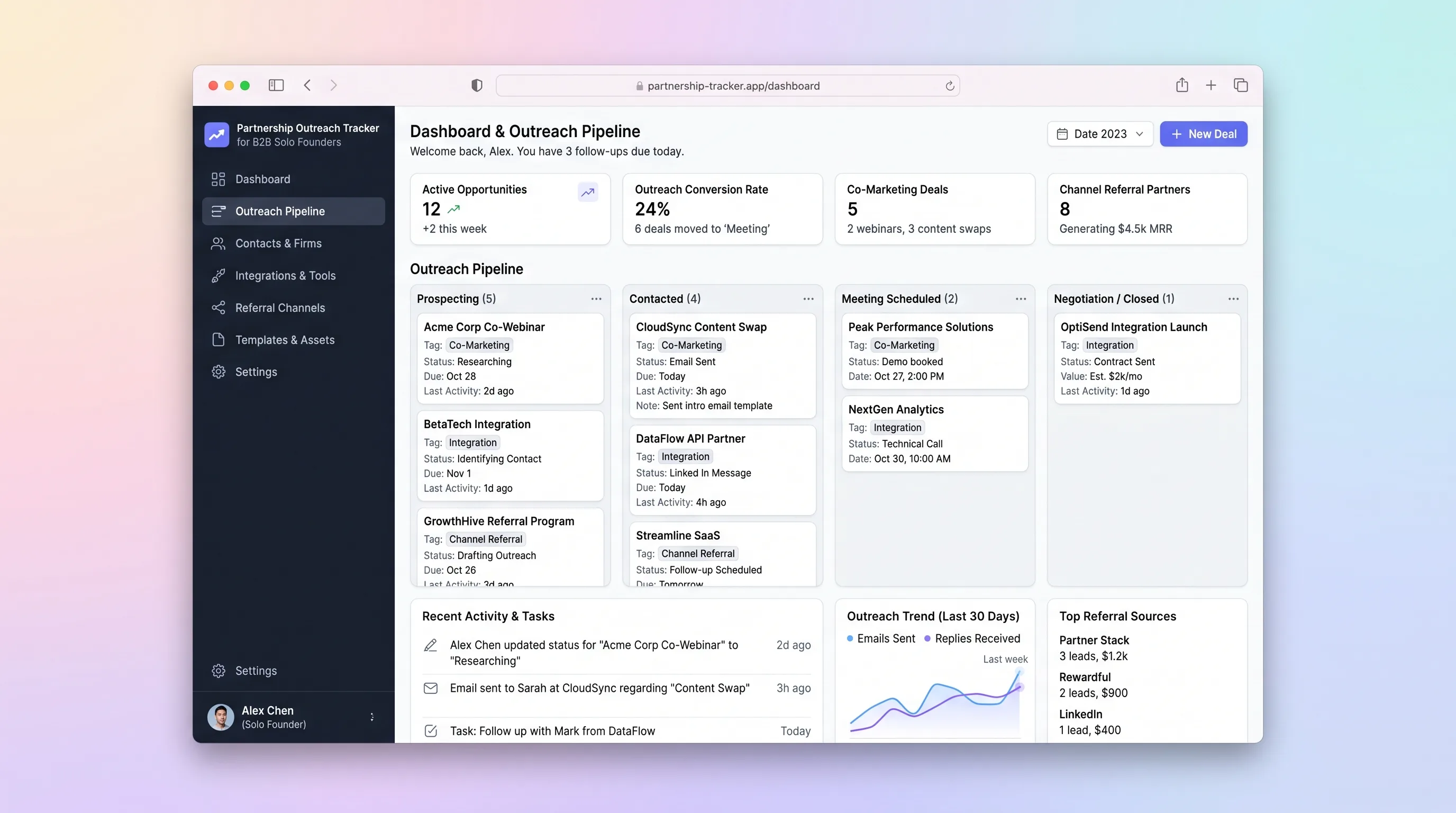
A single-workspace outreach tracker that lets a solo B2B founder run a 30-partner campaign, log email replies, schedule follow-ups, and close co-marketing or integration deals without juggling spreadsheets and Gmail.
Internal ToolBusiness Operations
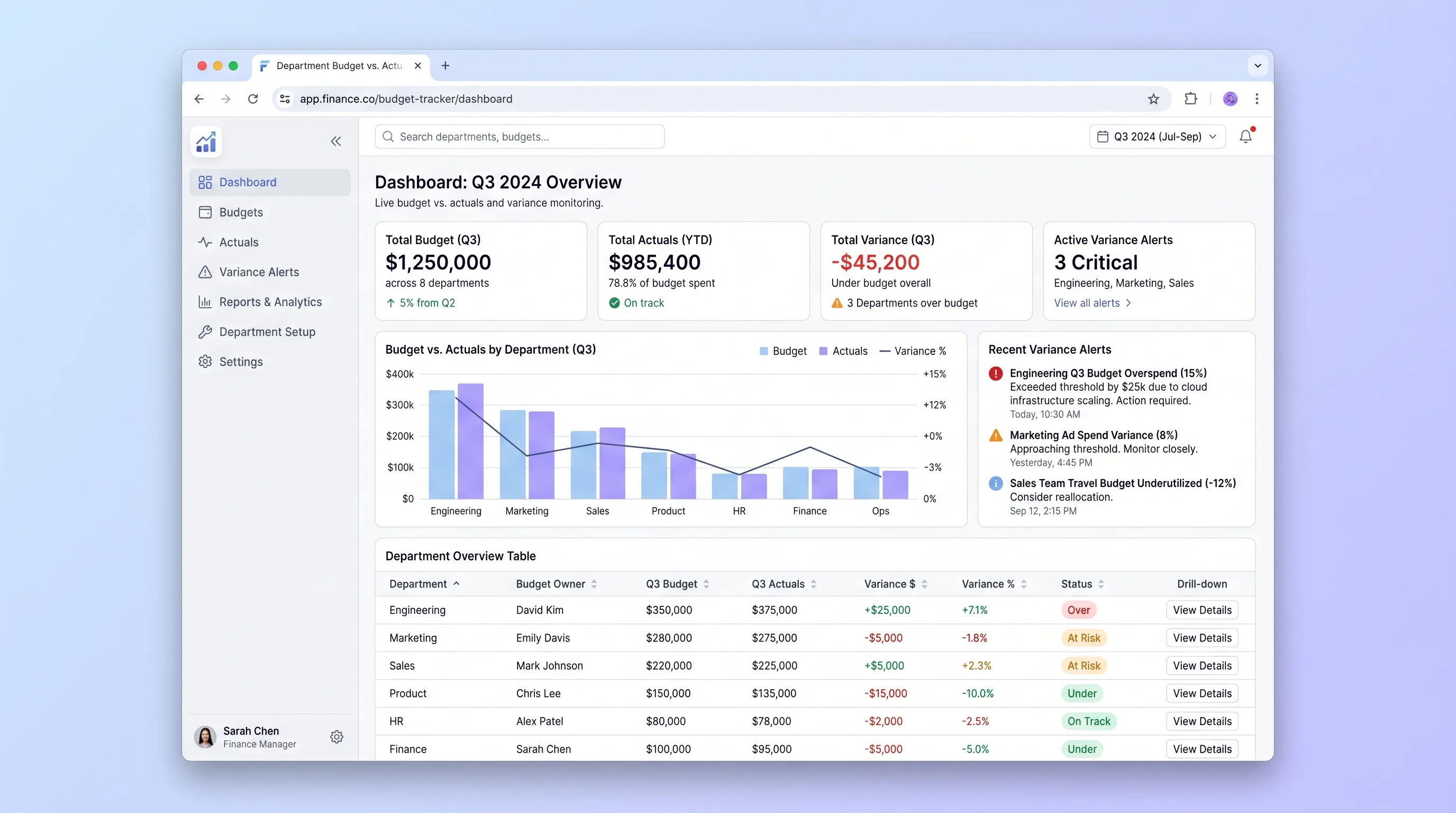
An internal tool that lets finance teams import annual budgets via CSV and gives department heads self-serve visibility into spend against budget with drill-down variance views and same-day threshold alerts.
SaaS WorkflowCreator Economy & Media
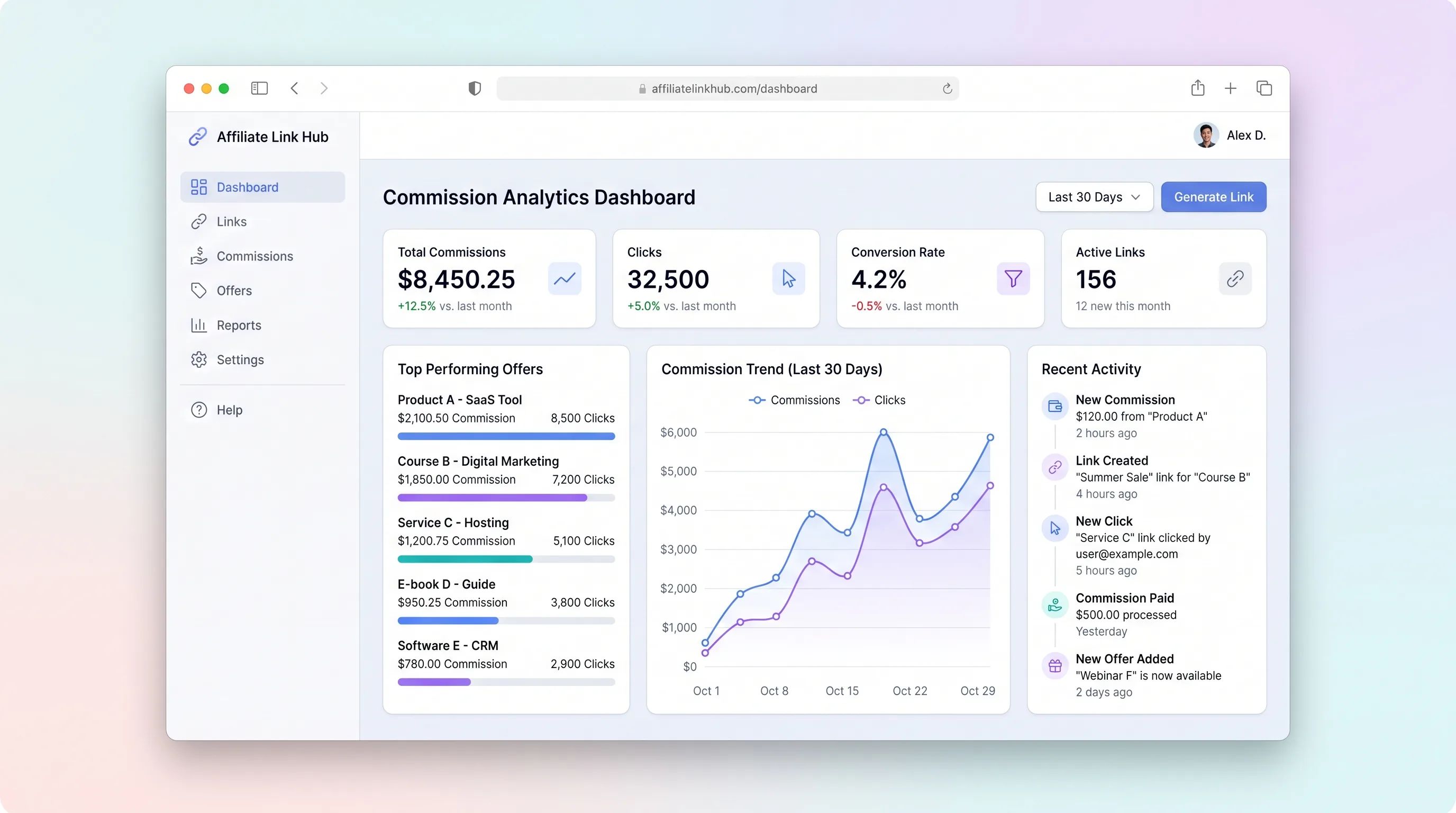
A focused workspace where creators import affiliate programs, distribute tracked links, monitor click and commission trends, and log payouts without juggling spreadsheets.
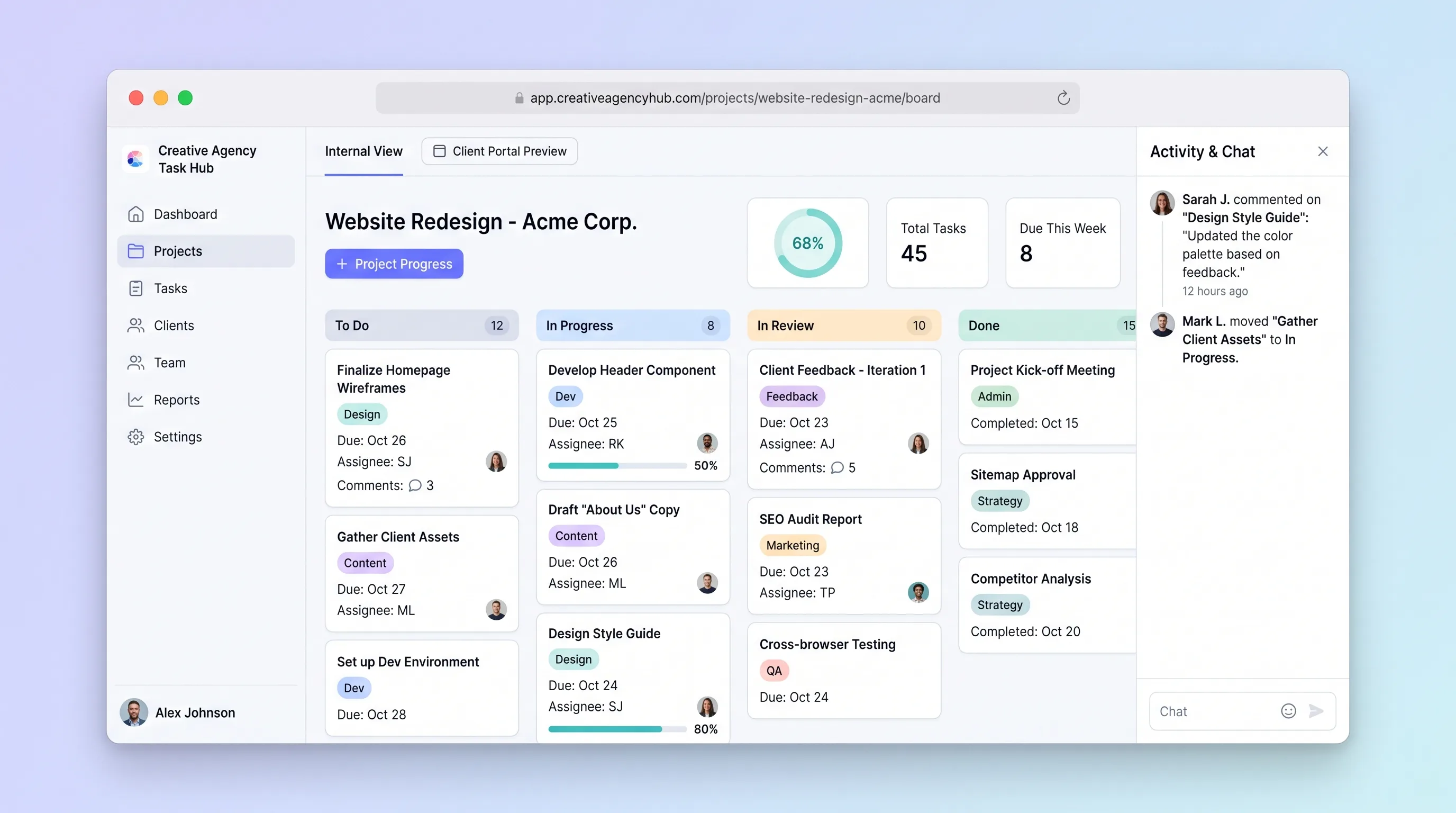
SaaS WorkflowProfessional Services
A focused project tracker where small creative agencies manage deliverables on an internal kanban board and share branded client portals for progress review and approvals without email chains.
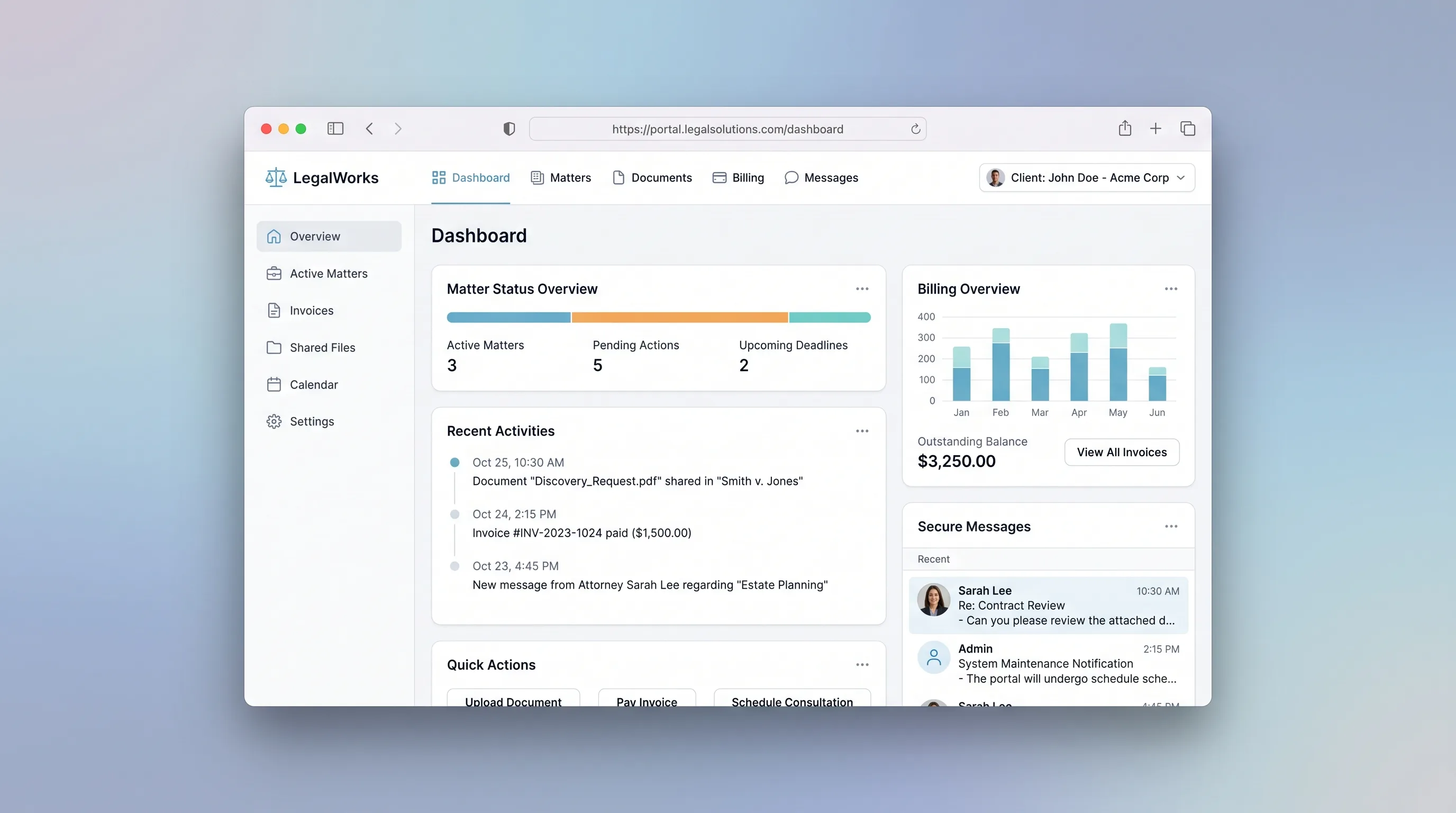
SaaS WorkflowProfessional Services
A branded portal where law firms manage client matters, share documents, log billable time, and collect invoice payments in one secure place.
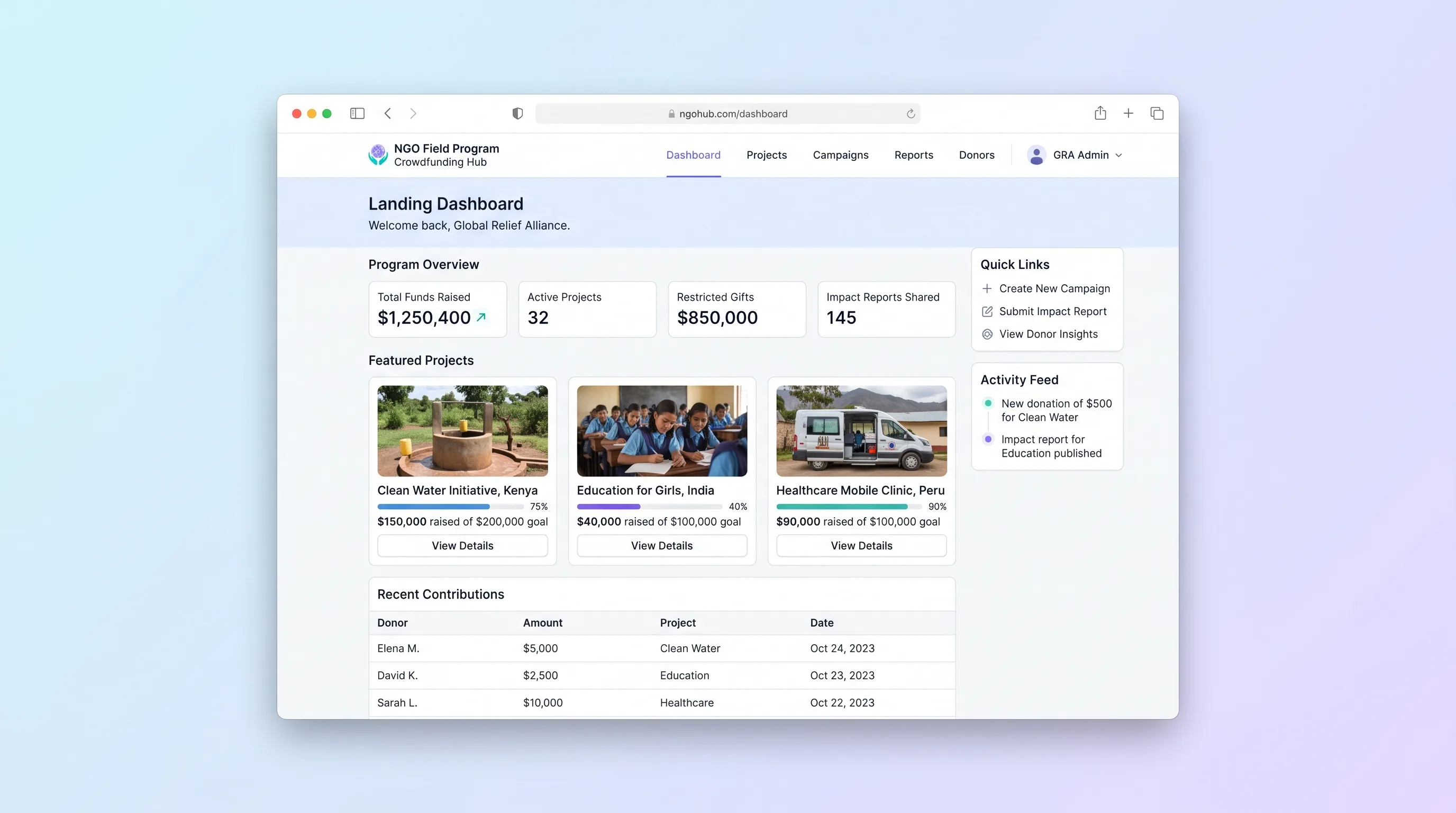
SaaS WorkflowProfessional Services
A multi-project crowdfunding portal where NGOs publish field programs, collect restricted gifts with donor dedications, and send field updates back to funders through a branded donor portal.