Build this if
The agency has credible service proof but loses time on vague inquiries and can define practical fit rules.
A conversion-focused site for digital agencies that turns service research and case-study browsing into structured, qualified discovery inquiries.
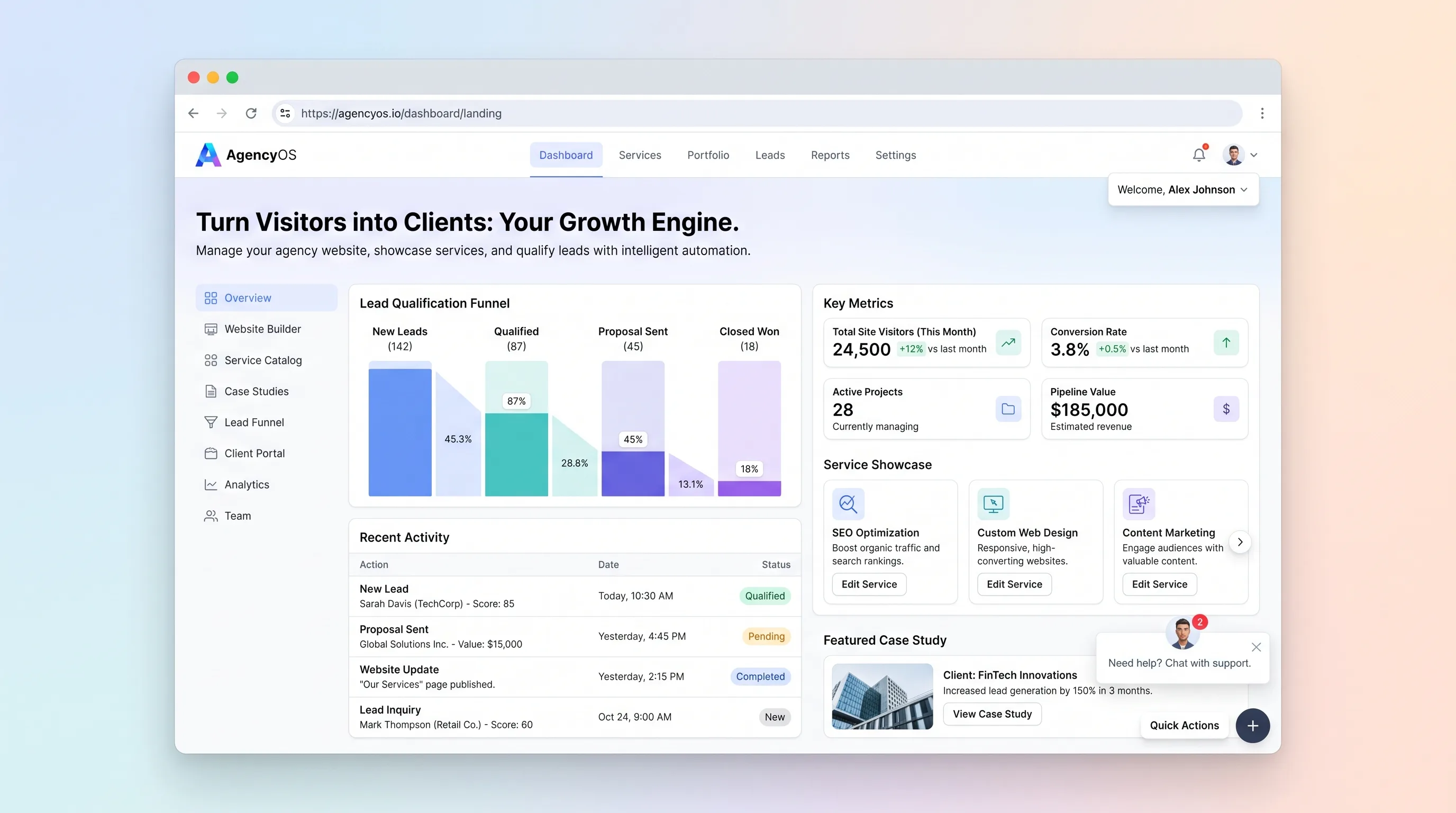
Decision snapshot
The agency has credible service proof but loses time on vague inquiries and can define practical fit rules.
The main need is project delivery, a full CRM, or demand generation without enough portfolio evidence.
Ask five target prospects to find relevant work and complete discovery, then confirm staff can accept or archive each submission from the captured context alone.
Problem and target customer
Small agencies often publish attractive portfolios but capture every inquiry through the same generic form. Staff then spend time clarifying budget, service fit, timing, and project context before they can decide whether to pursue the lead.
Owners and business-development leads at small digital agencies that sell defined services and need a clearer path from portfolio visit to discovery call.
Single-agency website sold as a project or maintained through a recurring hosting and content-support plan.
Editorial note
The product decision is to connect proof and qualification rather than build a broad agency operating system. A service page should lead naturally to relevant work and then ask only the project questions staff actually use to decide on a call.
Transparent rules are a better first boundary than AI scoring. They are inexpensive, editable by the agency, and let staff see exactly why budget, timing, or service fit changed an inquiry's priority.
The key validation is not page traffic. It is whether prospective clients submit more complete context and whether the agency can make a confident next-step decision without another round of basic clarification.
Choose your next step
Evaluate the operating tradeoffs quickly, or inspect how to build the MVP.
Compare the three operating paths at the default workload before opening the full calculator.
See cost preview Build this ideaInspect the build blueprintReview MVP scope, workflow, states, data rules, architecture, and acceptance criteria.
Open blueprintEvaluation preview
Directional infrastructure estimates for the current 500 qualified inquiries assumption. Open the full calculator when you are ready to change it.
One managed runtime and database for public pages, content editing, and lead handling.
Lowest operating effortOne small server runs the app and database with operator-managed backups.
Lowest baseline costSeparate application, database, and load-balancing capacity for a busier lead engine.
Most separation and controlBuild blueprint
Product goal
MVP scope
UX and user flow
Explain the agency's positioning and route visitors to a service, proof point, or discovery form.
Pair each offer with relevant case studies so visitors can judge fit before contacting the agency.
Collect contact details, desired service, goals, budget band, timing, and project context across short steps.
Show the fit score, reasons, submitted answers, ownership, notes, and next status for each prospect.
Let authorized staff maintain services, team profiles, and case studies without a code release.
Core entity outline
A sellable agency offer used by public pages, case-study relationships, and discovery choices.
Evidence of completed work that links a client context to services and outcomes without inventing performance claims.
A submitted project inquiry and its qualification state.
A timestamped staff observation attached to a prospect.
An administrator-controlled condition that contributes a labeled amount to fit scoring.
Architecture and data flow
Render fast marketing pages, service detail, case studies, and the discovery form.
Protect lead operations and content editing behind role checks.
Validate submissions, evaluate qualification rules, persist state changes, and prepare notifications.
Store services, case studies, leads, rules, notes, users, and status history.
Keep optimized case-study and team images outside the database.
Deliverables and acceptance
Recommended stack
Support fast public pages and a responsive protected staff interface in one codebase.
Keep content, lead states, qualification rules, and role checks in a relational model.
Serve case-study imagery from object storage without bloating database backups.
Send receipt and assignment notices while tracking delivery failures.
The first release is primarily a content-rich website plus a small operational inbox. A single full-stack application and relational database keep scoring and lead history auditable without adding an AI service or separate worker fleet.
Copy the build prompt, model the operating cost, and choose where to deploy.
Execution
Once the blueprint is clear, use the prompt, cost model, and deployment options to start building.
Build prompt
Build a responsive Next.js application with a public marketing surface and a protected staff area. Keep lead qualification deterministic and editable rather than presenting it as AI.
Build prompt
Open the prompt pack whenever you are ready to take this blueprint into your builder.
Build prompt ready
Copy the prompt into your builder, then use the cost model below to choose how you want to run it.
Use the cost model to choose a deployment path that matches the build plan.
Cost calculator
A technical run-cost estimate for the first production version. Team, acquisition, payment fees, and business COGS are excluded.
$5-$25 per 500 qualified inquiries
Low and high values allow for usage variance and plan headroom.
One managed runtime and database for public pages, content editing, and lead handling.
5K qualified inquiries included, then $5-$15 per 5K qualified inquiriesConfirmation and staff-notification messages generated by discovery submissions.
3K qualified inquiries includedThe estimate combines the selected infrastructure path, required operating modules, selected optional modules, and usage above included monthly allowances. Taxes and regional uplifts are excluded.
Deployment options
Choose based on operating preference, not only the headline price.
Run the site, database, and media credentials with a short deployment path.
Resource usage can exceed the plan minimum as traffic or media work grows.
Run the app, worker, and database on one small Vultr VPS with Docker Compose and explicit backups.
The owner is responsible for patching, monitoring, and restore drills.
Separate application, worker, data, storage, and backup responsibilities as the workload grows.
More components add configuration and observability work.
Start building
Use Lovable to lay out the service pages, filterable work gallery, multi-step discovery form, and staff lead view before connecting production data.
Open Lovable 02AutomationNotify the right agency ownerUse Make as optional glue to post qualified inquiries to an internal channel or copy them into an existing CRM after the on-site lead flow is proven.
Open Make 03DeployShip the public site and lead inbox togetherDeploy the web app, database, and media-backed case studies on Railway so marketing pages and inquiry handling share one release path.
Open RailwayKeep exploring
AI ToolProfessional Services
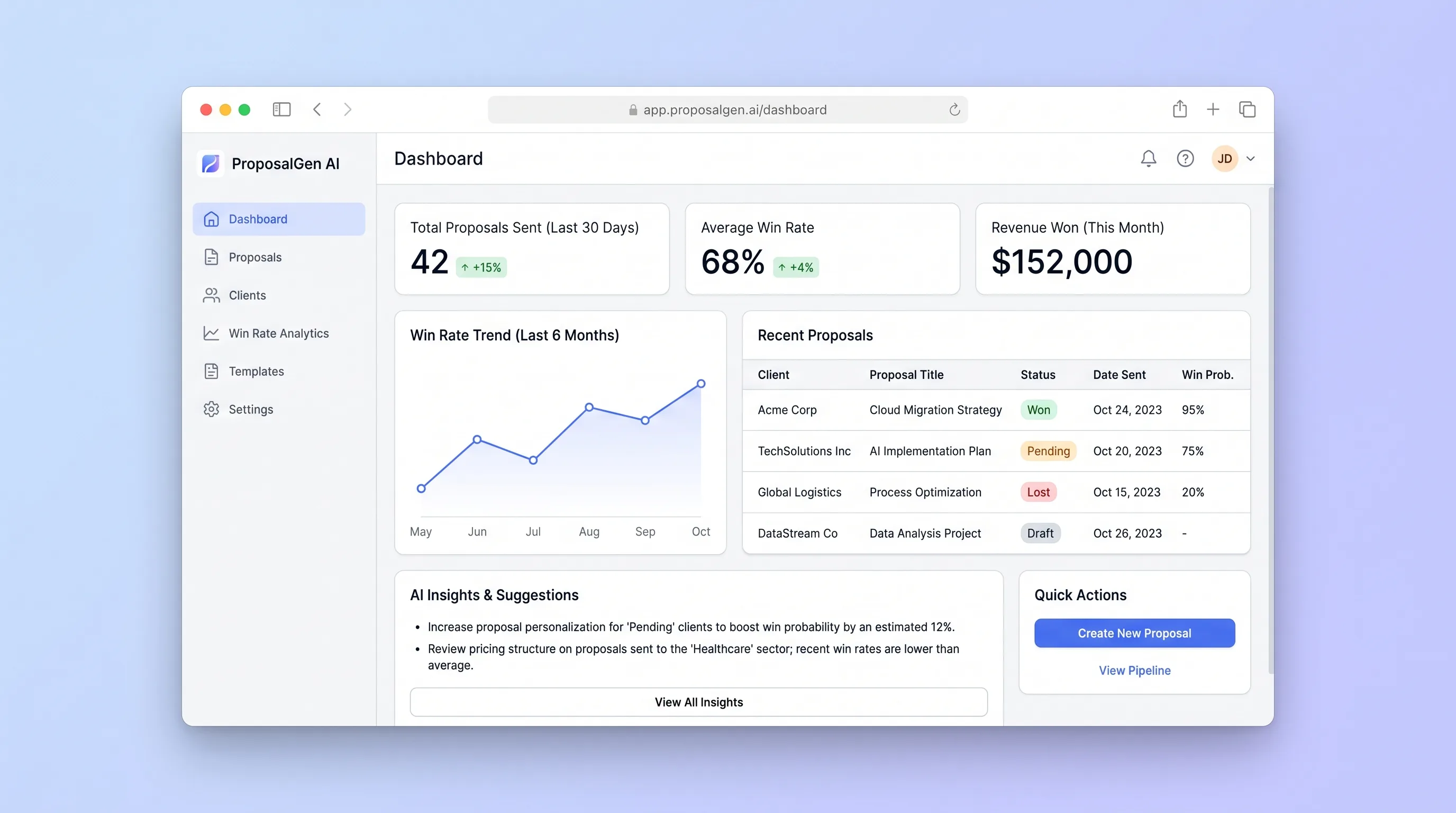
A consultant workspace for turning structured discovery notes into an editable proposal, sending a versioned client link, and learning from accepted or lost outcomes.
AI ToolSales & Marketing
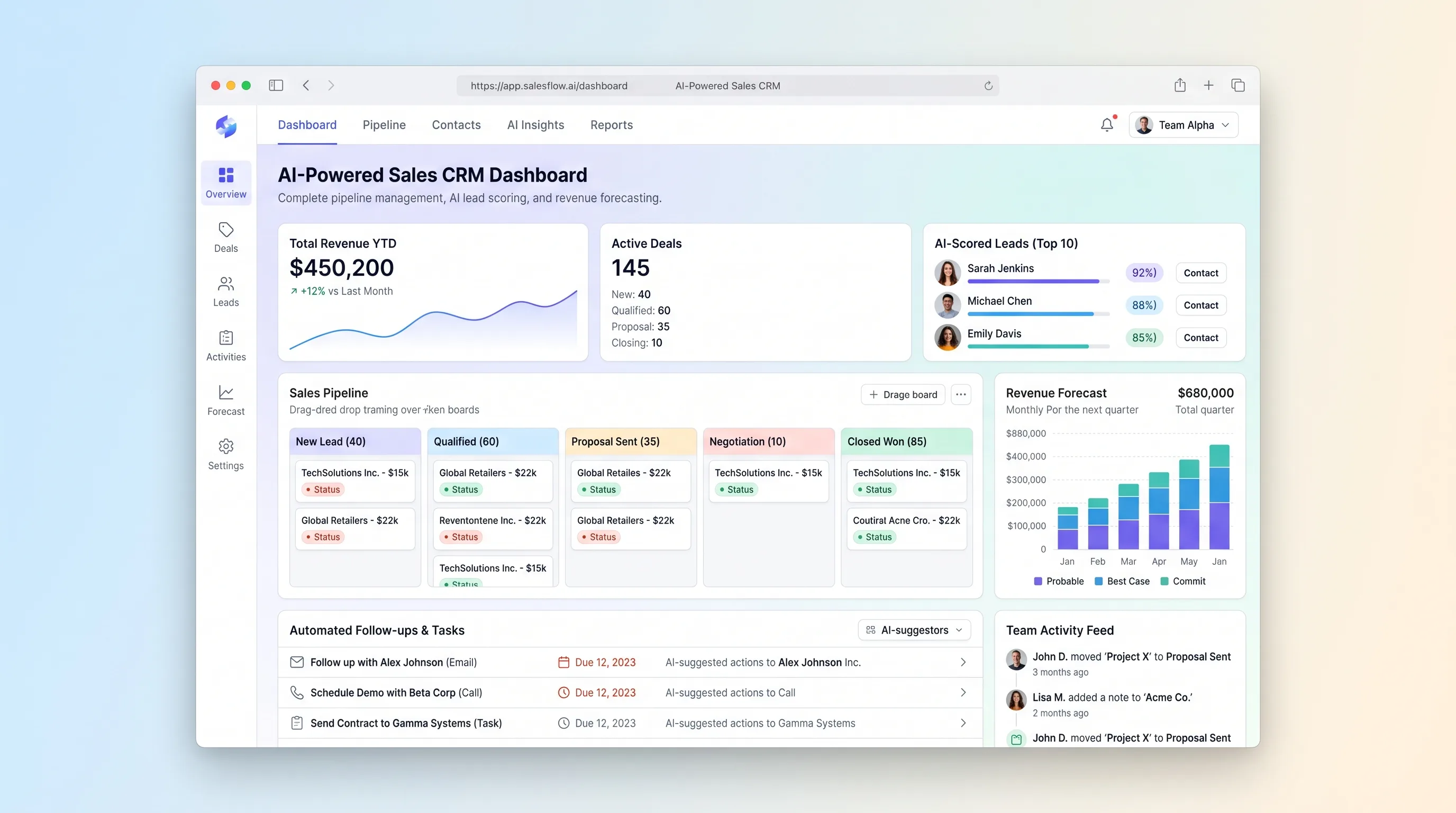
A focused sales pipeline that explains lead priority, flags stalled deals, drafts the next follow-up, and rolls qualified opportunities into a transparent forecast.
Website & Lead GenerationProfessional Services
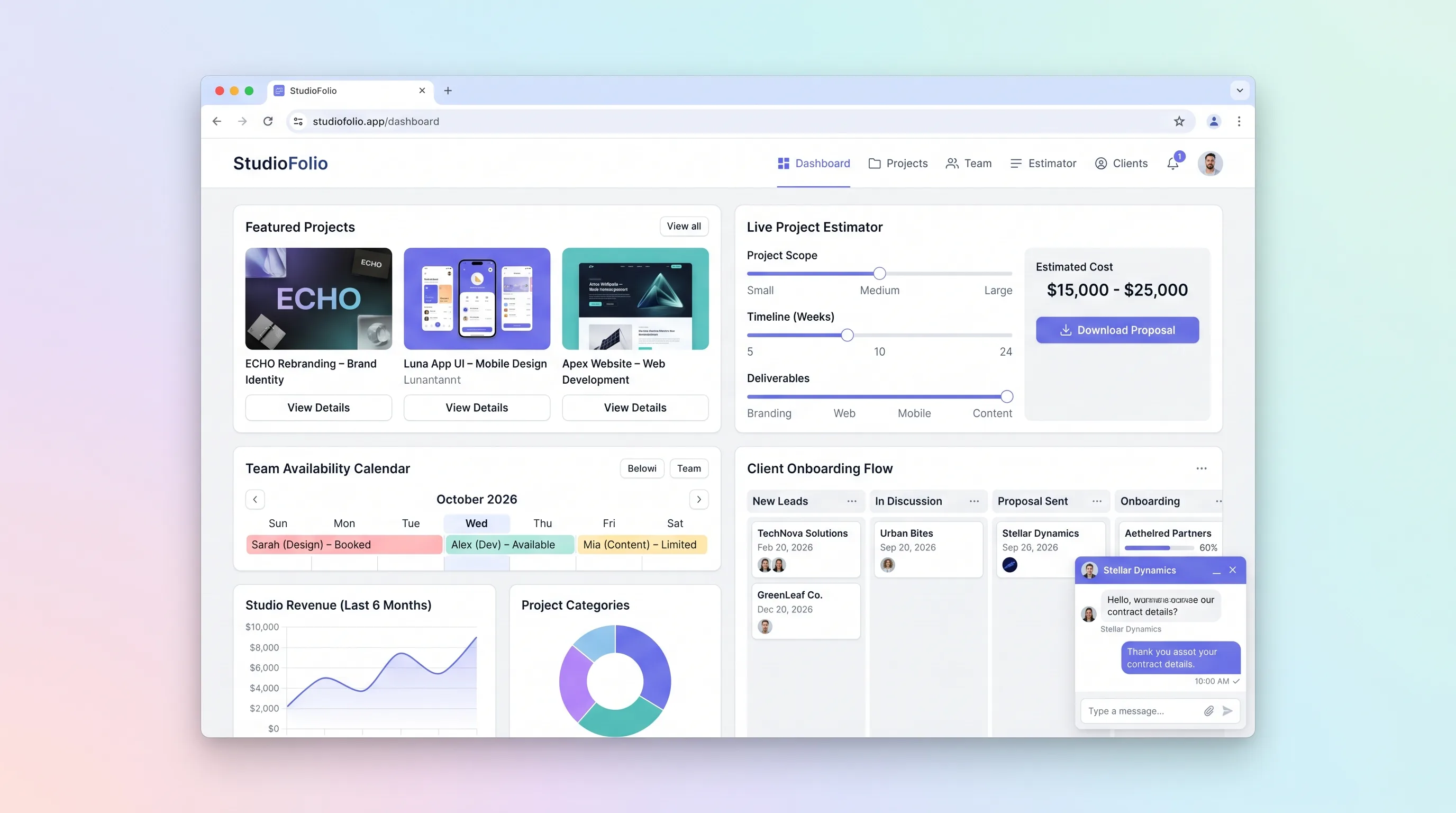
A portfolio site for indie creative studios that pairs a bold showcase with a live project estimator, team availability calendar, and inquiry onboarding.
Website & Lead GenerationHome & Local Services
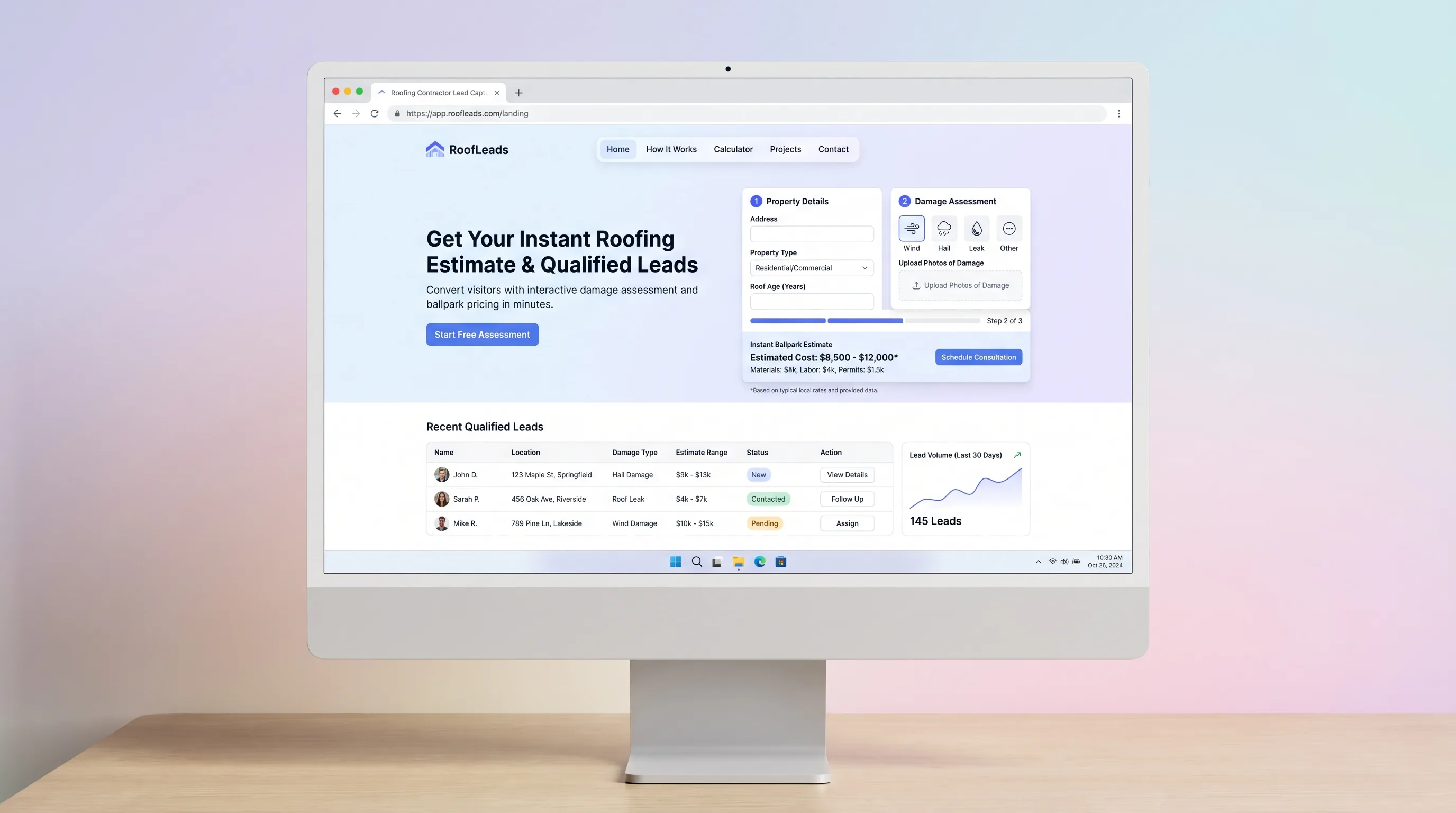
A local roofing website that turns damage details, roof facts, and photos into a clearly qualified lead with a contractor-configured ballpark range.
Website & Lead GenerationHome & Local Services
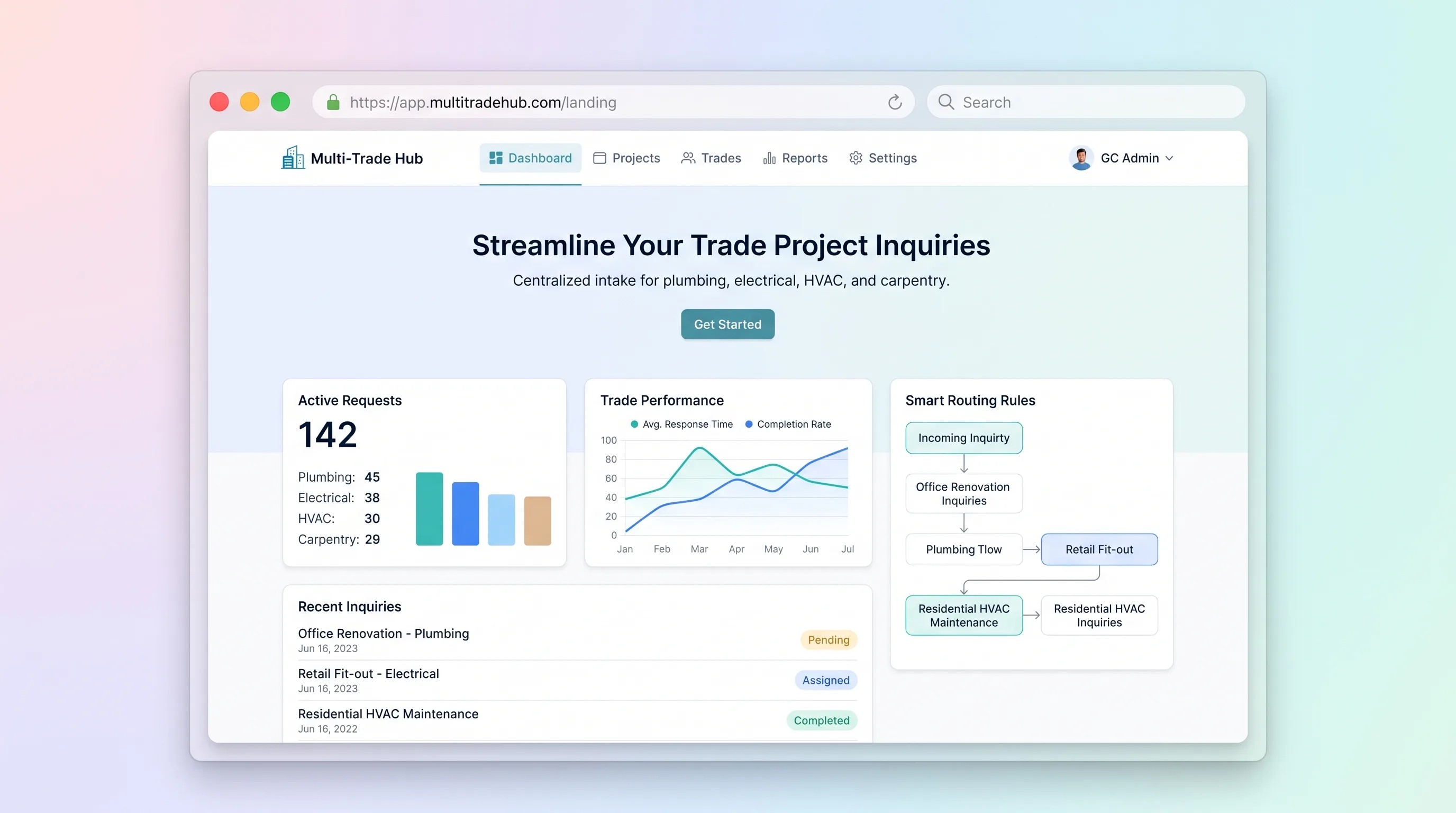
A structured inquiry and estimating handoff for general contractors handling plumbing, electrical, HVAC, and carpentry requests across one project.
Website & Lead GenerationCreator Economy & Media
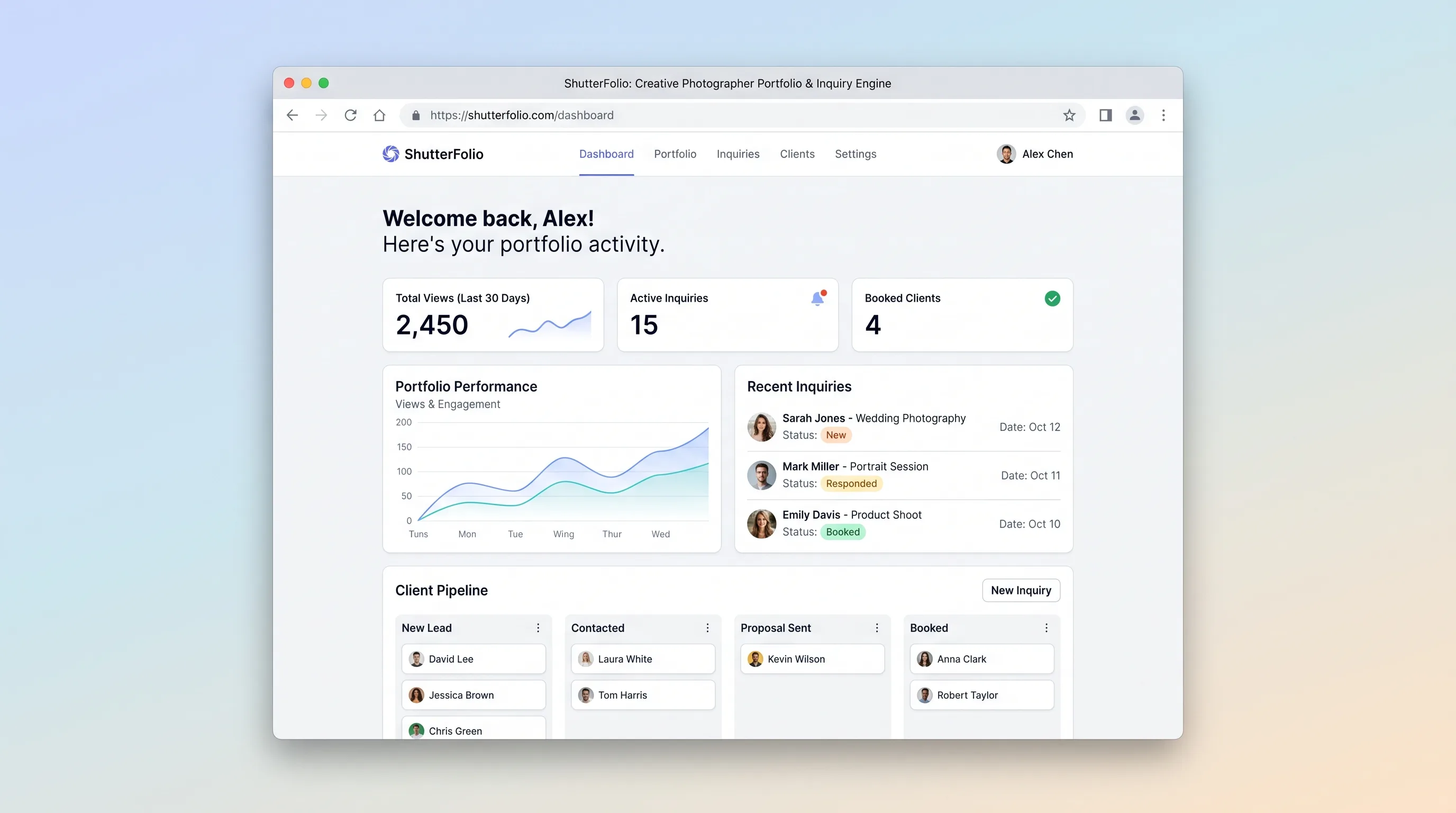
A portfolio site builder that lets freelance photographers publish genre-organized galleries and capture structured booking inquiries, replacing scattered generic website tools with a single cinematic workflow.