Build this if
Consultants sell recurring service patterns, already conduct discovery, and will maintain approved scope language and outcome reasons.
A consultant workspace for turning structured discovery notes into an editable proposal, sending a versioned client link, and learning from accepted or lost outcomes.
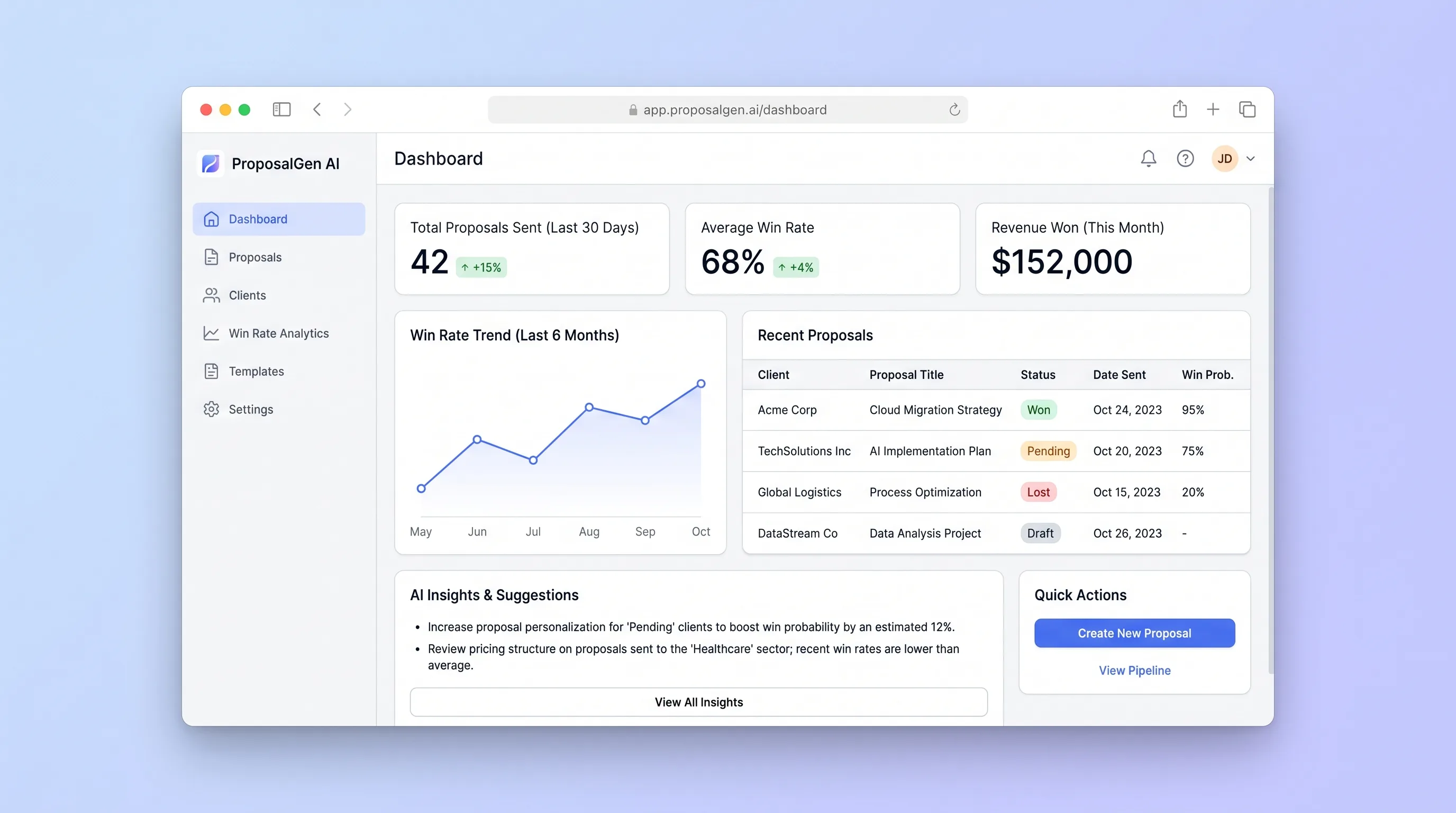
Decision snapshot
Consultants sell recurring service patterns, already conduct discovery, and will maintain approved scope language and outcome reasons.
The product must replace legal contracting, decide prices automatically, or promise conversion improvement from sparse results.
Have ten consultants prepare and send 30 real or sandbox proposals, measuring drafting time, unsupported-fact corrections, version integrity, outcome completion, and cohort reproducibility.
Problem and target customer
Independent consultants rebuild proposals from old documents, risk inconsistent scope and pricing language, and rarely record why work was won or lost. Raw win-rate percentages become misleading when drafts, client segments, and outcome dates are mixed.
Independent consultants and boutique advisory firms selling repeatable project types through written proposals.
Monthly subscription with proposal-generation allowances and team collaboration on higher tiers.
Editorial note
Generation is only as reliable as discovery. The brief must preserve unknowns and separate approved consultant material from client facts so the draft cannot invent credentials, outcomes, or commitments.
Versioning protects both sides of the sale. A client should respond to the exact scope and price they received, while the consultant remains free to create a revised version after a question or negotiation.
Win-rate analysis begins with a defensible denominator, not optimization advice. Showing unanswered, expired, accepted, and declined proposals separately prevents a flattering percentage from hiding incomplete follow-up.
Choose your next step
Evaluate the operating tradeoffs quickly, or inspect how to build the MVP.
Compare the three operating paths at the default workload before opening the full calculator.
See cost preview Build this ideaInspect the build blueprintReview MVP scope, workflow, states, data rules, architecture, and acceptance criteria.
Open blueprintEvaluation preview
Directional infrastructure estimates for the current 500 generated proposals assumption. Open the full calculator when you are ready to change it.
Managed app, database, queue, and generation worker for proposal creation and delivery.
Lowest operating effortOne operator-managed server runs editing, delivery, and generation jobs.
Lowest baseline costSeparate proposal delivery, database, and generation capacity for a small firm.
Most separation and controlBuild blueprint
Product goal
MVP scope
UX and user flow
Capture the facts and open questions that may appear in the proposal.
Generate and revise structured sections with scope checks and source labels.
Review the exact immutable version and configure client access.
Present the proposal and collect a clear response or question without exposing the editor.
Calculate eligible win rates and compare outcomes without implying causation.
Core entity outline
An approved consulting offer with reusable deliverables and boundaries.
The factual input and uncertainty boundary for one proposal.
The editable working document and current review status.
An immutable sent snapshot with client access and outcome.
A viewed, question, accepted, declined, expired, or revoked event on a sent version.
Architecture and data flow
Manage approved services, briefs, proposal editing, send preview, and outcome analysis.
Build bounded prompt context, return structured sections, validate unsupported claims, and save a draft version.
Render immutable versions, validate access tokens, collect questions and outcomes, and support revocation.
Select eligible version outcomes and calculate reproducible cohort metrics.
Store briefs, approved content, sections, prices, versions, events, reasons, and improvement notes.
Deliverables and acceptance
Recommended stack
Support a structured editor, secure public proposal pages, and outcome dashboards.
Keep briefs, sections, prices, immutable snapshots, events, and cohort filters consistent.
Run proposal generation and email retries with recoverable state.
Return predictable proposal sections that can be checked against approved inputs.
Deliver versioned links and notify consultants about explicit client events.
The product's long-term value comes from disciplined input, version integrity, and clean outcomes. The model accelerates first drafts but the consultant owns factual accuracy, scope, pricing, and every client-visible version.
Copy the build prompt, model the operating cost, and choose where to deploy.
Execution
Once the blueprint is clear, use the prompt, cost model, and deployment options to start building.
Build prompt
Build a Next.js application with PostgreSQL, a structured LLM generation worker, portable proposal sections, immutable sent versions, and event-based outcome analysis. Do not generate unsupported credentials, case studies, or guarantees.
Build prompt
Open the prompt pack whenever you are ready to take this blueprint into your builder.
Build prompt ready
Copy the prompt into your builder, then use the cost model below to choose how you want to run it.
Use the cost model to choose a deployment path that matches the build plan.
Cost calculator
A technical run-cost estimate for the first production version. Team, acquisition, payment fees, and business COGS are excluded.
$11-$34 per 500 generated proposals
Low and high values allow for usage variance and plan headroom.
Managed app, database, queue, and generation worker for proposal creation and delivery.
5K generated proposals included, then $5-$15 per 5K generated proposalsApproved consultant content and client brief input plus a structured editable proposal draft.
500 generated proposals x 7K input + 2.2K output tokensClient link delivery and consultant event notifications for the sent-version workflow.
3K generated proposals includedThe estimate combines the selected infrastructure path, required operating modules, selected optional modules, and usage above included monthly allowances. Taxes and regional uplifts are excluded.
Deployment options
Choose based on operating preference, not only the headline price.
Run the editor, public proposal service, database, queue, and generation worker together.
Persistent services can exceed the base plan as proposal traffic grows.
Run the app, worker, and database on one small Vultr VPS with Docker Compose and explicit backups.
The operator owns backups, security updates, token monitoring, and job recovery.
Separate application, worker, data, storage, and backup responsibilities as the workload grows.
Extra infrastructure does not replace careful scope and outcome governance.
Start building
Use Lovable to test client briefing, section generation, scope editing, pricing options, version preview, sent-state tracking, and outcome analysis.
Open Lovable 02AutomationNotify on proposal outcomesUse Make as optional glue to notify a consultant when a client accepts, declines, or asks a question; keep proposal versions and analytics in the product.
Open Make 03DeployDeploy the proposal workspaceRun the editor, database, generation worker, and public proposal links on Railway with versioned server-side access tokens.
Open RailwayKeep exploring
AI ToolSales & Marketing
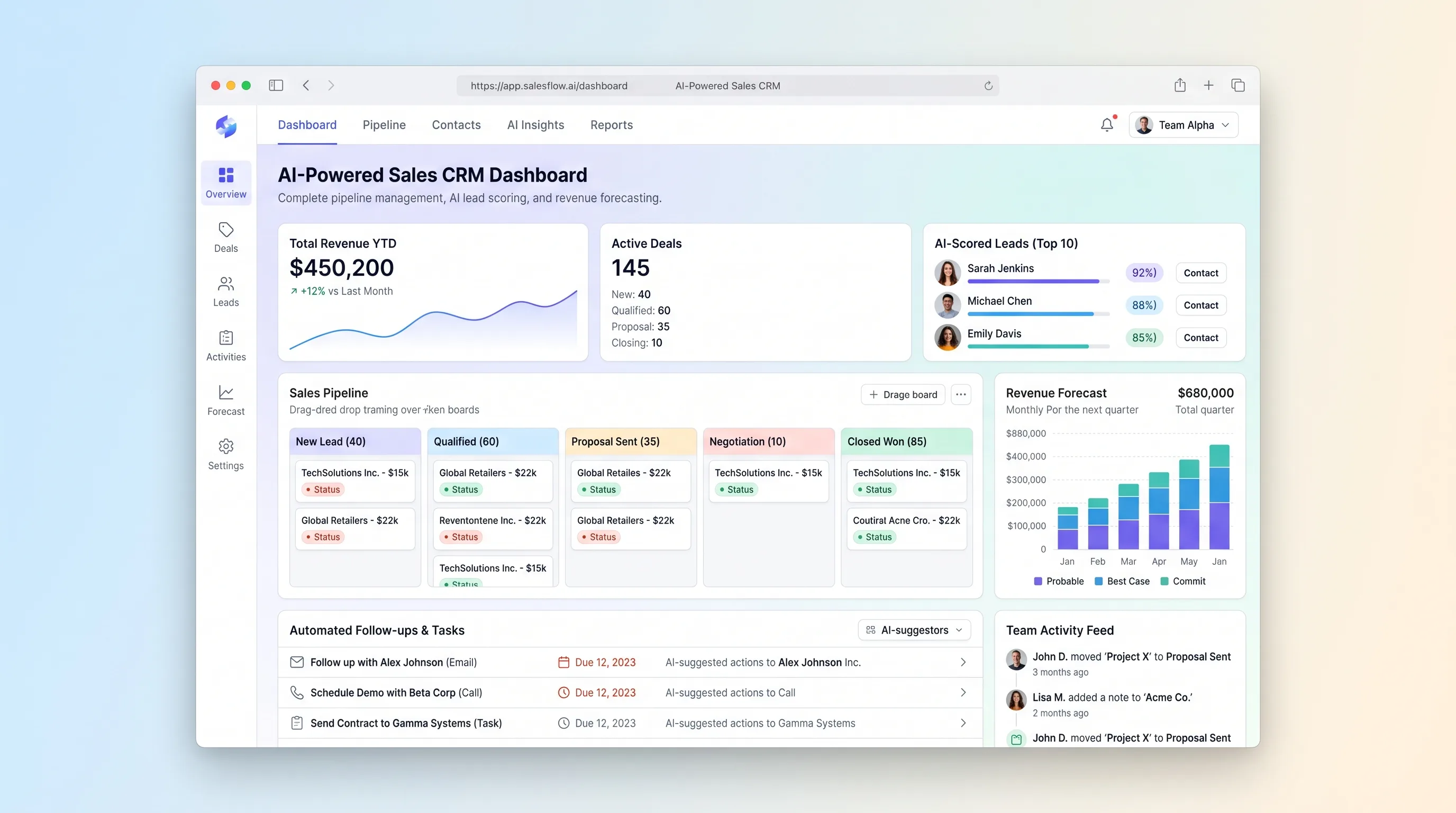
A focused sales pipeline that explains lead priority, flags stalled deals, drafts the next follow-up, and rolls qualified opportunities into a transparent forecast.
Website & Lead GenerationProfessional Services
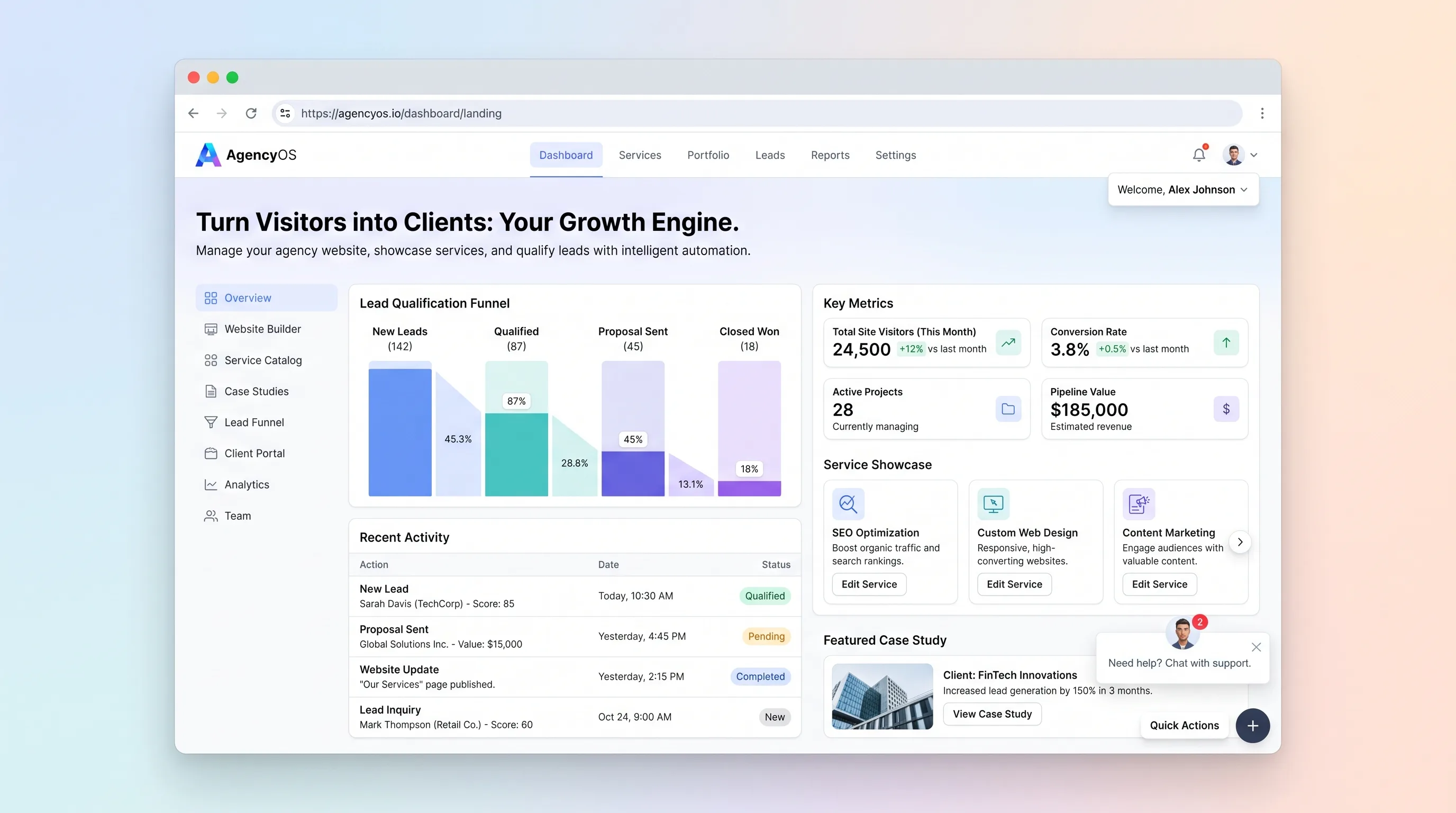
A conversion-focused site for digital agencies that turns service research and case-study browsing into structured, qualified discovery inquiries.
AI ToolProfessional Services
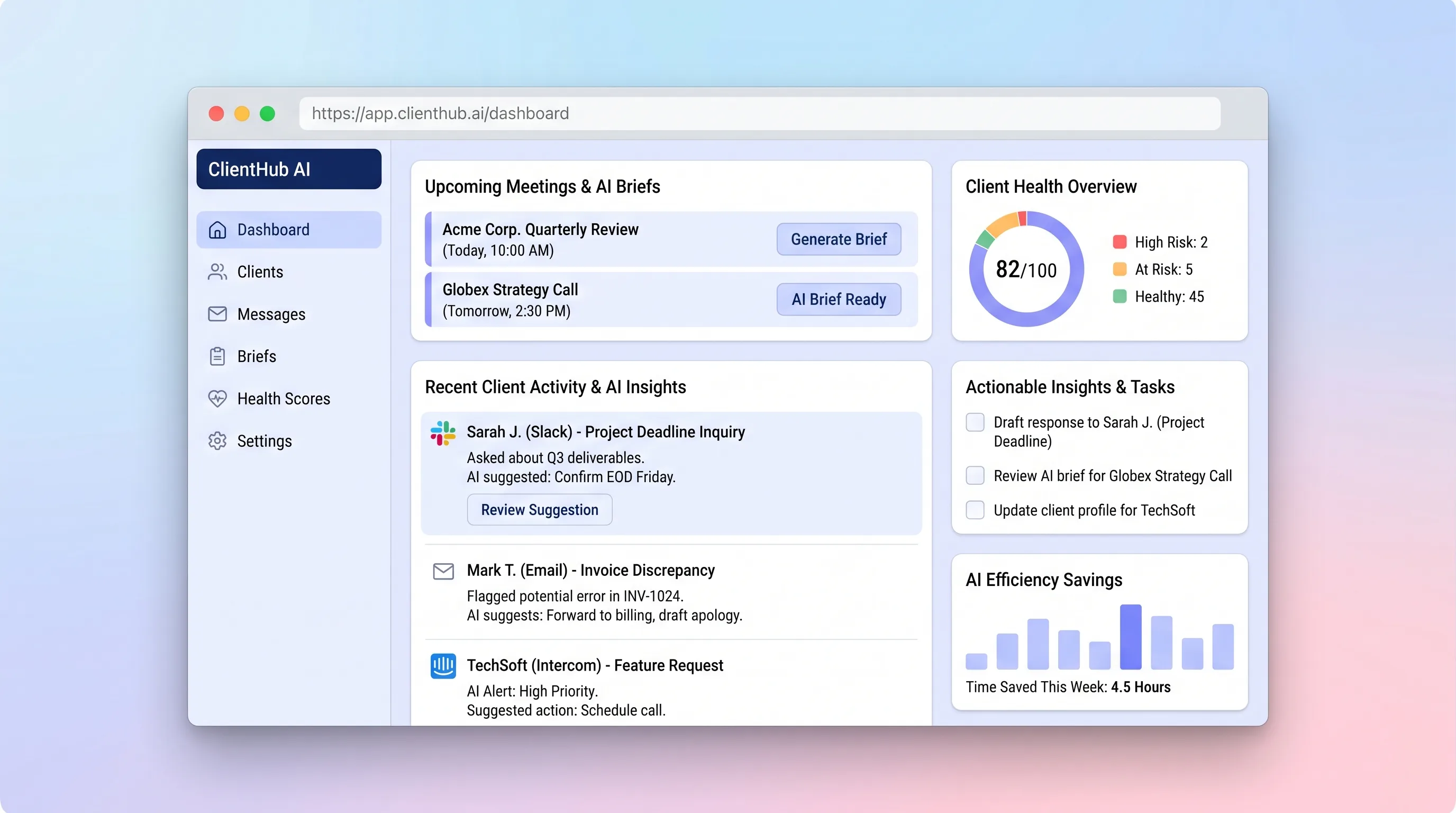
A shared client timeline that turns recent messages, decisions, and open commitments into an editable brief before the next conversation.
AI ToolProfessional Services
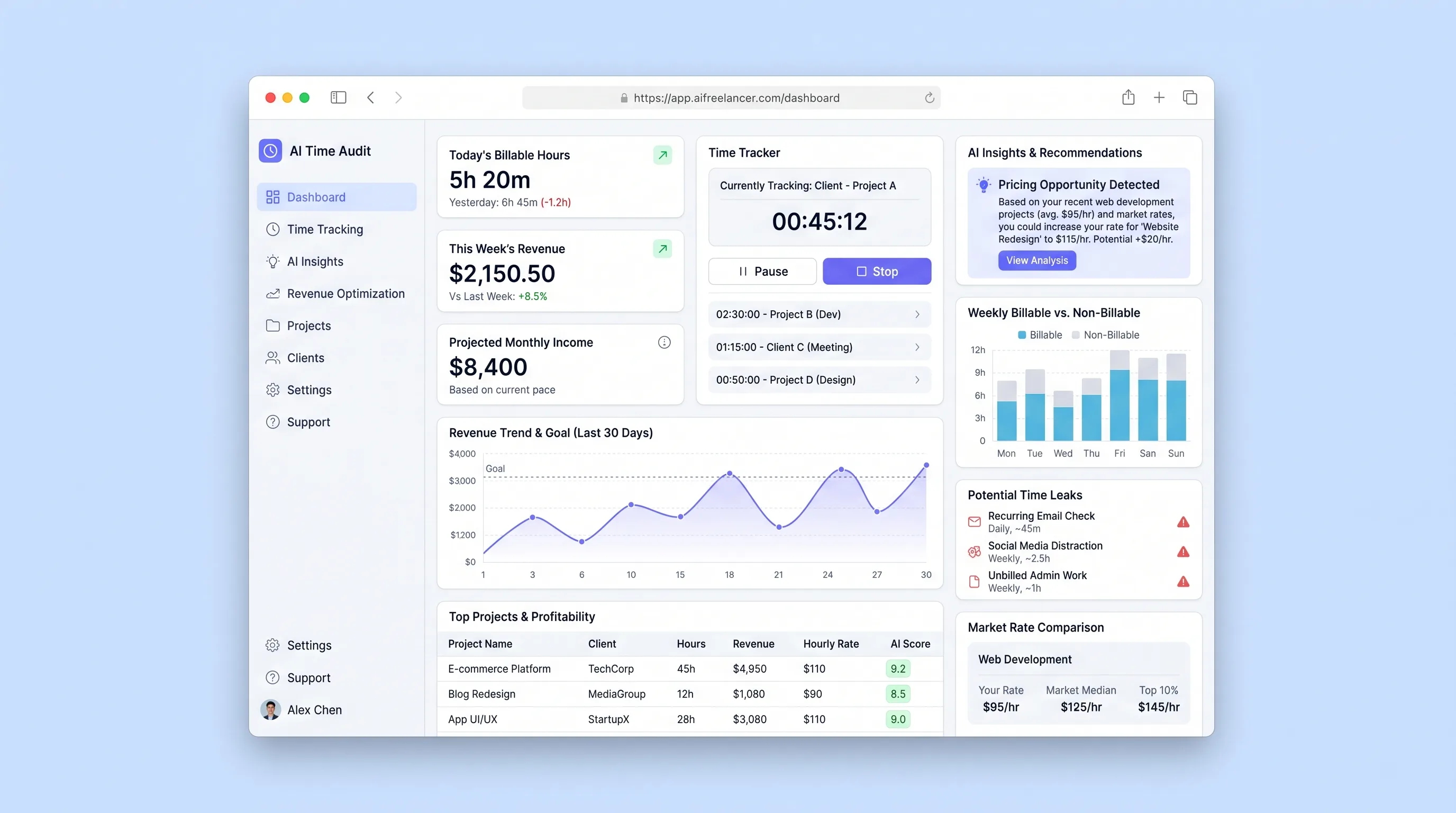
A focused tool that imports freelancer activity logs, uses LLM analysis to categorize work patterns, surfaces billable-hour leaks, and recommends rate adjustments based on detected work patterns and market-rate benchmarks.
AI ToolSales & Marketing
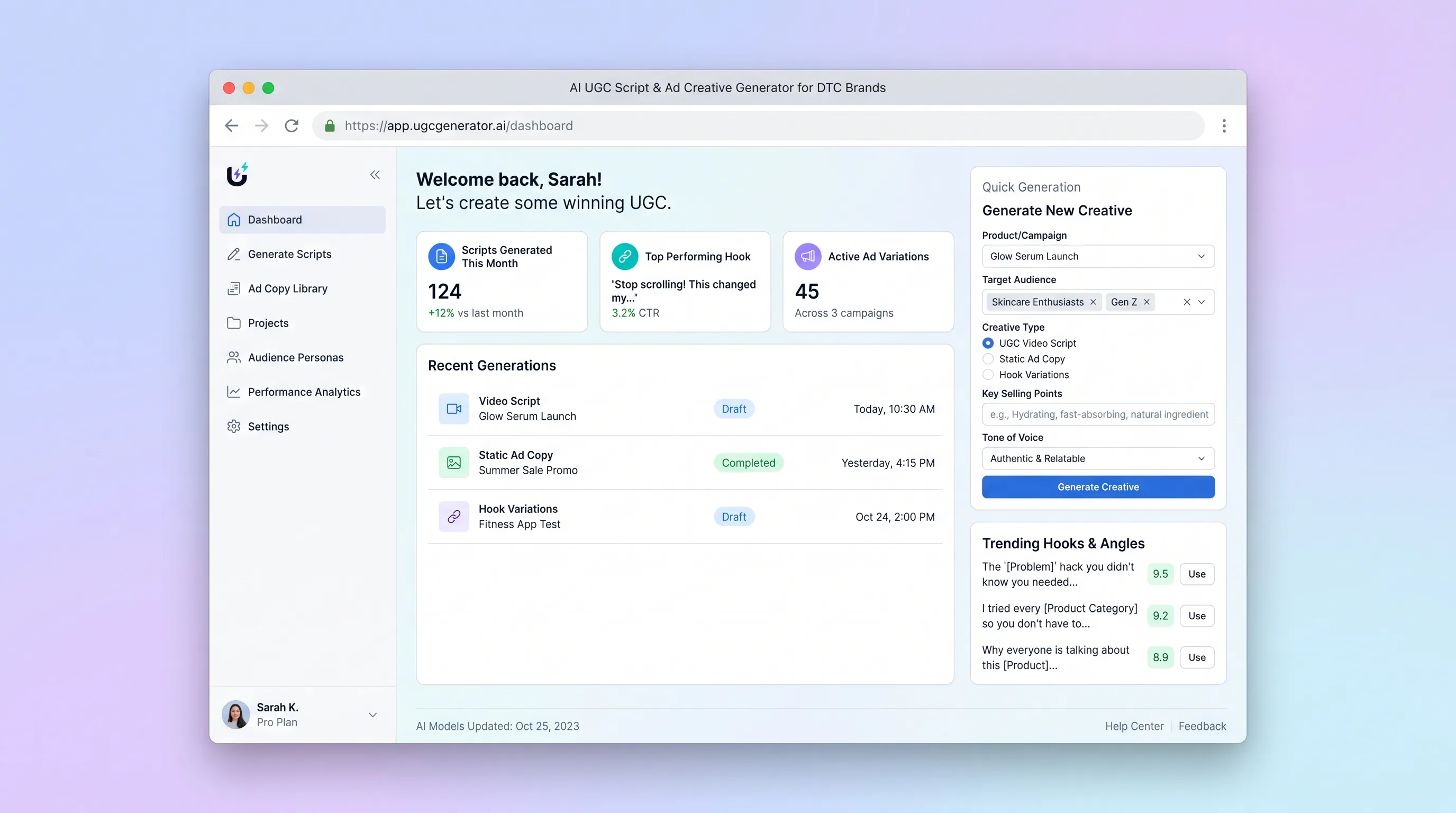
A brand-safe creative workspace that transforms approved product facts and audience personas into editable UGC scripts, hooks, static copy, and creator briefs.
AI ToolSales & Marketing
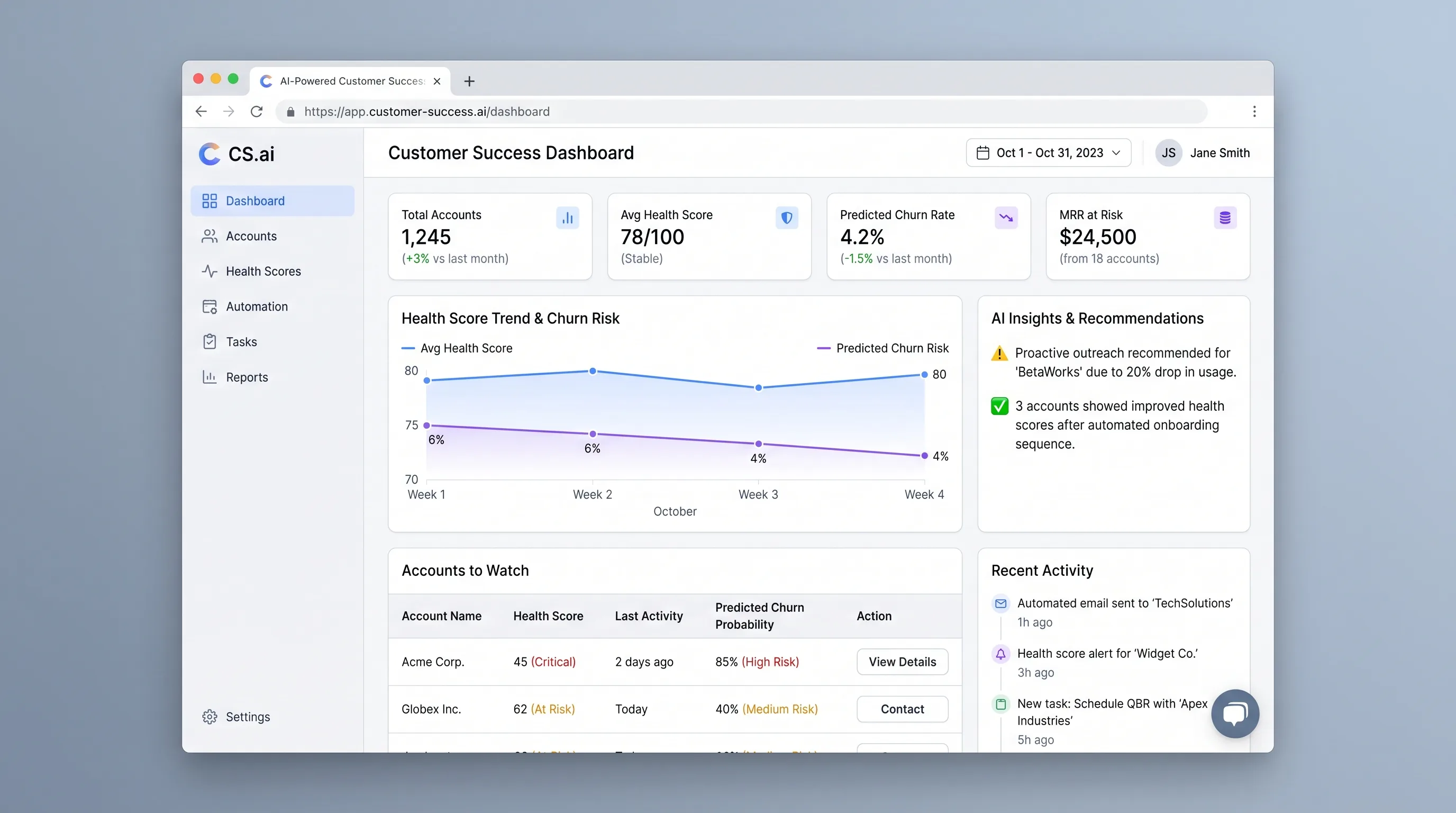
An at-risk account queue that combines configurable health rules with context-aware outreach drafts, giving customer success managers a clear next action.