Build this if
A SaaS team can provide a small set of reliable account signals and wants explainable prioritization plus reviewed outreach.
An at-risk account queue that combines configurable health rules with context-aware outreach drafts, giving customer success managers a clear next action.
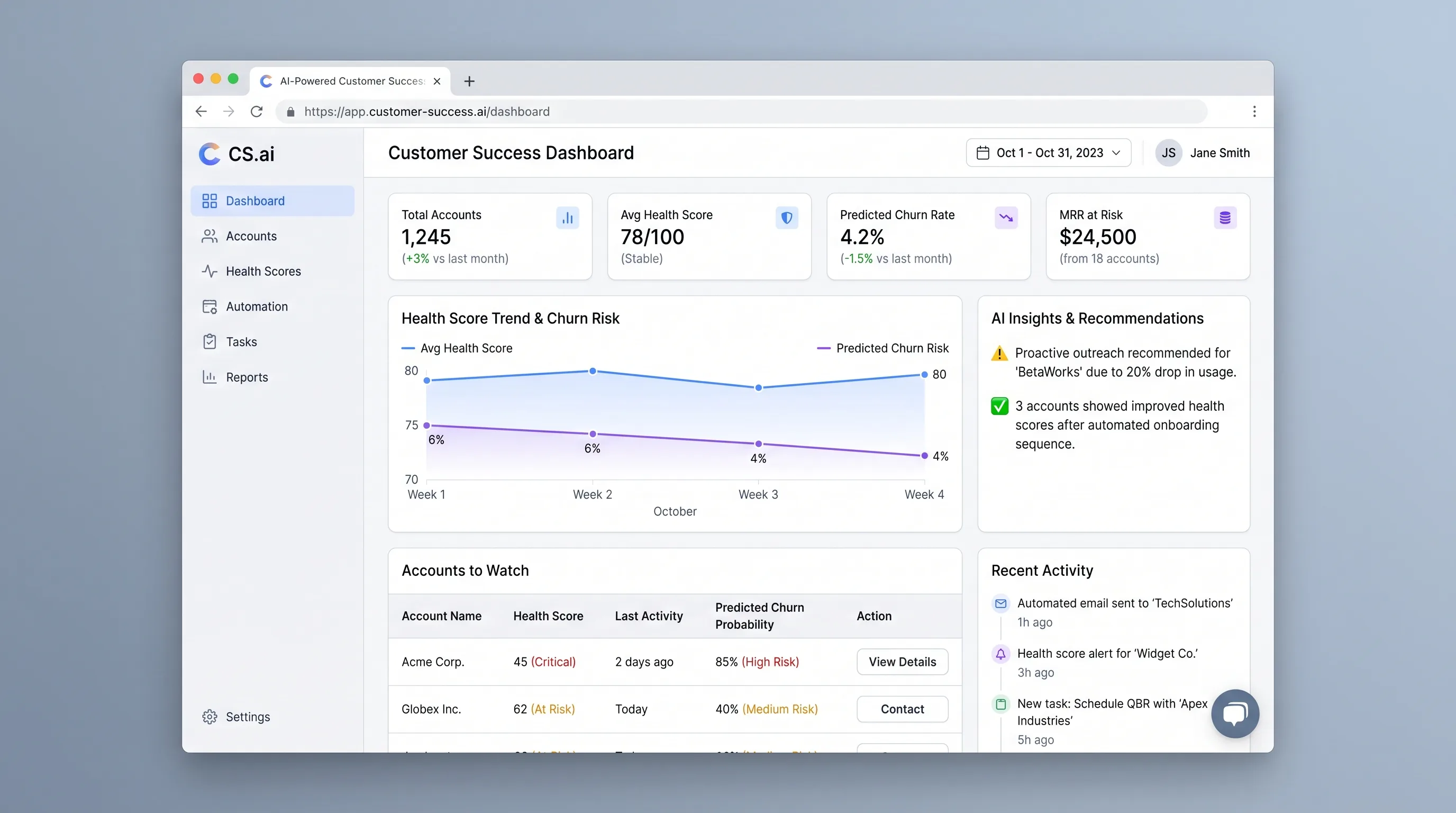
Decision snapshot
A SaaS team can provide a small set of reliable account signals and wants explainable prioritization plus reviewed outreach.
The buyer expects accurate churn prediction without clean identity mapping, historical outcomes, or human success operations.
Replay four weeks of signals for 50 accounts, have managers review explanations and drafts, and measure factor corrections, response outcomes, and time to first action.
Problem and target customer
Small SaaS teams track logins, feature adoption, support issues, and payment status in separate systems. Customer success managers notice risk late, cannot explain a health score, and write repetitive follow-ups without a unified account context.
Customer success managers and founders at subscription software companies with a manageable account portfolio and access to basic product, support, and billing signals.
Monthly subscription tiered by active customer accounts and health refresh volume.
Editorial note
The score is useful only when a success manager can see its ingredients. Versioned rules and freshness states make health an operational prioritization tool rather than an unsupported churn prediction.
AI belongs after risk review, where it can turn selected facts and a playbook into a draft. The manager still decides whether the evidence is fair, edits the language, and owns the send.
Start with a few signals that teams trust. Connector breadth is less valuable than proving that the queue surfaces understandable accounts and that recorded interventions create a repeatable follow-up habit.
Choose your next step
Evaluate the operating tradeoffs quickly, or inspect how to build the MVP.
Compare the three operating paths at the default workload before opening the full calculator.
See cost preview Build this ideaInspect the build blueprintReview MVP scope, workflow, states, data rules, architecture, and acceptance criteria.
Open blueprintEvaluation preview
Directional infrastructure estimates for the current 1,000 at-risk interventions assumption. Open the full calculator when you are ready to change it.
Managed application, database, queue, and refresh workers for account triage.
Lowest operating effortOne operator-managed server runs imports, scoring, drafts, and the web app.
Lowest baseline costSeparate app, database, ingestion, and processing capacity for a larger portfolio.
Most separation and controlBuild blueprint
Product goal
MVP scope
UX and user flow
Rank accounts by current health, score change, and unresolved risk factors.
Explain the latest score using source signals, rule contributions, and recent interactions.
Create a draft from selected facts and require a manager edit or approval before sending.
Let an administrator configure weights, thresholds, and freshness expectations with a preview.
Core entity outline
The subscription customer and ownership boundary for signals and interventions.
A normalized observation such as login recency, feature use, ticket load, or payment state.
A versioned condition and weight applied to a known signal.
An immutable score and explanation at one refresh time.
A reviewed customer-success action and its result.
Architecture and data flow
Present the portfolio queue, explain scores, review outreach, and manage rules.
Validate idempotent CSV or endpoint imports and quarantine bad records.
Apply a versioned rule set, persist factors, and emit material score changes.
Build bounded context, generate a draft, validate facts, and expose errors for retry.
Store accounts, normalized signals, snapshots, rules, interventions, and delivery events.
Deliverables and acceptance
Recommended stack
Support dense account triage, factor inspection, rules, and draft review.
Keep account identity, signals, rule versions, immutable snapshots, and interventions auditable.
Run imports, health refreshes, draft generation, and retries outside requests.
Generate structured outreach drafts from a narrow, human-selected fact set.
Send approved customer outreach with a delivery idempotency boundary.
Health scoring should be deterministic because account teams need explanations and stable rules. The model is reserved for language generation after the manager selects verified factors, so AI does not decide customer risk or send autonomously.
Copy the build prompt, model the operating cost, and choose where to deploy.
Execution
Once the blueprint is clear, use the prompt, cost model, and deployment options to start building.
Build prompt
Build a Next.js application with PostgreSQL, scheduled signal imports, a deterministic health-rule engine, and a server-side LLM adapter used only for human-reviewed outreach drafts.
Build prompt
Open the prompt pack whenever you are ready to take this blueprint into your builder.
Build prompt ready
Copy the prompt into your builder, then use the cost model below to choose how you want to run it.
Use the cost model to choose a deployment path that matches the build plan.
Cost calculator
A technical run-cost estimate for the first production version. Team, acquisition, payment fees, and business COGS are excluded.
$6.24-$27 per 1,000 at-risk interventions
Low and high values allow for usage variance and plan headroom.
Managed application, database, queue, and refresh workers for account triage.
20K at-risk interventions included, then $5-$15 per 20K at-risk interventionsSelected account context and a reviewed outreach draft for one at-risk intervention.
1K at-risk interventions x 700 input + 250 output tokensHuman-approved intervention messages and delivery events.
3K at-risk interventions includedThe estimate combines the selected infrastructure path, required operating modules, selected optional modules, and usage above included monthly allowances. Taxes and regional uplifts are excluded.
Deployment options
Choose based on operating preference, not only the headline price.
Run the app, database, queue, and scheduled health and outreach workers in one managed project.
Continuous workers and growing import volume can raise resource spend.
Run the app, worker, and database on one small Vultr VPS with Docker Compose and explicit backups.
Backups, worker monitoring, and security updates are self-managed.
Separate application, worker, data, storage, and backup responsibilities as the workload grows.
The broader topology adds operations before connector quality is proven.
Start building
Use Lovable to test account health explanations, risk filters, signal timelines, playbook choice, draft review, and outcome logging with success managers.
Open Lovable 02AutomationBring in bounded customer signalsUse Make as optional glue for scheduled CSV, support, or product-event imports after the team agrees on the small signal set that drives health rules.
Open Make 03DeployRun health refreshes and draft jobsDeploy the application, database, scheduled refresh worker, and draft-generation worker on Railway.
Open RailwayKeep exploring
AI ToolBusiness Operations
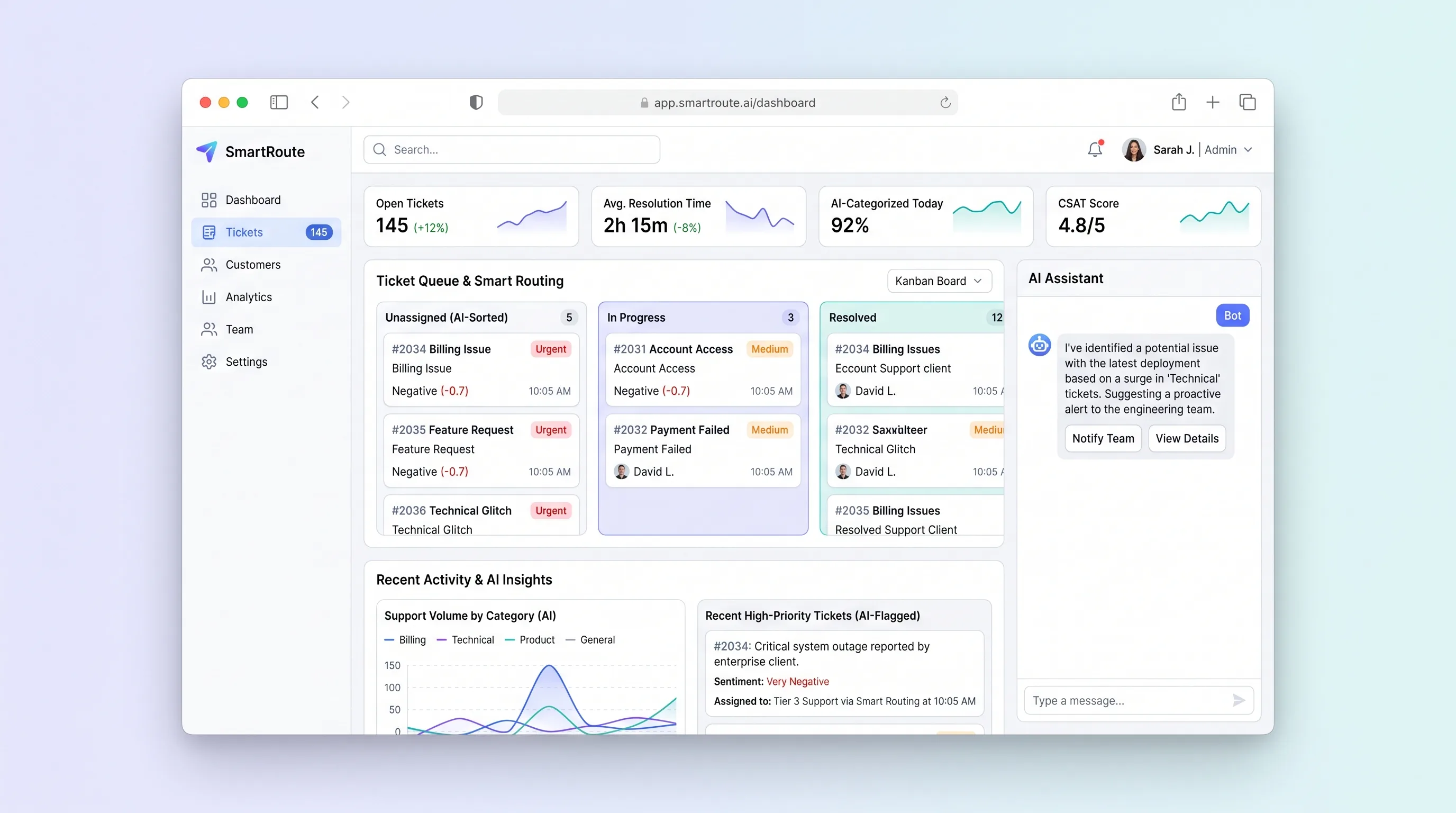
A shared support inbox that suggests ticket category, urgency, and the best available agent while keeping routing reasons and customer replies reviewable.
AI ToolProfessional Services
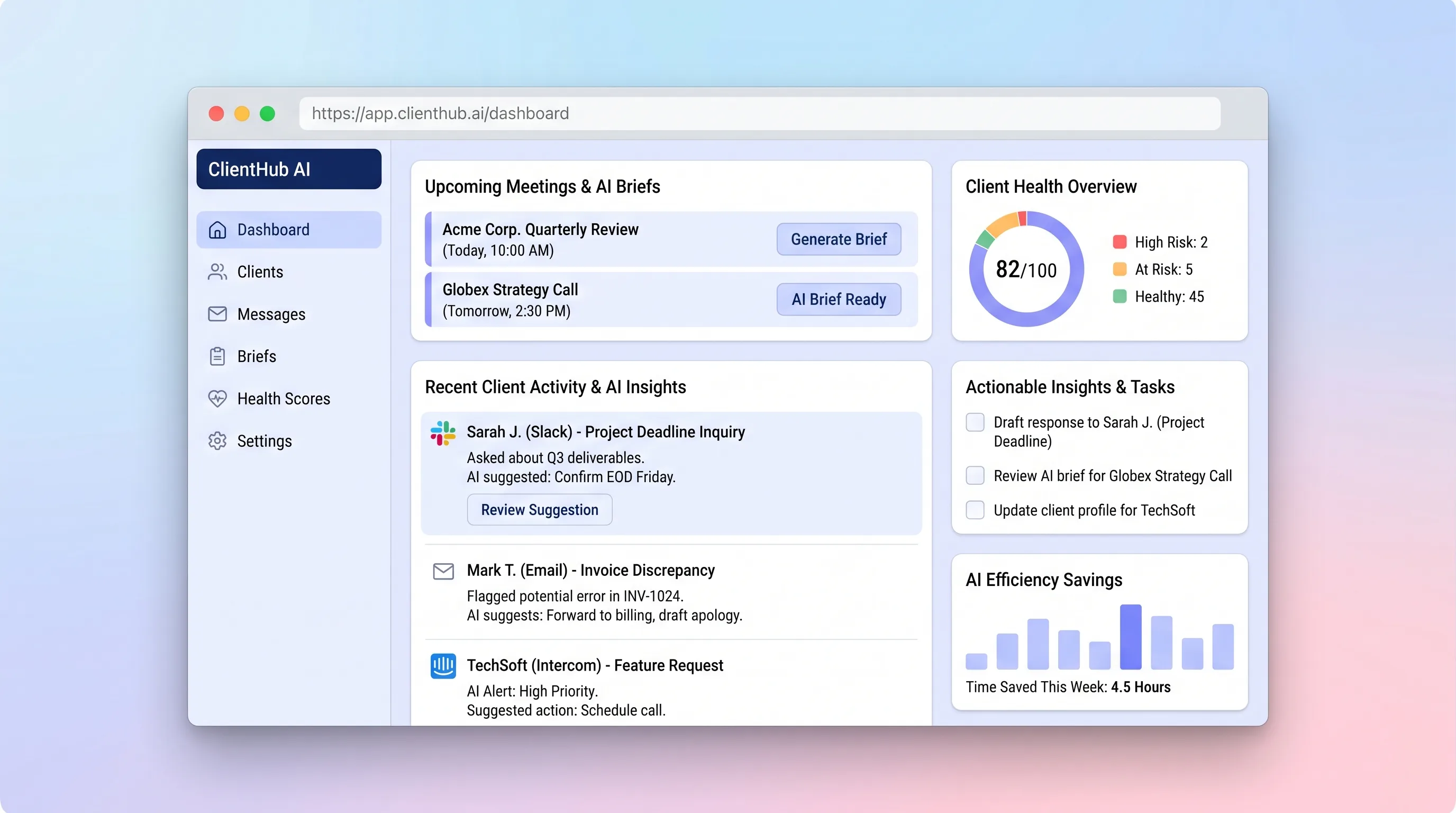
A shared client timeline that turns recent messages, decisions, and open commitments into an editable brief before the next conversation.
AI ToolSales & Marketing
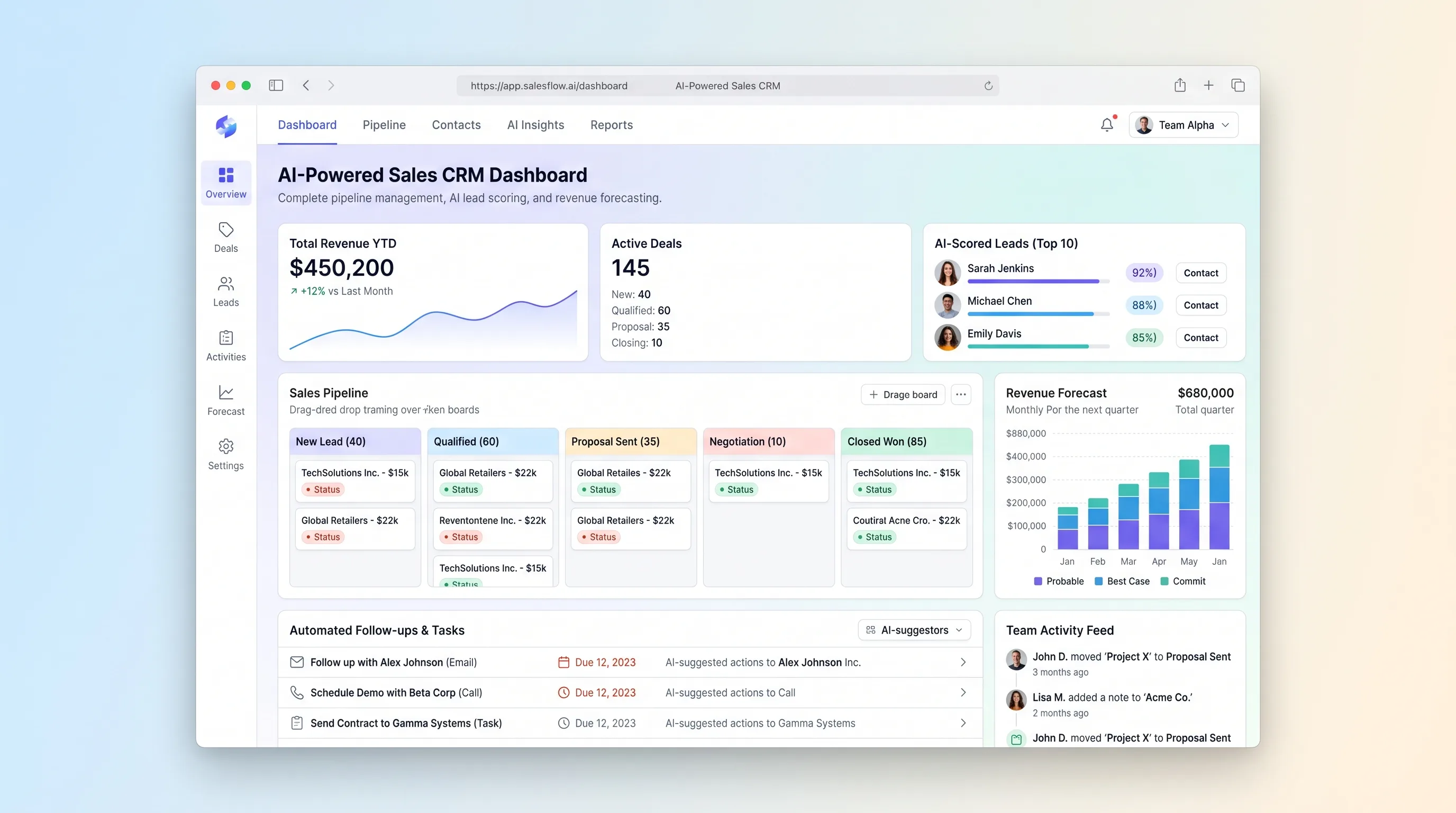
A focused sales pipeline that explains lead priority, flags stalled deals, drafts the next follow-up, and rolls qualified opportunities into a transparent forecast.
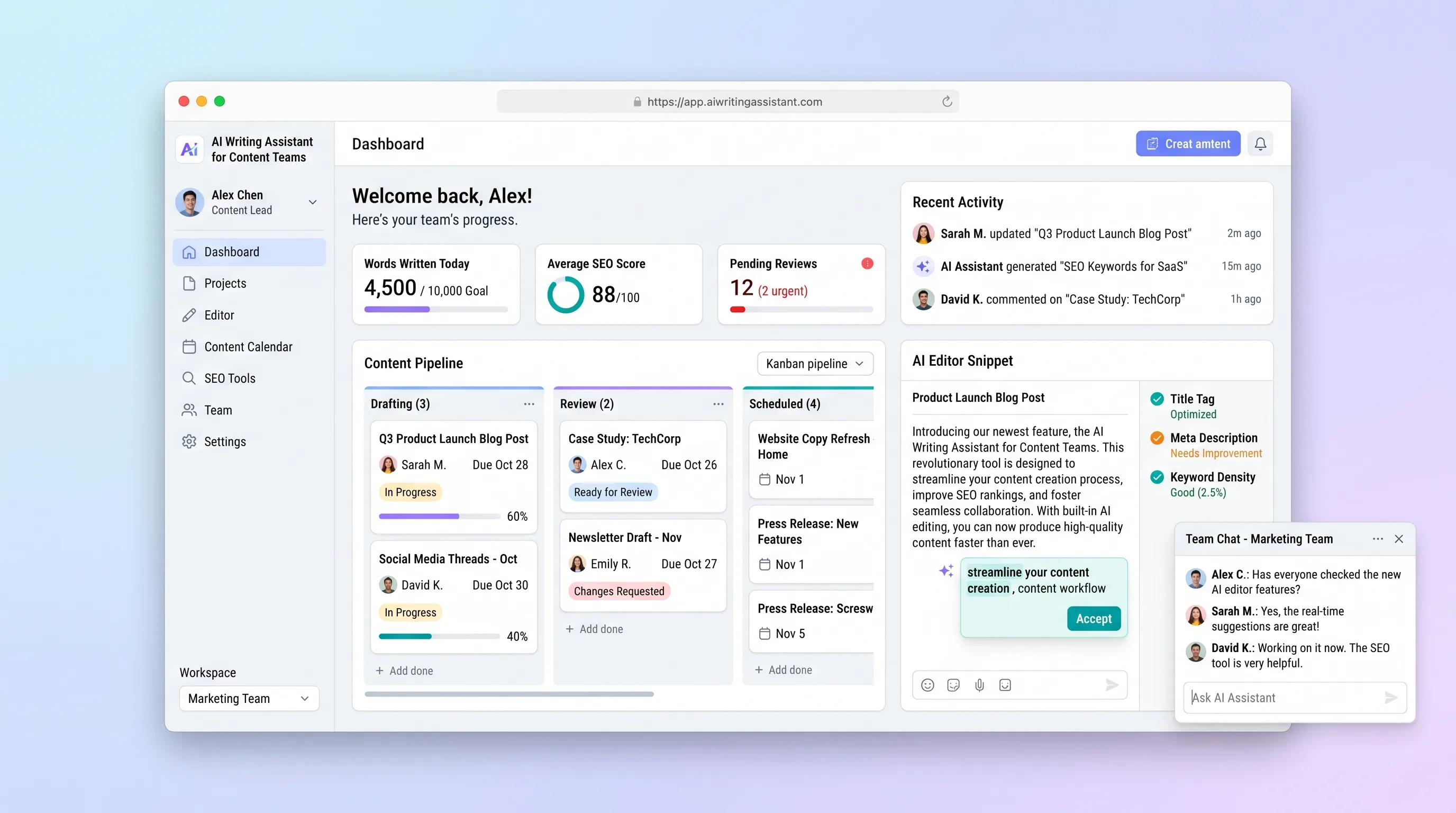
AI ToolSales & Marketing
A team writing workspace where each piece moves from AI draft through human editing, SEO review, and approval without switching tools.
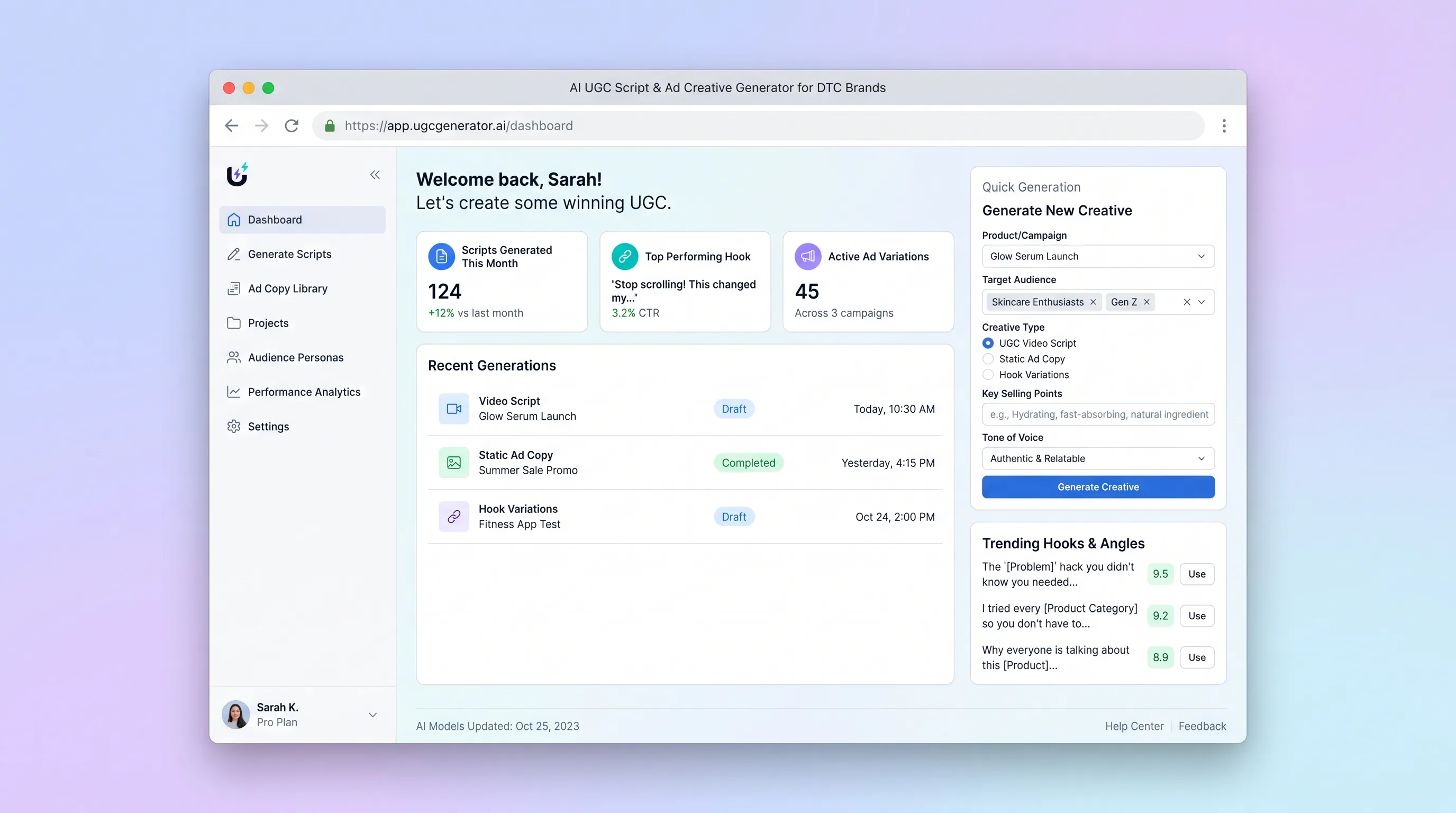
AI ToolSales & Marketing
A brand-safe creative workspace that transforms approved product facts and audience personas into editable UGC scripts, hooks, static copy, and creator briefs.
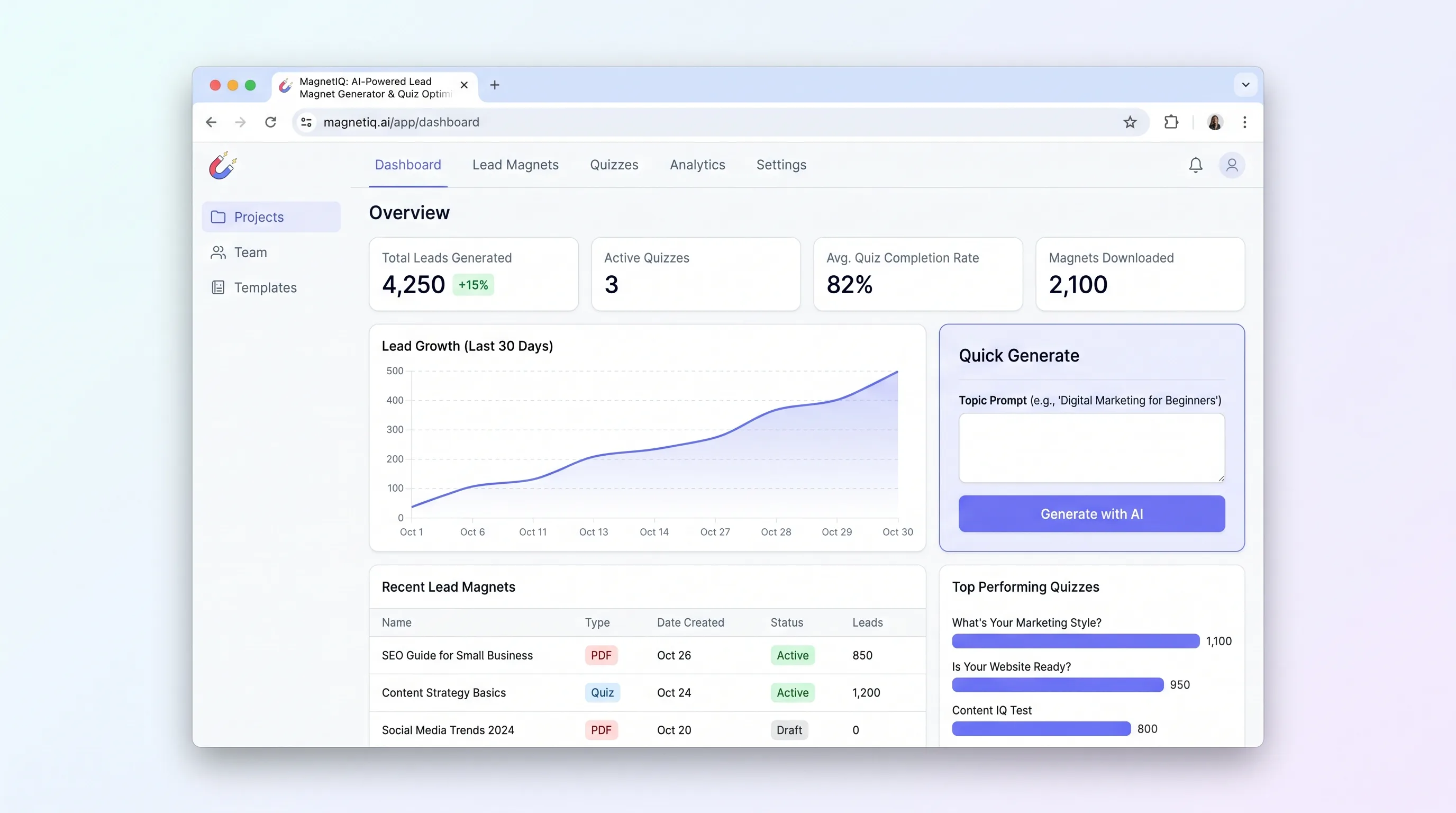
AI ToolSales & Marketing
Enter one topic prompt and get a multi-question quiz with segmented result copy and matching downloadable lead magnets, ready to publish and capture leads.