Build this if
Build when a roofing contractor receives enough low-context web inquiries to value a consistent pre-call assessment and can maintain realistic rate bands.
A local roofing website that turns damage details, roof facts, and photos into a clearly qualified lead with a contractor-configured ballpark range.
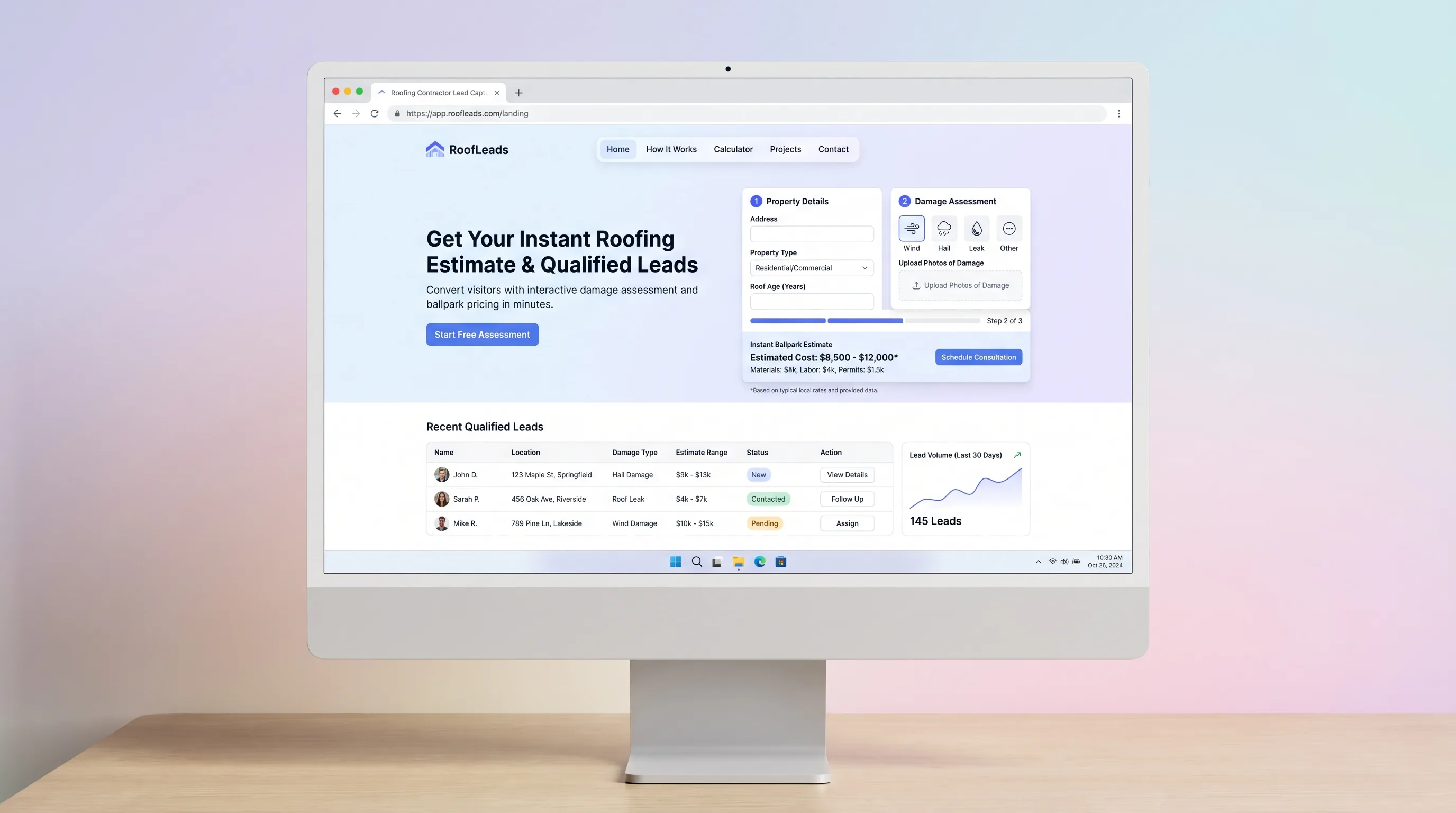
Decision snapshot
Build when a roofing contractor receives enough low-context web inquiries to value a consistent pre-call assessment and can maintain realistic rate bands.
Avoid if the contractor expects satellite measurement, insurance adjudication, or binding quotes without an onsite inspection.
Send qualified local traffic through the form for two weeks and compare completion, callback speed, and repeated-question count against the contractor's current contact form.
Problem and target customer
Homeowners often submit vague contact forms that give a roofer too little information to prioritize the call. Contractors then spend time collecting address, urgency, roof type, affected area, and photos before they can even discuss a rough range.
Owner-operated and small residential roofing contractors that buy or generate web traffic and personally review incoming repair and replacement leads.
One-time setup plus a monthly hosting and lead-workspace subscription for each contractor site.
Editorial note
The calculator should qualify a conversation, not impersonate an inspection. A low-high range becomes trustworthy when the visitor can see which roof facts and contractor-owned rate bands shaped it, along with a clear statement of what remains unknown.
Photo upload is part of lead quality, so it needs the same recovery care as the form. Completed answers should survive a failed image, accepted files should be visible before submission, and the contractor should know whether the record is complete.
The commercial test is better callbacks. Measure whether the contractor reaches informed prospects faster and repeats fewer intake questions; do not judge the MVP by traffic or estimate counts alone.
Choose your next step
Evaluate the operating tradeoffs quickly, or inspect how to build the MVP.
Compare the three operating paths at the default workload before opening the full calculator.
See cost preview Build this ideaInspect the build blueprintReview MVP scope, workflow, states, data rules, architecture, and acceptance criteria.
Open blueprintEvaluation preview
Directional infrastructure estimates for the current 500 roof estimate submissions assumption. Open the full calculator when you are ready to change it.
Managed application, PostgreSQL, backups, and observability for assessment drafts, rate calculations, and lead reviews.
Lowest operating effortOne small cloud server runs the app, database, and backup job for assessment drafts, rate calculations, and lead reviews.
Lowest baseline costSeparate web, data, worker, and monitoring capacity for assessment drafts, rate calculations, and lead reviews.
Most separation and controlBuild blueprint
Product goal
MVP scope
UX and user flow
Explain supported roofing work, service area, estimate limitations, and the assessment call to action.
Collect roof facts, symptoms, urgency, contact consent, and photos in a resumable mobile flow.
Show the configured low-high range, assumptions, disclaimer, and expected callback.
Help the contractor sort submissions by urgency, work type, completeness, and service-area fit.
Maintain service ZIP codes, rate bands, modifiers, disclaimers, and notification recipients.
Core entity outline
Stores public business details, service areas, notification recipients, and active estimate settings.
Versions work-type ranges and modifiers used to calculate a nonbinding estimate.
Defines the base range or modifier for work type, area band, material, pitch, urgency, or access.
Keeps assessment answers, contact consent, estimate range, service fit, and lead status.
References a private uploaded image and its scan or upload state.
Records qualification, contact attempts, notes, and closure without rewriting the original estimate.
Architecture and data flow
Serves local service content and the mobile assessment without exposing contractor administration.
Loads the active rate card and produces an explainable low-high range from validated answers.
Manages settings and turns submissions into a prioritized callback queue.
Stores rate-card versions, assessment facts, consent, estimate results, and lead events.
Accepts signed photo uploads and serves them only to authorized contractor users.
Deliverables and acceptance
Recommended stack
Combines fast local-service pages with a resumable assessment and protected contractor console.
Keeps rate versions, submissions, consent, and callback history consistent.
Supports constrained direct uploads and signed contractor access to damage photos.
Sends confirmation and contractor alerts after the lead transaction commits.
Reduces automated submissions before storing contact details and photos.
A deterministic calculator is safer and easier for the contractor to tune than AI image analysis. Versioned rules and resilient photo intake create the useful pre-call context without pretending to replace inspection.
Copy the build prompt, model the operating cost, and choose where to deploy.
Execution
Once the blueprint is clear, use the prompt, cost model, and deployment options to start building.
Build prompt
Use Lovable for the conversion flow and contractor console, then implement the rule-based calculator, signed uploads, and lead persistence in a Railway-hosted application.
Build prompt
Open the prompt pack whenever you are ready to take this blueprint into your builder.
Build prompt ready
Copy the prompt into your builder, then use the cost model below to choose how you want to run it.
Use the cost model to choose a deployment path that matches the build plan.
Cost calculator
A technical run-cost estimate for the first production version. Team, acquisition, payment fees, and business COGS are excluded.
$10-$40 per 250 roof estimate submissions
Low and high values allow for usage variance and plan headroom.
Managed application, PostgreSQL, backups, and observability for assessment drafts, rate calculations, and lead reviews.
10K roof estimate submissions included, then $6-$18 per 10K roof estimate submissionsStores validated assessment photos privately and serves them to authenticated contractor users.
Monthly allowance from this idea's operating profileSends one visitor confirmation and contractor alert after a lead is safely stored.
3K roof estimate submissions includedThe estimate combines the selected infrastructure path, required operating modules, selected optional modules, and usage above included monthly allowances. Taxes and regional uplifts are excluded.
Deployment options
Choose based on operating preference, not only the headline price.
Deploy public estimate requests, private photos, and contractor lead review with a managed database and background jobs in one project.
Usage billing needs active budget alerts.
Run the app, worker, and database on one small Vultr VPS with Docker Compose and explicit backups.
Patching, monitoring, backups, and recovery remain operator tasks.
Separate application, worker, data, storage, and backup responsibilities as the workload grows.
The larger service surface requires more operational work.
Start building
Build the public service pages, guided roof assessment, photo upload, estimate result, contractor rate settings, and qualified lead queue.
Open Lovable 02AutomationConnect bounded handoffsUse Make only to notify the contractor or copy an accepted lead into an existing CRM after the estimate record has been saved.
Open Make 03DeployDeploy the operating serviceDeploy the public site, protected contractor console, database, signed photo storage, and notification endpoint together.
Open RailwayKeep exploring
Website & Lead GenerationProfessional Services
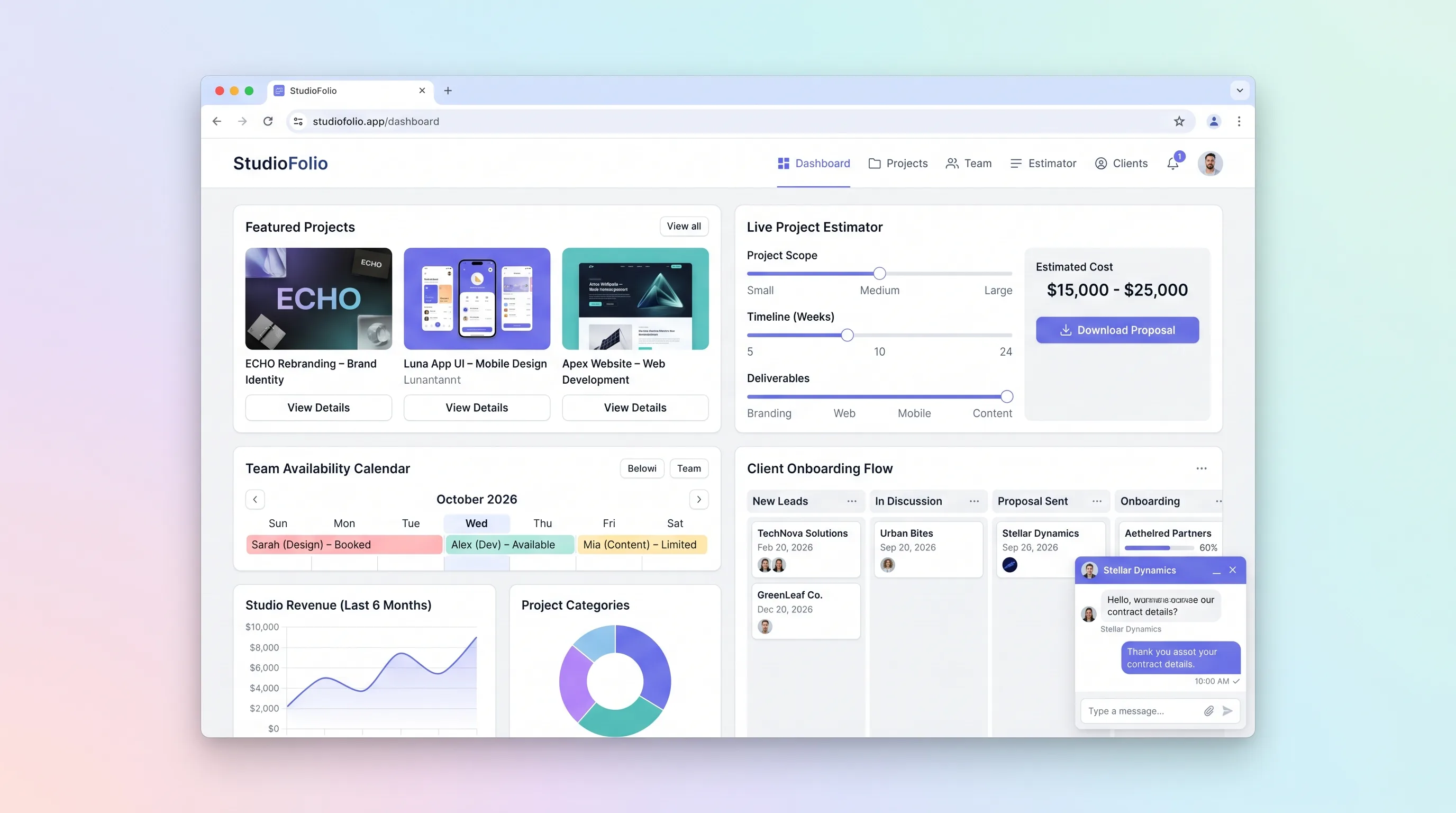
A portfolio site for indie creative studios that pairs a bold showcase with a live project estimator, team availability calendar, and inquiry onboarding.
Internal ToolReal Estate
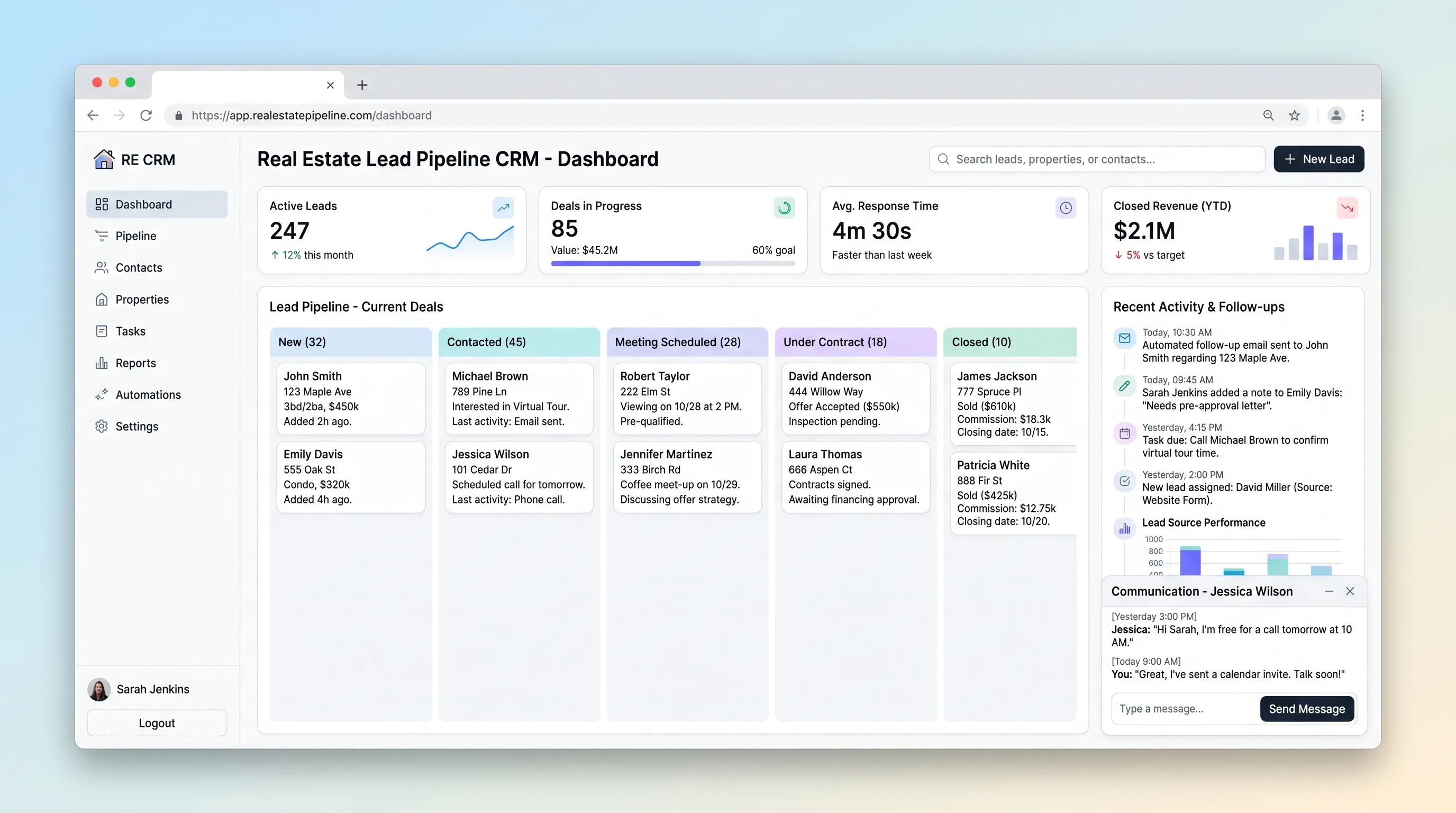
A focused CRM for agents to qualify property inquiries, schedule the next contact, move opportunities through deal stages, and see overdue follow-ups.
Website & Lead GenerationHome & Local Services
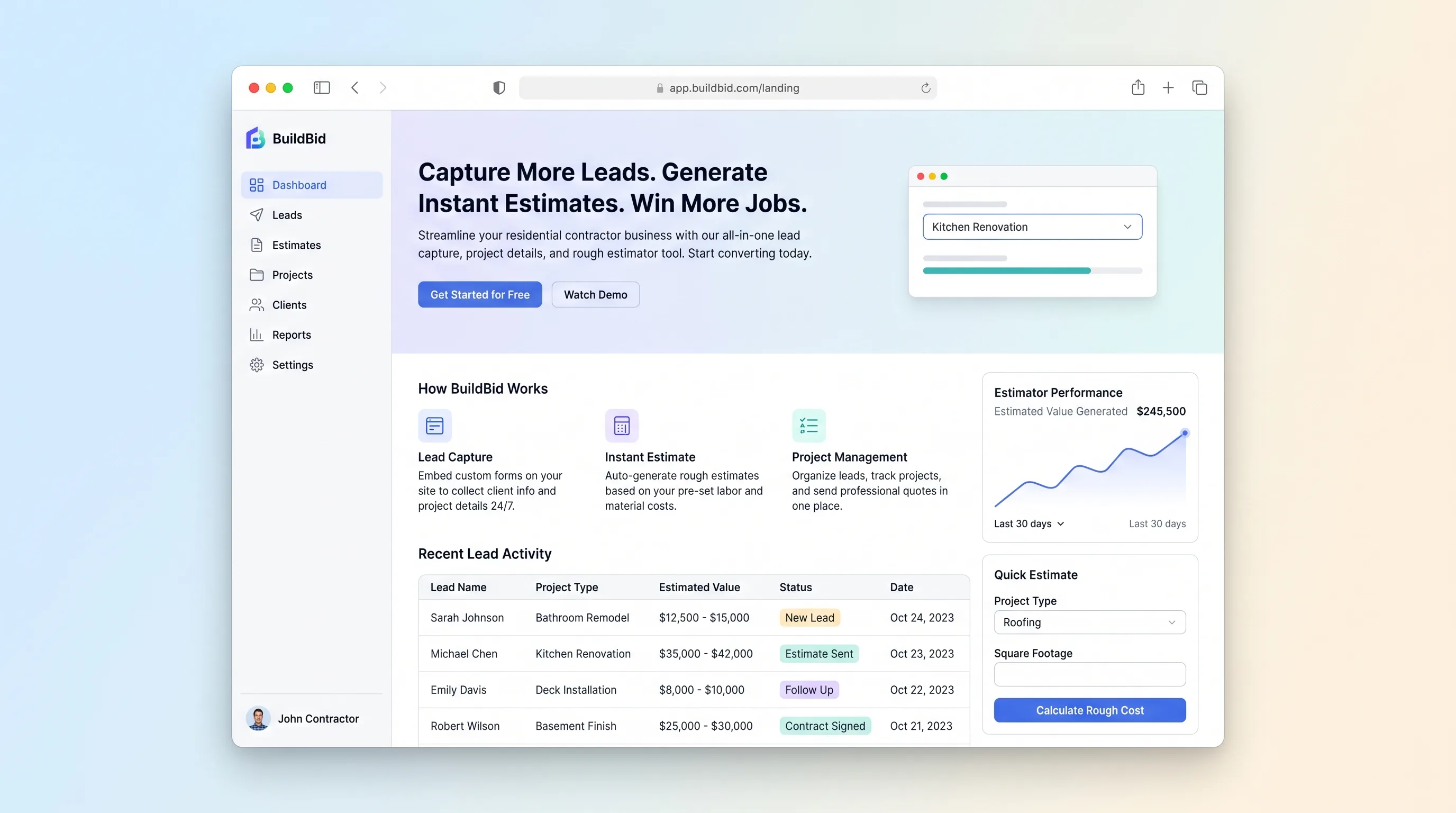
A conversion-focused lead capture site where homeowners submit project details in under two minutes and receive an instant rough estimate, while contractors review qualified leads in a dashboard within seconds.
Website & Lead GenerationHome & Local Services
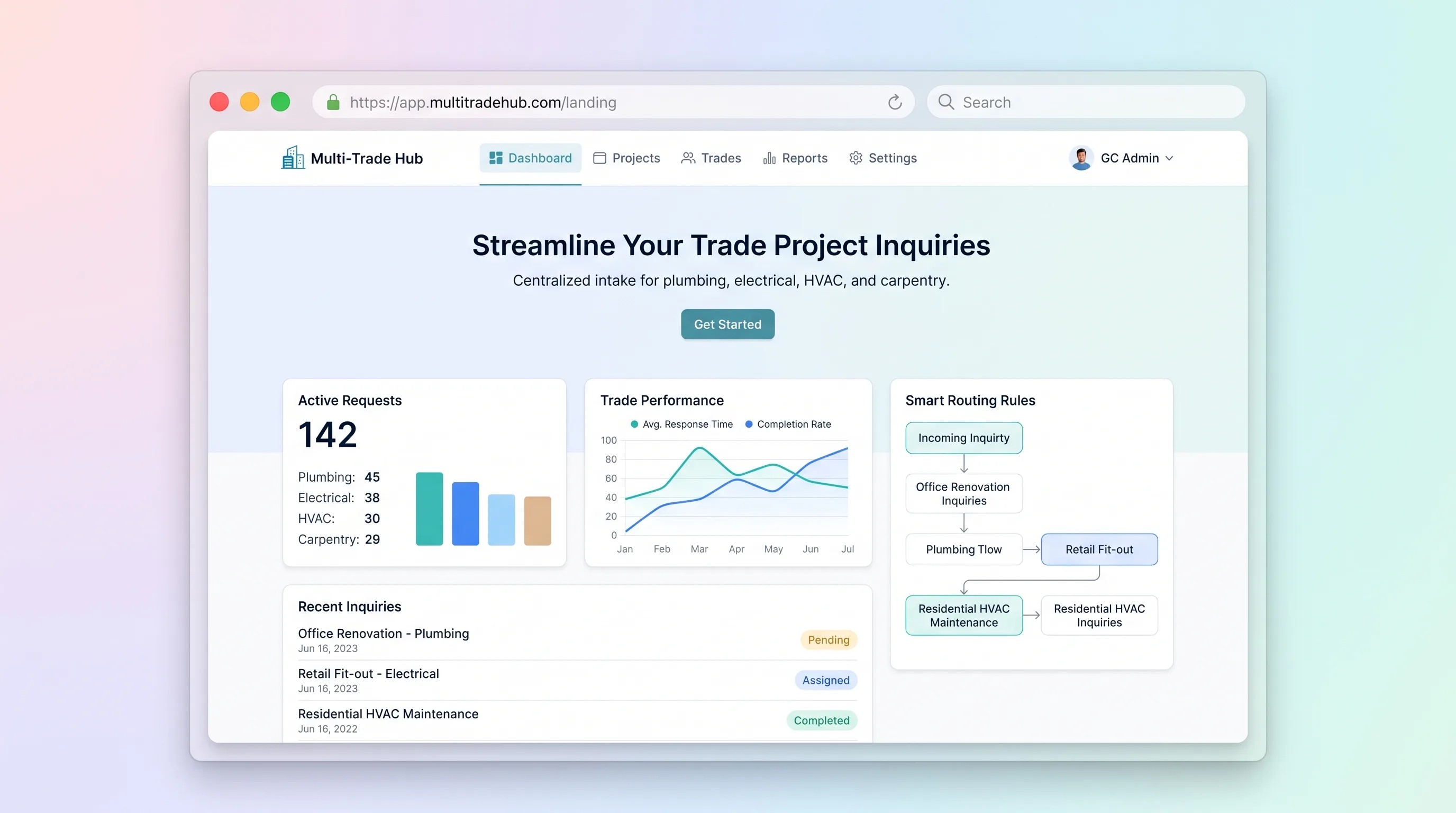
A structured inquiry and estimating handoff for general contractors handling plumbing, electrical, HVAC, and carpentry requests across one project.
Website & Lead GenerationHome & Local Services
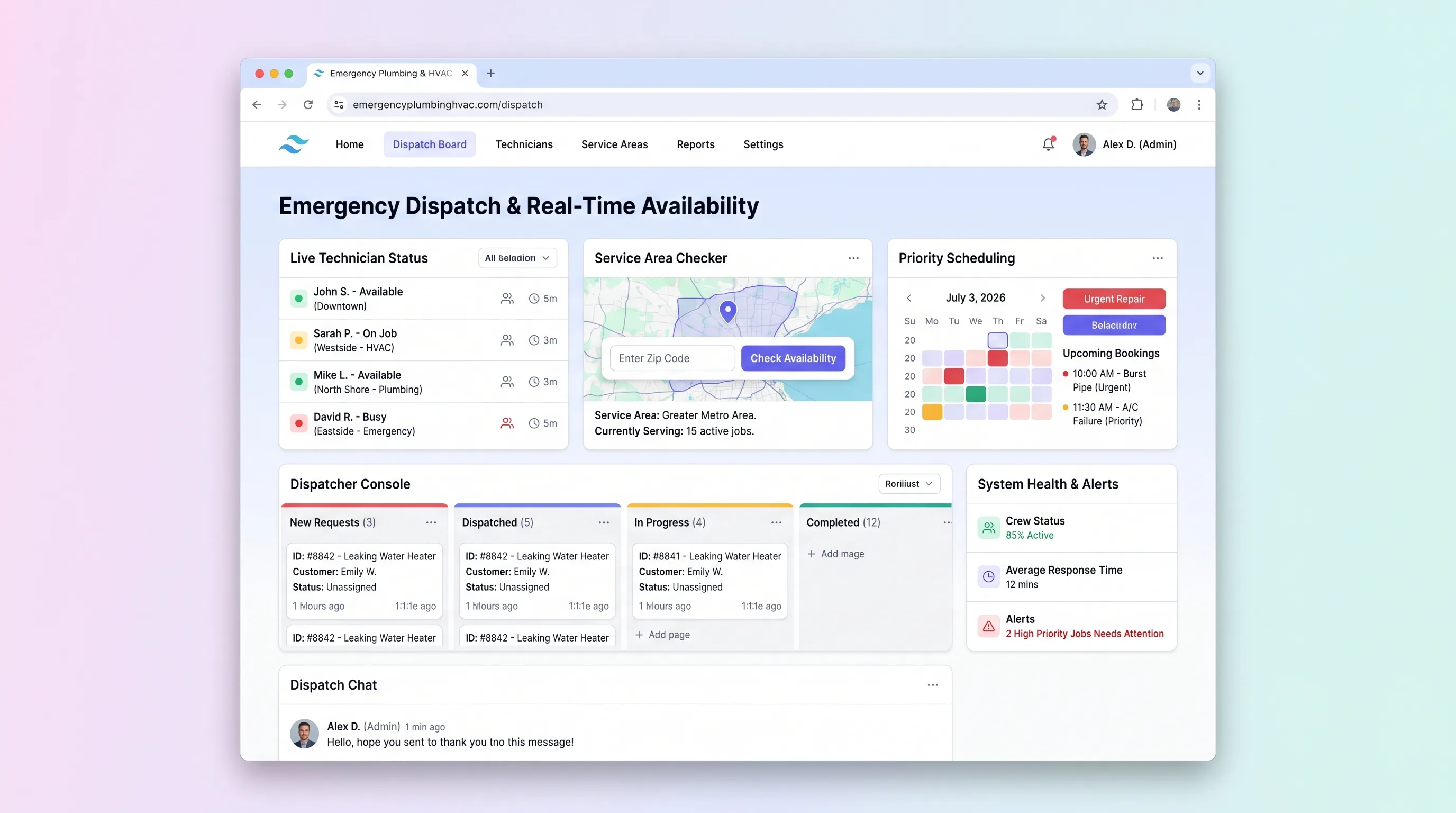
A 24/7 intake and dispatch surface that tells callers whether service is available, captures urgent repair details, and lets a dispatcher confirm the right technician.
Website & Lead GenerationHome & Local Services
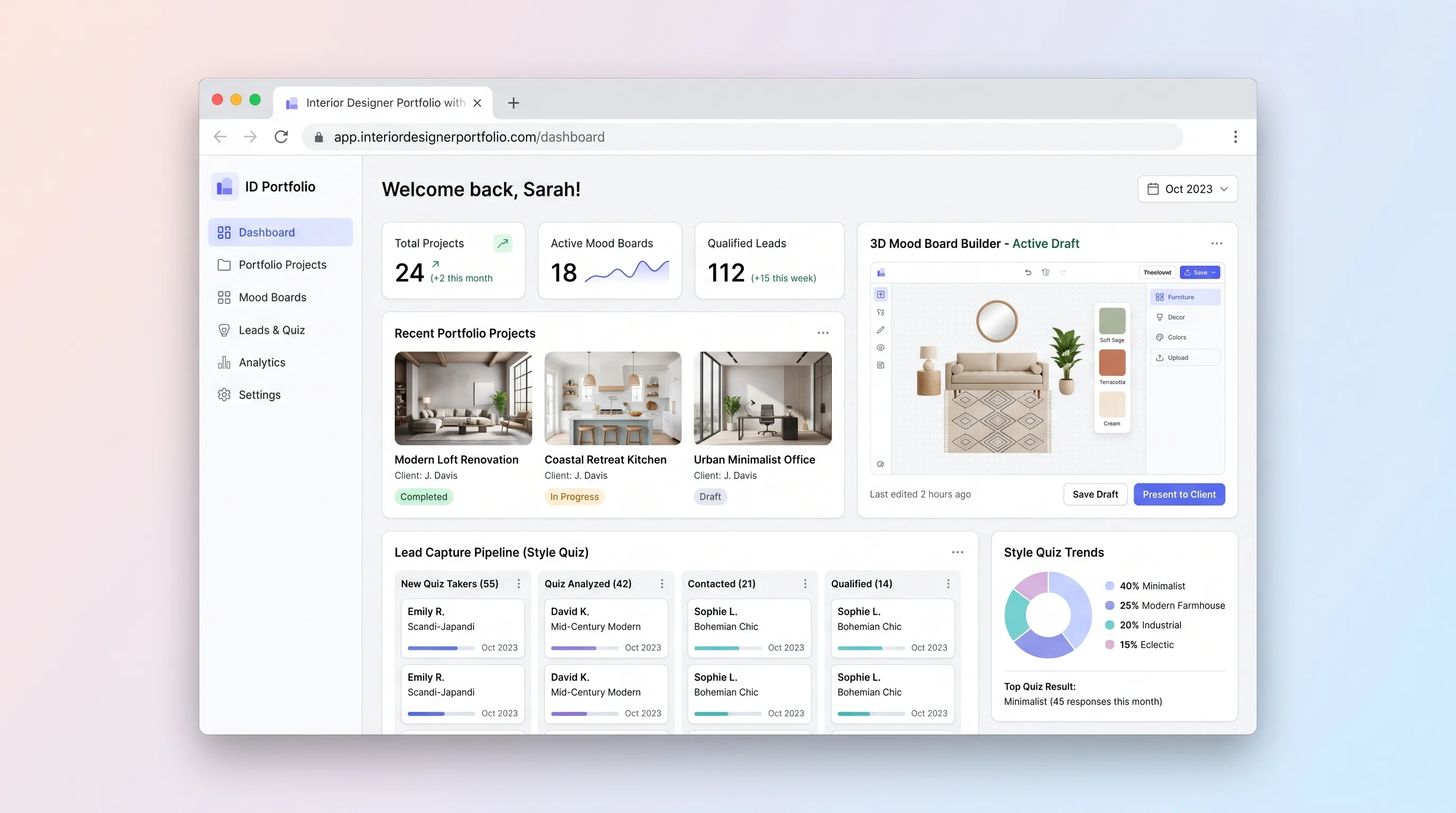
A portfolio website for independent interior designers that lets visitors explore projects, assemble 3D mood boards, complete a style quiz, and submit qualified inquiries—all in one session.