Build this if
Build when agents can quantify missed or late follow-ups and agree to keep the next action current after every conversation.
A focused CRM for agents to qualify property inquiries, schedule the next contact, move opportunities through deal stages, and see overdue follow-ups.
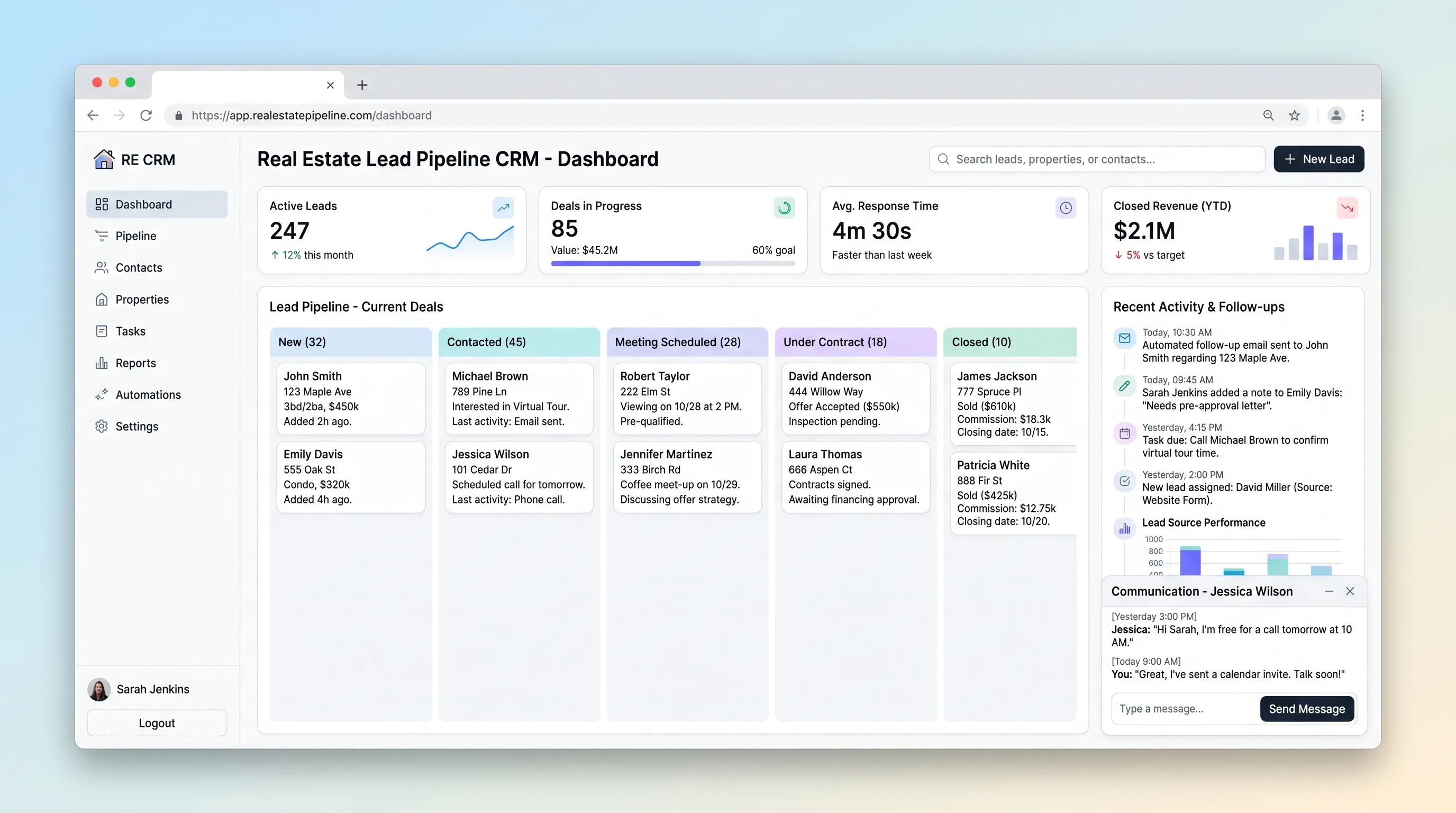
Decision snapshot
Build when agents can quantify missed or late follow-ups and agree to keep the next action current after every conversation.
Avoid if the first sale depends on MLS sync, transaction-document compliance, or brokerage-wide reporting.
Run twenty active buyer and seller opportunities for two weeks and measure overdue actions, unowned leads, and time from inquiry to first recorded contact.
Problem and target customer
Independent agents and small broker teams often split inquiries, property preferences, viewing notes, and follow-up dates across inboxes and spreadsheets. Leads go quiet because stage changes do not reliably produce a clear owner and next action.
Independent real estate agents and small residential sales teams handling enough active buyer and seller inquiries to need a shared follow-up queue.
Per-seat monthly subscription with a small team workspace tier.
Editorial note
The board is secondary to the next-action contract. A lead can sit in the correct stage and still be neglected, so the MVP should make missing ownership and overdue follow-up more visible than pipeline decoration.
Real estate context belongs on the opportunity: buyer or seller intent, areas, price range, interested properties, viewings, and offer state. Keeping those details beside the activity timeline prevents the CRM from becoming a generic contact list.
Validate behavior before integrations. If agents do not record the outcome and replacement action after a real call, adding an MLS feed or predictive score will not repair the operating habit the product is meant to support.
Choose your next step
Evaluate the operating tradeoffs quickly, or inspect how to build the MVP.
Compare the three operating paths at the default workload before opening the full calculator.
See cost preview Build this ideaInspect the build blueprintReview MVP scope, workflow, states, data rules, architecture, and acceptance criteria.
Open blueprintEvaluation preview
Directional infrastructure estimates for the current 1,500 lead follow-up actions assumption. Open the full calculator when you are ready to change it.
Managed application, PostgreSQL, backups, and observability for lead updates, queue checks, and pipeline queries.
Lowest operating effortOne small cloud server runs the app, database, and backup job for lead updates, queue checks, and pipeline queries.
Lowest baseline costSeparate web, data, worker, and monitoring capacity for lead updates, queue checks, and pipeline queries.
Most separation and controlBuild blueprint
Product goal
MVP scope
UX and user flow
Create or import a buyer or seller lead with enough context to qualify it.
Prioritize overdue and upcoming calls, emails, and viewings.
Keep contact context, interested properties, activity, stage, and next action together.
Move opportunities between stages and expose value, stage age, and missing next actions.
Summarize weighted value and closing dates without replacing financial reporting.
Core entity outline
Stores the person, preferred channel, consent, and communication coordinates.
Represents one buyer or seller journey with owner, intent, value, stage, and next action.
Records a referenced listing or a structured set of buyer requirements.
Captures a call, email, note, viewing, reply, or stage change with outcome.
Defines the single promised next action and its delivery state.
Stores provider delivery, bounce, and reply signals needed to stop or repair follow-up.
Architecture and data flow
Provides capture, queue, detail, board, and forecast views with role-scoped actions.
Stores contacts, opportunities, property interests, activities, tasks, and email events.
Claims due email tasks, enforces stop conditions, and records delivery attempts idempotently.
Sends approved templates and verifies provider webhooks for delivery, bounce, and reply events.
Deliverables and acceptance
Recommended stack
Supports fast pipeline views and secure server-side mutations for contact and deal state.
Keeps opportunity stages, activities, ownership, and scheduled actions transactionally consistent.
Claims due follow-ups and retries provider failures without duplicate sends.
Provides template delivery and webhook events behind a replaceable interface.
Provides team sessions and role claims without custom authentication.
The differentiator is a trustworthy next-action queue tied to property-specific context. A relational core and small scheduler are sufficient; feed synchronization and AI scoring can wait.
Copy the build prompt, model the operating cost, and choose where to deploy.
Execution
Once the blueprint is clear, use the prompt, cost model, and deployment options to start building.
Build prompt
Prototype the pipeline and daily queue in Lovable, then implement durable stage history, scheduled reminders, and email events in a Railway-hosted server application.
Build prompt
Open the prompt pack whenever you are ready to take this blueprint into your builder.
Build prompt ready
Copy the prompt into your builder, then use the cost model below to choose how you want to run it.
Use the cost model to choose a deployment path that matches the build plan.
Cost calculator
A technical run-cost estimate for the first production version. Team, acquisition, payment fees, and business COGS are excluded.
$13-$40 per 1,000 lead follow-up actions
Low and high values allow for usage variance and plan headroom.
Managed application, PostgreSQL, backups, and observability for lead updates, queue checks, and pipeline queries.
25K lead follow-up actions included, then $6-$18 per 25K lead follow-up actionsSends approved one-to-one follow-up templates and receives delivery events for the next-action queue.
3K lead follow-up actions includedThe estimate combines the selected infrastructure path, required operating modules, selected optional modules, and usage above included monthly allowances. Taxes and regional uplifts are excluded.
Deployment options
Choose based on operating preference, not only the headline price.
Deploy real estate inquiry tracking and scheduled follow-ups with a managed database and background jobs in one project.
Usage billing needs active budget alerts.
Run the app, worker, and database on one small Vultr VPS with Docker Compose and explicit backups.
Patching, monitoring, backups, and recovery remain operator tasks.
Separate application, worker, data, storage, and backup responsibilities as the workload grows.
The larger service surface requires more operational work.
Start building
Build inquiry capture, lead detail, a stage board, a next-action queue, and a compact pipeline forecast using realistic buyer and seller records.
Open Lovable 02AutomationConnect bounded handoffsUse Make only to copy new website inquiries into the CRM or notify an assigned agent; the CRM remains the source of truth for stage and follow-up state.
Open Make 03DeployDeploy the operating serviceDeploy the authenticated app, database, scheduled follow-up worker, and email webhook endpoint as one maintainable project.
Open RailwayKeep exploring
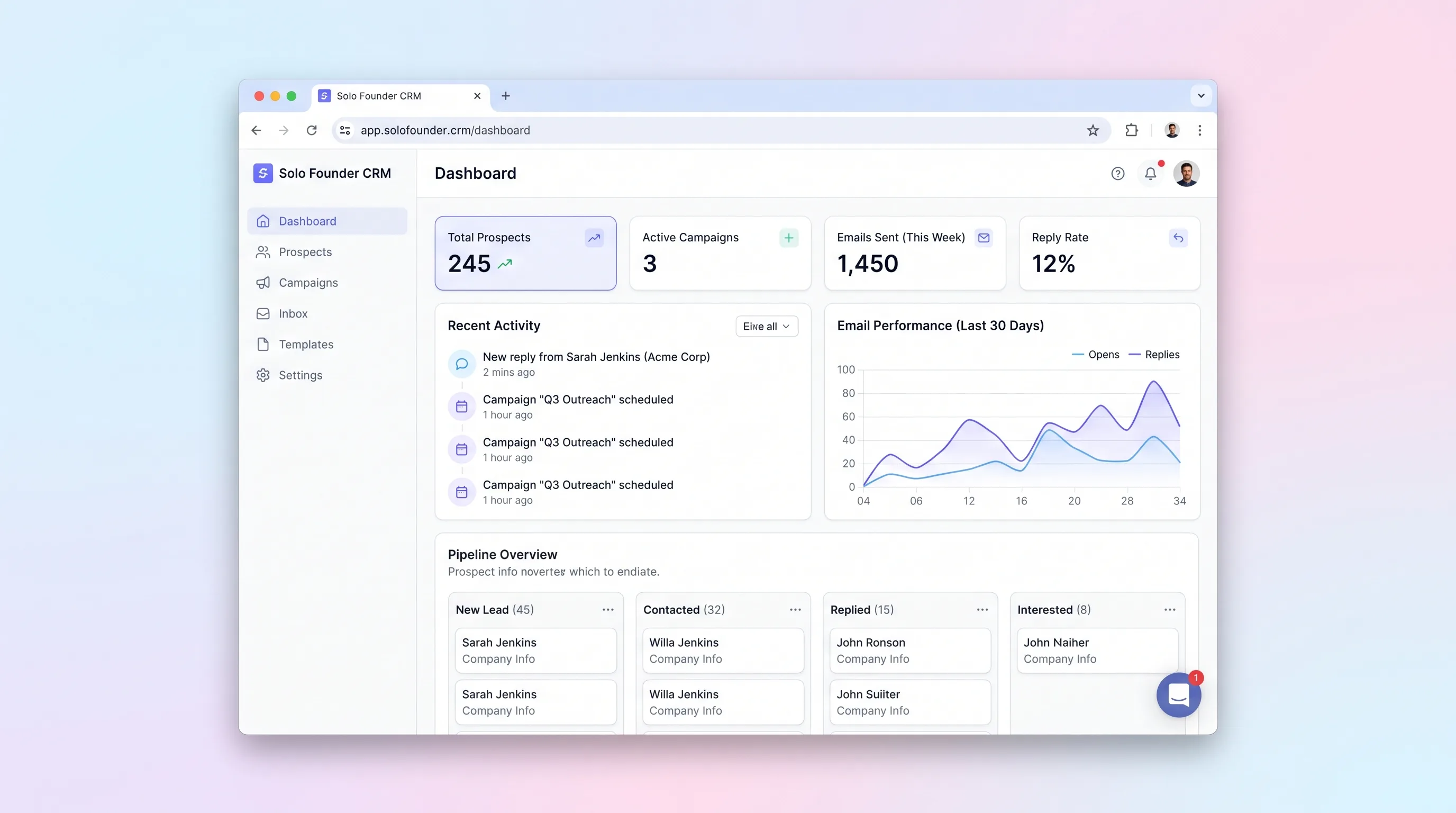
Internal ToolSales & Marketing
A lightweight founder sales desk for importing prospects, enrolling approved contacts in short email sequences, tracking replies, and stopping outreach safely.
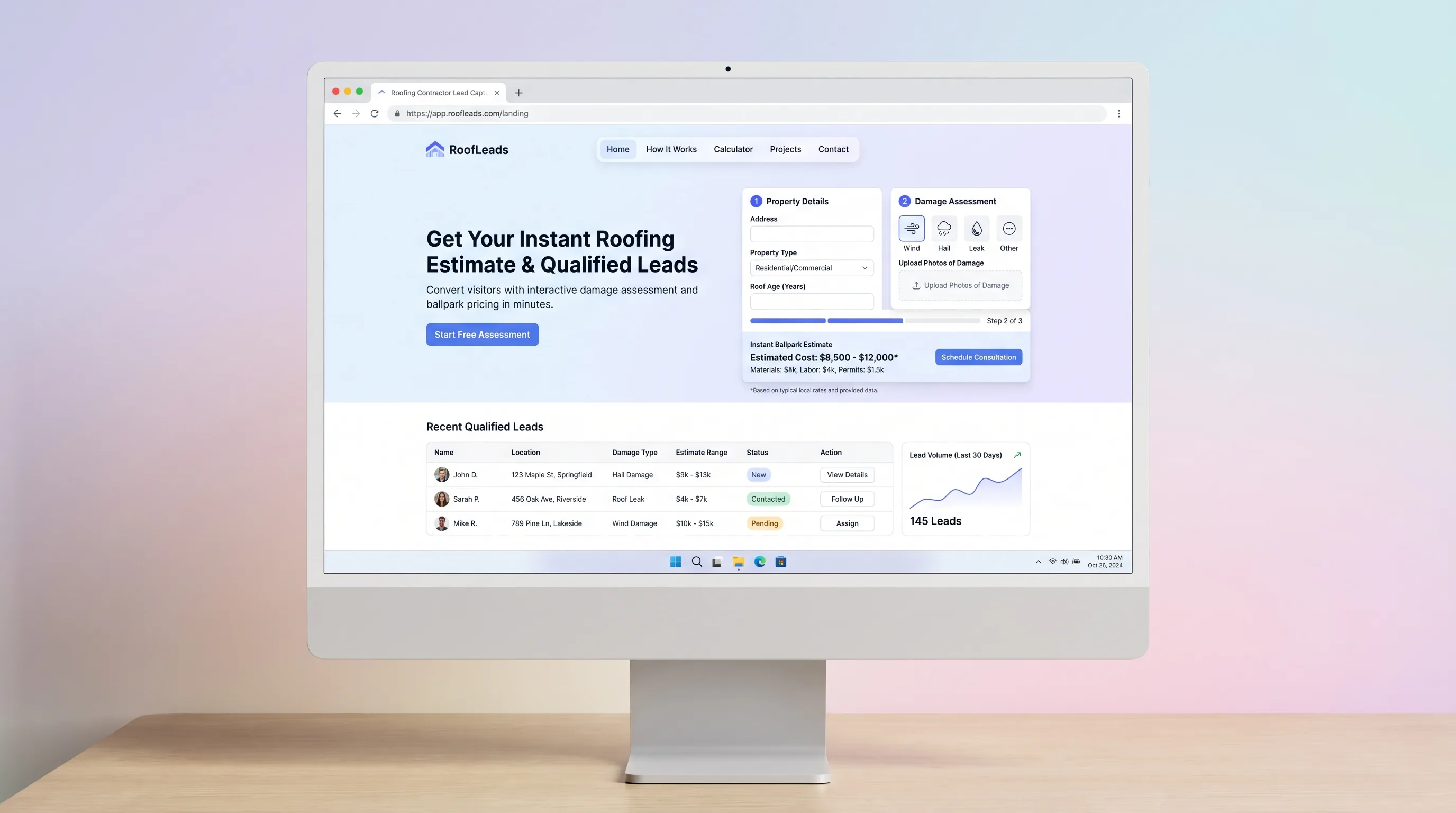
Website & Lead GenerationHome & Local Services
A local roofing website that turns damage details, roof facts, and photos into a clearly qualified lead with a contractor-configured ballpark range.
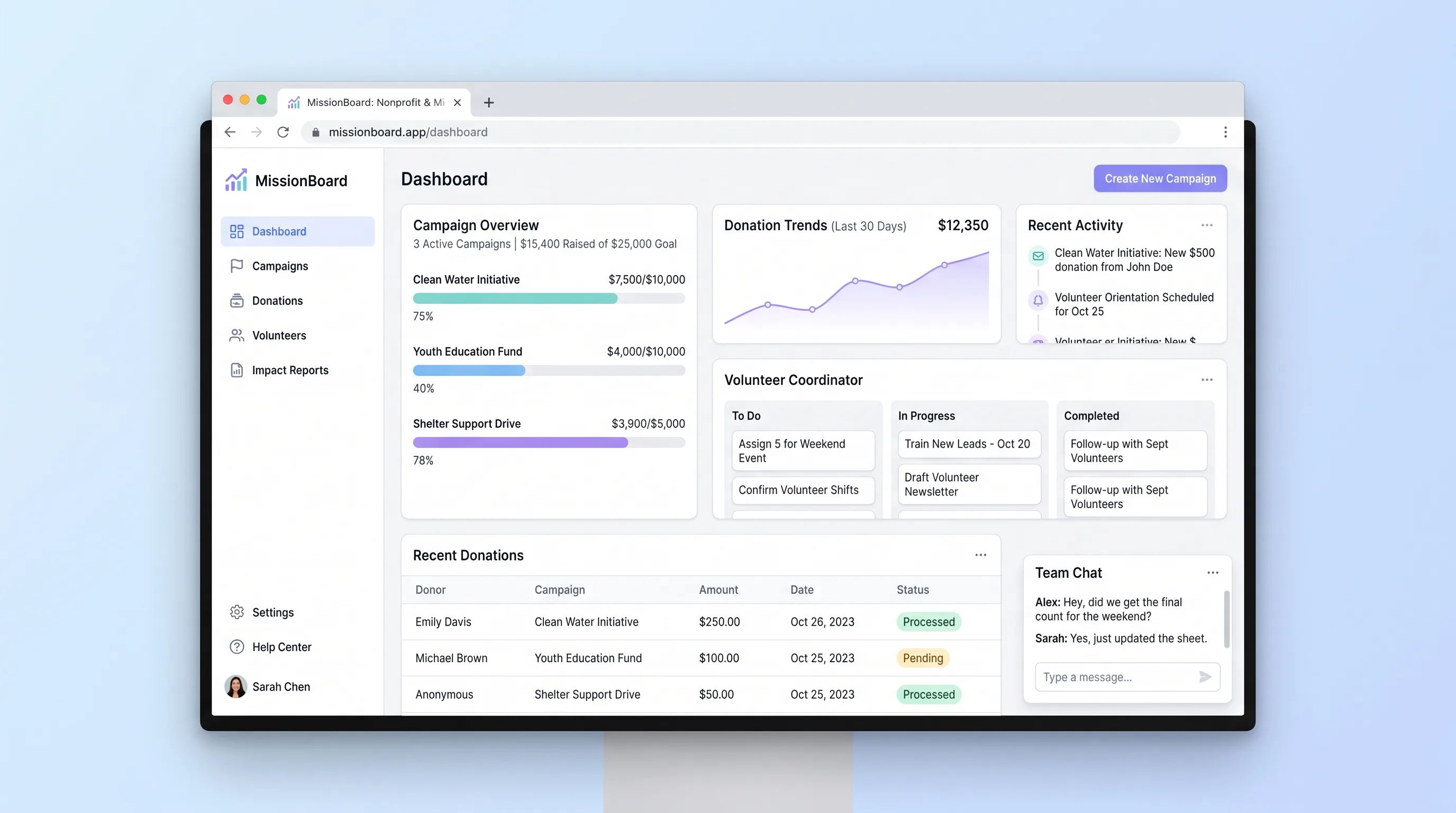
Internal ToolEvents & Community
A shared operations hub for small nonprofits and ministry teams to coordinate campaigns, reconcile contributions and volunteer work, and report outcomes.
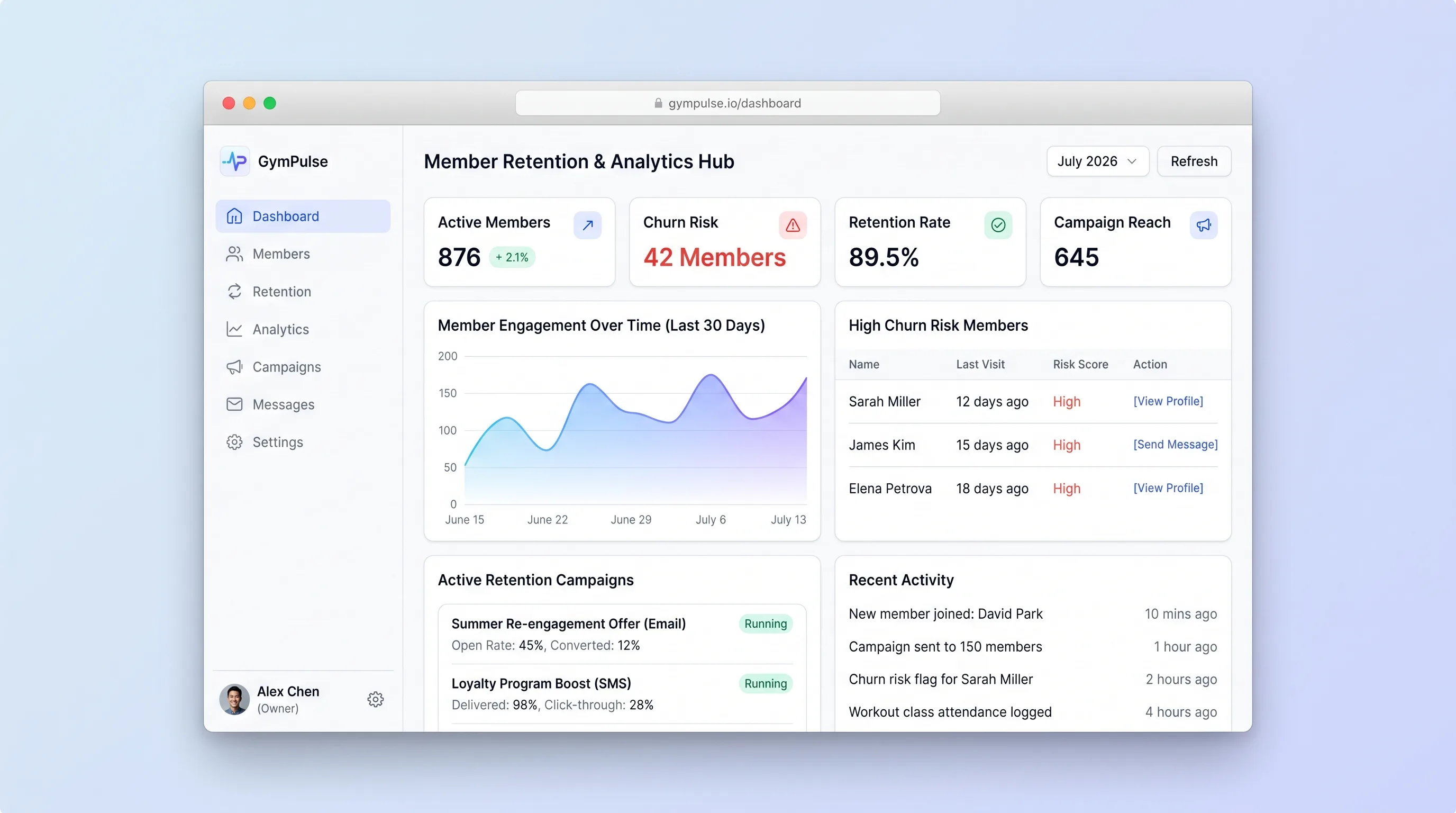
Internal ToolHealthcare & Wellness
A manager-facing hub that explains attendance-based risk flags, supports consent-checked outreach, and records member responses in one place.
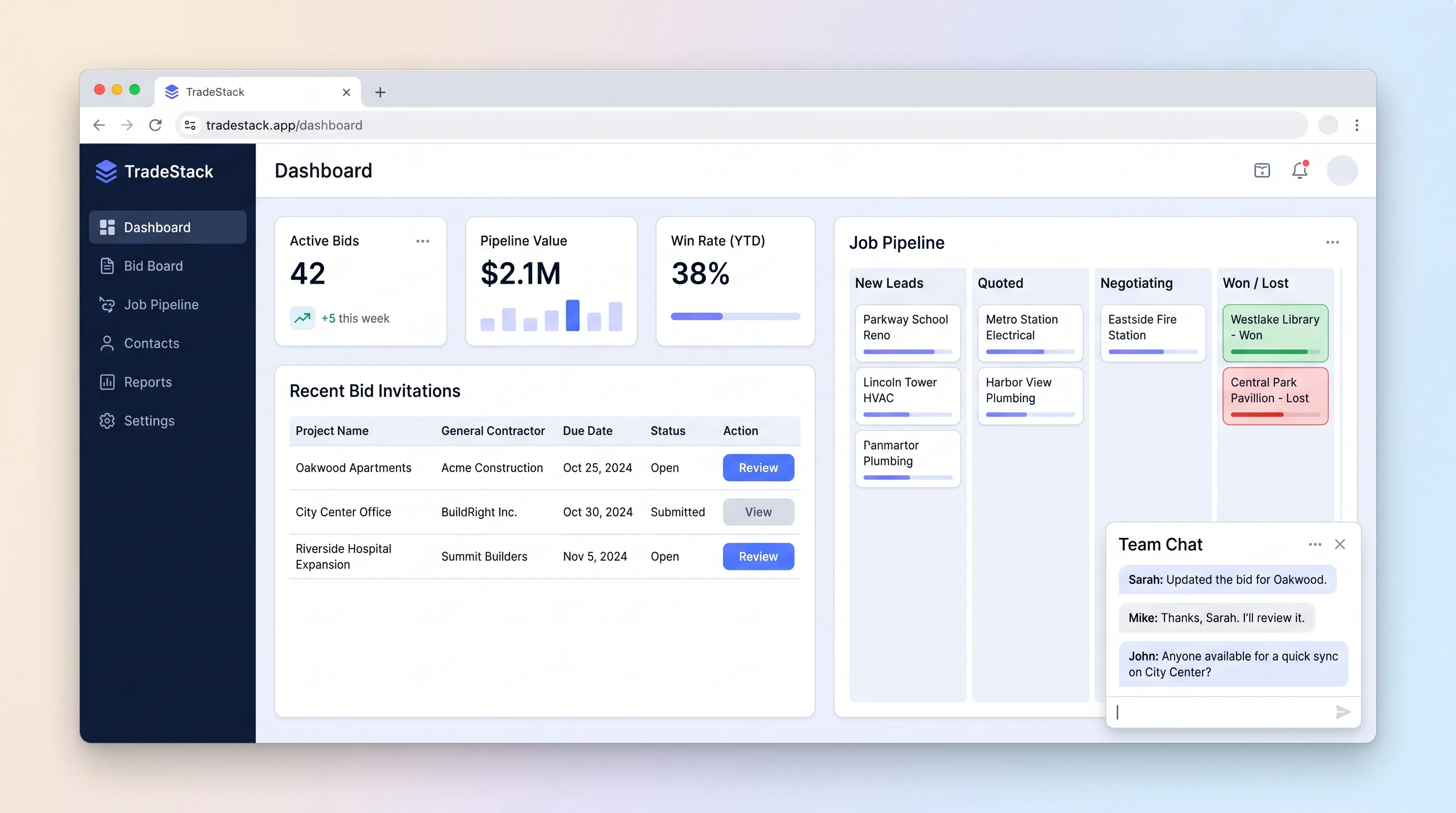
Internal ToolHome & Local Services
An internal bid desk for specialty contractors to capture invitations, prepare deadlines, move opportunities through estimating, and learn from won or lost work.
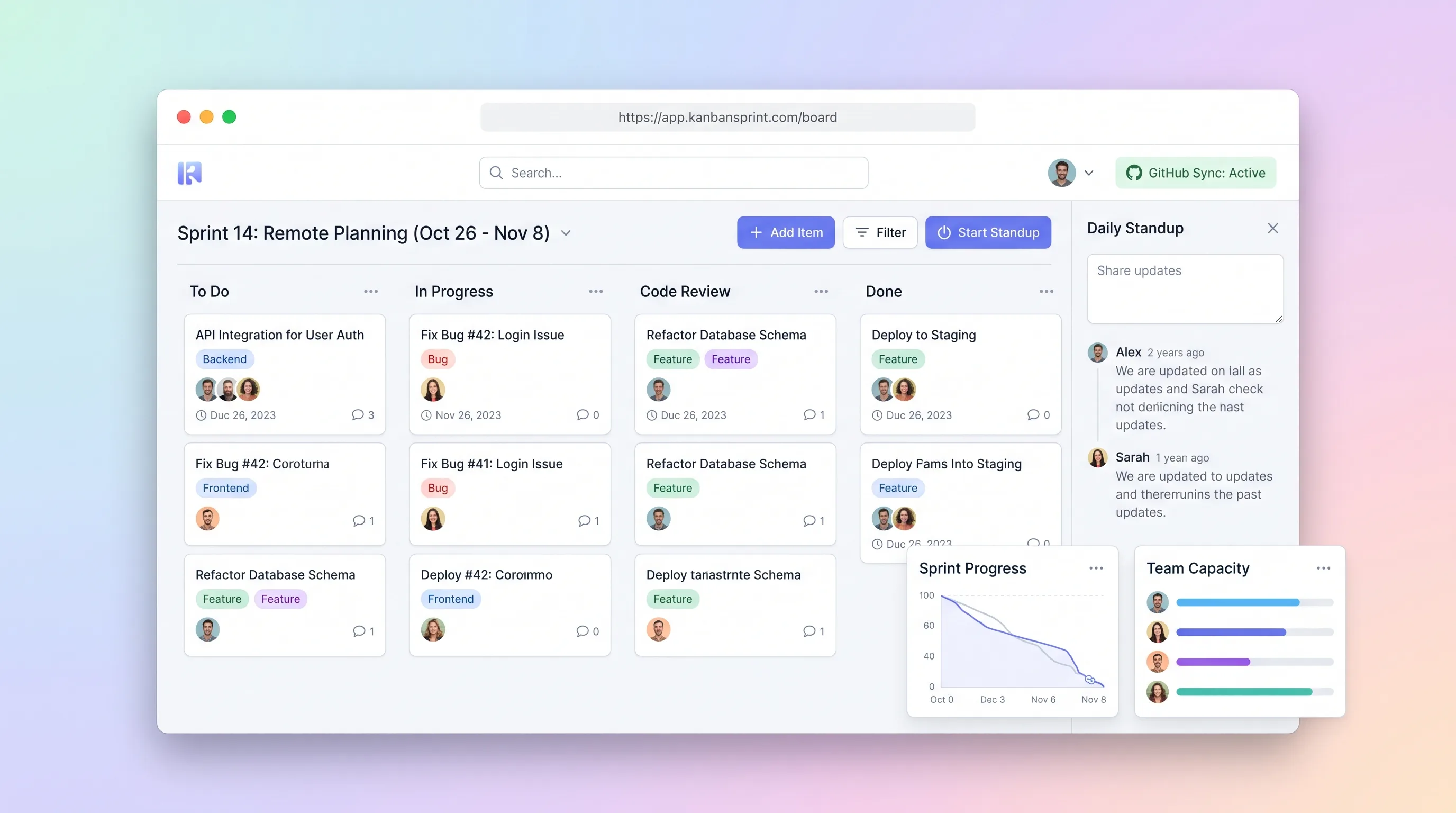
Internal ToolDeveloper & IT Operations
A compact planning workspace that keeps sprint commitments, GitHub issue state, board movement, daily blockers, and end-of-sprint carryover aligned.