Build this if
Your on-call team loses emergency leads or repeats intake because callers cannot see credible coverage and capacity.
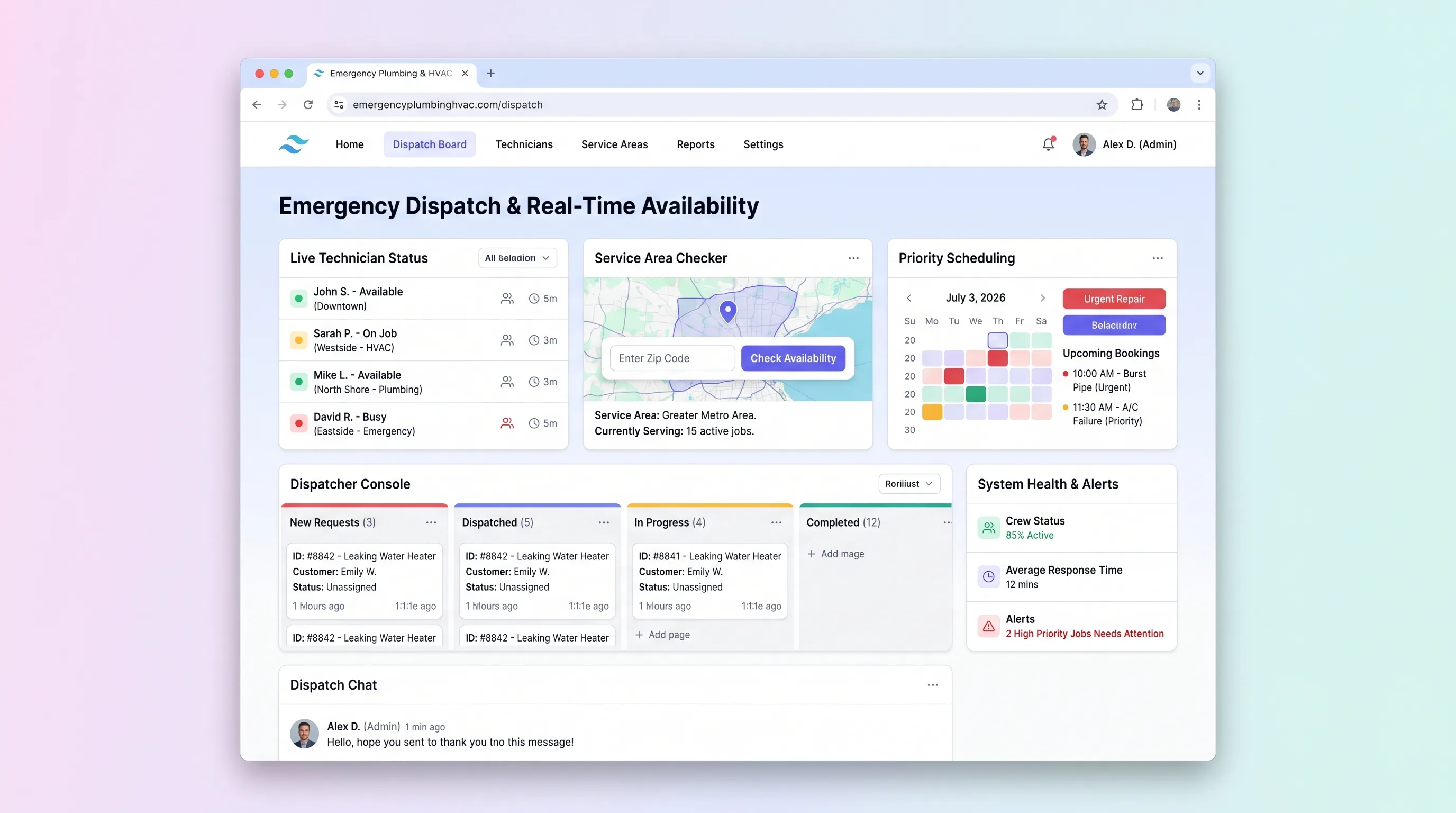
A 24/7 intake and dispatch surface that tells callers whether service is available, captures urgent repair details, and lets a dispatcher confirm the right technician.
Decision snapshot
Your on-call team loses emergency leads or repeats intake because callers cannot see credible coverage and capacity.
You have no dispatcher maintaining shift availability, or you require route optimization and live GPS from launch.
Run the site beside the emergency phone line for two weeks and verify dispatchers can act on at least 80% of submitted requests without re-asking the structured intake questions.
Problem and target customer
During urgent plumbing or HVAC failures, customers repeatedly call to learn whether anyone can reach them. Dispatchers retype addresses and symptoms while trying to compare technician coverage, shift capacity, and job priority under time pressure.
Local plumbing and HVAC companies with an on-call dispatcher and several technicians covering defined postal-code service areas.
Monthly operator subscription per service region or dispatch team.
Editorial note
Real-time availability should mean a capacity window the dispatch team actively owns, not a map animation or false promise. The useful commitment is modest: covered area, accepted request, assigned technician, and a window that can be updated.
Hazard questions help sort the queue and display emergency guidance, but they must not diagnose. Keeping a human dispatcher at the acceptance boundary reduces safety risk and makes the first release workable without vehicle telemetry.
Choose your next step
Evaluate the operating tradeoffs quickly, or inspect how to build the MVP.
Compare the three operating paths at the default workload before opening the full calculator.
See cost preview Build this ideaInspect the build blueprintReview MVP scope, workflow, states, data rules, architecture, and acceptance criteria.
Open blueprintEvaluation preview
Directional infrastructure estimates for the current 500 service requests assumption. Open the full calculator when you are ready to change it.
Railway hosts the site, console, database, and SMS worker.
Lowest operating effortA Hetzner cloud server runs the stack with operator-managed backups.
Lowest baseline costDedicated or larger resources isolate the database and workers.
Most separation and controlBuild blueprint
Product goal
MVP scope
UX and user flow
Confirm service area, display the next capacity window, and start a concise request.
Collect symptoms, hazard answers, address, contact details, and access notes.
Sort unreviewed requests by hazard and age, then show qualified technicians with current capacity.
Core entity outline
Defines covered postal codes, service types, and default response windows.
Stores caller, address, symptoms, hazards, priority, and dispatch decision.
Records technician coverage, qualifications, shift interval, and current capacity.
Links one request to a technician and promised arrival window.
Architecture and data flow
Serve fast mobile coverage and request forms with accessible emergency guidance.
Show prioritized requests, capacity windows, and manual assignment controls.
Persist coverage, shifts, requests, assignments, and status history.
Send accepted, changed-window, and en-route messages with retries.
Deliverables and acceptance
Recommended stack
Supports a fast public form and authenticated dispatch console in one deployment.
Transactions prevent double assignment and preserve status history.
Urgent confirmations need a direct channel and delivery status.
SMS retries must be durable and idempotent.
The product should expose only availability that an operator can maintain. Postal-code rules and transactional capacity reservations provide credible answers without pretending to know precise routes or arrival times.
Copy the build prompt, model the operating cost, and choose where to deploy.
Execution
Once the blueprint is clear, use the prompt, cost model, and deployment options to start building.
Build prompt
Use a server-rendered TypeScript app with PostgreSQL and a durable SMS queue; model availability as operator-maintained capacity windows rather than unverifiable GPS precision.
Build prompt
Open the prompt pack whenever you are ready to take this blueprint into your builder.
Build prompt ready
Copy the prompt into your builder, then use the cost model below to choose how you want to run it.
Use the cost model to choose a deployment path that matches the build plan.
Cost calculator
A technical run-cost estimate for the first production version. Team, acquisition, payment fees, and business COGS are excluded.
$13-$85 per 500 service requests
Low and high values allow for usage variance and plan headroom.
Railway hosts the site, console, database, and SMS worker.
1K service requests included, then $2-$8 per 1K service requestsEstimate for one or more US SMS status messages per request; carrier and destination fees vary.
0 included, then $8.3-$50 per 1K service requestsThe estimate combines the selected infrastructure path, required operating modules, selected optional modules, and usage above included monthly allowances. Taxes and regional uplifts are excluded.
Deployment options
Choose based on operating preference, not only the headline price.
Deploy the intake, console, database, and SMS worker with health checks.
Availability depends on active usage monitoring and incident response.
Run the app, worker, and database on one small Vultr VPS with Docker Compose and explicit backups.
You own redundancy, patching, backups, and on-call response.
Separate application, worker, data, storage, and backup responsibilities as the workload grows.
Higher operational burden than managed hosting.
Start building
Use Lovable to test the mobile request form, coverage result, promised arrival window, and dispatcher triage board.
Open Lovable 02AutomationRelay confirmed jobs to back-office toolsUse Make later to copy dispatcher-confirmed jobs into an existing CRM or accounting queue; do not automate technician selection in the first release.
Open Make 03DeployDeploy the always-on intake serviceRun the public site, dispatch console, database, and SMS job worker together with health checks.
Open RailwayKeep exploring
Website & Lead GenerationHome & Local Services
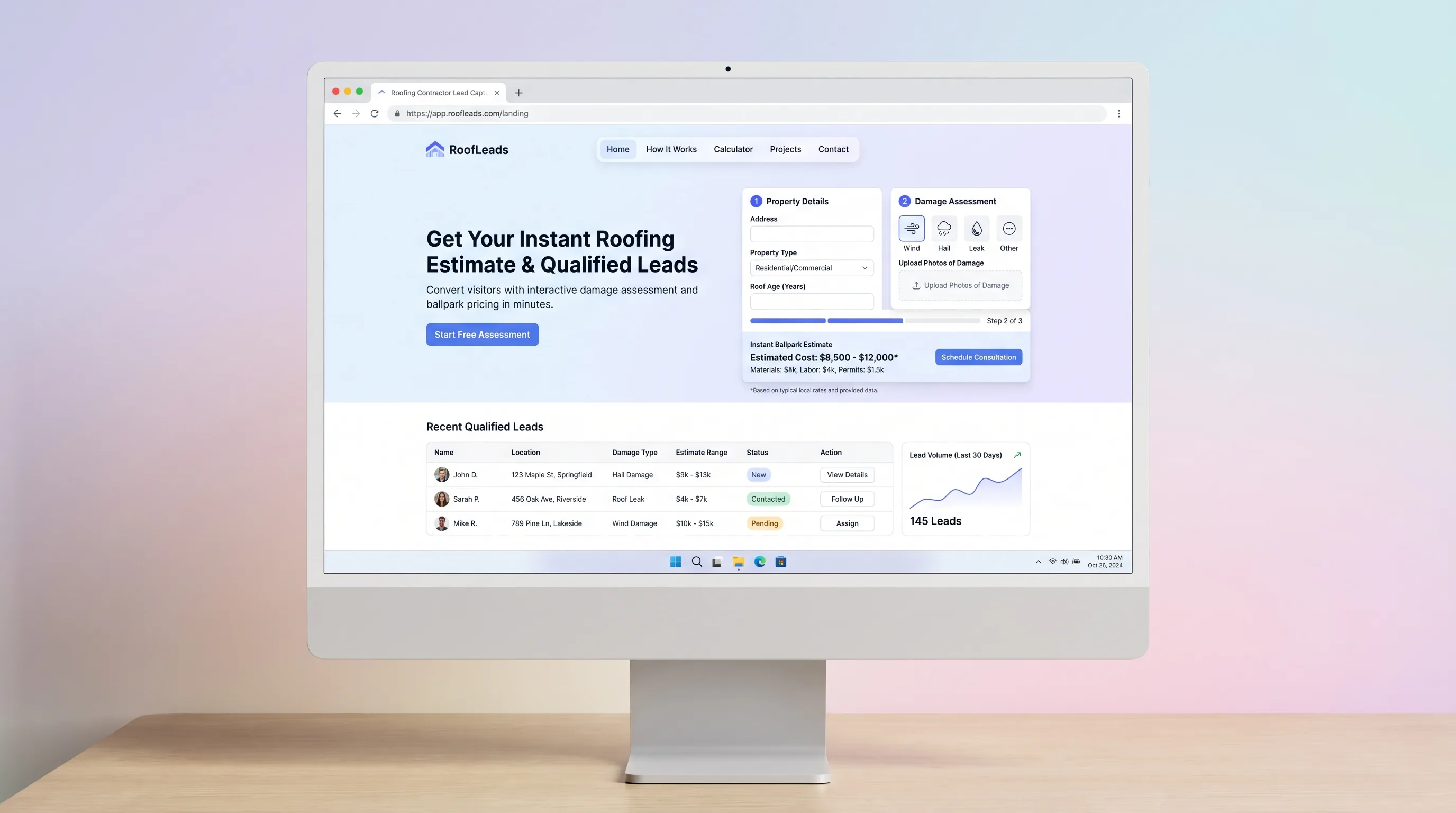
A local roofing website that turns damage details, roof facts, and photos into a clearly qualified lead with a contractor-configured ballpark range.
Website & Lead GenerationHome & Local Services
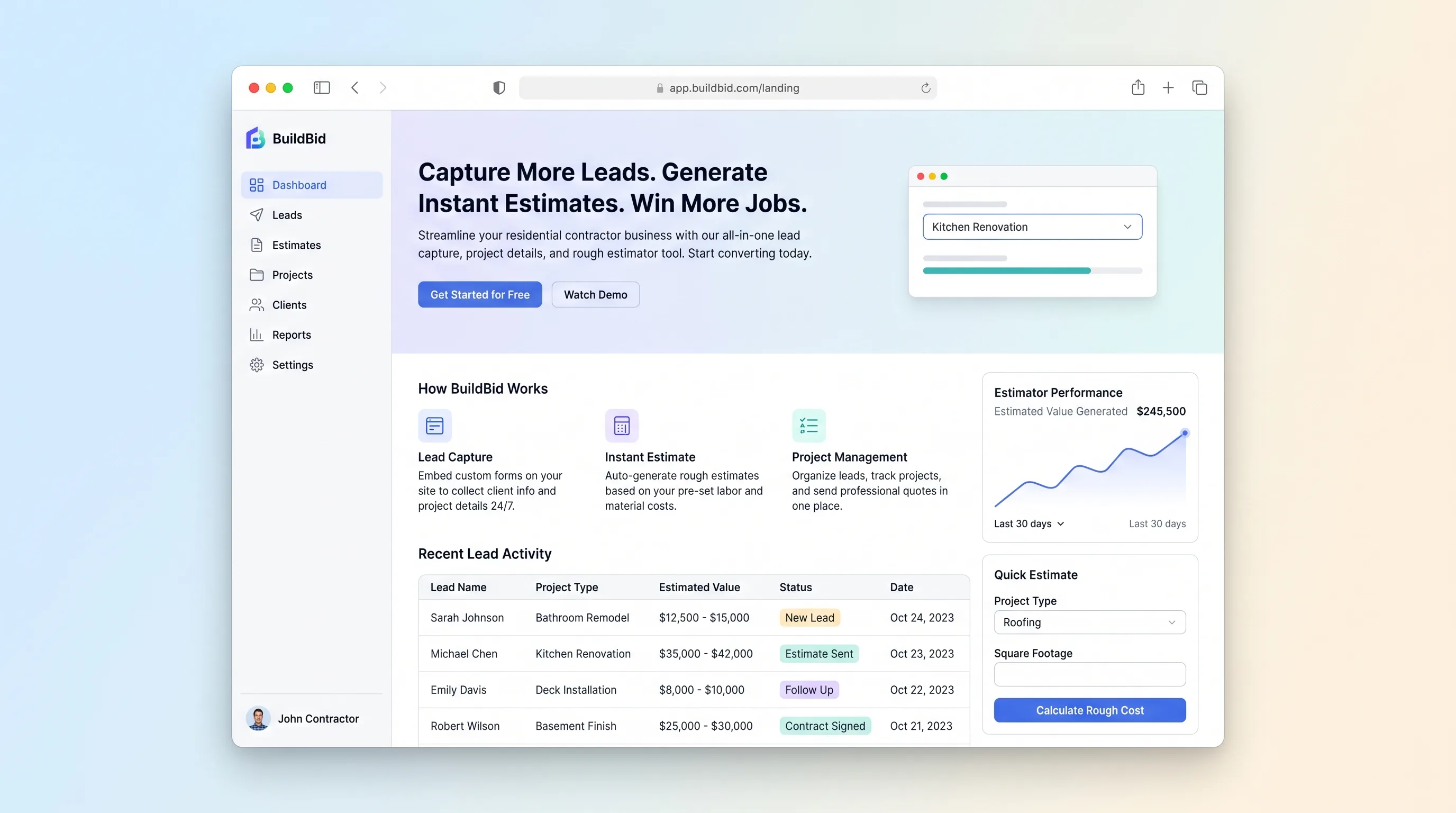
A conversion-focused lead capture site where homeowners submit project details in under two minutes and receive an instant rough estimate, while contractors review qualified leads in a dashboard within seconds.
Website & Lead GenerationHome & Local Services
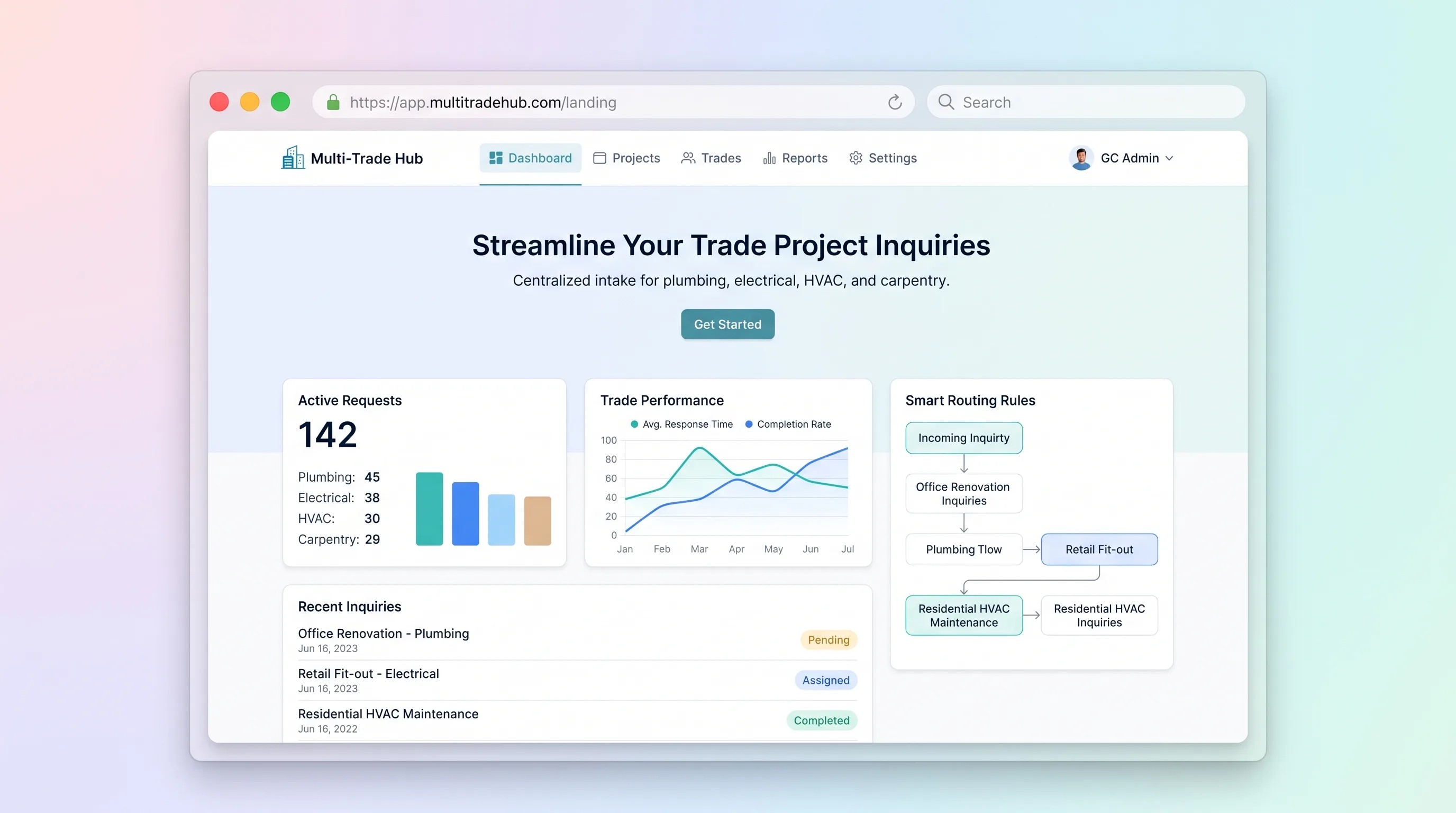
A structured inquiry and estimating handoff for general contractors handling plumbing, electrical, HVAC, and carpentry requests across one project.
Website & Lead GenerationHome & Local Services
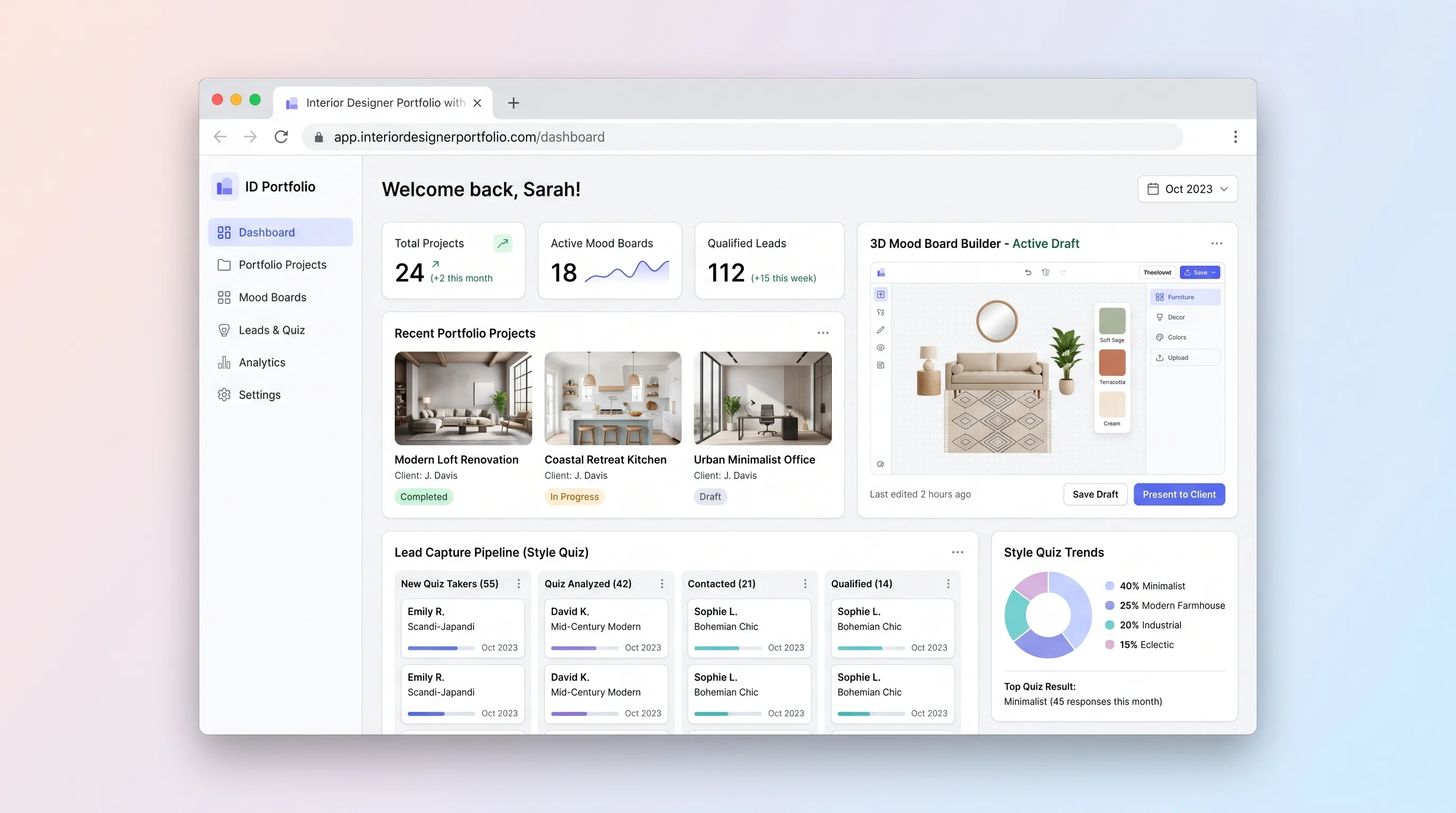
A portfolio website for independent interior designers that lets visitors explore projects, assemble 3D mood boards, complete a style quiz, and submit qualified inquiries—all in one session.
Website & Lead GenerationEvents & Community
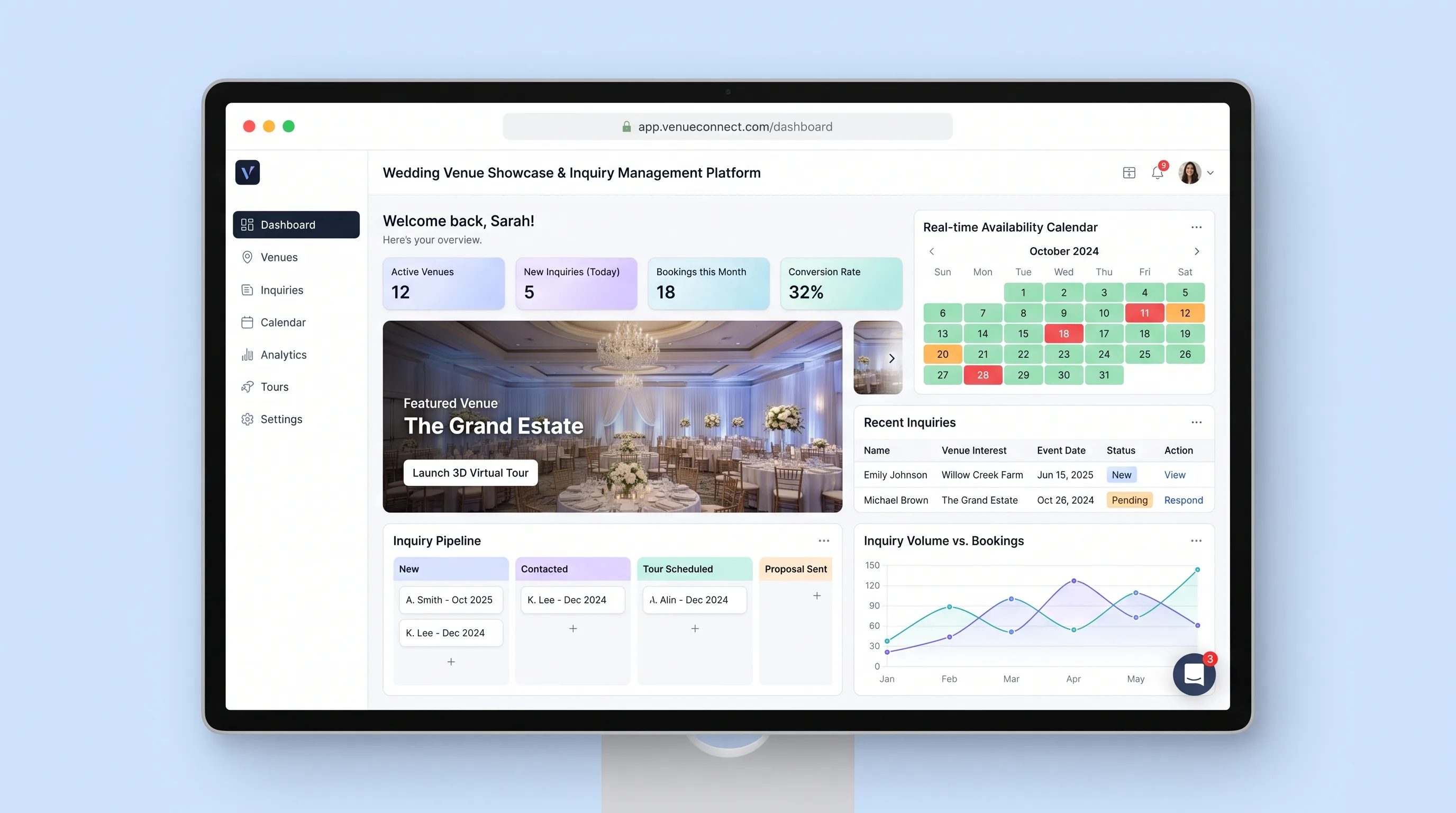
A visual venue website that qualifies wedding inquiries against maintained availability and gives coordinators one place to respond and advance leads.
Website & Lead GenerationProfessional Services
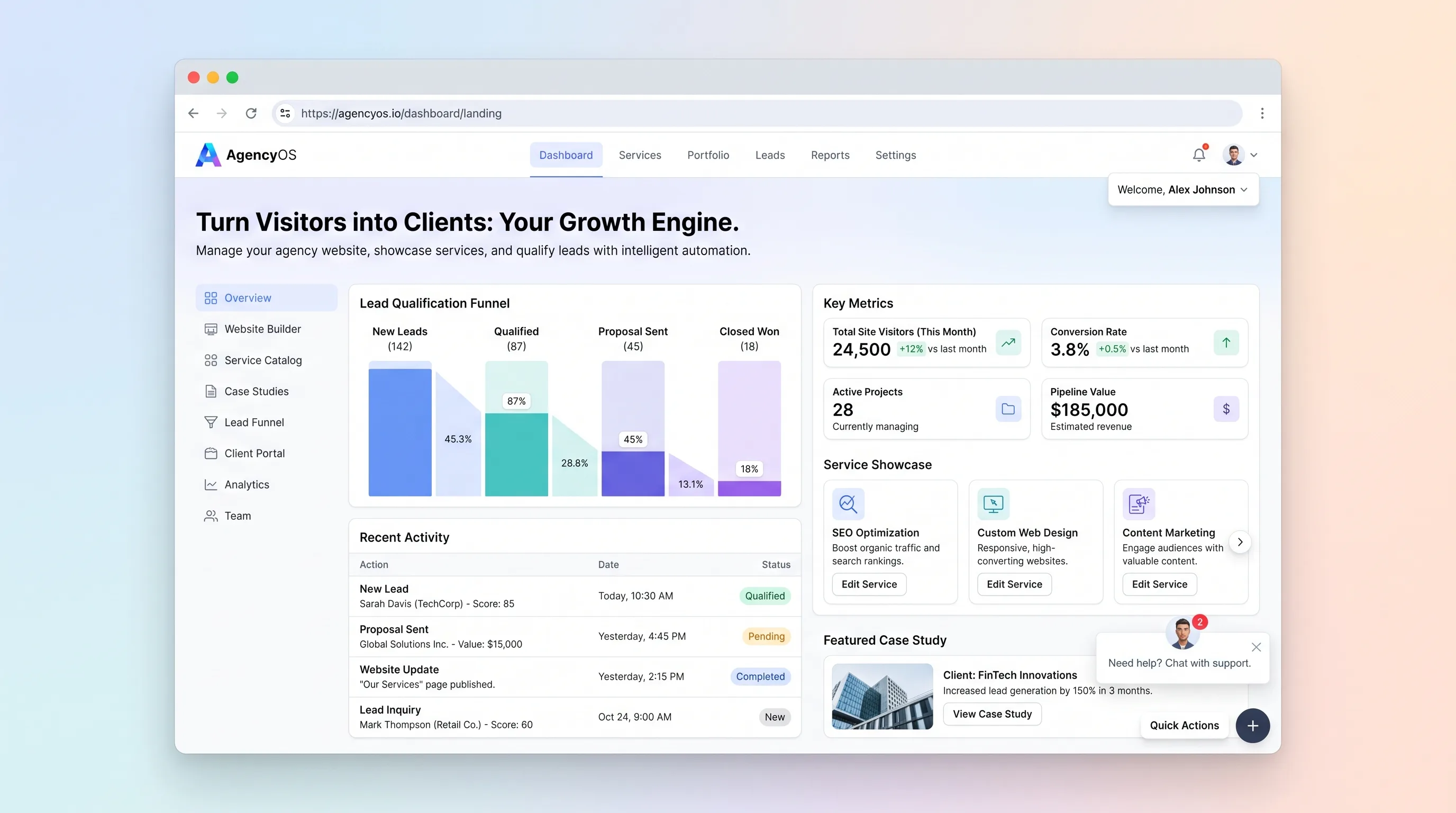
A conversion-focused site for digital agencies that turns service research and case-study browsing into structured, qualified discovery inquiries.