Build this if
Office staff repeatedly chase missing scope and manually decide which estimator owns each discipline.
A structured inquiry and estimating handoff for general contractors handling plumbing, electrical, HVAC, and carpentry requests across one project.
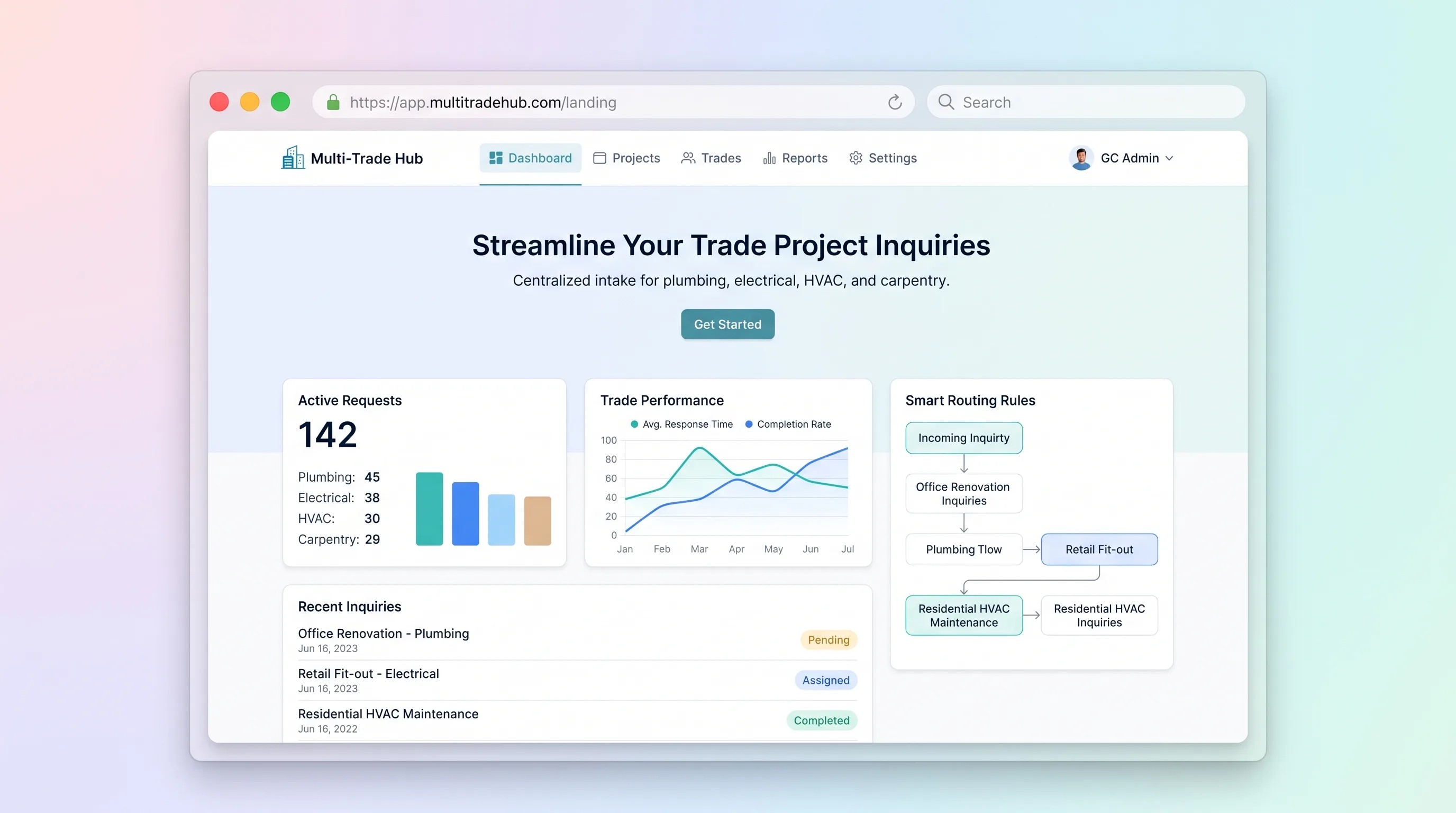
Decision snapshot
Office staff repeatedly chase missing scope and manually decide which estimator owns each discipline.
The contractor mainly needs field dispatch, job costing, construction management, or automated instant pricing.
Submit ten recent inquiry scenarios through the form and verify staff agree with the routed trade owners and can prepare a quote without a basic-information callback.
Problem and target customer
Project inquiries arrive through calls, email, and generic forms with missing site details, unclear trade scope, and photos detached from the request. Coordinators re-contact prospects before estimators can decide ownership or prepare a quote.
Small general contractors and multi-trade service firms with an office coordinator assigning residential or light-commercial inquiries to estimators.
Monthly subscription per contractor office, with higher tiers for additional estimators, service territories, and request volume.
Editorial note
The first product boundary ends at a quote decision. Project delivery, dispatch, and job costing would turn a focused lead handoff into a construction management suite before the intake problem is validated.
Trade routing should be explainable and editable by the contractor. Address, property type, selected discipline, and staff availability are enough to propose ownership while unusual requests remain in a human triage queue.
The strongest beta signal is fewer clarification calls before estimating. Completion rate and quote speed are useful later, but the source does not establish target percentages.
Choose your next step
Evaluate the operating tradeoffs quickly, or inspect how to build the MVP.
Compare the three operating paths at the default workload before opening the full calculator.
See cost preview Build this ideaInspect the build blueprintReview MVP scope, workflow, states, data rules, architecture, and acceptance criteria.
Open blueprintEvaluation preview
Directional infrastructure estimates for the current 300 project requests assumption. Open the full calculator when you are ready to change it.
Managed app, database, and job capacity for public requests and staff triage.
Lowest operating effortOne operator-managed server handles intake, files, database, and staff views.
Lowest baseline costSeparate runtime, database, and storage capacity for heavier request traffic.
Most separation and controlBuild blueprint
Product goal
MVP scope
UX and user flow
Collect enough site and scope information for the contractor to make a routing decision.
Separate routed inquiries from service-area, missing-data, and multi-trade exceptions.
Give an estimator the request, attachments, ownership, notes, due date, and quote controls.
Let the prospect check whether information is needed, a quote is ready, or the request was declined.
Core entity outline
Stores the customer, property, scope, timing, and lifecycle of one inquiry.
Identifies each discipline involved and its routing result.
Defines an ordered territory, property, trade, and availability condition for assignment.
Captures the estimator's bounded proposal summary and customer decision.
Keeps clarification questions and customer answers attached to the inquiry.
Architecture and data flow
Render conditional form steps, uploads, confirmation, and customer status.
Protect triage, estimator assignment, notes, and quote actions.
Validate requests, evaluate routing rules, enforce transitions, and queue notices.
Store requests, trades, rules, quotes, messages, and delivery state.
Keep project photos outside the relational database.
Deliverables and acceptance
Recommended stack
Serve a mobile intake and dense staff queue from one application.
Represent multi-trade assignments, ordered rules, quote states, and staff roles.
Store project photos with signed access and predictable low-volume costs.
Deliver request, clarification, and quote notices with visible failure state.
Normalize locations for service-area checks while preserving manual review on lookup failure.
The key technical risk is trustworthy routing from incomplete public input. A relational rule model, protected file storage, and explicit triage state keep ownership explainable without AI classification.
Copy the build prompt, model the operating cost, and choose where to deploy.
Execution
Once the blueprint is clear, use the prompt, cost model, and deployment options to start building.
Build prompt
Build a mobile-friendly public intake plus a desktop staff queue in Next.js. Use administrator-defined trade and territory rules; do not use an LLM to classify construction scope.
Build prompt
Open the prompt pack whenever you are ready to take this blueprint into your builder.
Build prompt ready
Copy the prompt into your builder, then use the cost model below to choose how you want to run it.
Use the cost model to choose a deployment path that matches the build plan.
Cost calculator
A technical run-cost estimate for the first production version. Team, acquisition, payment fees, and business COGS are excluded.
$8.33-$50 per 500 project requests
Low and high values allow for usage variance and plan headroom.
Managed app, database, and job capacity for public requests and staff triage.
5K project requests included, then $5-$15 per 5K project requestsObject storage for intake images after the included beta allowance.
Monthly allowance from this idea's operating profileThe estimate combines the selected infrastructure path, required operating modules, selected optional modules, and usage above included monthly allowances. Taxes and regional uplifts are excluded.
Deployment options
Choose based on operating preference, not only the headline price.
Host intake, staff operations, database, and background notices with little platform setup.
Resource use and attachment traffic can increase the bill.
Run the app, worker, and database on one small Vultr VPS with Docker Compose and explicit backups.
The operator owns updates, monitoring, and restore drills.
Separate application, worker, data, storage, and backup responsibilities as the workload grows.
More components increase configuration and observability work.
Start building
Use Lovable to test the conditional customer form, trade-routing explanation, estimator queue, and quote-status view with office staff.
Open Lovable 02AutomationNotify assigned estimatorsUse Make as optional glue to post a newly assigned request to an existing team channel or send a bounded reminder when the quote due date passes.
Open Make 03DeployHost intake and estimating operations togetherDeploy the public form, protected request queue, database, and attachment handling on Railway with one production release path.
Open RailwayKeep exploring
Internal ToolHome & Local Services
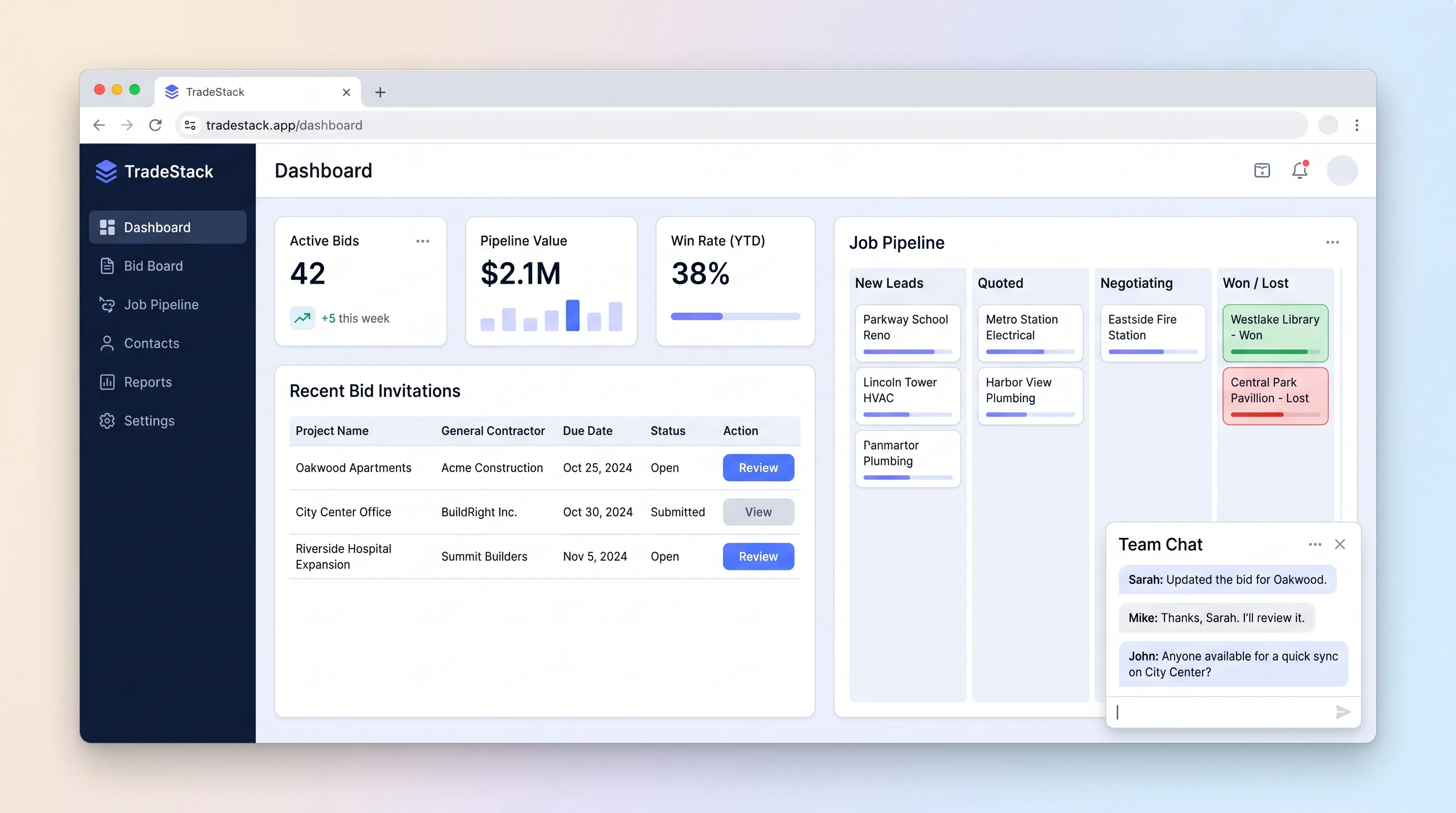
An internal bid desk for specialty contractors to capture invitations, prepare deadlines, move opportunities through estimating, and learn from won or lost work.
Website & Lead GenerationHome & Local Services
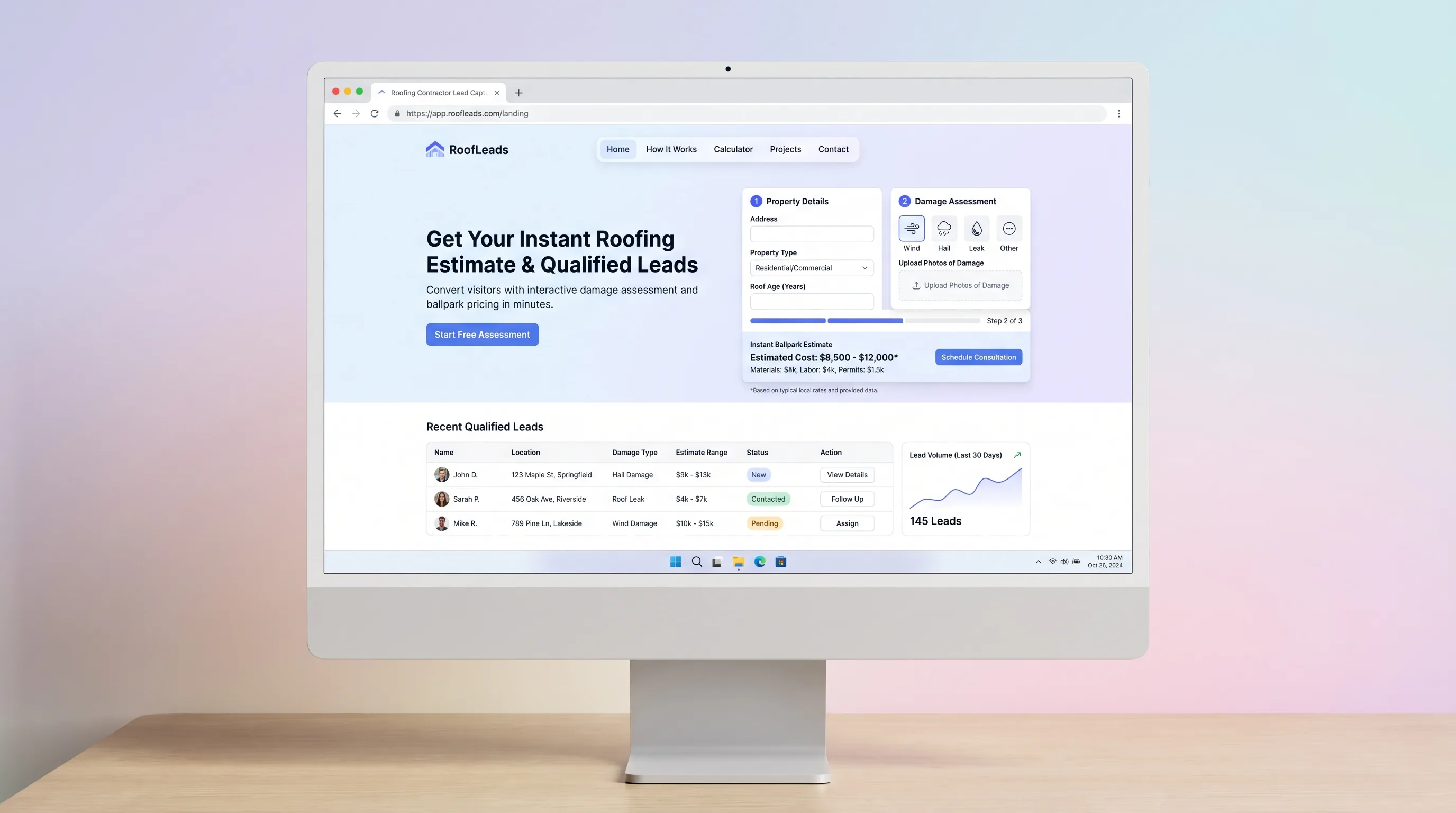
A local roofing website that turns damage details, roof facts, and photos into a clearly qualified lead with a contractor-configured ballpark range.
Website & Lead GenerationHome & Local Services
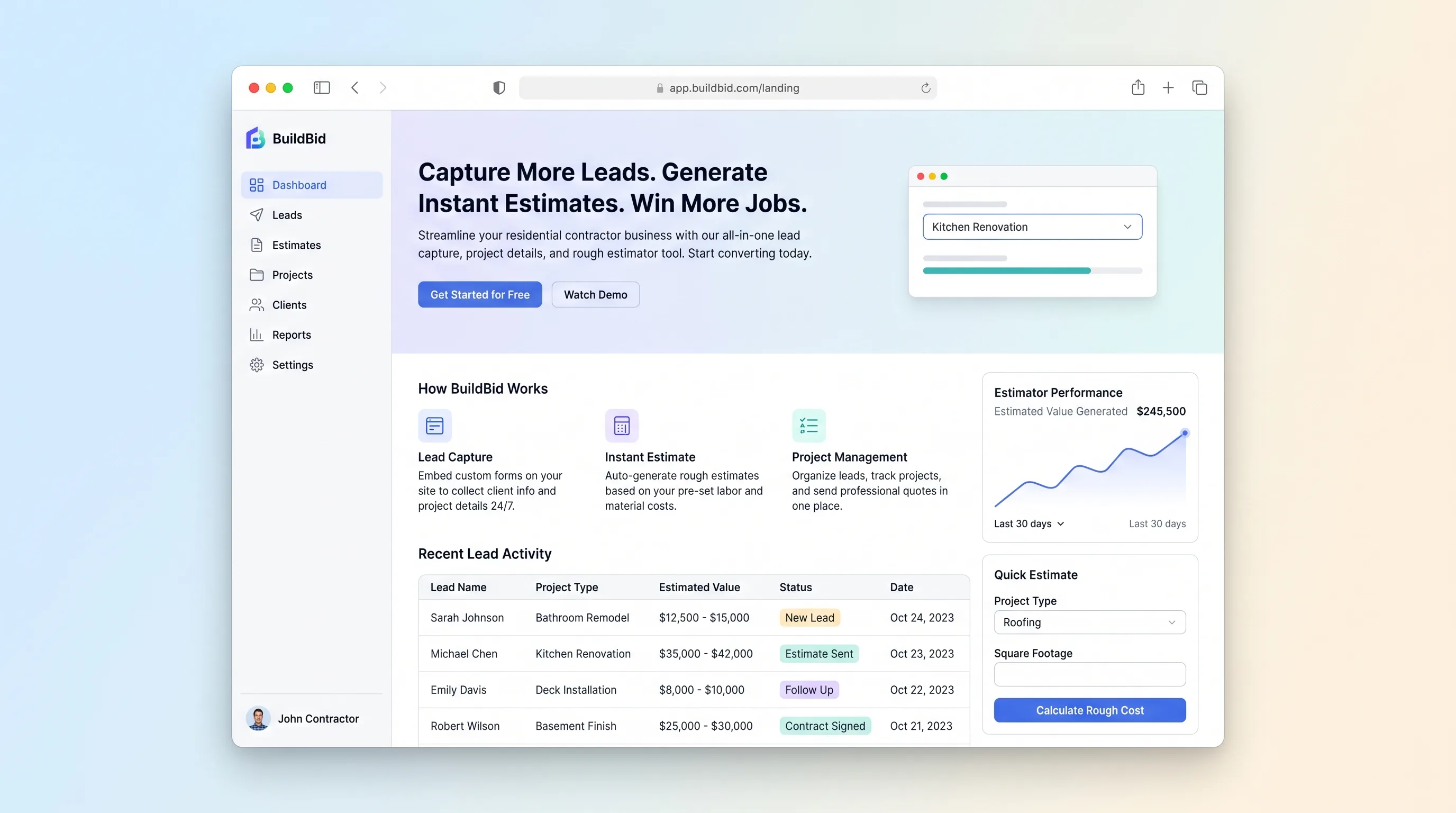
A conversion-focused lead capture site where homeowners submit project details in under two minutes and receive an instant rough estimate, while contractors review qualified leads in a dashboard within seconds.
Website & Lead GenerationHome & Local Services
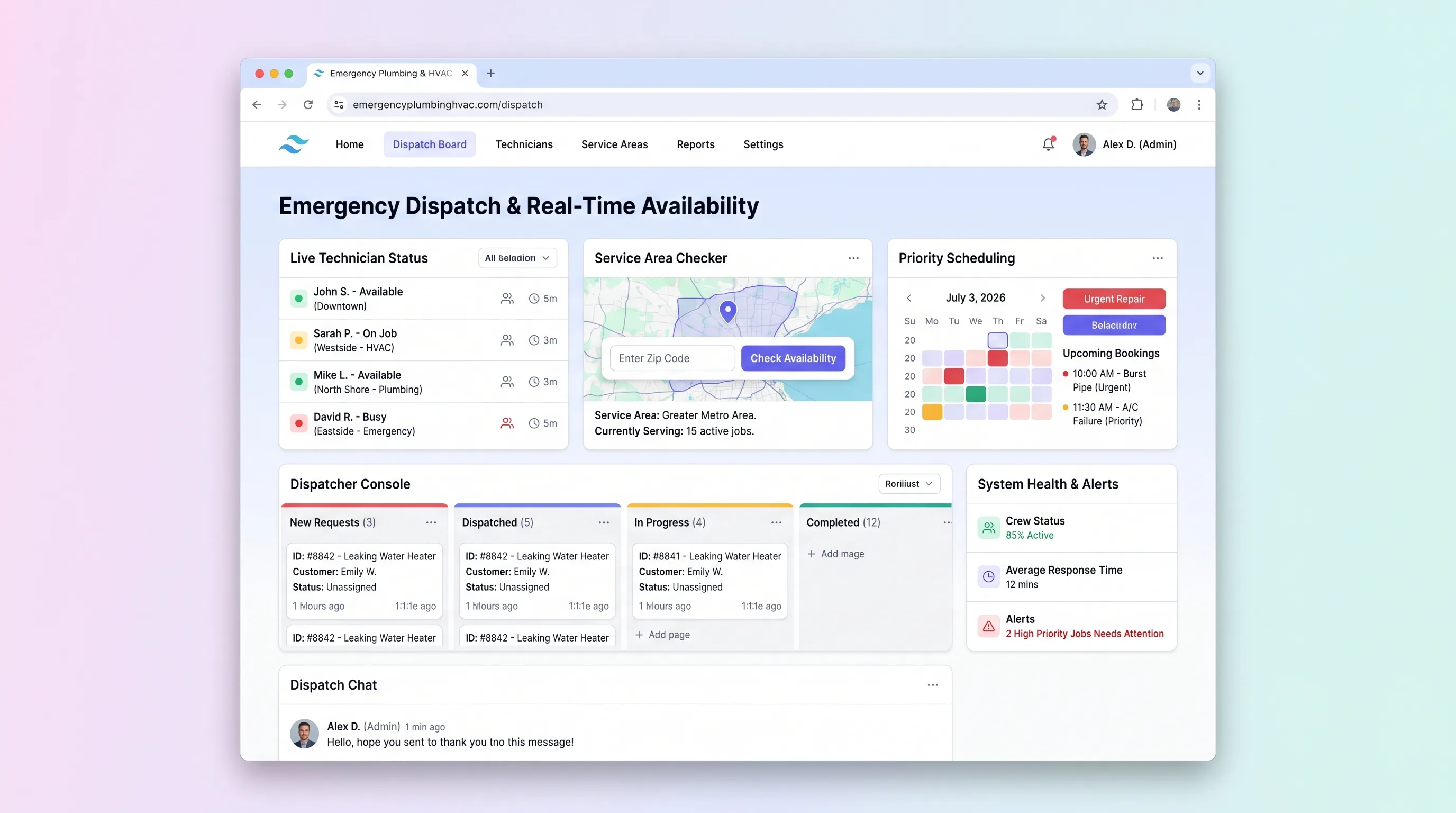
A 24/7 intake and dispatch surface that tells callers whether service is available, captures urgent repair details, and lets a dispatcher confirm the right technician.
Website & Lead GenerationHome & Local Services
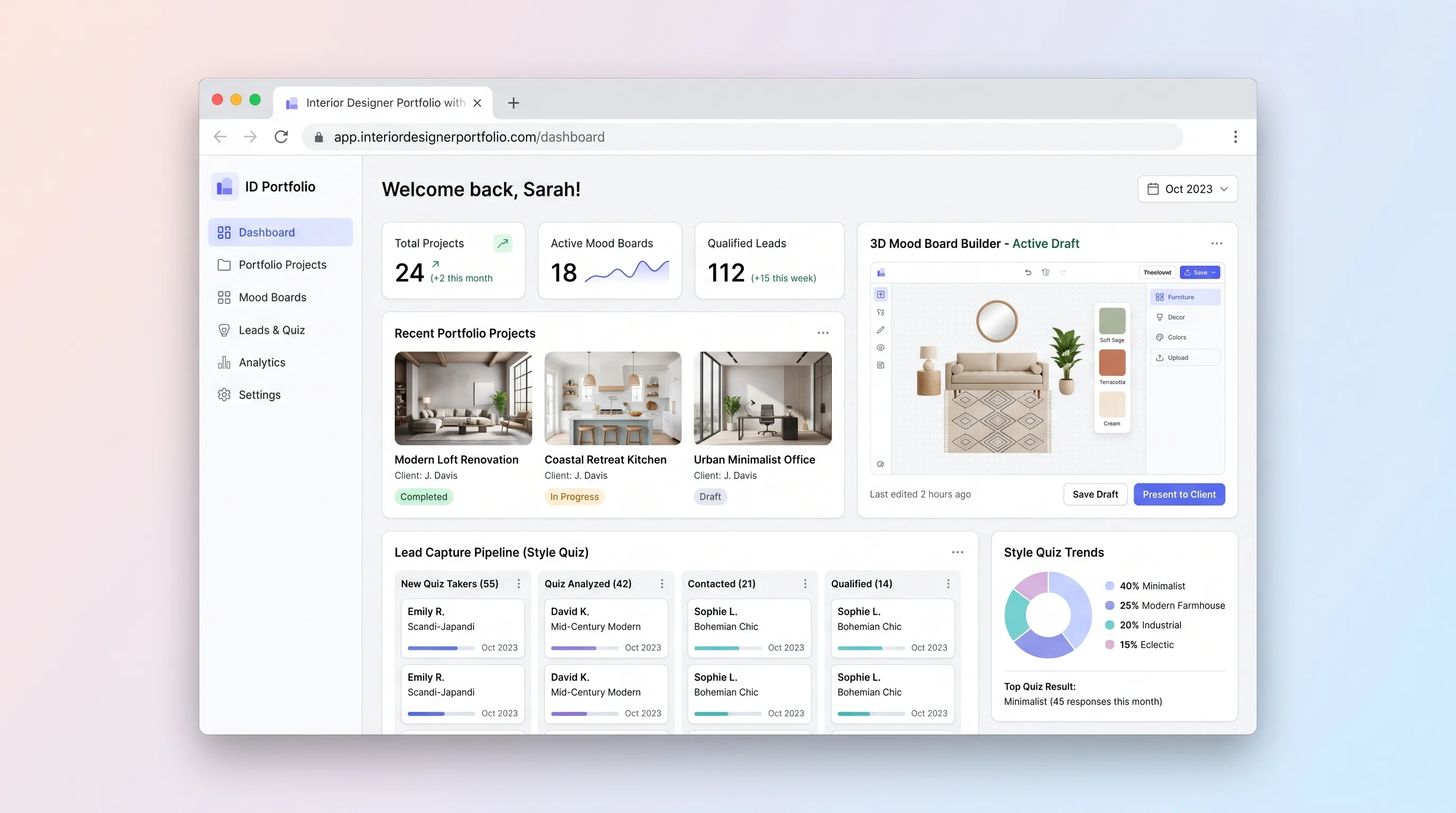
A portfolio website for independent interior designers that lets visitors explore projects, assemble 3D mood boards, complete a style quiz, and submit qualified inquiries—all in one session.
Website & Lead GenerationProfessional Services
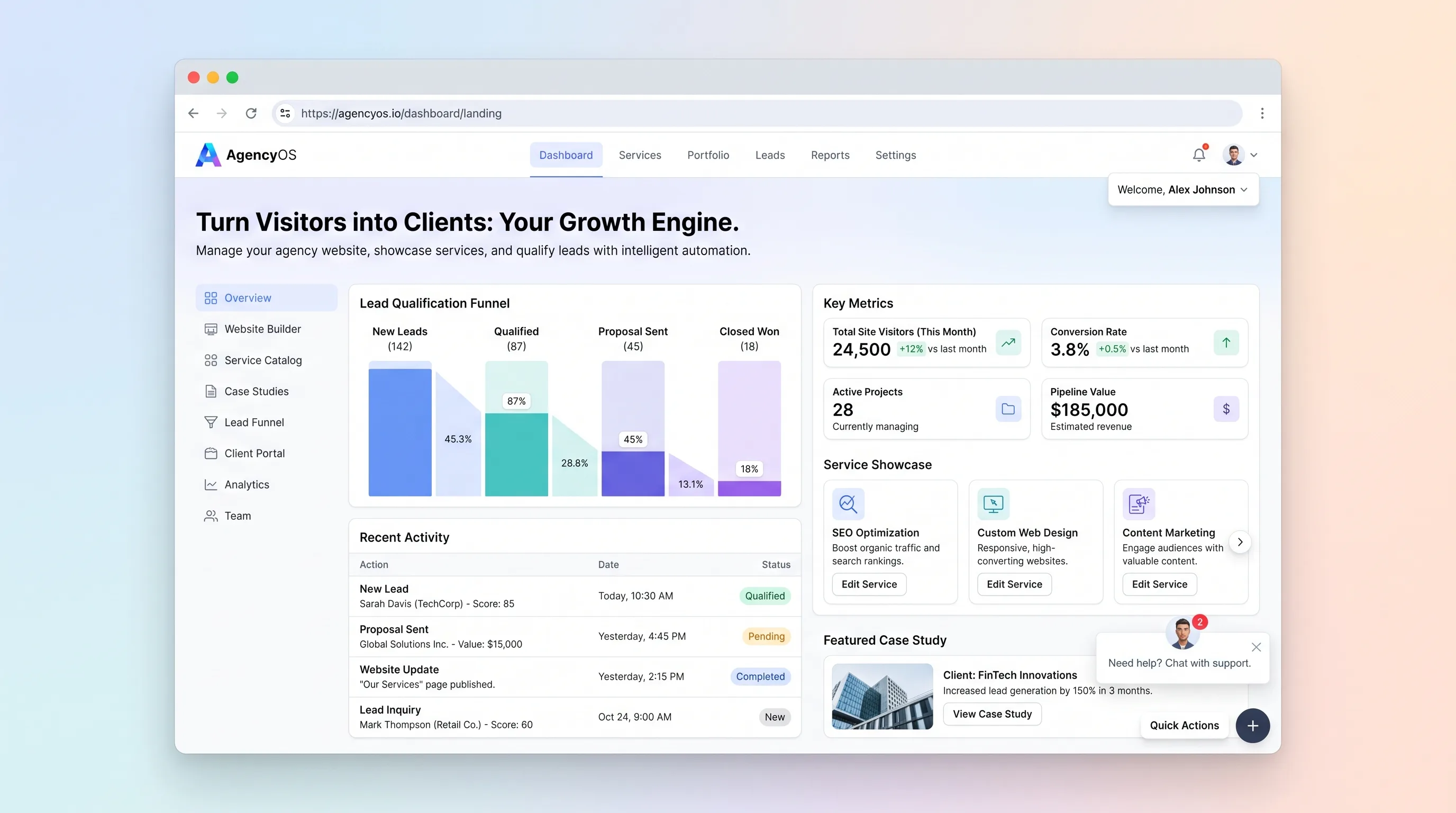
A conversion-focused site for digital agencies that turns service research and case-study browsing into structured, qualified discovery inquiries.