Build this if
Your consultancy repeatedly loses time clarifying proposal status, current deliverables, and client approvals.
A branded workspace for boutique consultancies to move a prospect from proposal approval into a controlled engagement with milestones, files, and client sign-offs.
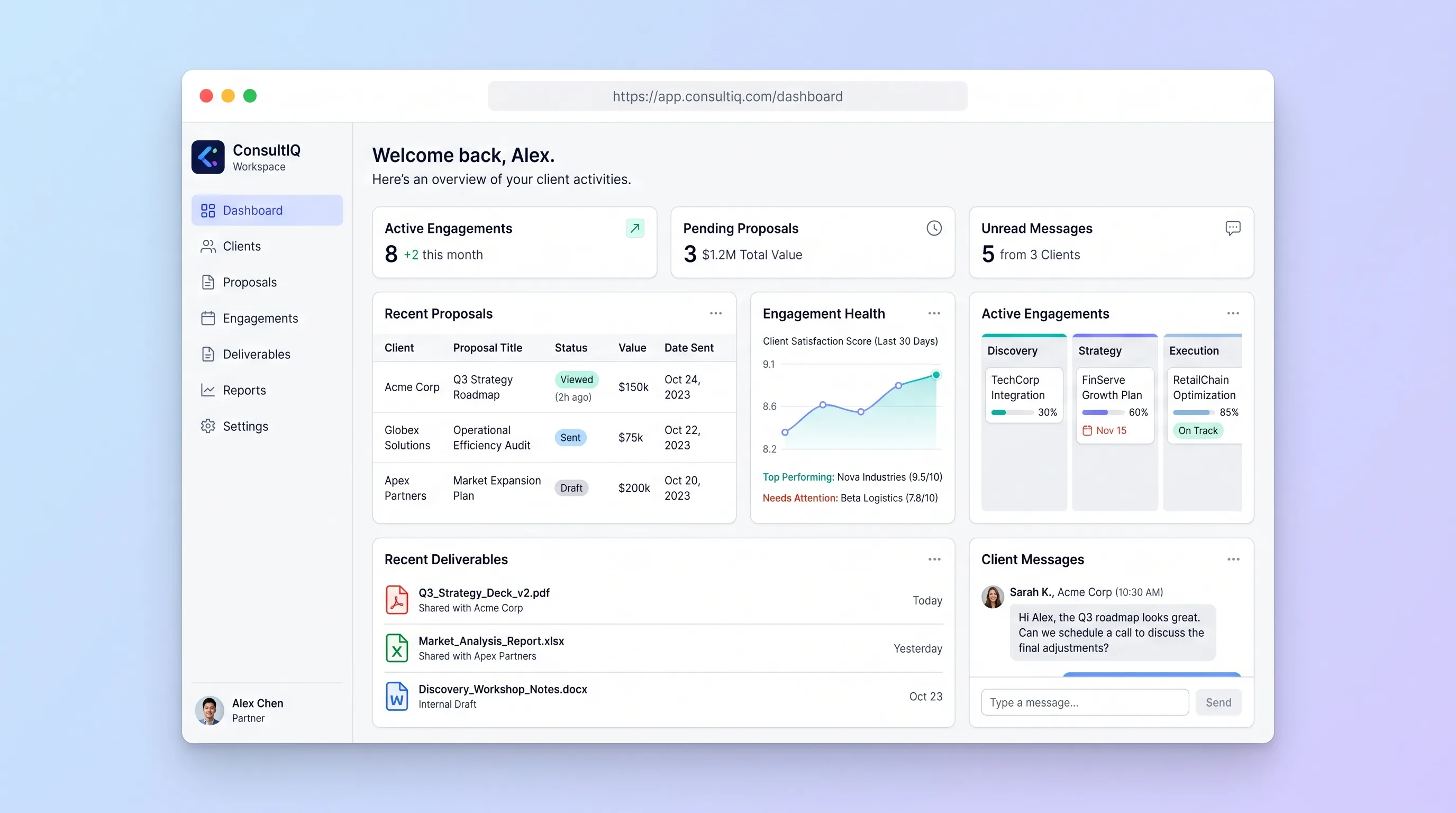
Decision snapshot
Your consultancy repeatedly loses time clarifying proposal status, current deliverables, and client approvals.
You primarily need full CRM, resource planning, billing, or legally qualified e-signatures in the first release.
Onboard three live engagements and verify that each client can approve scope and accept a deliverable without asking for an email attachment or drive link.
Problem and target customer
Boutique consultancies often send proposals by email, track engagement status in internal documents, and share final files through disconnected folders. Clients cannot tell what needs approval or which deliverable is current, and consultants spend billable time reconstructing the record.
Partners and project leads at boutique management consultancies that handle several active B2B engagements without a dedicated client operations system.
Monthly consultancy workspace subscription, tiered by active client engagements and storage.
Editorial note
The defensible record here is the client's decision on a specific version. A polished portal is useful, but the product earns trust only when both parties can distinguish draft scope from issued scope and current work from an obsolete attachment.
Keep the pilot deliberately below full professional-services automation. Proposal approval, milestone visibility, and deliverable acceptance form one coherent handoff; billing, resource planning, and qualified signatures introduce separate buyers and risk profiles.
Choose your next step
Evaluate the operating tradeoffs quickly, or inspect how to build the MVP.
Compare the three operating paths at the default workload before opening the full calculator.
See cost preview Build this ideaInspect the build blueprintReview MVP scope, workflow, states, data rules, architecture, and acceptance criteria.
Open blueprintEvaluation preview
Directional infrastructure estimates for the current 200 client artifacts assumption. Open the full calculator when you are ready to change it.
Railway runs the app, database, and notification worker.
Lowest operating effortA shared Hetzner cloud server runs Docker services with external object storage.
Lowest baseline costDedicated or larger cloud resources isolate client traffic and document processing.
Most separation and controlBuild blueprint
Product goal
MVP scope
UX and user flow
Show scope, fees, assumptions, version history, and the client's approval action.
Summarize milestones, due dates, owner, and blockers for both parties.
Keep file versions, consultant notes, client comments, and sign-off together.
Core entity outline
Defines the client organization, contacts, branding boundary, and portal access.
Freezes the scope, commercial terms, and decision associated with one issued version.
Tracks the approved work, responsible consultant, and milestone sequence.
Stores each uploaded artifact and the client decision on that exact version.
Architecture and data flow
Serve consultancy and client views with organization- and engagement-level authorization.
Persist immutable proposal versions, milestones, decisions, and audit metadata.
Create short-lived upload and download URLs scoped to an engagement.
Deliver invitations and decision alerts with retry protection.
Deliverables and acceptance
Recommended stack
Supports authenticated portal routes, printable proposal views, and server-side authorization in one app.
Relational constraints fit versions, approvers, milestones, and tenant isolation.
Signed access keeps client files private and avoids proxying large uploads.
Invitations and approval alerts need reliable retries and stable message IDs.
A conventional relational web app is the safest MVP because the product promise depends on version identity and authorization, not advanced collaboration. Keep files in object storage and decisions in the database.
Copy the build prompt, model the operating cost, and choose where to deploy.
Execution
Once the blueprint is clear, use the prompt, cost model, and deployment options to start building.
Build prompt
Build a TypeScript monolith with PostgreSQL and object storage so proposal versions, client approvals, milestones, and file access share one authorization boundary.
Build prompt
Open the prompt pack whenever you are ready to take this blueprint into your builder.
Build prompt ready
Copy the prompt into your builder, then use the cost model below to choose how you want to run it.
Use the cost model to choose a deployment path that matches the build plan.
Cost calculator
A technical run-cost estimate for the first production version. Team, acquisition, payment fees, and business COGS are excluded.
$5-$35 per 200 client artifacts
Low and high values allow for usage variance and plan headroom.
Railway runs the app, database, and notification worker.
500 client artifacts included, then $2-$8 per 500 client artifactsPortal invitations and proposal or deliverable decision alerts.
3K client artifacts includedEstimate for PDFs and office files stored in R2 with signed access.
500 client artifacts includedThe estimate combines the selected infrastructure path, required operating modules, selected optional modules, and usage above included monthly allowances. Taxes and regional uplifts are excluded.
Deployment options
Choose based on operating preference, not only the headline price.
Ship the portal, database, and notification worker with little infrastructure setup.
Usage billing requires monitoring as files and traffic grow.
Run the app, worker, and database on one small Vultr VPS with Docker Compose and explicit backups.
You operate patches, backups, monitoring, and restore tests.
Separate application, worker, data, storage, and backup responsibilities as the workload grows.
Requires active infrastructure ownership.
Start building
Use Lovable to test the branded proposal view, approval action, milestone timeline, and deliverable sign-off with real consultants and clients.
Open Lovable 02AutomationRelay approved engagement eventsUse Make only after the core flow works to notify an internal channel or create a finance task when a proposal is accepted.
Open Make 03DeployDeploy a private client workspaceHost the portal and database on Railway while keeping proposal PDFs and deliverables in signed object storage.
Open RailwayKeep exploring
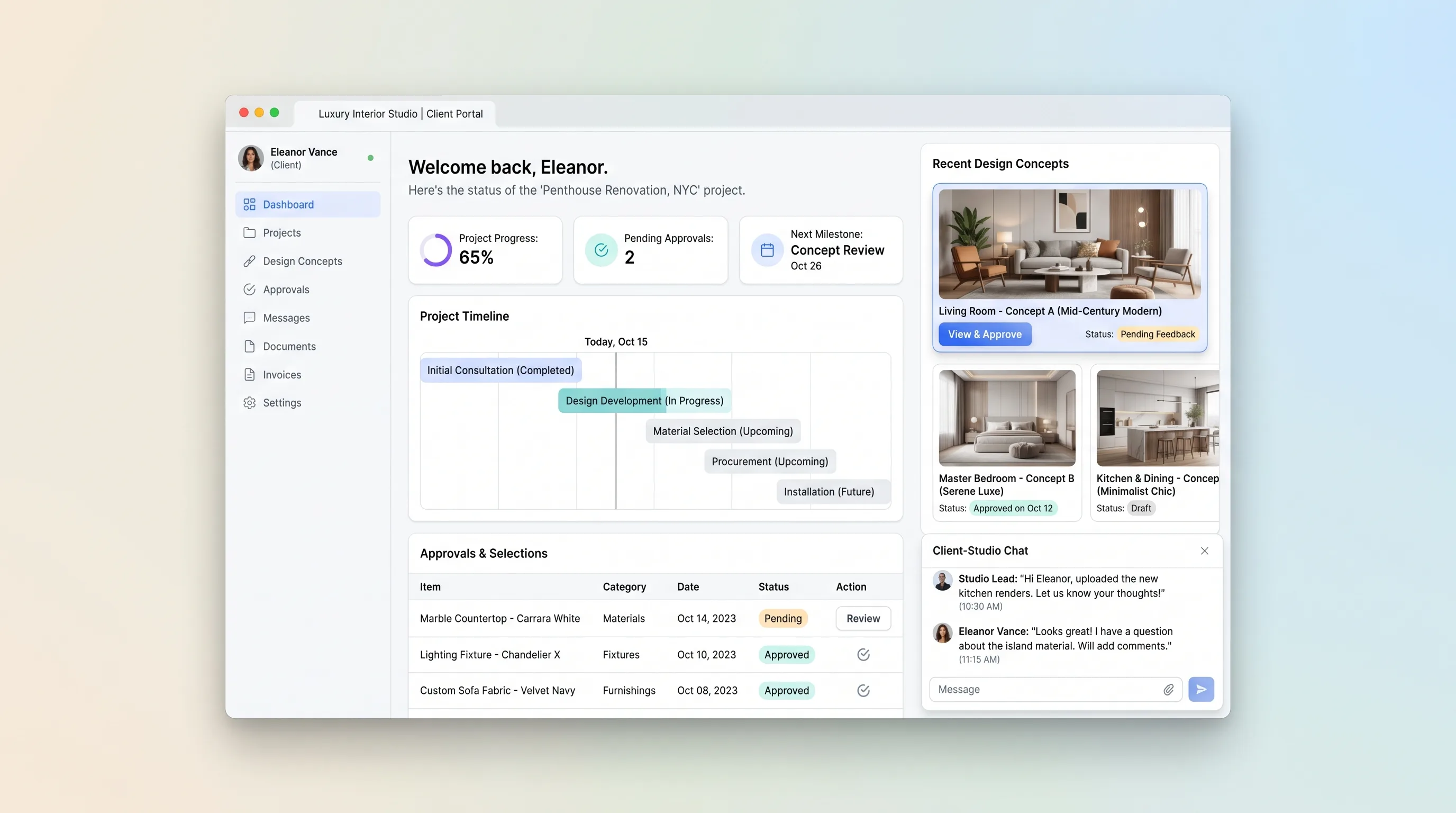
SaaS WorkflowProfessional Services
A private project space where interior studios publish concept versions, clients make item-level decisions, and both track milestones and procurement exceptions.
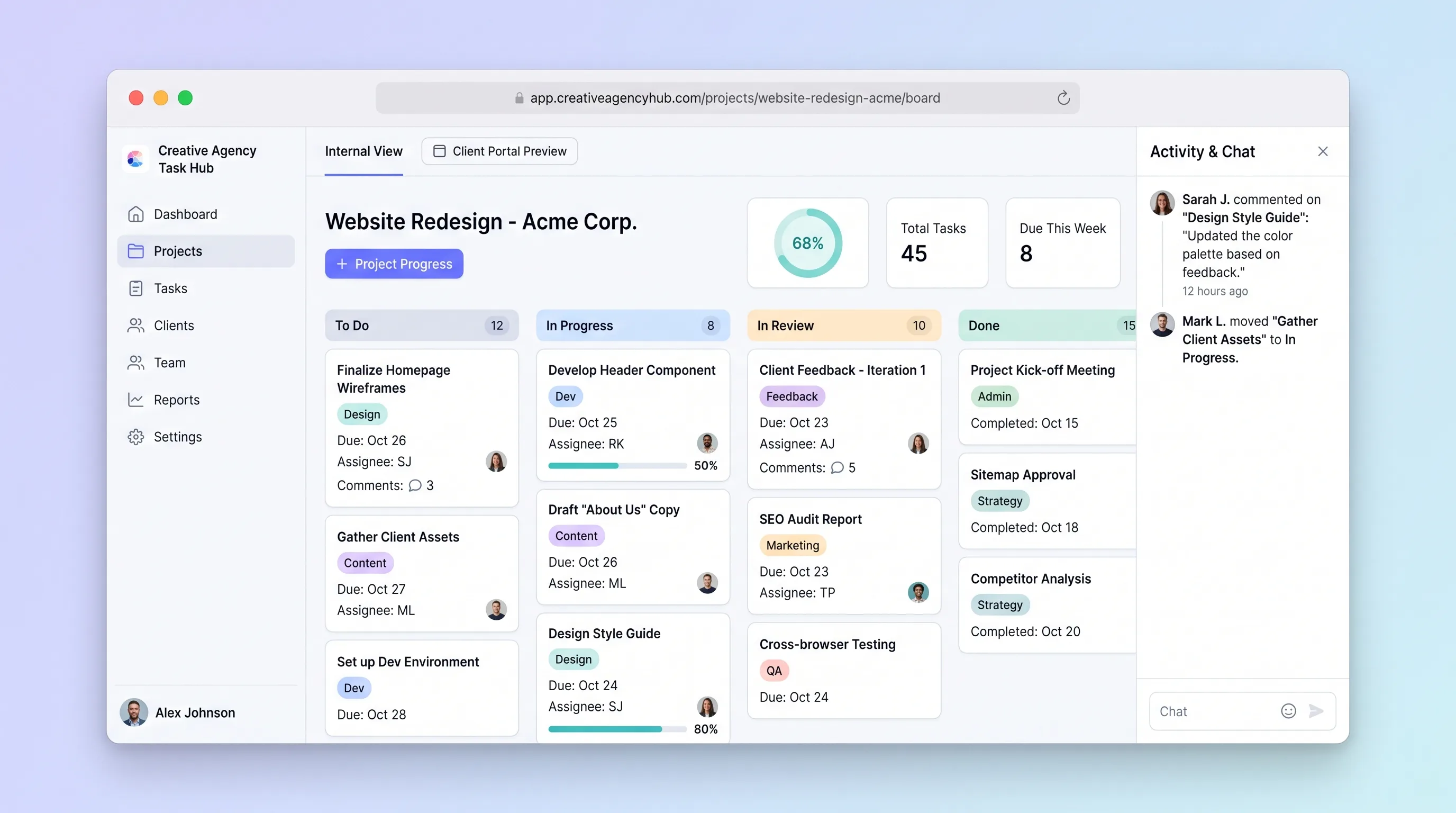
SaaS WorkflowProfessional Services
A focused project tracker where small creative agencies manage deliverables on an internal kanban board and share branded client portals for progress review and approvals without email chains.
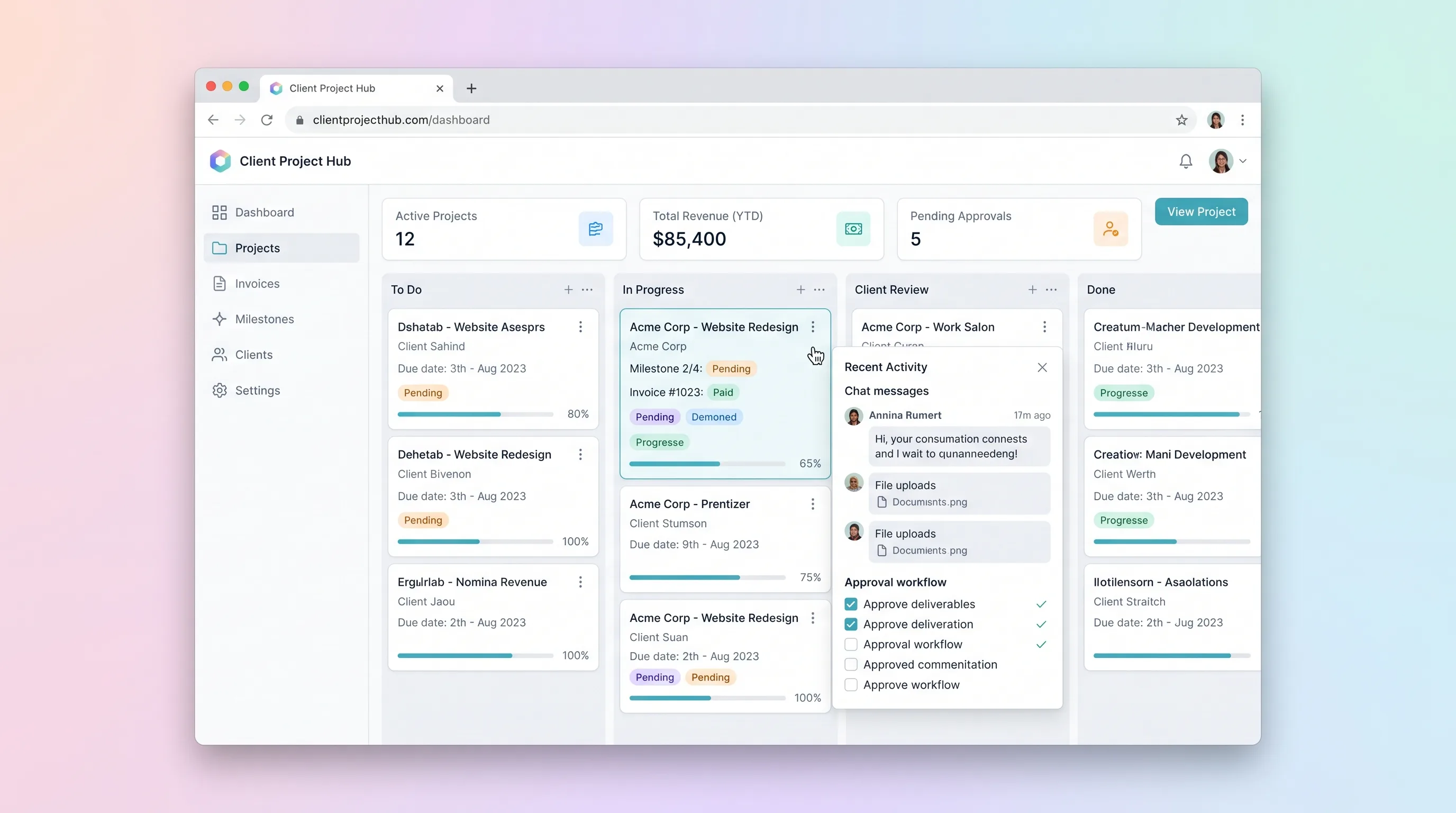
SaaS WorkflowProfessional Services
A kanban-driven workspace where freelancers and small agencies track client project milestones, route deliverables through an approval workflow, and auto-generate invoices upon approval.
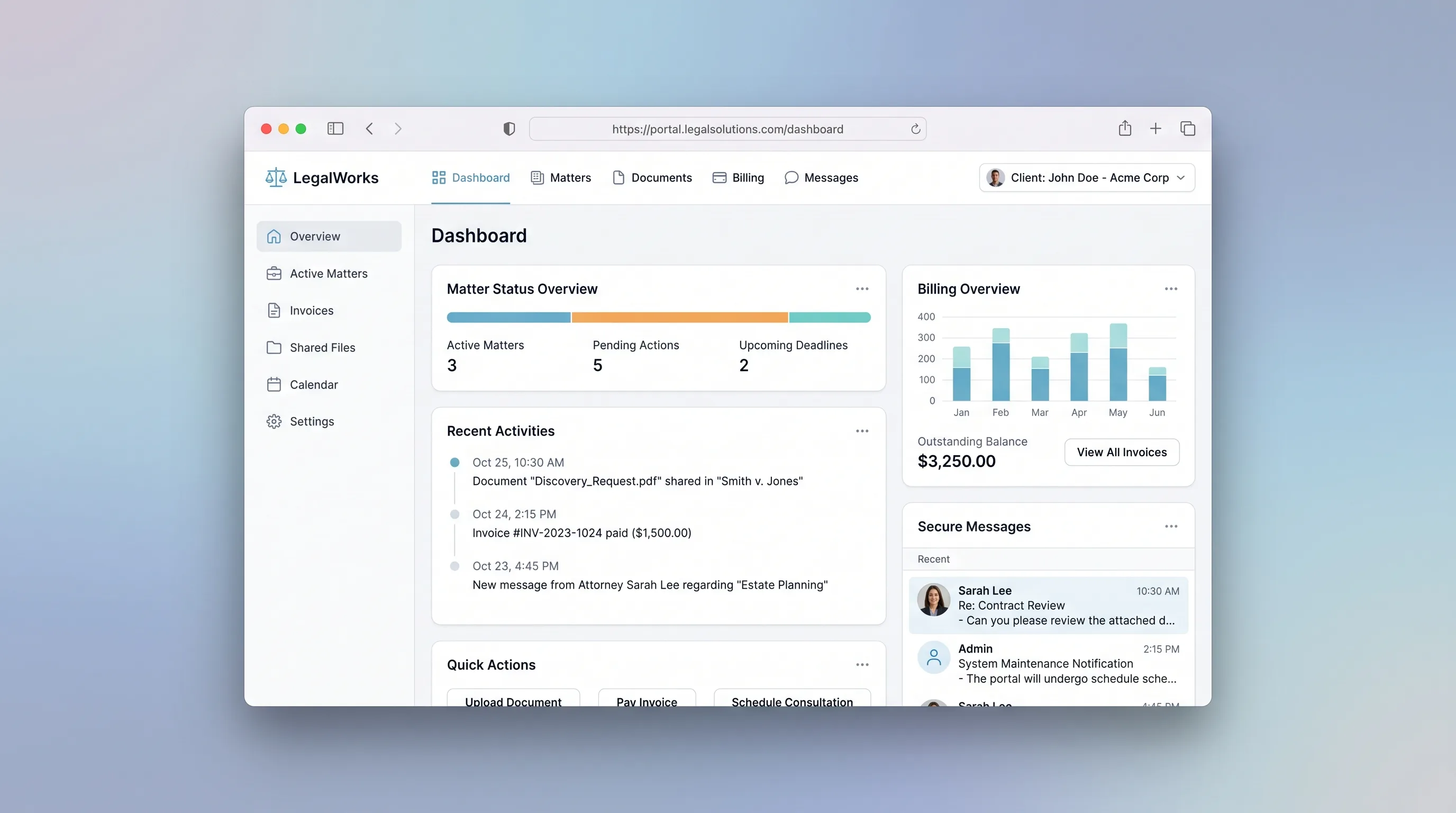
SaaS WorkflowProfessional Services
A branded portal where law firms manage client matters, share documents, log billable time, and collect invoice payments in one secure place.
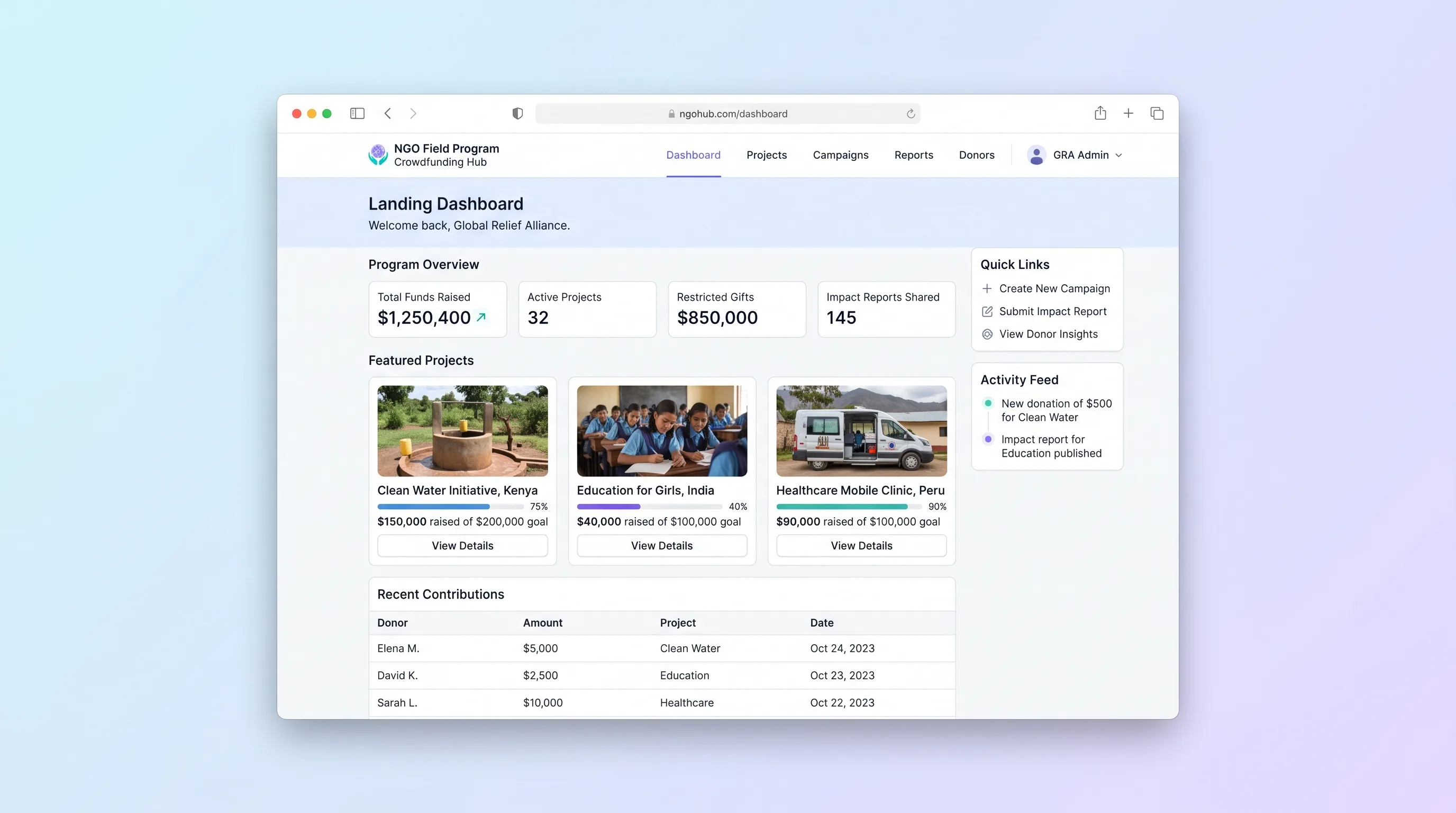
SaaS WorkflowProfessional Services
A multi-project crowdfunding portal where NGOs publish field programs, collect restricted gifts with donor dedications, and send field updates back to funders through a branded donor portal.
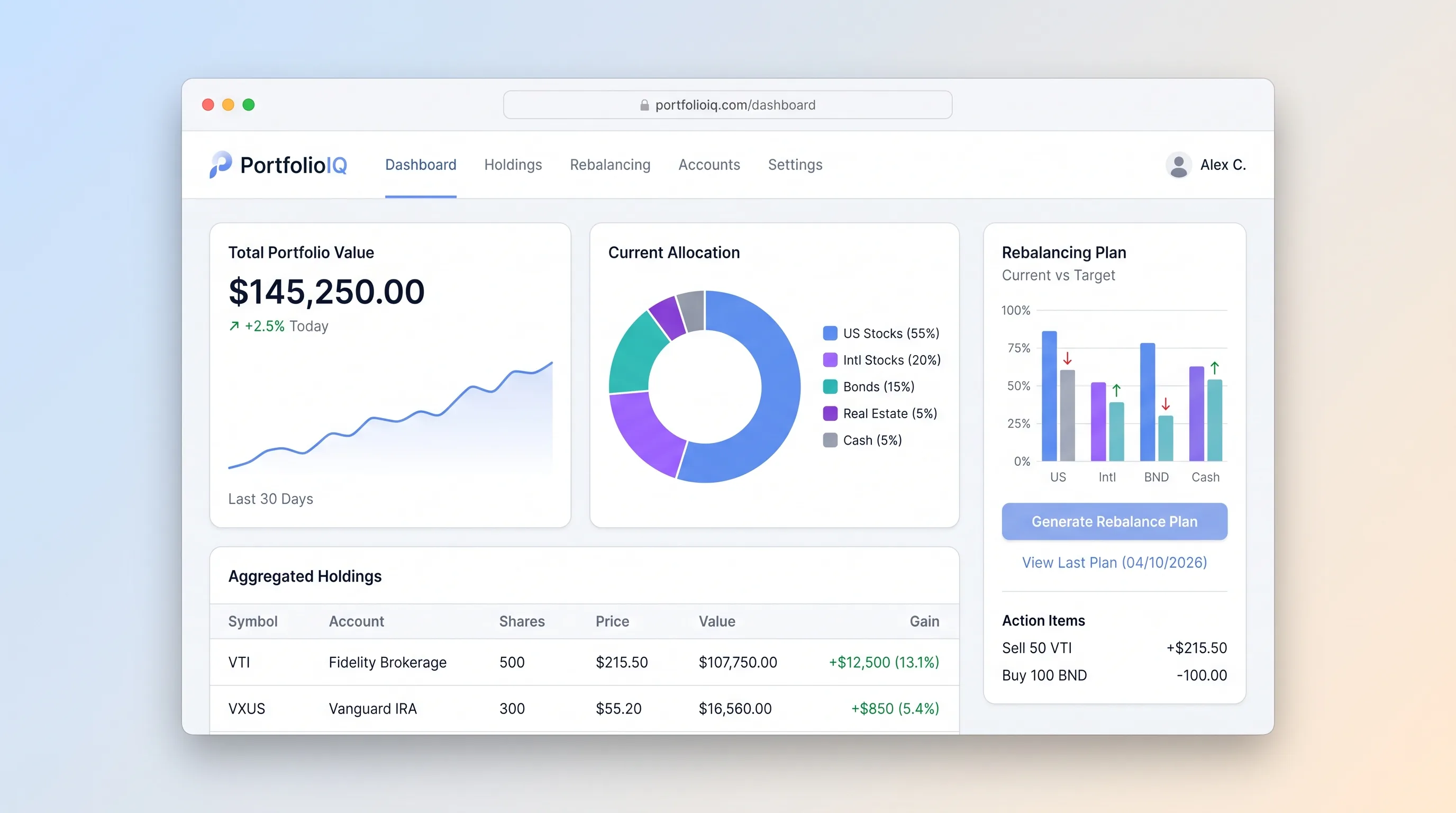
SaaS WorkflowProfessional Services
Import positions across multiple brokerage accounts, compare current allocation against a target model, and generate actionable rebalancing trade plans.