Build this if
The studio already manages concepts and procurement but needs a single client-facing approval record.
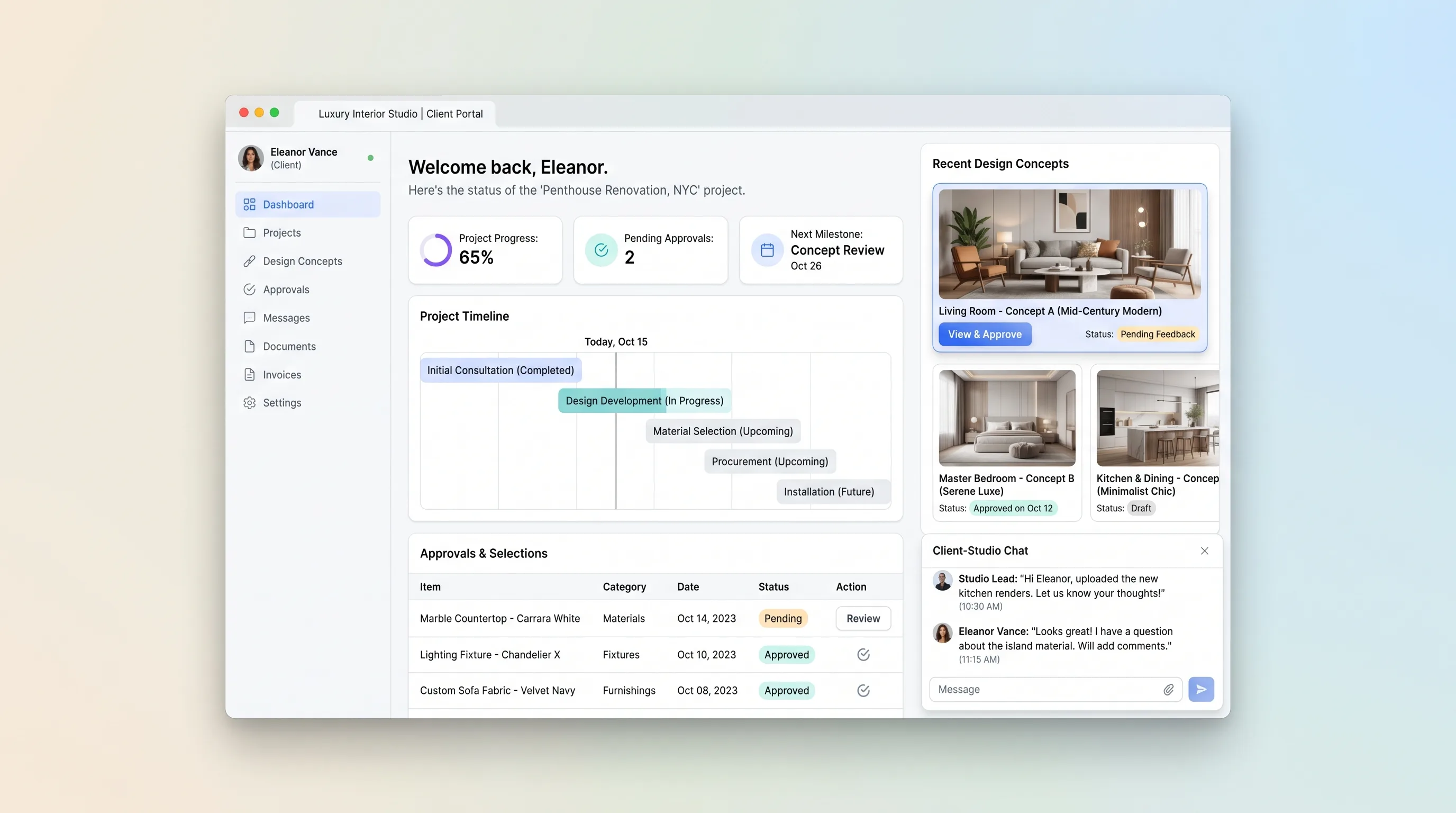
A private project space where interior studios publish concept versions, clients make item-level decisions, and both track milestones and procurement exceptions.
Decision snapshot
The studio already manages concepts and procurement but needs a single client-facing approval record.
The buyer expects full accounting, construction scheduling, 3D design tools, or automated vendor purchasing.
Run one active project through a concept decision cycle and measure approval turnaround, repeated questions, and disputed selection history.
Problem and target customer
Active design projects lose a reliable decision history when concept decks, selection approvals, delivery changes, and milestone updates are scattered across inboxes and spreadsheets.
High-end residential interior studios managing active projects with clients who expect a polished, private review experience.
Monthly studio subscription based on active projects
Editorial note
Interior clients need to know exactly what they reviewed and what happens next. Numbered concepts and item-level decisions turn aesthetic feedback into an operational record without flattening the studio's presentation.
Procurement belongs in the portal only at the client-visible status boundary. Purchase orders, margins, and vendor operations can remain in existing studio systems until a validated integration is justified.
Choose your next step
Evaluate the operating tradeoffs quickly, or inspect how to build the MVP.
Compare the three operating paths at the default workload before opening the full calculator.
See cost preview Build this ideaInspect the build blueprintReview MVP scope, workflow, states, data rules, architecture, and acceptance criteria.
Open blueprintEvaluation preview
Directional infrastructure estimates for the current 500 approval requests assumption. Open the full calculator when you are ready to change it.
Run the web app and Postgres as managed services with capacity for the first approval requests.
Lowest operating effortOperate the app, database, and scheduled jobs on one small server with manual backups.
Lowest baseline costSeparate application and data capacity, add managed database backups, and retain room for a worker.
Most separation and controlBuild blueprint
Product goal
MVP scope
UX and user flow
Summarize the current concept, pending decisions, milestones, and procurement exceptions.
Present a versioned design direction and individual selection items.
Show client-visible ordering, shipping, delay, and delivery states.
Explain project phases, target dates, completion, and dependencies.
Publish concept versions and manage client-visible project status.
Core entity outline
Defines studio ownership, client participants, project status, and visibility.
Freezes a numbered board and its client decision window.
Represents one furniture, finish, fixture, or direction requiring a client decision.
Appends a client's approval, rejection, or change request to one item.
Tracks the client-visible lifecycle of an approved selection.
Shows a named phase, target date, dependencies, and completion.
Architecture and data flow
Displays project status, concept decisions, procurement updates, milestones, and messages.
Publishes concept versions and controls all client-visible information.
Enforces studio ownership, participant access, publish rules, and append-only decisions.
Stores versions, decisions, item states, dependencies, and visibility flags.
Serves concept images through project-scoped signed URLs.
Deliverables and acceptance
Recommended stack
Supports separate studio and client navigation with server-rendered project summaries.
Fits project membership, immutable versions, decisions, and field visibility.
Protects concept imagery while issuing short-lived project-scoped links.
Sends invitations and reminders without making delivery part of approval truth.
The core is a permissioned decision ledger around visual assets, so relational versioning and strict media access matter more than AI, search, or a broad project-management framework.
Copy the build prompt, model the operating cost, and choose where to deploy.
Execution
Once the blueprint is clear, use the prompt, cost model, and deployment options to start building.
Build prompt
Use Lovable to validate the visual hierarchy and approval interactions, then implement project permissions and immutable decision history server-side before inviting clients.
Build prompt
Open the prompt pack whenever you are ready to take this blueprint into your builder.
Build prompt ready
Copy the prompt into your builder, then use the cost model below to choose how you want to run it.
Use the cost model to choose a deployment path that matches the build plan.
Cost calculator
A technical run-cost estimate for the first production version. Team, acquisition, payment fees, and business COGS are excluded.
$20-$70 per 1,000 approval requests
Low and high values allow for usage variance and plan headroom.
Run the web app and Postgres as managed services with capacity for the first approval requests.
5K approval requests included, then $5-$15 per 5K approval requestsThe estimate combines the selected infrastructure path, required operating modules, selected optional modules, and usage above included monthly allowances. Taxes and regional uplifts are excluded.
Deployment options
Choose based on operating preference, not only the headline price.
Deploy the interior project client portal with managed runtime, Postgres, environment variables, and logs in one project.
Usage-based compute can become less predictable as traffic grows.
Run the app, worker, and database on one small Vultr VPS with Docker Compose and explicit backups.
The operator owns database maintenance, monitoring, and recovery drills.
Separate application, worker, data, storage, and backup responsibilities as the workload grows.
More components increase setup and operational work.
Start building
Build the project overview, concept board, item decision, milestone, and procurement views with distinct studio and client actions.
Open Lovable 02AutomationRelay approved-item updatesUse Make only to notify an existing procurement sheet or inbox after a client decision; the portal remains the approval record.
Open Make 03DeployDeploy the private project portalRun project access, versioned concepts, item decisions, milestone updates, and media metadata with Postgres on Railway.
Open RailwayKeep exploring
Website & Lead GenerationReal Estate
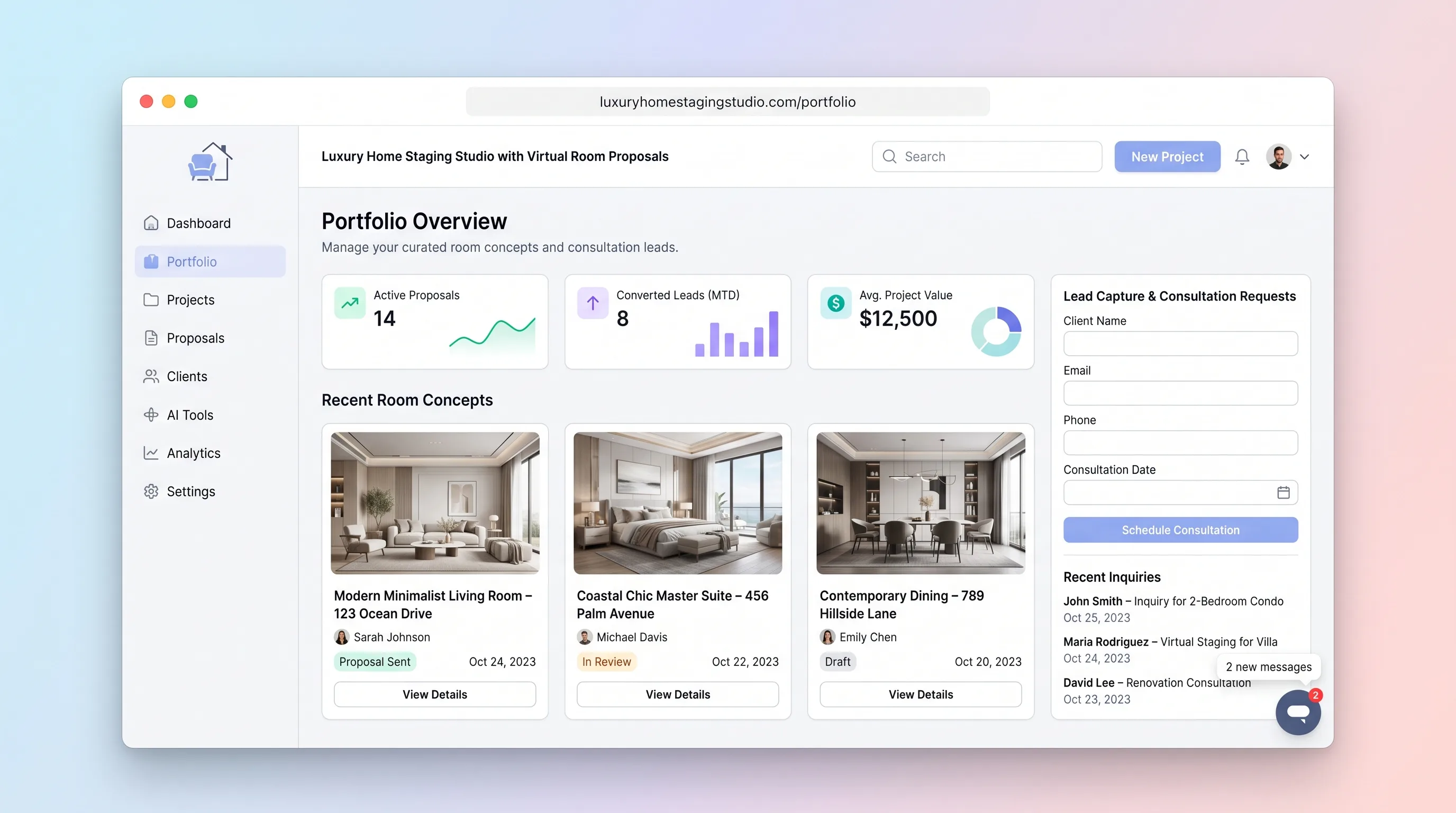
A premium studio site and private proposal flow for turning room photos and consultation details into curated, reviewable staging concepts.
SaaS WorkflowProfessional Services
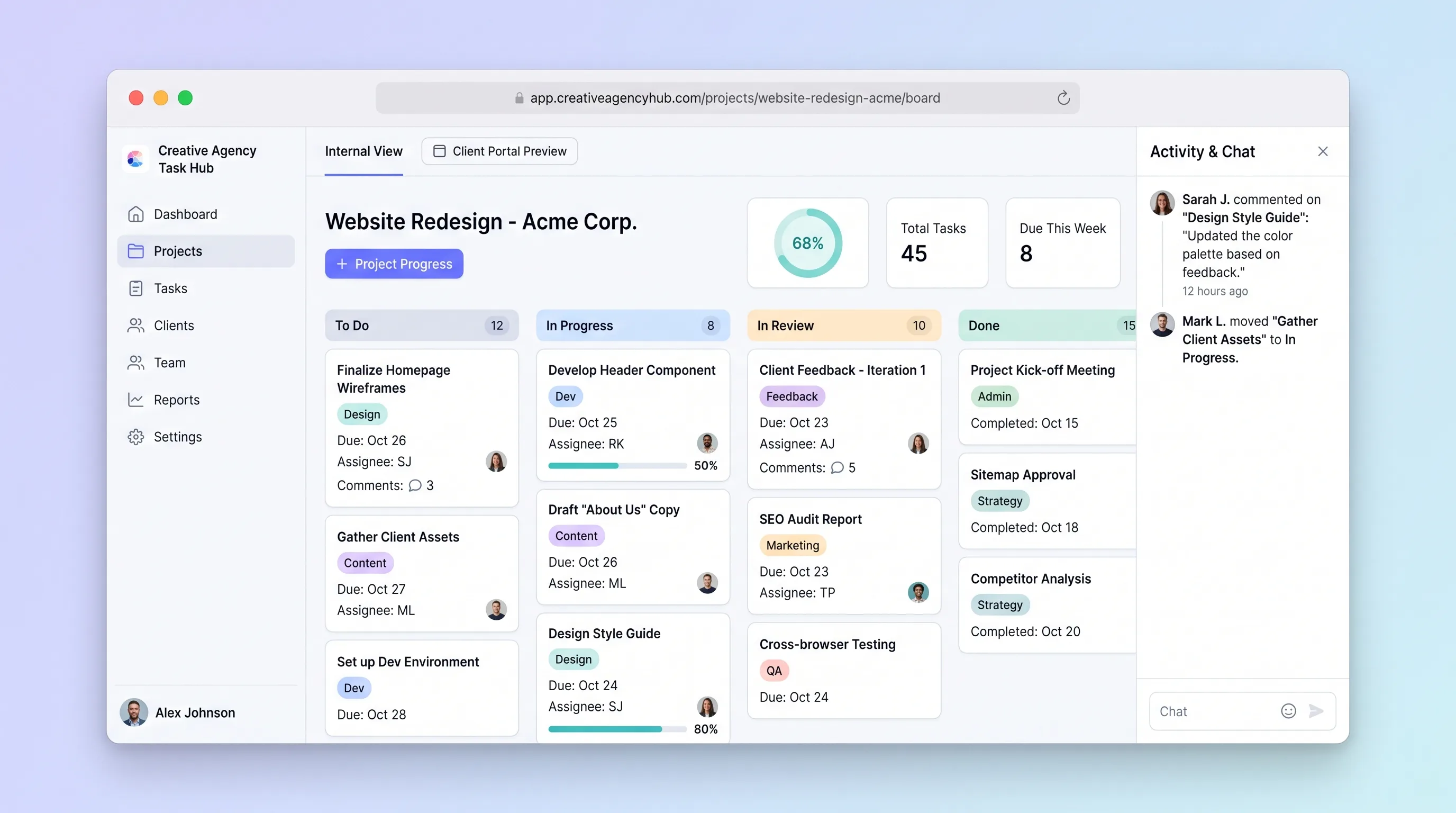
A focused project tracker where small creative agencies manage deliverables on an internal kanban board and share branded client portals for progress review and approvals without email chains.
SaaS WorkflowProfessional Services
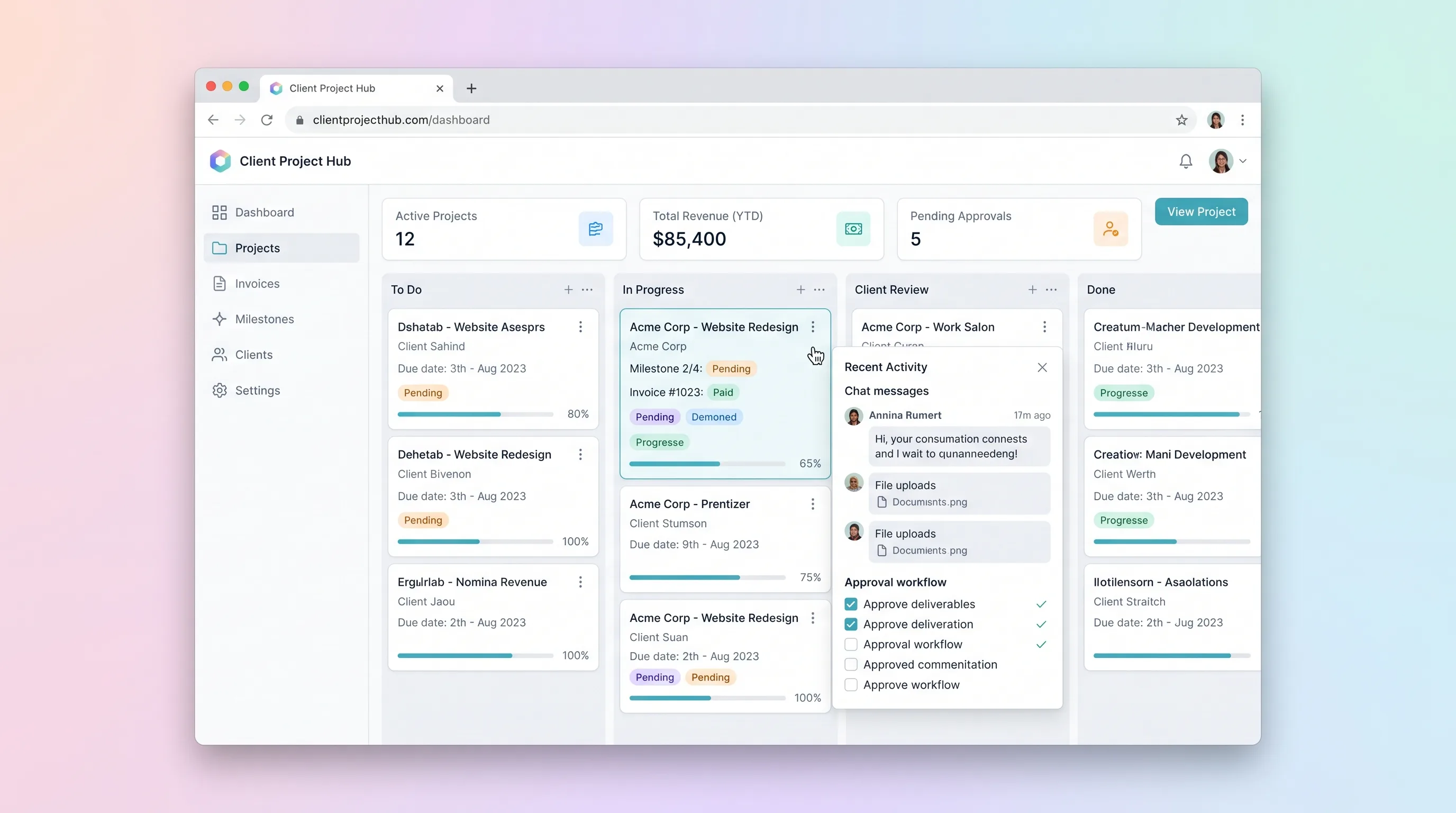
A kanban-driven workspace where freelancers and small agencies track client project milestones, route deliverables through an approval workflow, and auto-generate invoices upon approval.
SaaS WorkflowProfessional Services
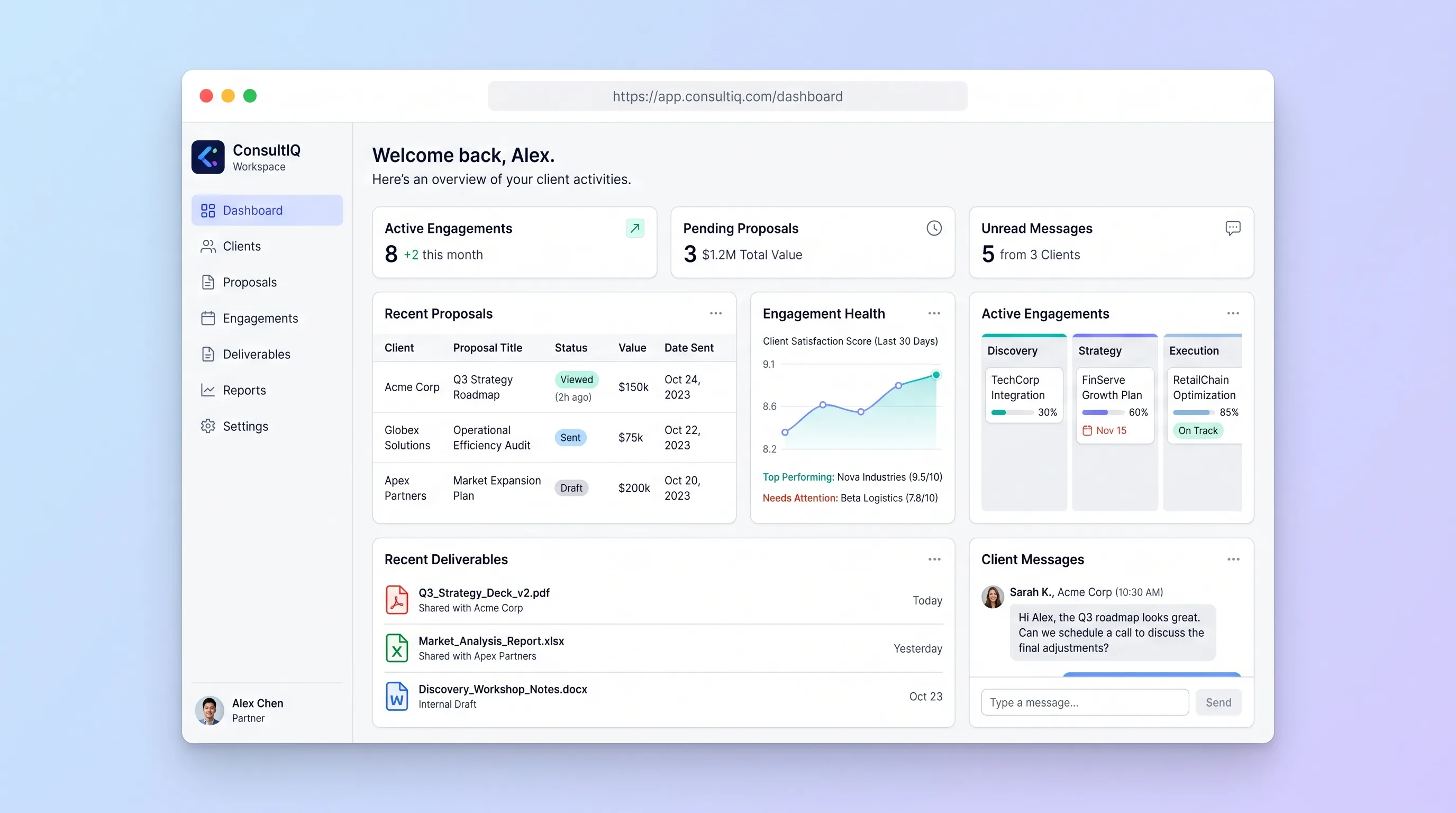
A branded workspace for boutique consultancies to move a prospect from proposal approval into a controlled engagement with milestones, files, and client sign-offs.
SaaS WorkflowProfessional Services
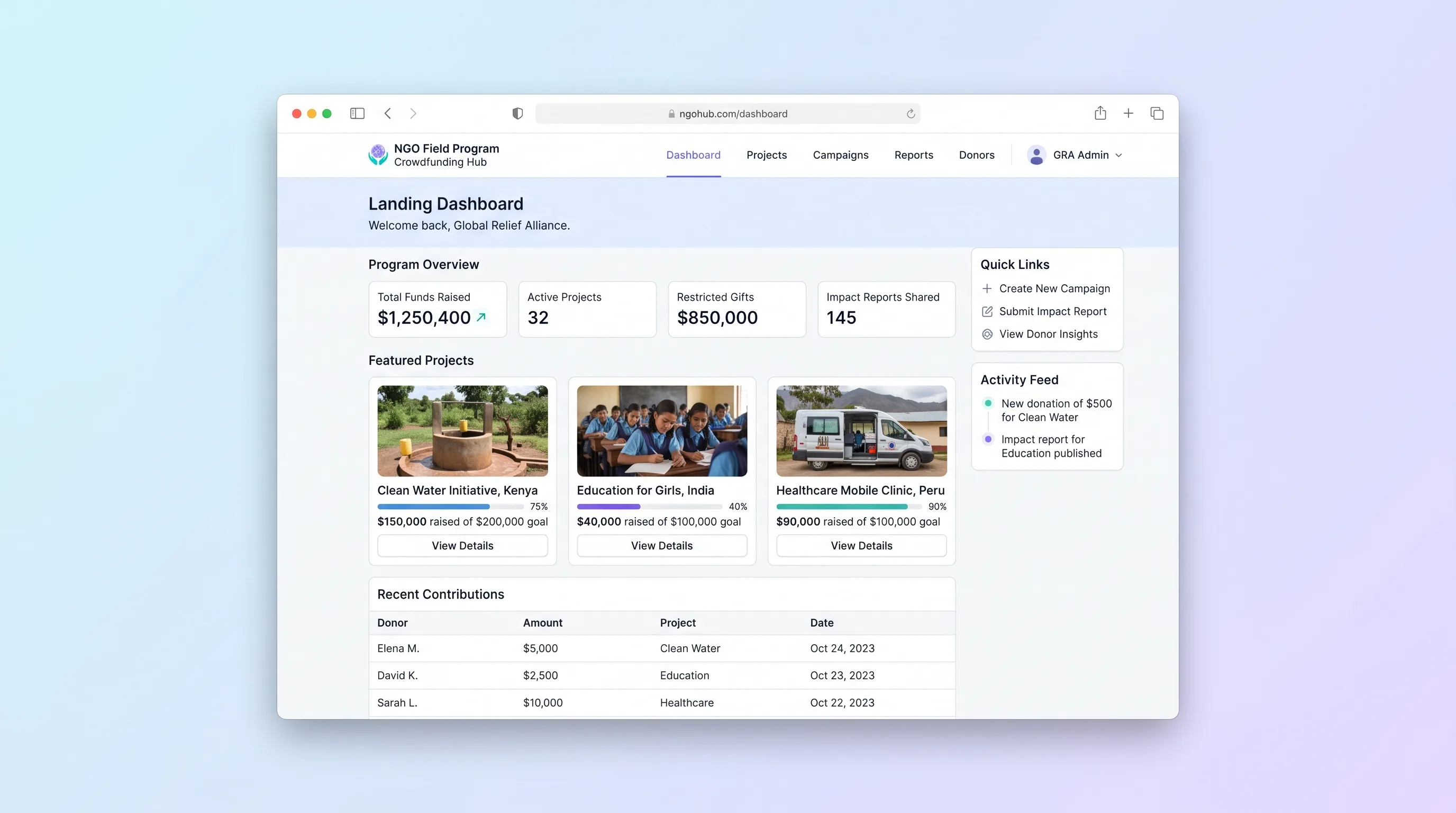
A multi-project crowdfunding portal where NGOs publish field programs, collect restricted gifts with donor dedications, and send field updates back to funders through a branded donor portal.
SaaS WorkflowProfessional Services
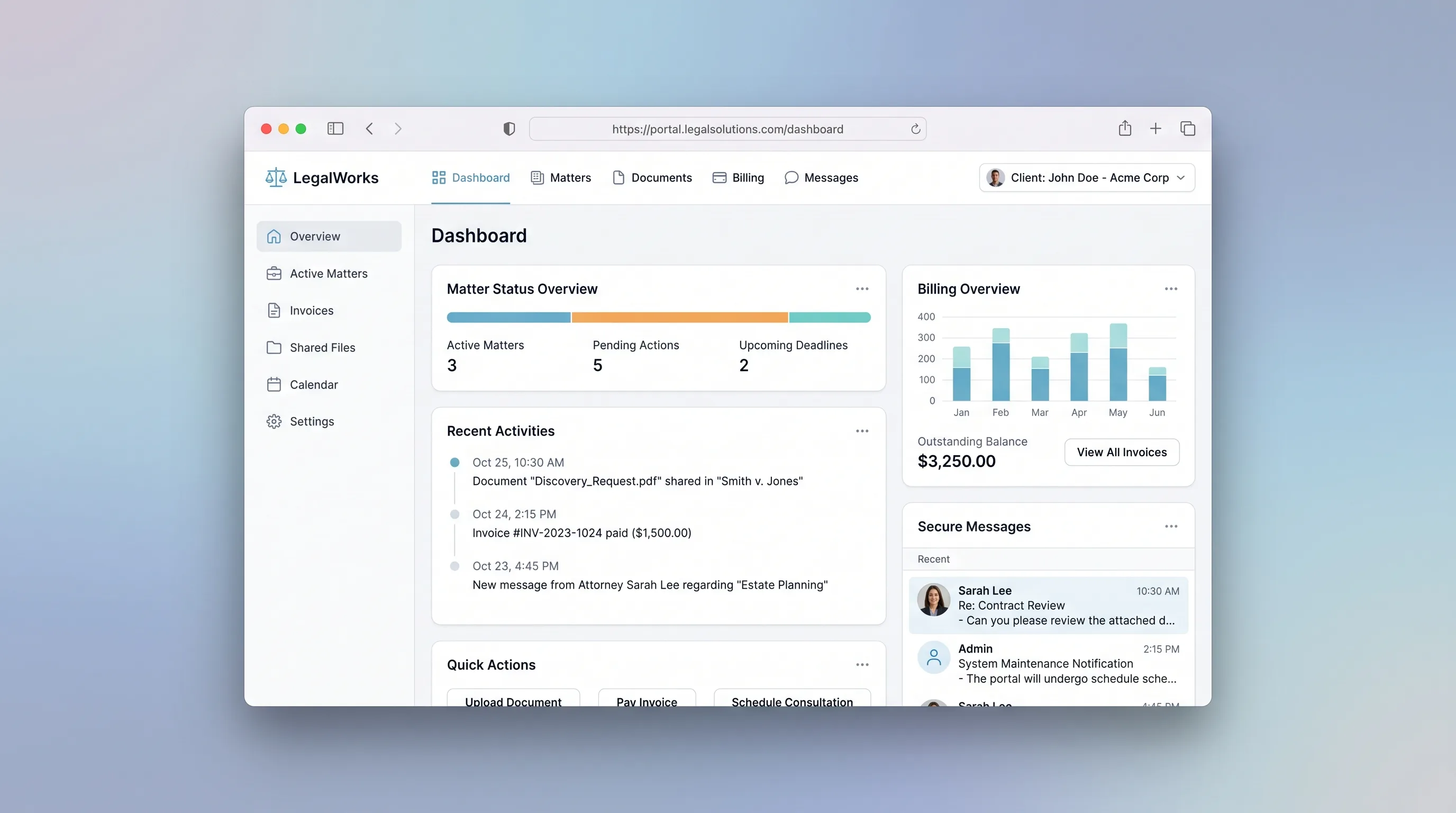
A branded portal where law firms manage client matters, share documents, log billable time, and collect invoice payments in one secure place.