Build this if
The studio already creates curated room concepts and wants a more controlled way to qualify leads and present them.
A premium studio site and private proposal flow for turning room photos and consultation details into curated, reviewable staging concepts.
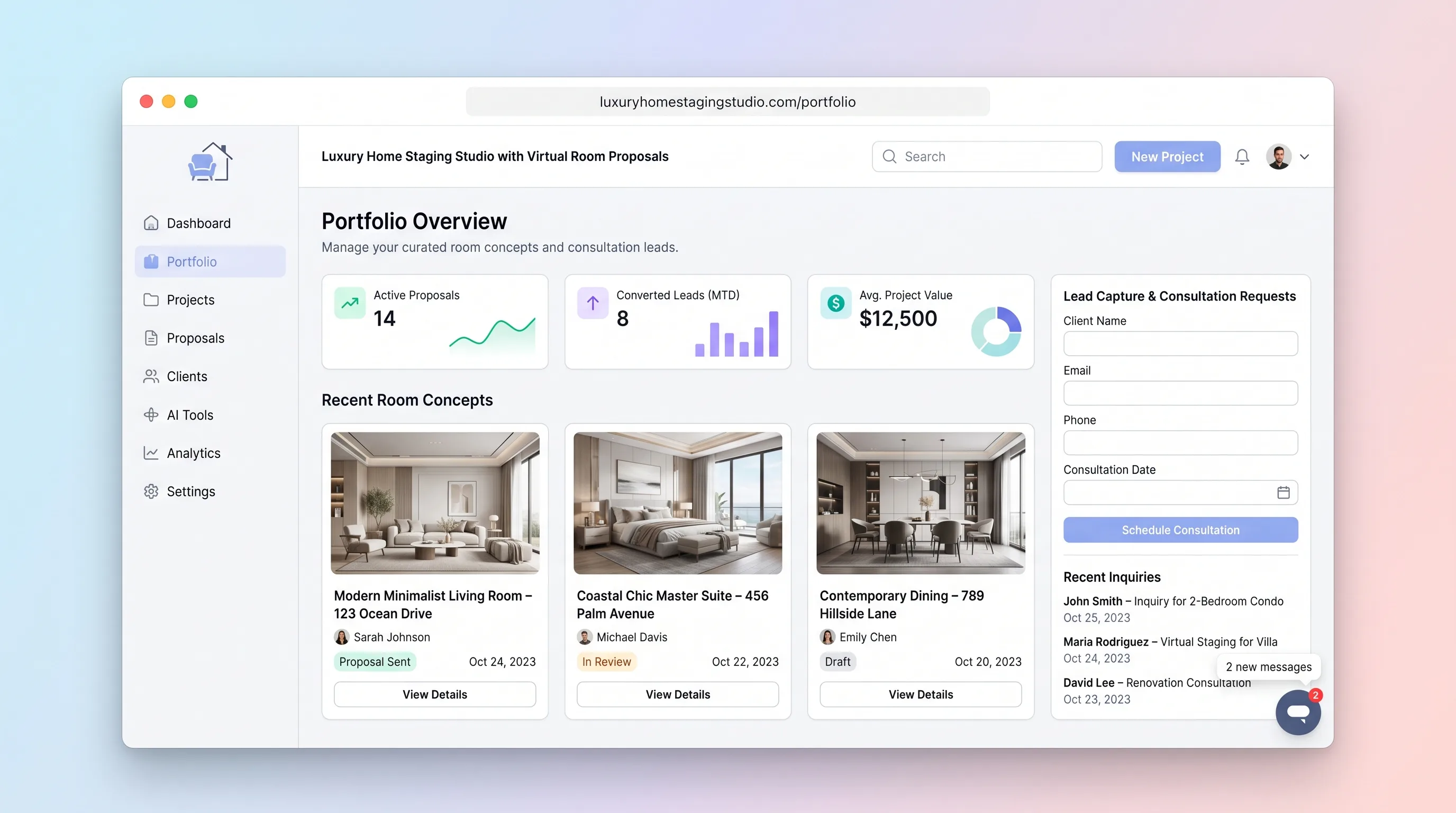
Decision snapshot
The studio already creates curated room concepts and wants a more controlled way to qualify leads and present them.
The sale depends on automatic photorealistic staging, furniture logistics, or full renovation management.
Use five real consultations to test proposal completion time, room-specific feedback quality, and the percentage of clients who reach a clear decision.
Problem and target customer
Home staging proposals are difficult to keep coherent when room photos, concept references, scope notes, and client feedback move through separate email threads.
Boutique home staging studios serving homeowners and real estate agents who expect polished remote consultation materials.
Lead-generation site supporting fixed-fee staging consultations
Editorial note
The digital proposal is valuable because it gives each room one current narrative and one decision history. It does not need generated imagery to replace a disciplined staging consultation.
Public portfolio visitors and active proposal clients have different trust needs. The first sees selected work; the second receives private property material through a revocable link.
Choose your next step
Evaluate the operating tradeoffs quickly, or inspect how to build the MVP.
Compare the three operating paths at the default workload before opening the full calculator.
See cost preview Build this ideaInspect the build blueprintReview MVP scope, workflow, states, data rules, architecture, and acceptance criteria.
Open blueprintEvaluation preview
Directional infrastructure estimates for the current 100 proposals published assumption. Open the full calculator when you are ready to change it.
Run the web app and Postgres as managed services with capacity for the first proposals published.
Lowest operating effortOperate the app, database, and scheduled jobs on one small server with manual backups.
Lowest baseline costSeparate application and data capacity, add managed database backups, and retain room for a worker.
Most separation and controlBuild blueprint
Product goal
MVP scope
UX and user flow
Show services, completed staging work, and a clear consultation path.
Capture property context, rooms, timing, goals, and image uploads.
Let staff qualify a request and move it into proposal preparation.
Assemble room sections from selected concept media, notes, and scope choices.
Present one coherent private proposal with focused feedback and approval controls.
Core entity outline
Stores contact consent, property context, room needs, timing, and pipeline status.
Groups a lead's room type, notes, and uploaded photos.
Represents studio-owned portfolio or proposal imagery with usage metadata.
Preserves a client-facing version, expiry, scope summary, and decision state.
Combines room-specific concept assets, rationale, and scope notes.
Records a client approval or revision request against one version.
Architecture and data flow
Presents the portfolio, services, editorial cards, and consultation intake.
Qualifies leads and composes versioned proposals.
Provides token-gated room review, comments, and decisions.
Enforces lead, media, version, access-token, and decision rules.
Store proposal metadata, permissions, and optimized room imagery separately.
Deliverables and acceptance
Recommended stack
Supports a polished public site plus authenticated staff and token-gated client routes.
Preserves lead status, proposal versions, comments, and decisions transactionally.
Keeps large room images private while serving optimized proposal variants.
Delivers proposal links and decision alerts without owning workflow state.
The build prioritizes versioned presentation and secure media access; it needs conventional relational and image infrastructure, not an LLM or a rendering pipeline.
Copy the build prompt, model the operating cost, and choose where to deploy.
Execution
Once the blueprint is clear, use the prompt, cost model, and deployment options to start building.
Build prompt
Use Lovable to prototype the visual proposal and client review experience because perceived clarity and trust matter more than complex automation in the first release.
Build prompt
Open the prompt pack whenever you are ready to take this blueprint into your builder.
Build prompt ready
Copy the prompt into your builder, then use the cost model below to choose how you want to run it.
Use the cost model to choose a deployment path that matches the build plan.
Cost calculator
A technical run-cost estimate for the first production version. Team, acquisition, payment fees, and business COGS are excluded.
$10-$35 per 100 proposals published
Low and high values allow for usage variance and plan headroom.
Run the web app and Postgres as managed services with capacity for the first proposals published.
5K proposals published included, then $5-$15 per 5K proposals publishedThe estimate combines the selected infrastructure path, required operating modules, selected optional modules, and usage above included monthly allowances. Taxes and regional uplifts are excluded.
Deployment options
Choose based on operating preference, not only the headline price.
Deploy the staging portfolio and proposal portal with managed runtime, Postgres, environment variables, and logs in one project.
Usage-based compute can become less predictable as traffic grows.
Run the app, worker, and database on one small Vultr VPS with Docker Compose and explicit backups.
The operator owns database maintenance, monitoring, and recovery drills.
Separate application, worker, data, storage, and backup responsibilities as the workload grows.
More components increase setup and operational work.
Start building
Build the public staging portfolio, consultation intake, staff proposal composer, and polished client review experience.
Open Lovable 02AutomationRoute consultation follow-upUse Make for optional notifications or calendar handoff after a lead submits or approves; proposal content stays in the studio portal.
Open Make 03DeployDeploy the staging studio portalHost portfolio content, private proposals, media references, approval history, and lead status on Railway.
Open RailwayKeep exploring
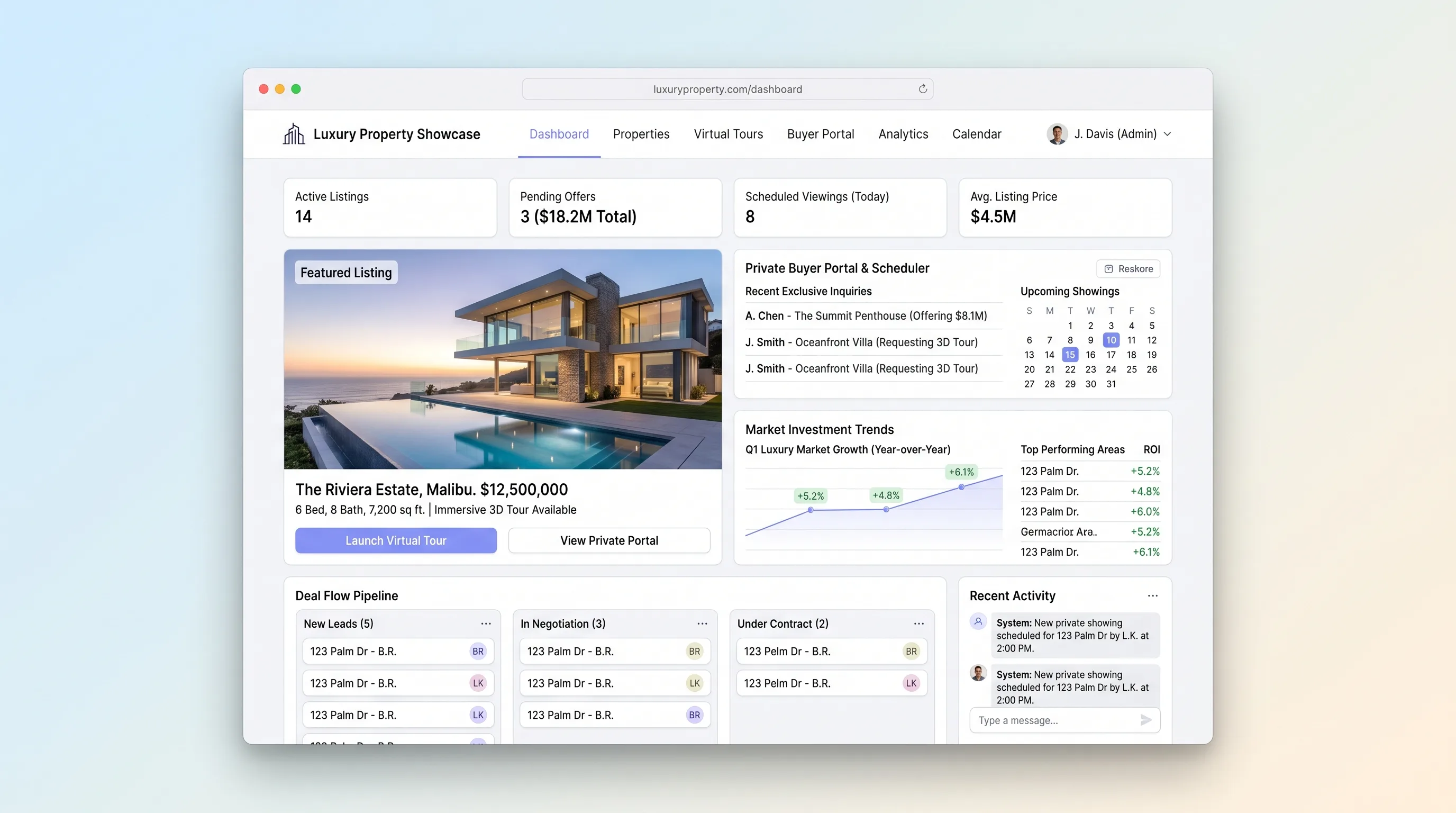
Website & Lead GenerationReal Estate
A premium listing site that gates private property materials, embeds immersive tours, records buyer access decisions, and coordinates showings.
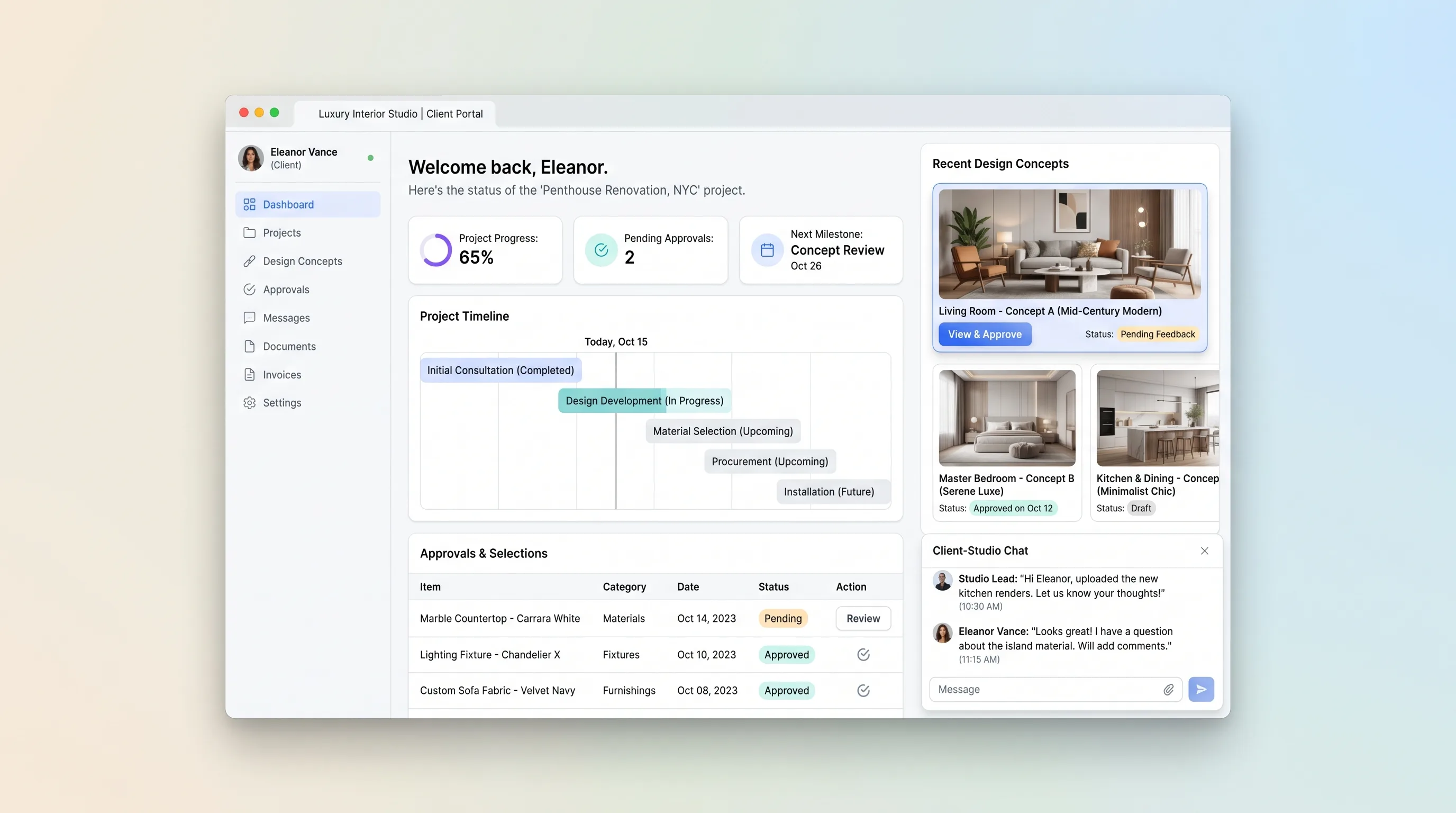
SaaS WorkflowProfessional Services
A private project space where interior studios publish concept versions, clients make item-level decisions, and both track milestones and procurement exceptions.
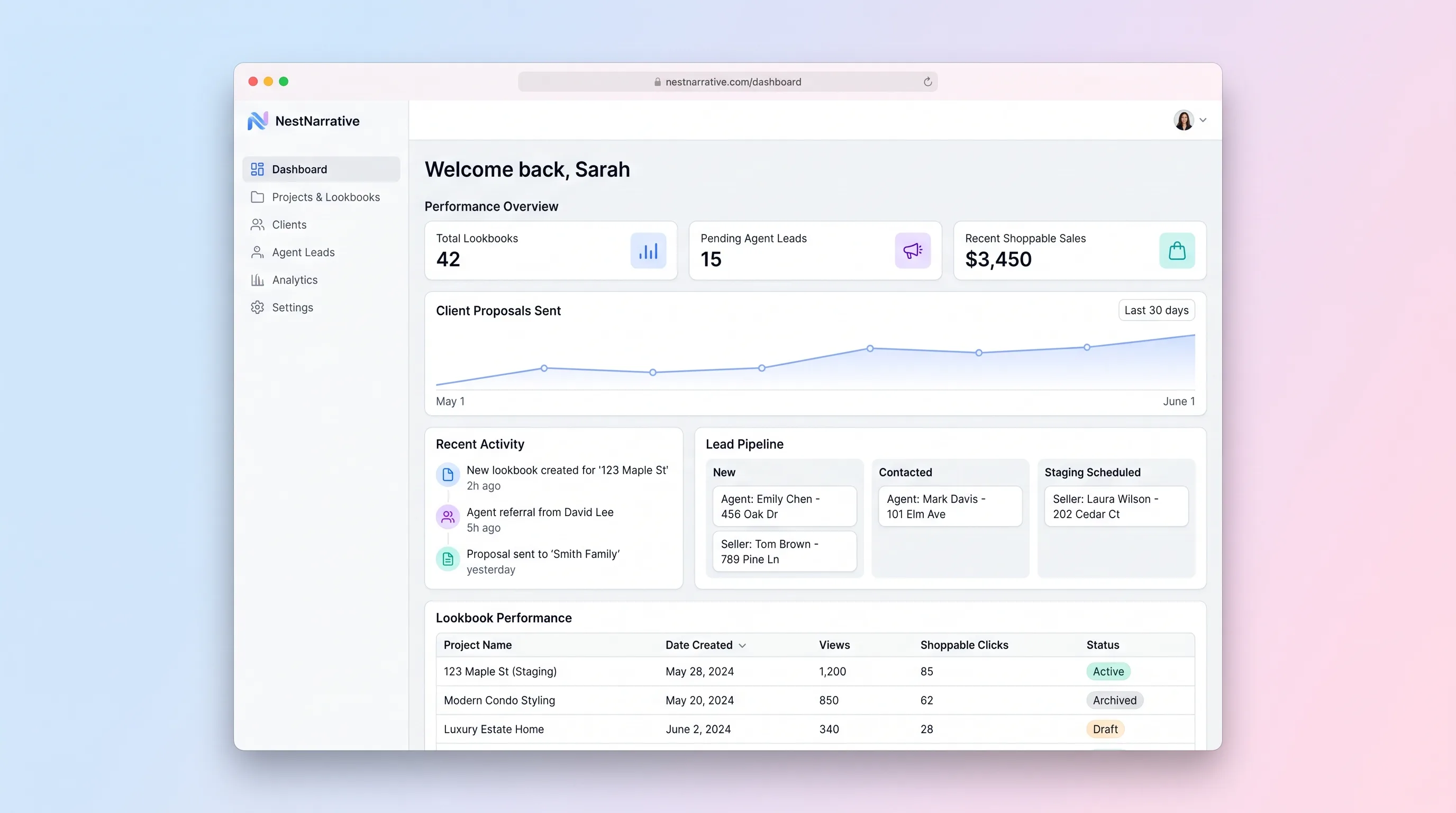
Website & Lead GenerationReal Estate
A publishing and lead-capture tool for home stagers to turn room projects into shoppable lookbooks and trace seller consultations back to agent referrals.
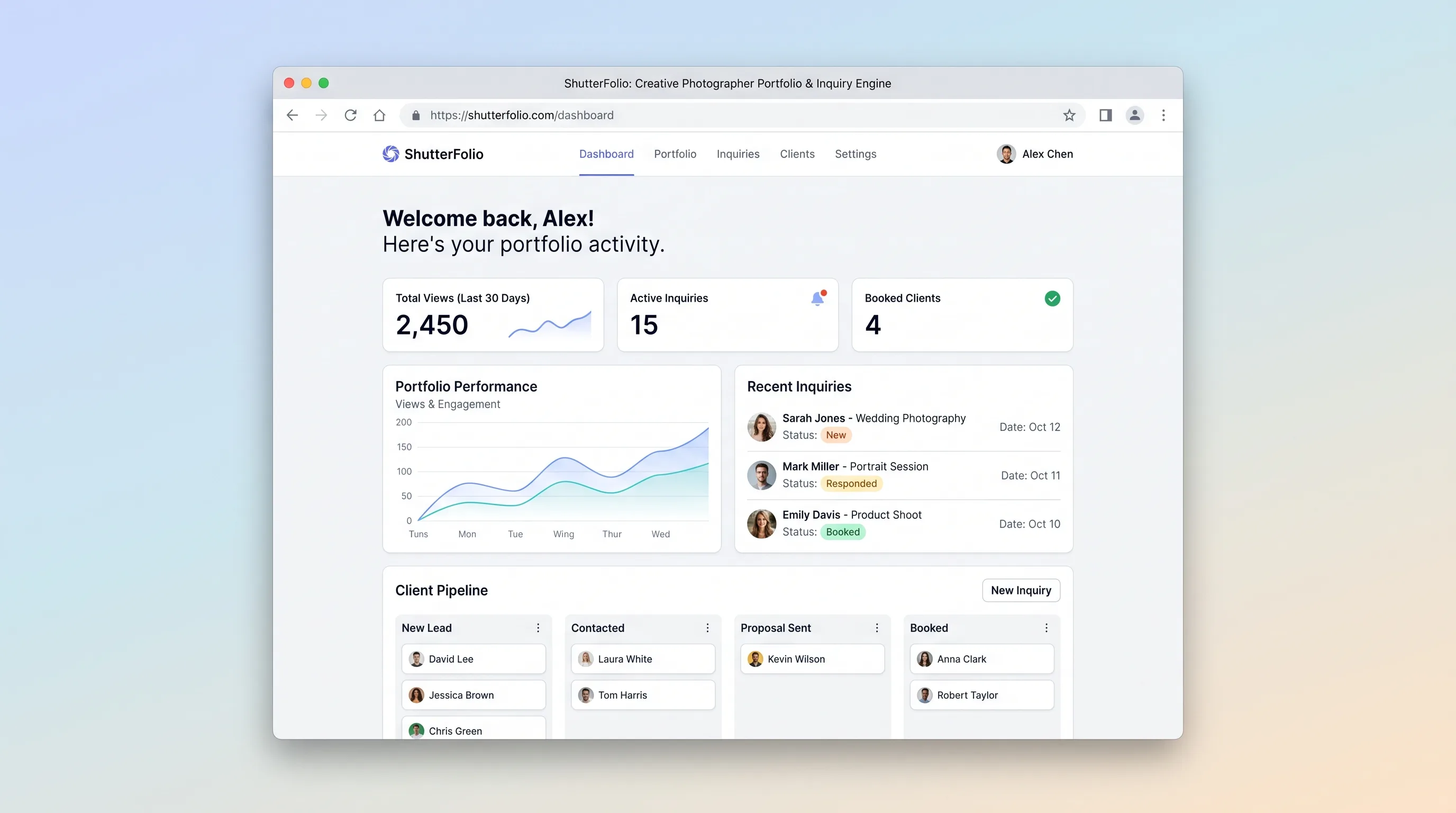
Website & Lead GenerationCreator Economy & Media
A portfolio site builder that lets freelance photographers publish genre-organized galleries and capture structured booking inquiries, replacing scattered generic website tools with a single cinematic workflow.
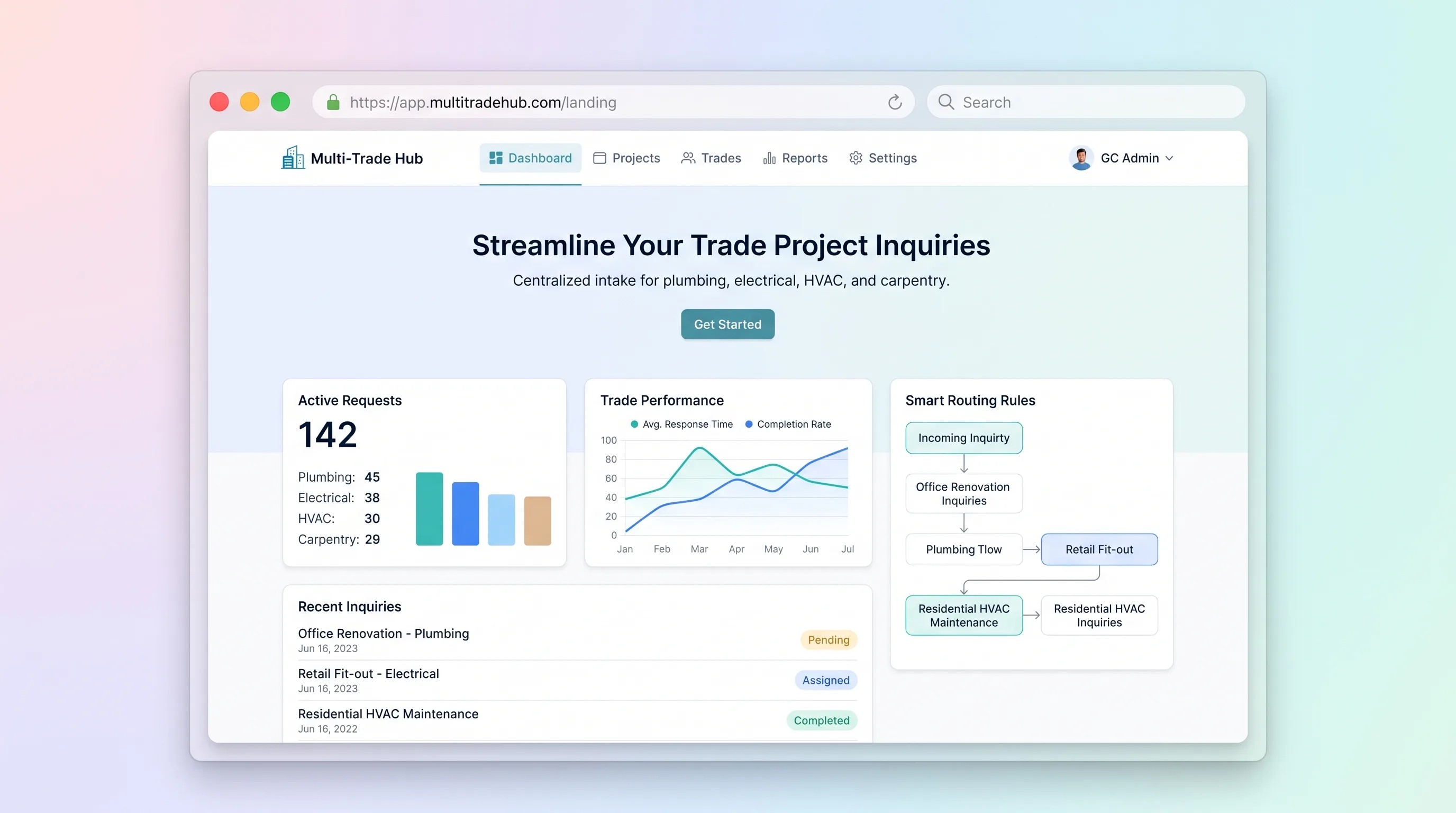
Website & Lead GenerationHome & Local Services
A structured inquiry and estimating handoff for general contractors handling plumbing, electrical, HVAC, and carpentry requests across one project.
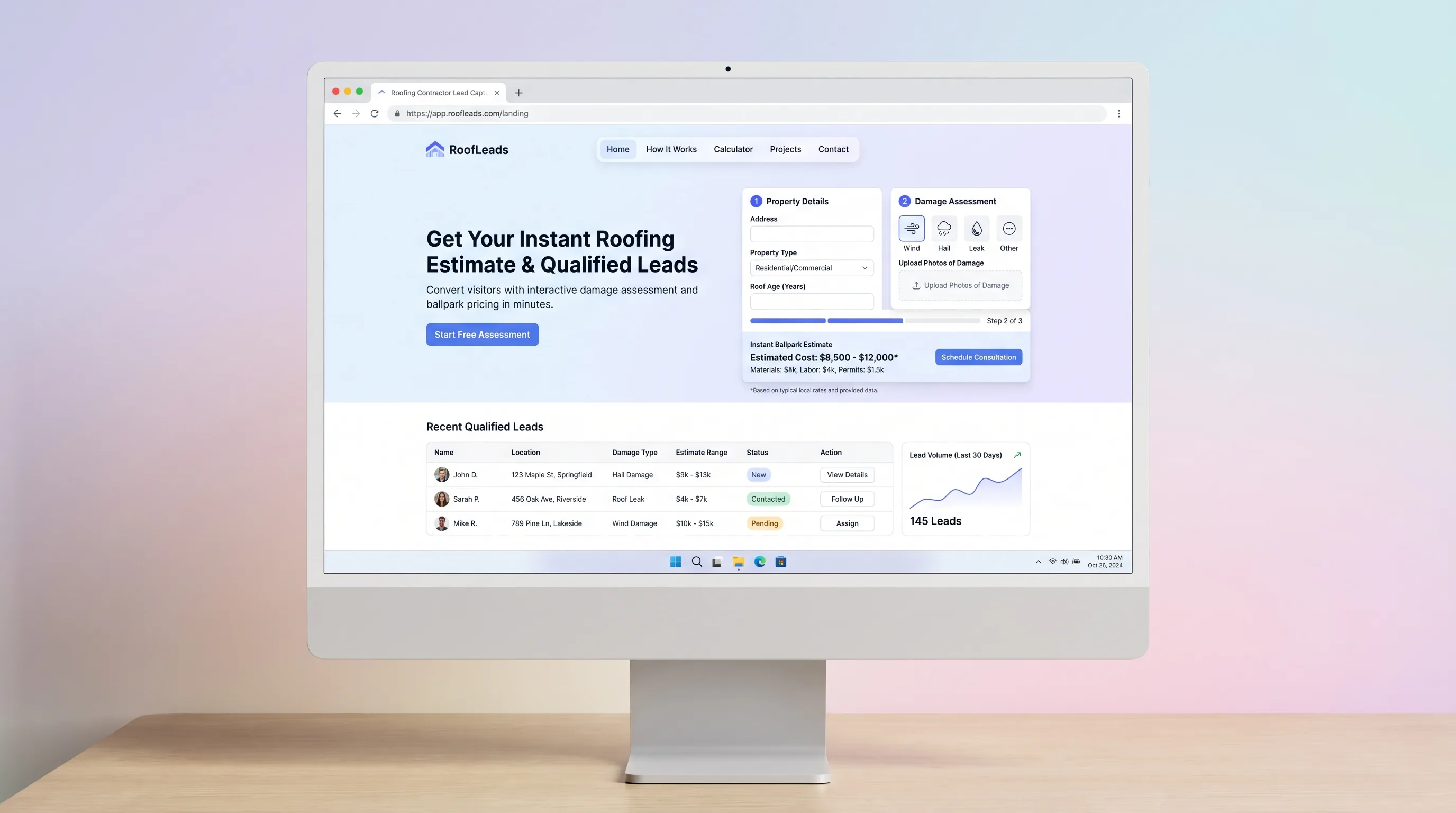
Website & Lead GenerationHome & Local Services
A local roofing website that turns damage details, roof facts, and photos into a clearly qualified lead with a contractor-configured ballpark range.