Build this if
You have at least three creators who have manually run referral waitlists and can articulate what tier thresholds and rewards they used.
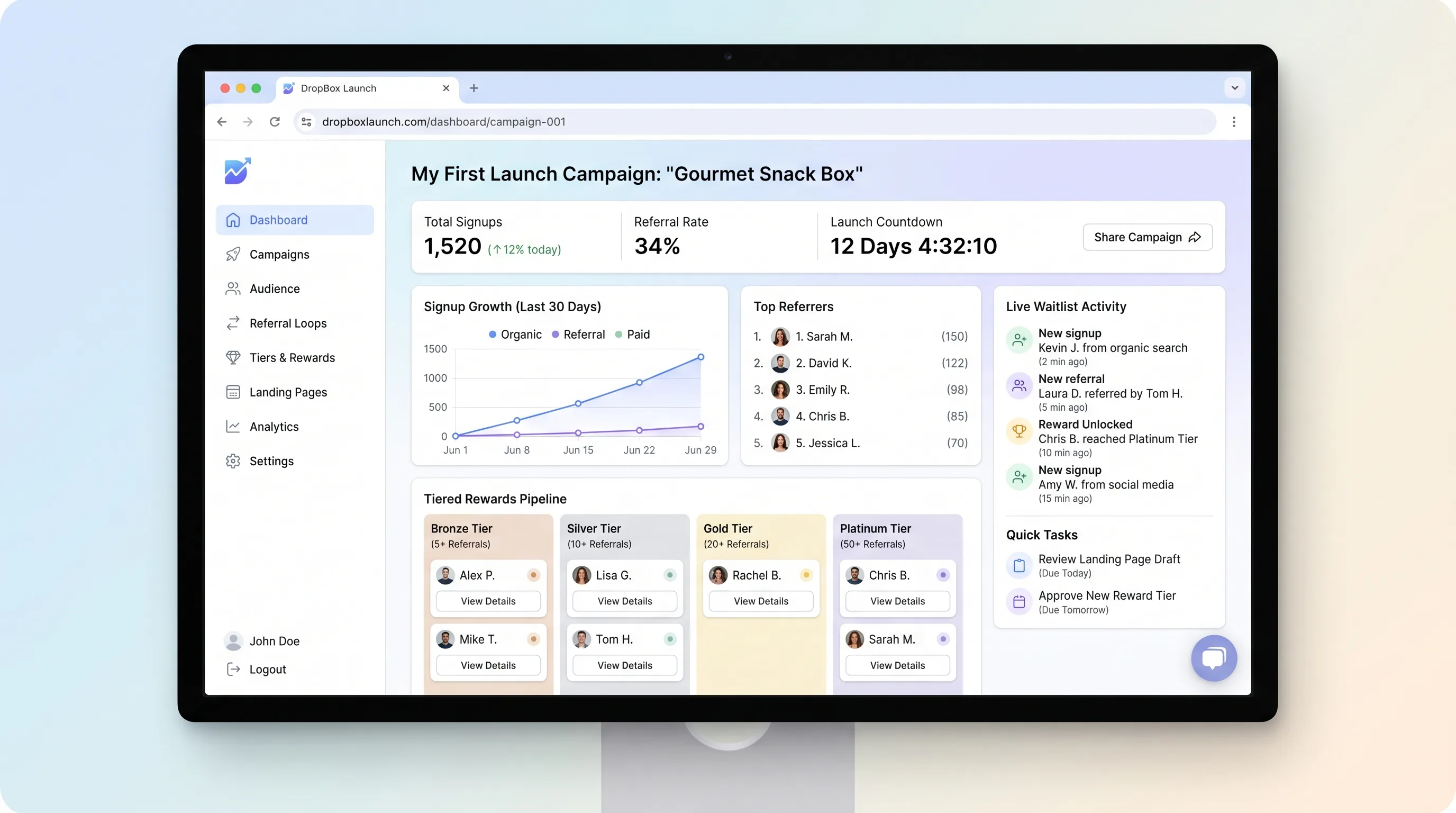
A focused landing page builder that lets creators publish a pre-launch page with countdown timers, email capture, and referral-based tiered waitlist rewards, then export segmented subscribers for launch-day campaigns.
Decision snapshot
You have at least three creators who have manually run referral waitlists and can articulate what tier thresholds and rewards they used.
Your target users sell one-off products rather than recurring subscription boxes, since referral loops depend on anticipation of an ongoing delivery.
Publish a launch page for one real upcoming box, drive 200 visitors via organic social, and measure email capture rate and referral participation rate.
Problem and target customer
Creators launching subscription boxes cobble together landing pages, referral tracking, and waitlist management across generic tools, losing referral attribution and spending hours manually segmenting subscribers before launch day.
Independent creators and small DTC brands preparing a subscription box launch who need a single page to build hype, capture emails, and incentivize referrals without custom development.
Monthly subscription with a paid workspace tier for multiple launches and higher subscriber volume.
Editorial note
Subscription box creators face a narrow window between announcing a product and opening sales. During that gap, the goal is not to sell but to accumulate committed emails and amplify reach through referrals. A dedicated pre-launch engine replaces the patchwork of landing page builders, spreadsheets, and manual referral counting that most indie creators rely on.
The core mechanic is simple: a visitor gives their email, receives a unique referral link, and sees how many friends they need to refer to unlock each reward tier. This turns every subscriber into a promoter. The MVP must track referrals accurately, display tier progress in real time, and let the creator export a segmented list when launch day arrives.
What this is not: a full ecommerce platform. It does not process payments, manage inventory, or handle shipping. Those concerns belong to the post-launch system. Keeping the scope to pre-launch hype and waitlist segmentation is what makes this shippable in weeks rather than months.
Choose your next step
Evaluate the operating tradeoffs quickly, or inspect how to build the MVP.
Compare the three operating paths at the default workload before opening the full calculator.
See cost preview Build this ideaInspect the build blueprintReview MVP scope, workflow, states, data rules, architecture, and acceptance criteria.
Open blueprintEvaluation preview
Directional infrastructure estimates for the current 250 content jobs assumption. Open the full calculator when you are ready to change it.
Managed app hosting, database, backups, and basic observability for the content workflow.
Lowest operating effortOne small VPS running the app, database, media volume, and backup job.
Lowest baseline costSeparate app, data, storage, and worker capacity for cleaner operations.
Most separation and controlBuild blueprint
Product goal
MVP scope
UX and user flow
Creator configures box name, launch date, brand colors, referral tiers, and reward descriptions
Visitors see countdown, enter email, receive referral link, and view tier progress
Creator monitors subscriber count, referral tier distribution, and exports the list
Subscriber sees their referral count, current tier, and next reward unlock
Core entity outline
Stores a person who joined the waitlist with their referral code and tier
Configuration for a single pre-launch page including date, theme, and tier definitions
Records a referral event linking referring and referred subscribers
Top-level container for a creator account and their launches
Audit trail of sign-ups, referrals, and tier upgrades for debugging and analytics
Architecture and data flow
Renders public pre-launch page, handles email submission, displays referral progress, and provides social share buttons.
Allows launch configuration, monitors waitlist, and triggers CSV export.
Generates unique referral codes, validates referral links on sign-up, and updates referral counts and tier status.
Sends confirmation emails on sign-up and milestone emails when a subscriber crosses a tier threshold.
Calls LLM API to generate landing page headline and referral share text from box name and description.
Deliverables and acceptance
Recommended stack
Rapid visual builder for DTC-styled landing pages with responsive design and form handling without custom frontend code.
Managed Postgres for subscriber records, referral relationships, and tier status with row-level security for workspace isolation.
Optional webhook listener that triggers transactional emails on new sign-ups and tier upgrades without writing custom email workers.
Developer-friendly email API for confirmation and milestone emails with reliable delivery tracking.
Generates landing page headline and referral share copy from the box name and description the creator enters during configuration.
Lovable handles the visual DTC landing page and dashboard without frontend engineering. Supabase stores subscribers, referrals, and launch settings with relational integrity. Make bridges sign-up events to Resend for transactional emails. OpenAI generates marketing copy at configuration time, reducing the creator's effort to write compelling page text.
Copy the build prompt, model the operating cost, and choose where to deploy.
Execution
Once the blueprint is clear, use the prompt, cost model, and deployment options to start building.
Build prompt
Lovable
Build prompt
Open the prompt pack whenever you are ready to take this blueprint into your builder.
Build prompt ready
Copy the prompt into your builder, then use the cost model below to choose how you want to run it.
Use the cost model to choose a deployment path that matches the build plan.
Cost calculator
A technical run-cost estimate for the first production version. Team, acquisition, payment fees, and business COGS are excluded.
$13-$33 per 125 content jobs
Low and high values allow for usage variance and plan headroom.
Managed app hosting, database, backups, and basic observability for the content workflow.
50K content jobs included, then $8-$20 per 100K content jobsTransactional email is implied by the source workflow or feature list.
3K content jobs includedThe estimate combines the selected infrastructure path, required operating modules, selected optional modules, and usage above included monthly allowances. Taxes and regional uplifts are excluded.
Deployment options
Choose based on operating preference, not only the headline price.
Fast Docker deployment for the app, database, worker, and preview workflow without managing a VPS.
Usage billing needs active monitoring as traffic and jobs grow.
Run the app, worker, and database on one small Vultr VPS with Docker Compose and explicit backups.
You own patching, backups, monitoring, and incident response.
Separate application, worker, data, storage, and backup responsibilities as the workload grows.
You own server setup, patching, backups, and operational monitoring.
Start building
Create the public pre-launch page with countdown timer, email capture, referral progress bar, and social share buttons. Build the creator dashboard for launch configuration and waitlist export. Use bold typography and high-contrast CTAs per the DTC aesthetic.
Open Lovable 02AutomationWire sign-up and milestone emailsSet up a Make scenario that listens for new subscriber webhooks from Supabase, triggers a confirmation email via Resend, and sends a milestone email when a subscriber crosses a referral tier threshold.
Open Make 03DeployDeploy referral attribution workerHost a lightweight Node service on Railway that generates unique referral codes, validates referral links on sign-up, and updates referral counts and tier status in Supabase.
Open RailwayKeep exploring
Booking PlatformFood & Beverage
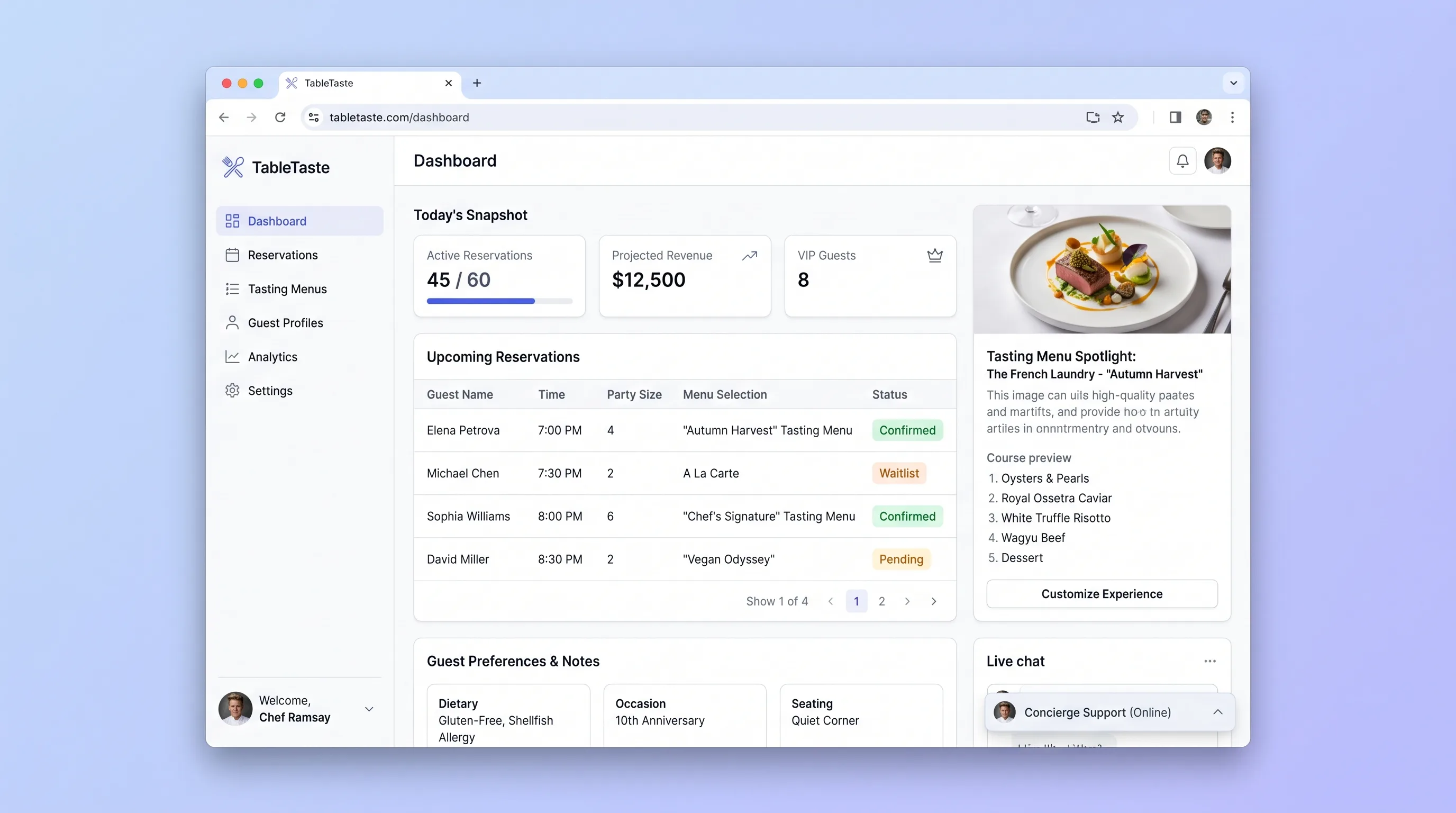
A reservation and tasting-menu showcase platform for upscale restaurants that lets guests preview courses, customize their experience, and book locked time slots while operators manage menus and daily bookings from one screen.
AI ToolBusiness Operations
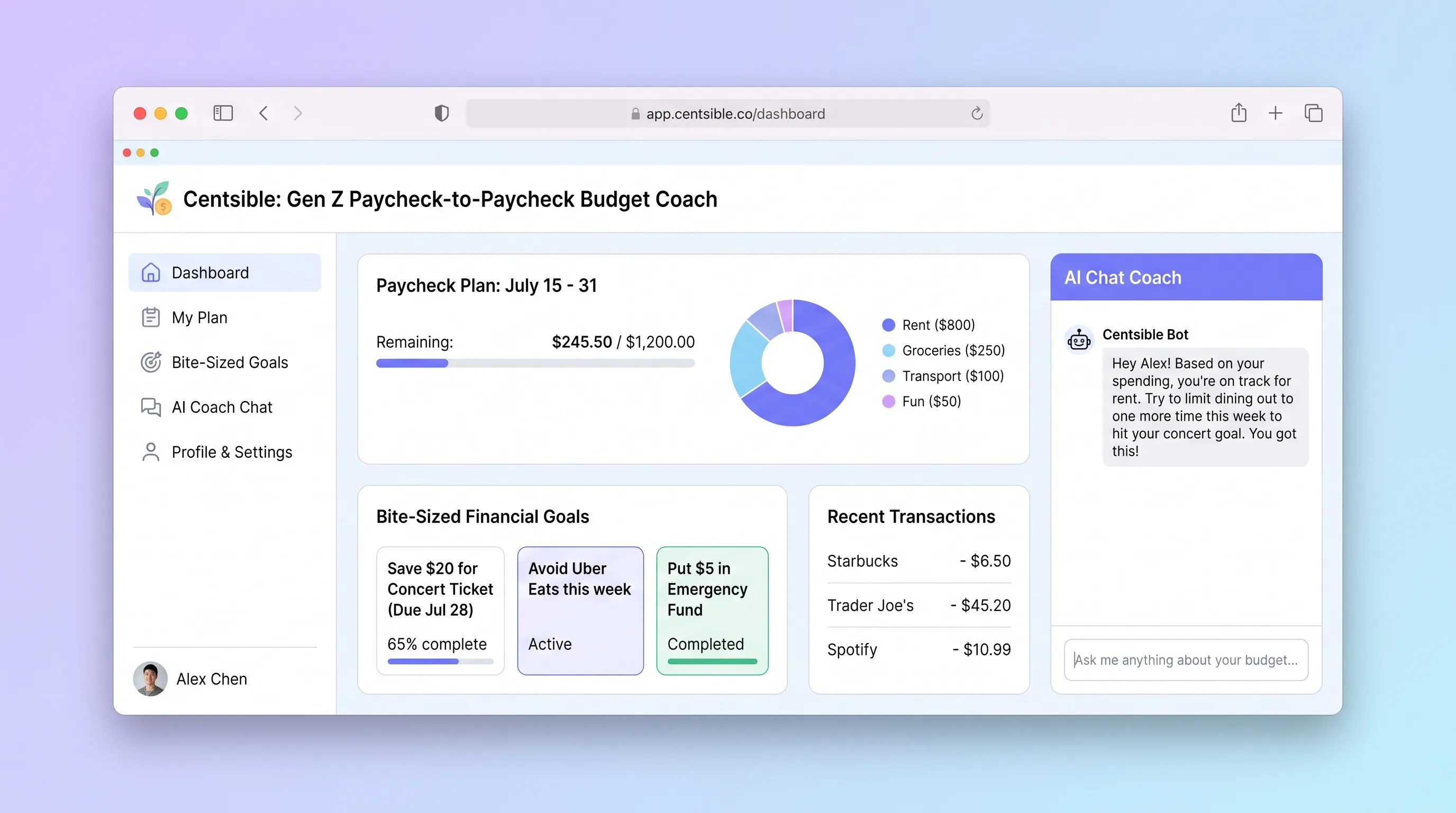
An AI-guided mobile budgeting app that helps Gen Z adults living paycheck to paycheck log expenses in seconds, understand their remaining budget instantly, and receive one plain-English money decision per week.
EcommerceRetail
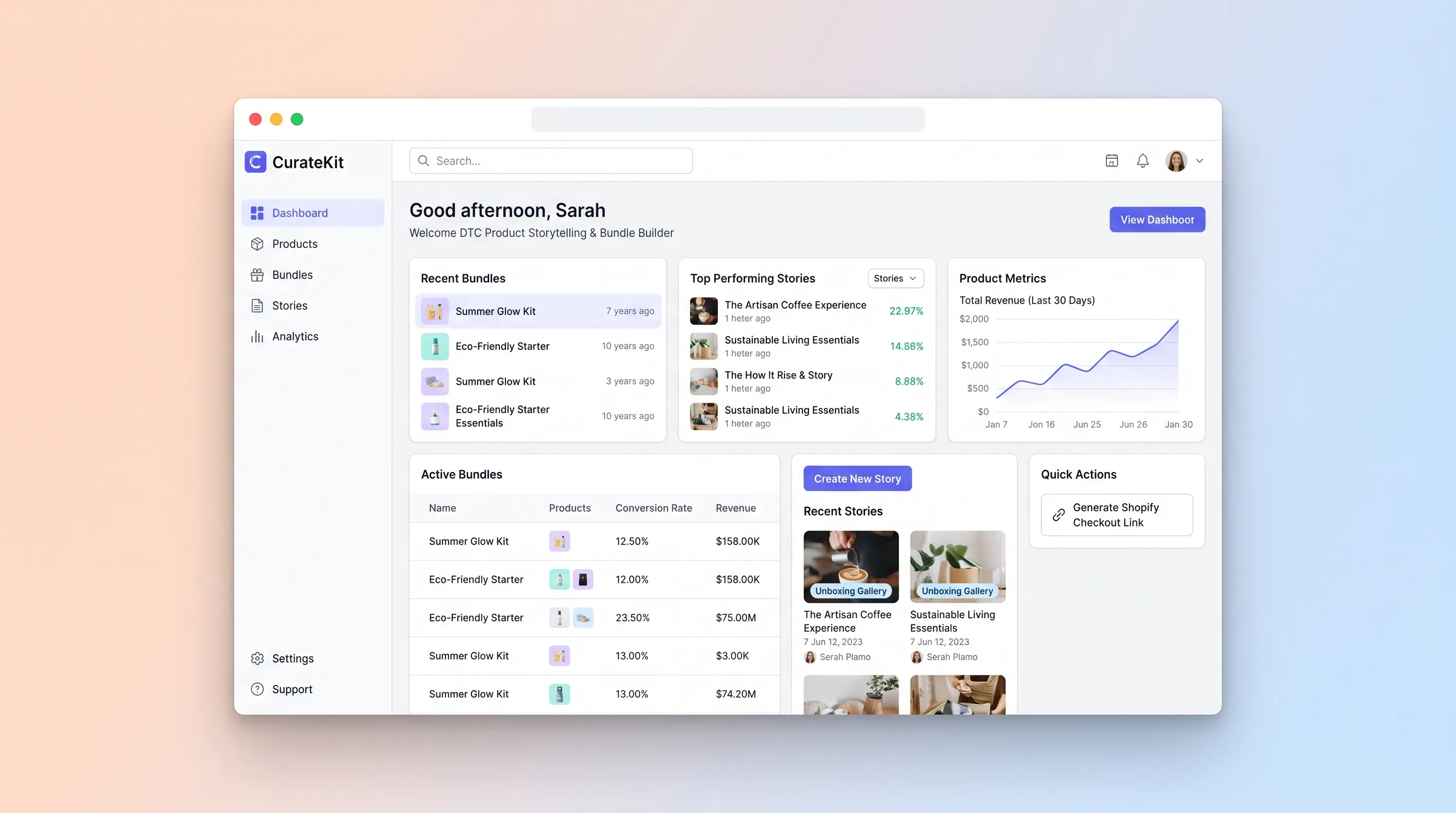
A no-code workspace where DTC brand owners assemble editorial product story pages with bundle configurators and UGC galleries, then publish Shopify-ready checkout links.
EcommerceRetail
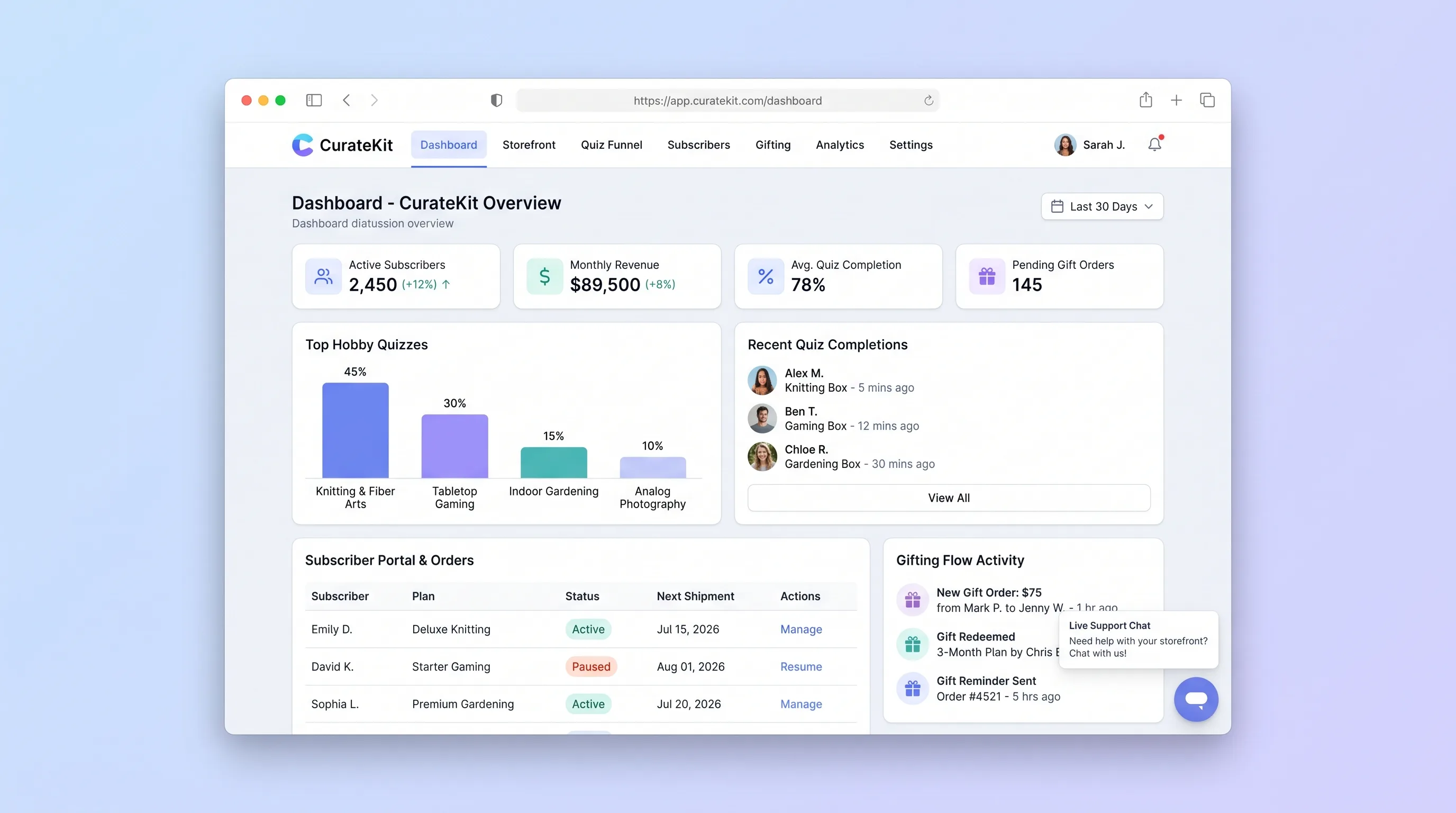
A direct-to-consumer storefront that turns hobby preferences into an explainable box recommendation, then supports recurring subscriptions, gifts, and basic account changes.
EcommerceBeauty & Fashion
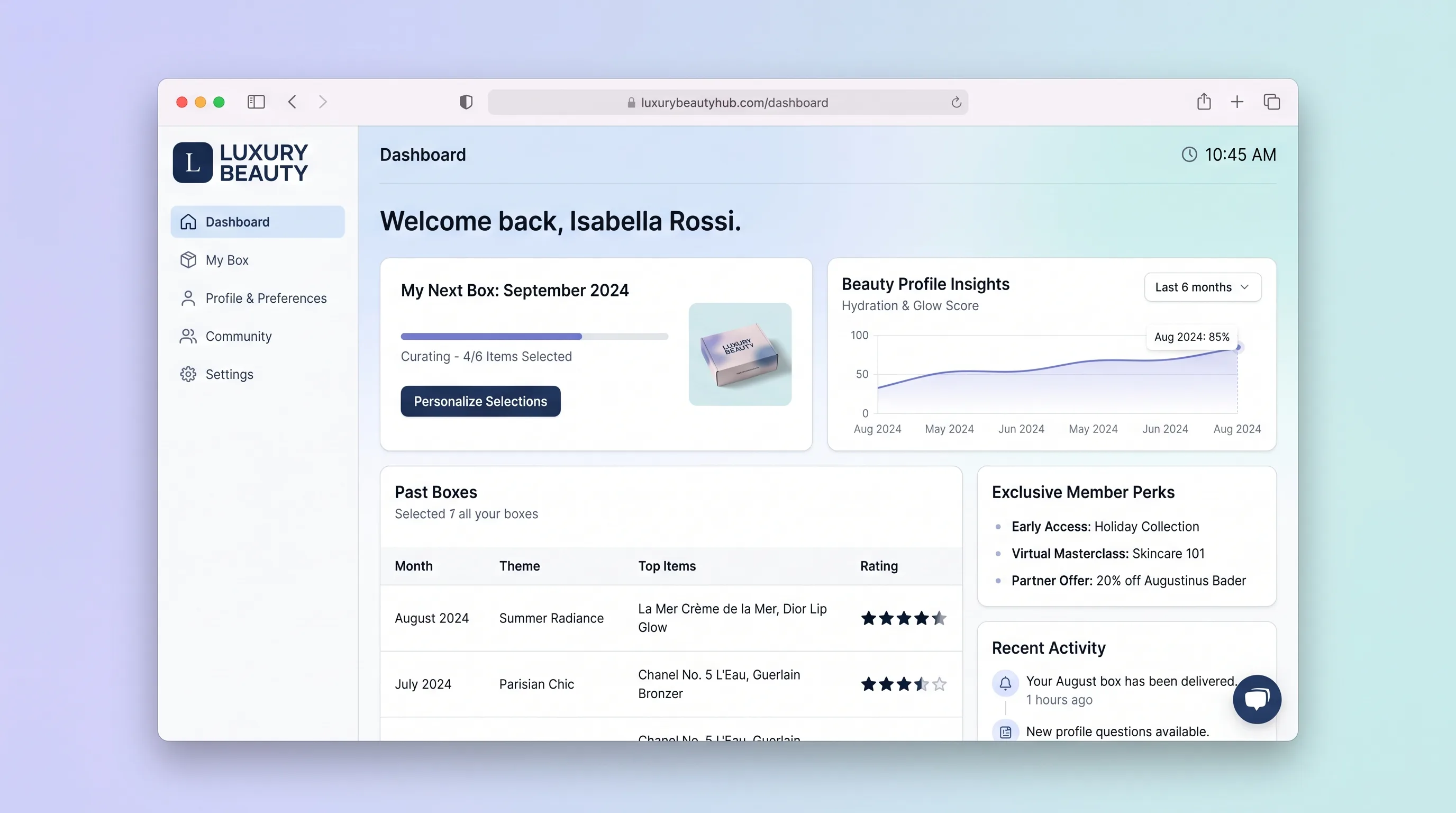
A premium beauty subscription platform where members complete a beauty quiz, personalize their monthly box, rate received products, shop full sizes, and manage their subscription in one curated hub.
EcommerceBeauty & Fashion
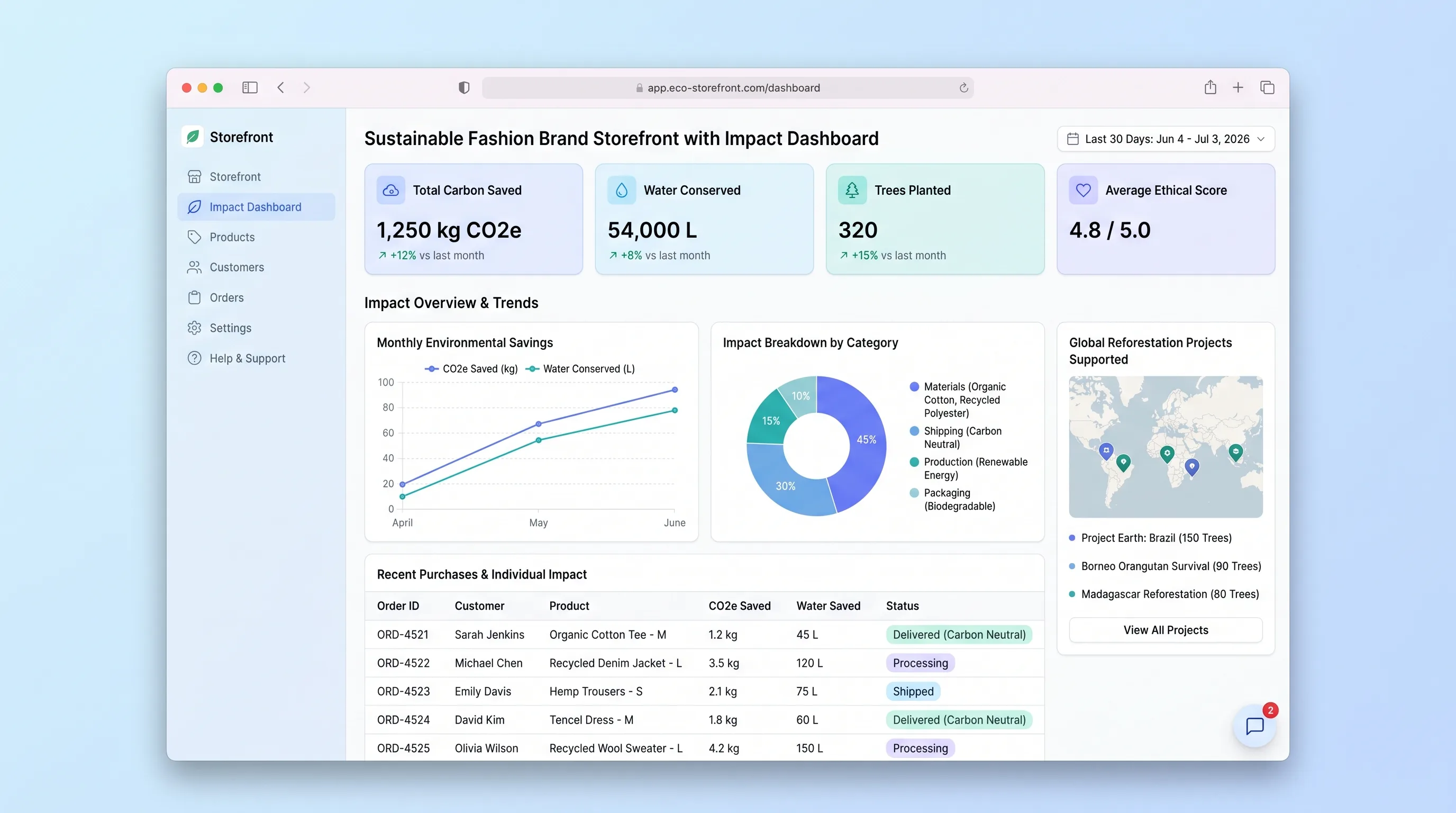
A conscious fashion storefront where shoppers browse curated eco collections, complete checkout, and then see their personal environmental impact dashboard accumulate CO2 saved, water conserved, and waste diverted across every order.