Build this if
You serve a restaurant running seat-limited tasting menus where course preview and dietary customization directly influence booking conversion.
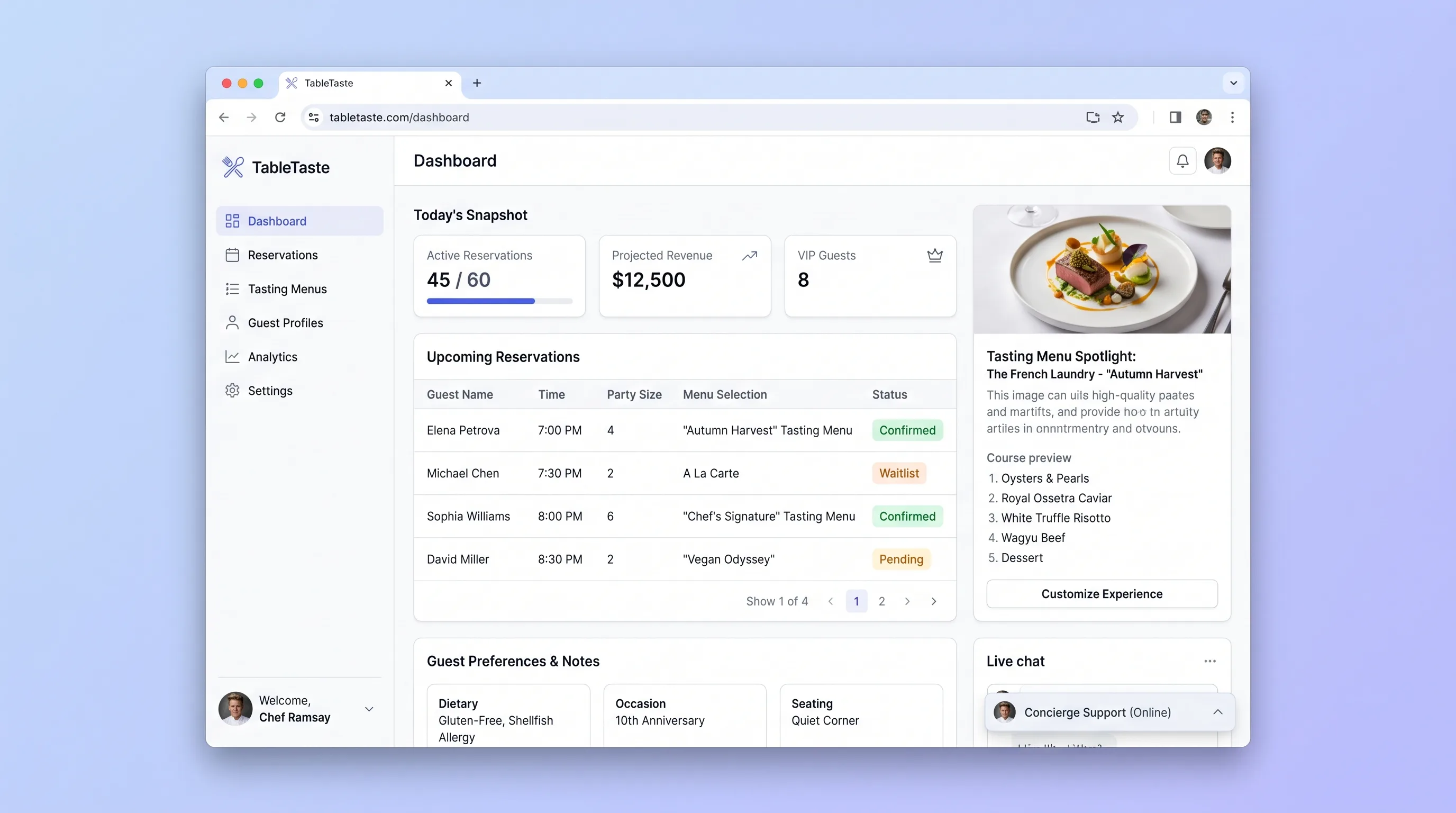
A reservation and tasting-menu showcase platform for upscale restaurants that lets guests preview courses, customize their experience, and book locked time slots while operators manage menus and daily bookings from one screen.
Decision snapshot
You serve a restaurant running seat-limited tasting menus where course preview and dietary customization directly influence booking conversion.
Your venue uses open-seating or à la carte only, with no need for course-level guest customization or slot locking.
Pilot with one restaurant for 30 days; measure if guests complete reservations in under 3 minutes and if double-bookings drop to zero with slot locking enabled.
Problem and target customer
Upscale restaurants rely on generic booking tools that cannot showcase multi-course tasting menus, capture dietary customizations per course, or prevent double-bookings across limited seating windows. Operators juggle spreadsheets and phone calls, losing the presentation quality their brand demands.
Fine-dining restaurant operators and maître d's who run fixed-seat tasting menus and need a branded reservation flow without custom software development.
Monthly subscription for restaurant operators plus a per-booking transaction fee covering payment processing and confirmation delivery.
Editorial note
TableTaste targets a narrow but high-value workflow: restaurants that run fixed-seat tasting menus where the menu itself is the sales pitch. Generic booking platforms treat the menu as an afterthought; TableTaste makes course preview the entry point to reservation.
The critical technical constraint is slot locking. Fine-dining tasting menus have limited seatings per night, often two waves. Without atomic concurrency control, two guests booking the same window creates an embarrassing overbooking. The MVP must lock slots at selection time and release them on timeout or cancellation.
The dark, moody aesthetic is not decoration—it is the brand. Playfair Display serifs, charcoal backgrounds, and gold accents signal the price tier before the guest reads a single course description. The UI must feel like the restaurant's printed menu, not a SaaS dashboard.
Choose your next step
Evaluate the operating tradeoffs quickly, or inspect how to build the MVP.
Compare the three operating paths at the default workload before opening the full calculator.
See cost preview Build this ideaInspect the build blueprintReview MVP scope, workflow, states, data rules, architecture, and acceptance criteria.
Open blueprintEvaluation preview
Directional infrastructure estimates for the current 500 bookings assumption. Open the full calculator when you are ready to change it.
Managed app hosting, database, backups, and basic observability for the booking workflow.
Lowest operating effortOne small VPS running the app, database, media volume, and backup job.
Lowest baseline costSeparate app, data, storage, and worker capacity for cleaner operations.
Most separation and controlBuild blueprint
Product goal
MVP scope
UX and user flow
Display the current tasting menu course-by-course with imagery, ingredients, and allergen information.
Let the guest select date, seating window, and party size with real-time availability.
Capture per-guest dietary restrictions and optional course substitutions.
Collect deposit or full payment and display the confirmed reservation with menu recap.
Show the operator today's bookings, menu editor, and guest customization notes for the kitchen.
Core entity outline
Represents the operator venue with seating capacity and tasting menu configuration.
The current or scheduled multi-course menu offered by the restaurant.
A single course within a tasting menu with ingredients and allergen tags.
A guest booking for a specific date, seating window, and party size with customization notes.
Audit trail of slot locks, releases, confirmations, and cancellations.
Architecture and data flow
Renders menu showcase, slot picker, customization, and payment screens via Lovable.
Renders the operator dashboard for menu editing and daily booking management.
Validates and atomically locks seating slots, releases expired locks on a cron schedule.
Sends email, SMS, and calendar invites via Make scenarios triggered by reservation state changes.
Receives payment provider webhooks and transitions reservations from pending to confirmed.
Deliverables and acceptance
Recommended stack
Visual builder supports the dark luxury aesthetic with custom typography and smooth page transitions needed for a branded fine-dining showcase.
Postgres with row-level security handles reservation records, slot locking via atomic updates, and menu entity relationships.
Glue layer for sending confirmation emails, SMS messages, and generating calendar invites after a reservation is confirmed.
Deploys the backend API and any serverless functions for payment webhook handling and slot-lock validation.
Lovable renders the presentation-heavy menu showcase and reservation UI with the required luxury aesthetic. Supabase provides durable relational storage with atomic slot locking to guarantee zero double-bookings. Make handles the notification pipeline without custom infrastructure. Railway hosts any server-side logic for payment webhooks and concurrency checks.
Copy the build prompt, model the operating cost, and choose where to deploy.
Execution
Once the blueprint is clear, use the prompt, cost model, and deployment options to start building.
Build prompt
Lovable
Build prompt
Open the prompt pack whenever you are ready to take this blueprint into your builder.
Build prompt ready
Copy the prompt into your builder, then use the cost model below to choose how you want to run it.
Use the cost model to choose a deployment path that matches the build plan.
Cost calculator
A technical run-cost estimate for the first production version. Team, acquisition, payment fees, and business COGS are excluded.
$13-$53 per 250 bookings
Low and high values allow for usage variance and plan headroom.
Managed app hosting, database, backups, and basic observability for the booking workflow.
50K bookings included, then $8-$20 per 100K bookingsTransactional email is implied by the source workflow or feature list.
3K bookings includedSMS provider is implied by the source workflow or feature list.
1K bookings includedPayment processor is implied by the source workflow or feature list.
100 included, then $0-$5 per 100 bookingsCalendar API is implied by the source workflow or feature list.
Monthly allowance from this idea's operating profileThe estimate combines the selected infrastructure path, required operating modules, selected optional modules, and usage above included monthly allowances. Taxes and regional uplifts are excluded.
Deployment options
Choose based on operating preference, not only the headline price.
Fast Docker deployment for the app, database, worker, and preview workflow without managing a VPS.
Usage billing needs active monitoring as traffic and jobs grow.
Run the app, worker, and database on one small Vultr VPS with Docker Compose and explicit backups.
You own patching, backups, monitoring, and incident response.
Separate application, worker, data, storage, and backup responsibilities as the workload grows.
You own server setup, patching, backups, and operational monitoring.
Start building
Create the dark luxury UI with Playfair Display, course cards with allergen tags, a slot-picker calendar, and the customization and payment screens. Connect to Supabase for menu data and reservation writes.
Open Lovable 02AutomationWire confirmation notifications and calendar invitesSet up scenarios that trigger on new reservation records: send transactional email with menu summary, SMS with booking details, and generate an .ics calendar invite. Handle payment success webhooks to mark reservations confirmed.
Open Make 03DeployDeploy slot-lock API and payment webhook handlerHost a lightweight Node service that performs atomic slot-lock validation against Supabase, processes payment provider webhooks, and releases expired locks on a cron schedule.
Open RailwayKeep exploring
SaaS WorkflowHealthcare & Wellness
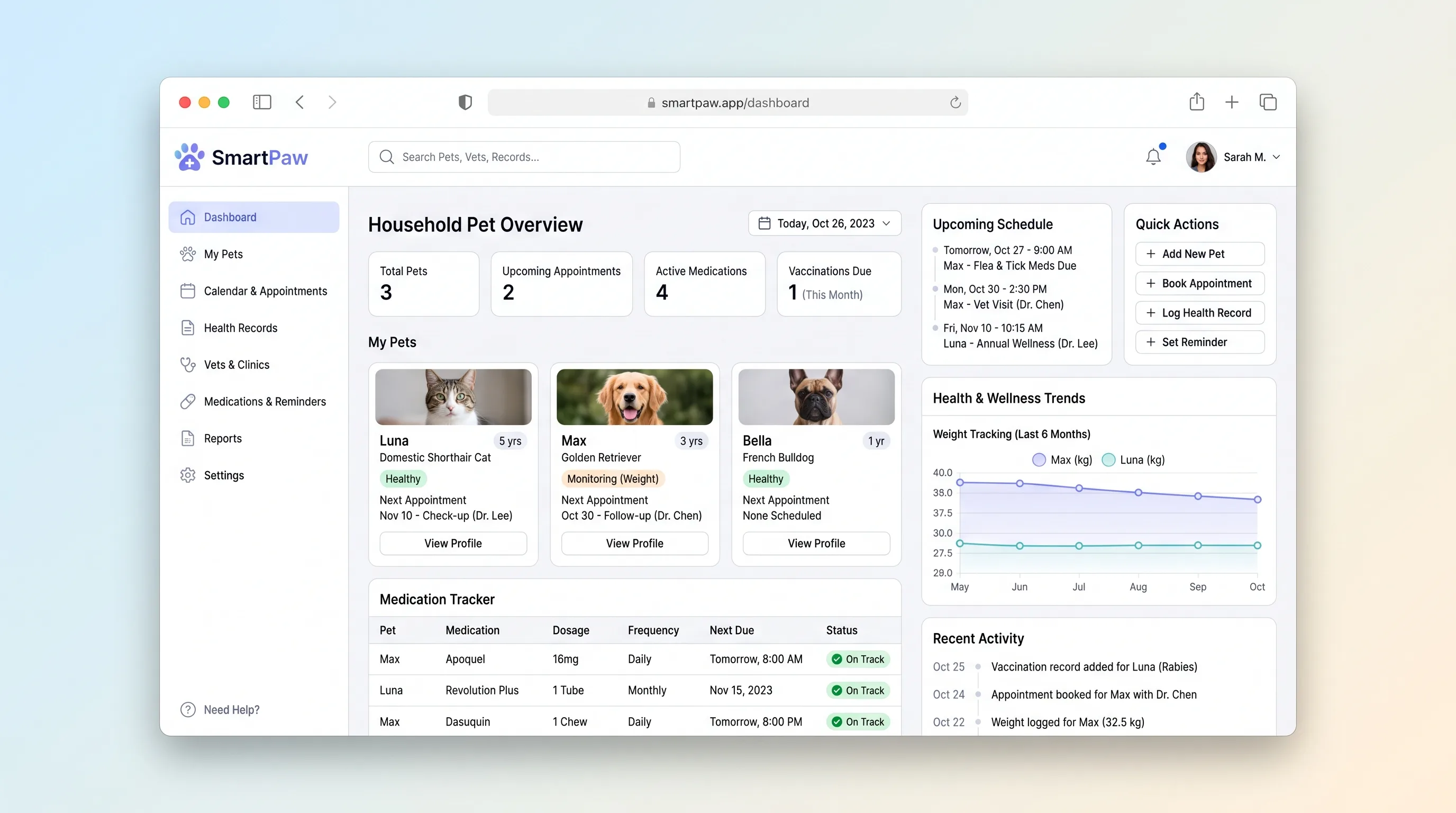
A household pet health hub where multi-pet owners track vaccination schedules, log medications, review vet visit history, book appointments, and share emergency care cards with sitters.
EcommerceRetail
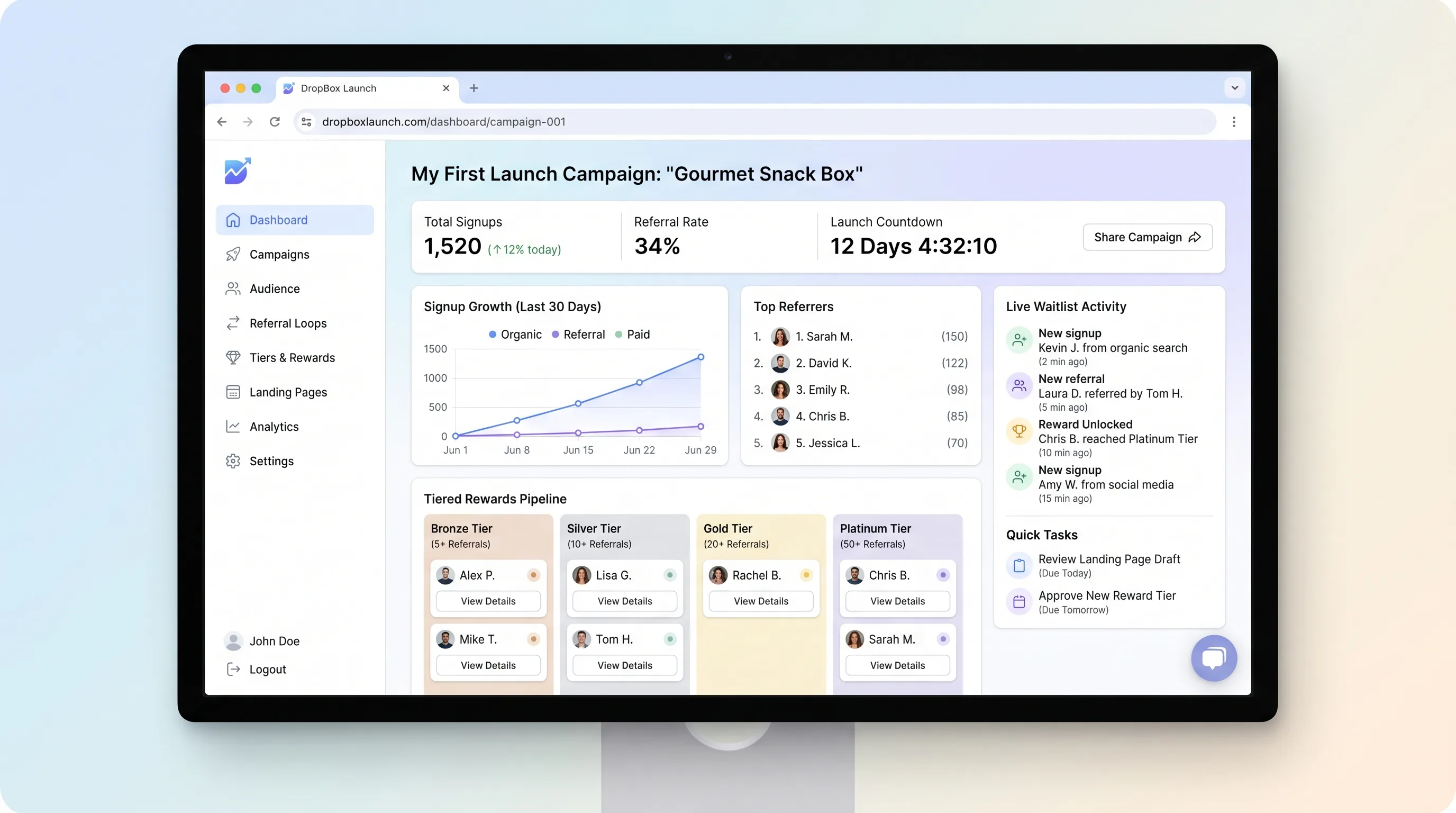
A focused landing page builder that lets creators publish a pre-launch page with countdown timers, email capture, and referral-based tiered waitlist rewards, then export segmented subscribers for launch-day campaigns.
Booking PlatformFood & Beverage
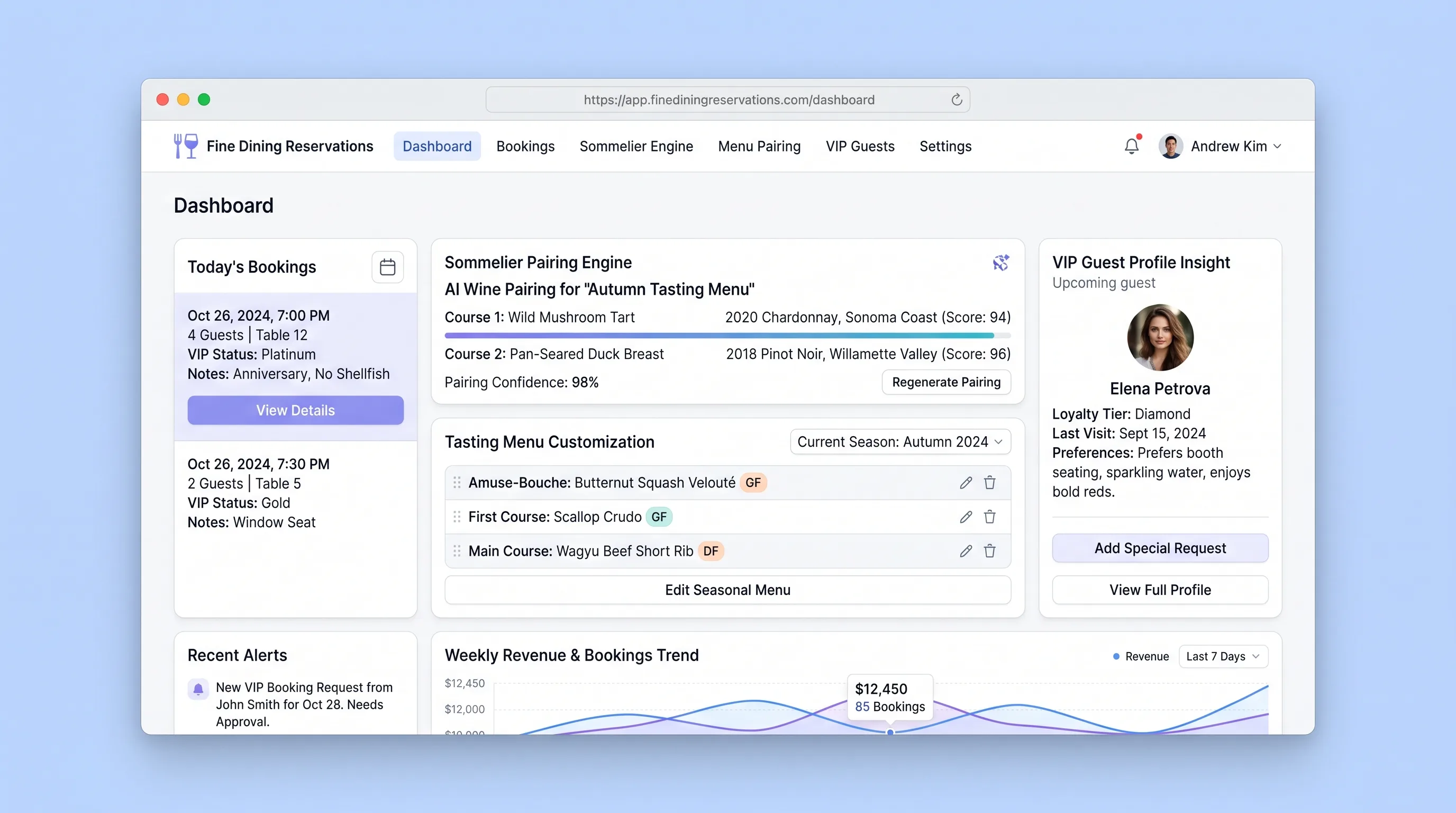
A restaurant booking experience that captures tasting-menu preferences, proposes explainable wine pairings for sommelier review, and preserves useful guest context for service.
Booking PlatformEducation
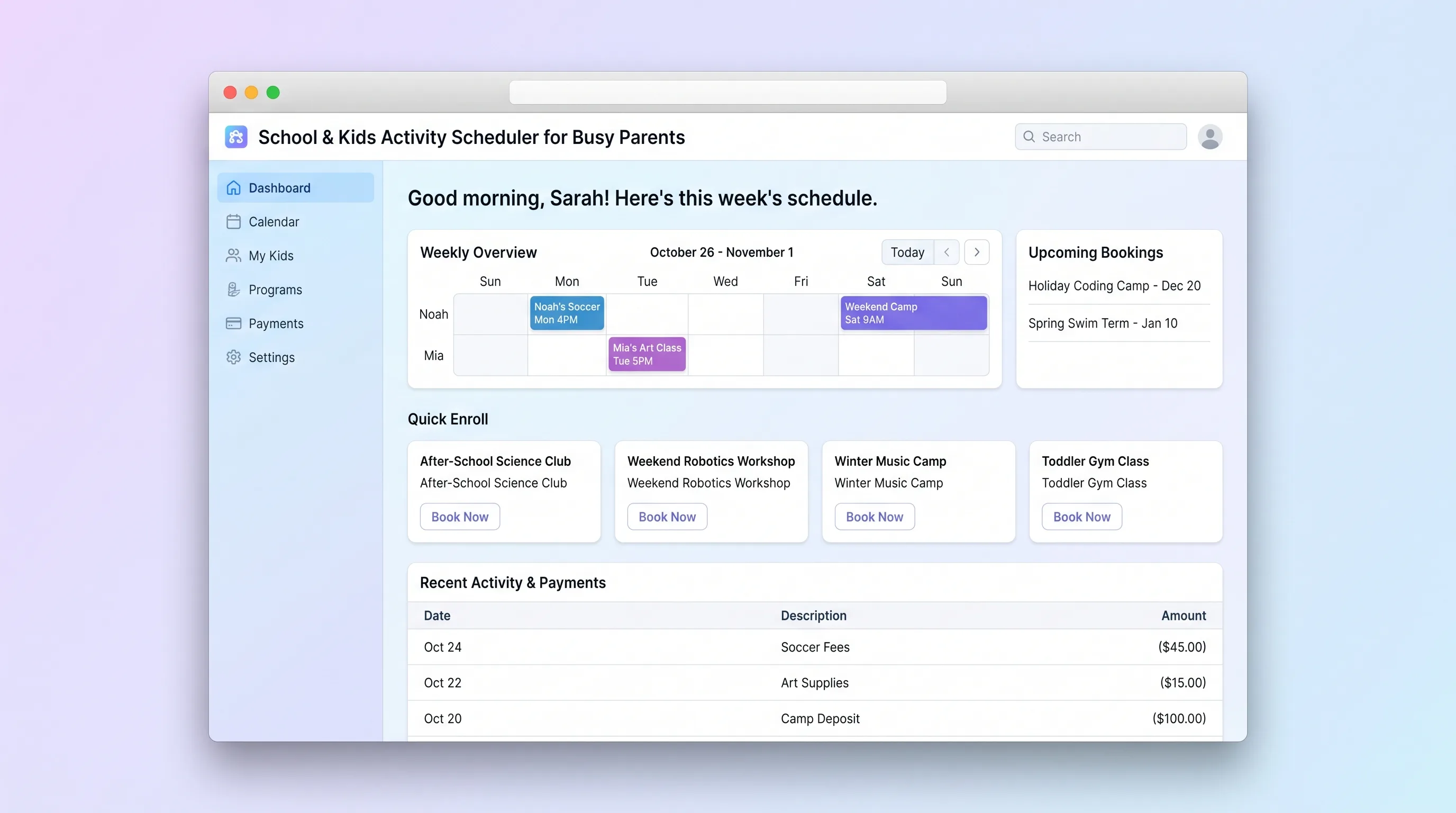
A focused booking platform where parents discover, enroll in, and pay for children's after-school programs, holiday camps, and weekend classes, while operators manage class listings, capacities, and enrollments.
Booking PlatformHealthcare & Wellness
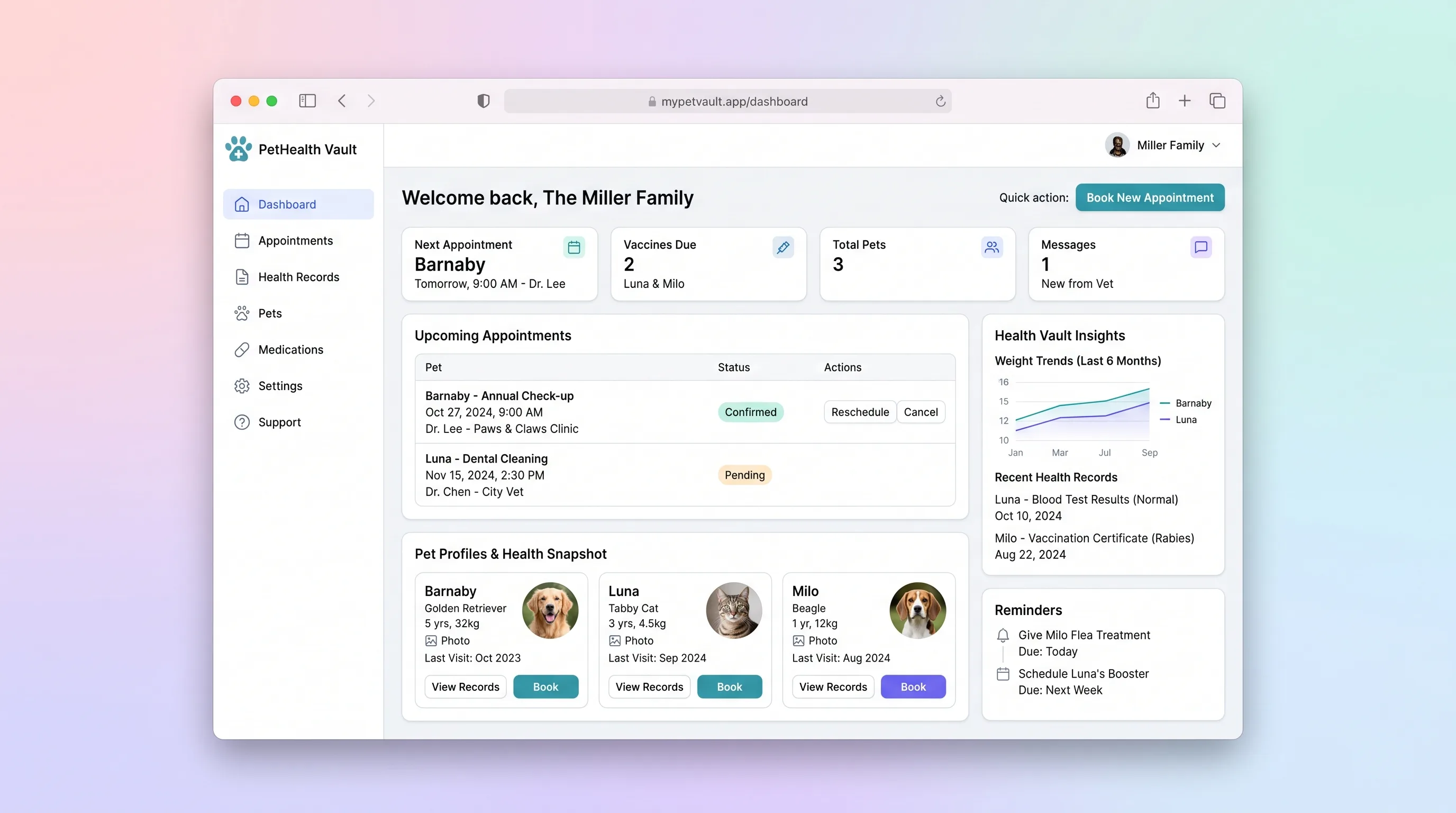
A household-focused app where pet owners manage health records and vaccination history for multiple pets and book vet appointments with automated reminders.
Booking PlatformHealthcare & Wellness
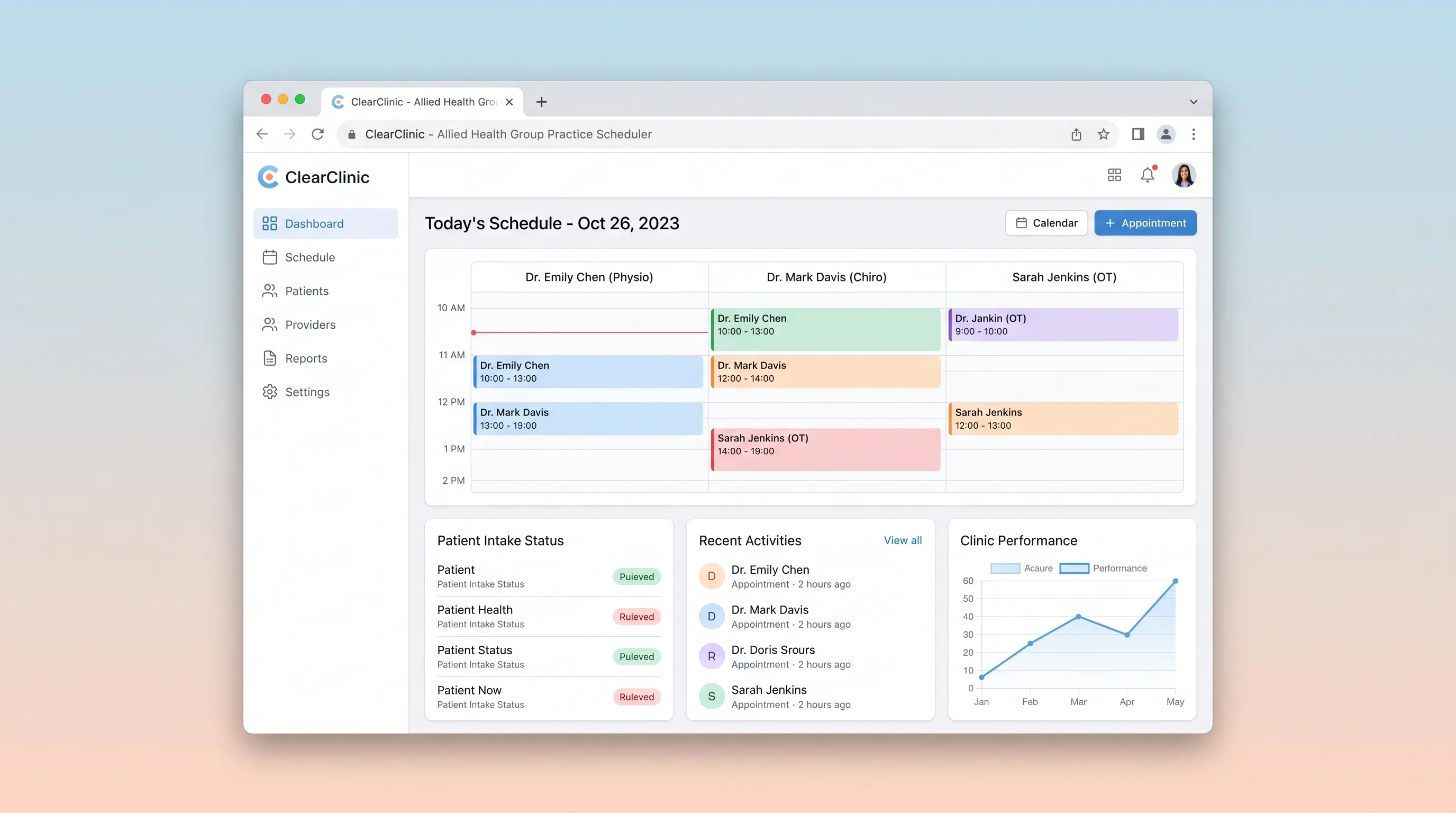
Multi-provider scheduling and patient intake platform for physiotherapy, chiropractic, and allied health group practices.