Build this if
Your restaurant already sells tasting menus and wants preference capture plus staff-reviewed pairing upsells inside direct booking.
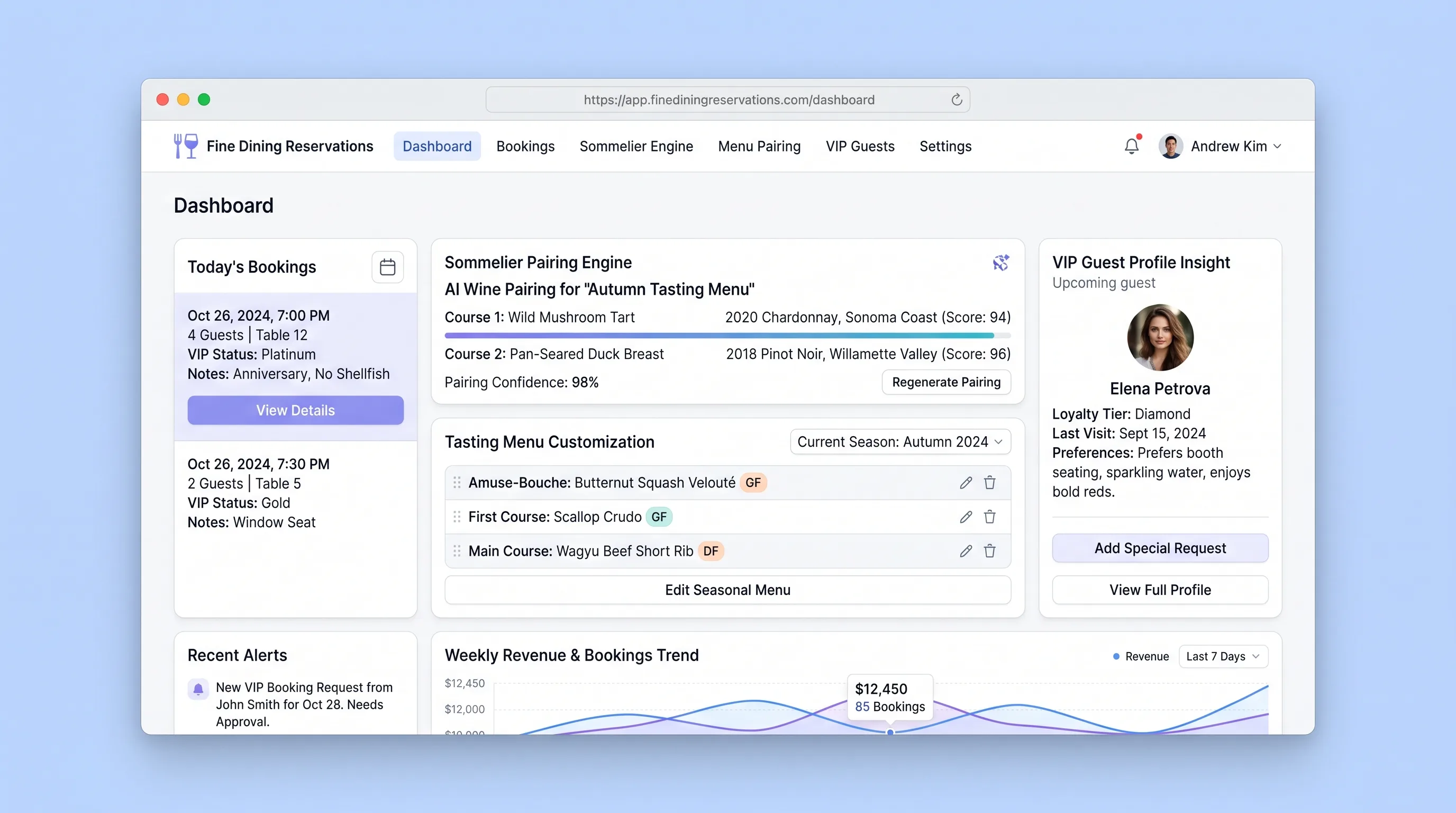
A restaurant booking experience that captures tasting-menu preferences, proposes explainable wine pairings for sommelier review, and preserves useful guest context for service.
Decision snapshot
Your restaurant already sells tasting menus and wants preference capture plus staff-reviewed pairing upsells inside direct booking.
You need a full POS, automatic allergy decisions, or autonomous wine recommendations with no sommelier review.
Run 50 test or live bookings and verify staff approve or meaningfully edit the pairing draft quickly enough to send it before the configured pre-service cutoff.
Problem and target customer
Fine-dining teams collect reservation details in one system, dietary notes elsewhere, and wine preferences only after arrival. Guests cannot plan the full experience, while sommeliers repeat basic discovery and risk acting on incomplete or outdated notes.
Independent fine-dining restaurants offering tasting menus, optional wine pairings, and high-touch repeat-guest service.
Monthly restaurant subscription plus an optional per-booking platform fee.
Editorial note
The pairing engine should operate inside the restaurant's current menu and available cellar list. That constraint makes its draft useful to a sommelier and prevents the polished interface from recommending a bottle the restaurant cannot serve.
Dietary notes and wine suggestions have different risk boundaries. The system can organize both, but only staff should resolve guest safety questions, and no generated text should imply that a pairing has addressed an allergy.
Choose your next step
Evaluate the operating tradeoffs quickly, or inspect how to build the MVP.
Compare the three operating paths at the default workload before opening the full calculator.
See cost preview Build this ideaInspect the build blueprintReview MVP scope, workflow, states, data rules, architecture, and acceptance criteria.
Open blueprintEvaluation preview
Directional infrastructure estimates for the current 500 bookings assumption. Open the full calculator when you are ready to change it.
Railway hosts booking, database, webhooks, and pairing worker.
Lowest operating effortA Hetzner cloud server runs the restaurant stack.
Lowest baseline costDedicated or larger resources isolate web, database, and workers.
Most separation and controlBuild blueprint
Product goal
MVP scope
UX and user flow
Choose date, party size, menu, seating, and dietary notes from valid availability.
Collect taste preferences and show the approved pairing explanation or a pending-review state.
Let staff inspect booking context, edit model suggestions, and approve what the guest sees.
Core entity outline
Defines date, seating period, table capacity, and booking cutoff.
Stores party size, menu version, guest notes, deposit state, and service status.
Provides approved labels, grapes, regions, style tags, availability, and menu compatibility constraints.
Stores model input version, structured suggestions, staff edits, and approval actor.
Architecture and data flow
Serve availability, guest checkout, preference capture, and staff review.
Hold and confirm covers transactionally to prevent overbooking.
Send constrained menu and catalog data to the LLM and validate structured output.
Persist menu versions, reservations, holds, profiles, and approvals.
Deliverables and acceptance
Recommended stack
Combines public booking and protected staff review.
Transactions are required for capacity holds and provider event idempotency.
Hosted deposit collection avoids handling card data.
The model drafts from a bounded menu and wine catalog while staff retain control.
Booking correctness is the foundation; pairing is a bounded, reviewable enhancement. Keep capacity and catalog rules deterministic, and let the model draft an explanation only from supplied active records.
Copy the build prompt, model the operating cost, and choose where to deploy.
Execution
Once the blueprint is clear, use the prompt, cost model, and deployment options to start building.
Build prompt
Use a TypeScript application with PostgreSQL, Stripe Checkout, and a structured-output LLM call whose suggestions remain pending until a sommelier approves them.
Build prompt
Open the prompt pack whenever you are ready to take this blueprint into your builder.
Build prompt ready
Copy the prompt into your builder, then use the cost model below to choose how you want to run it.
Use the cost model to choose a deployment path that matches the build plan.
Cost calculator
A technical run-cost estimate for the first production version. Team, acquisition, payment fees, and business COGS are excluded.
$5.84-$36 per 500 bookings
Low and high values allow for usage variance and plan headroom.
Railway hosts booking, database, webhooks, and pairing worker.
1K bookings included, then $2-$8 per 1K bookingsOne constrained draft per booking from the active tasting menu and wine catalog.
500 bookings x 1.2K input + 300 output tokensBooking, pairing-ready, and change notifications.
3K bookings includedThe estimate combines the selected infrastructure path, required operating modules, selected optional modules, and usage above included monthly allowances. Taxes and regional uplifts are excluded.
Deployment options
Choose based on operating preference, not only the headline price.
Deploy booking, database, webhooks, and pairing worker together.
Monitor resource and model usage during traffic spikes.
Run the app, worker, and database on one small Vultr VPS with Docker Compose and explicit backups.
You own availability, backup, and webhook incident response.
Separate application, worker, data, storage, and backup responsibilities as the workload grows.
Requires active operations.
Start building
Use Lovable to test party selection, menu choices, pairing explanation, deposit handoff, and staff review screens.
Open Lovable 02AutomationRelay confirmed covers to service prepUse Make optionally to send confirmed dietary and pairing summaries to a staff channel; staff approval stays in the product.
Open Make 03DeployDeploy booking and pairing servicesRun booking, inventory rules, payment webhooks, and pairing jobs together with a relational database.
Open RailwayKeep exploring
Booking PlatformFood & Beverage
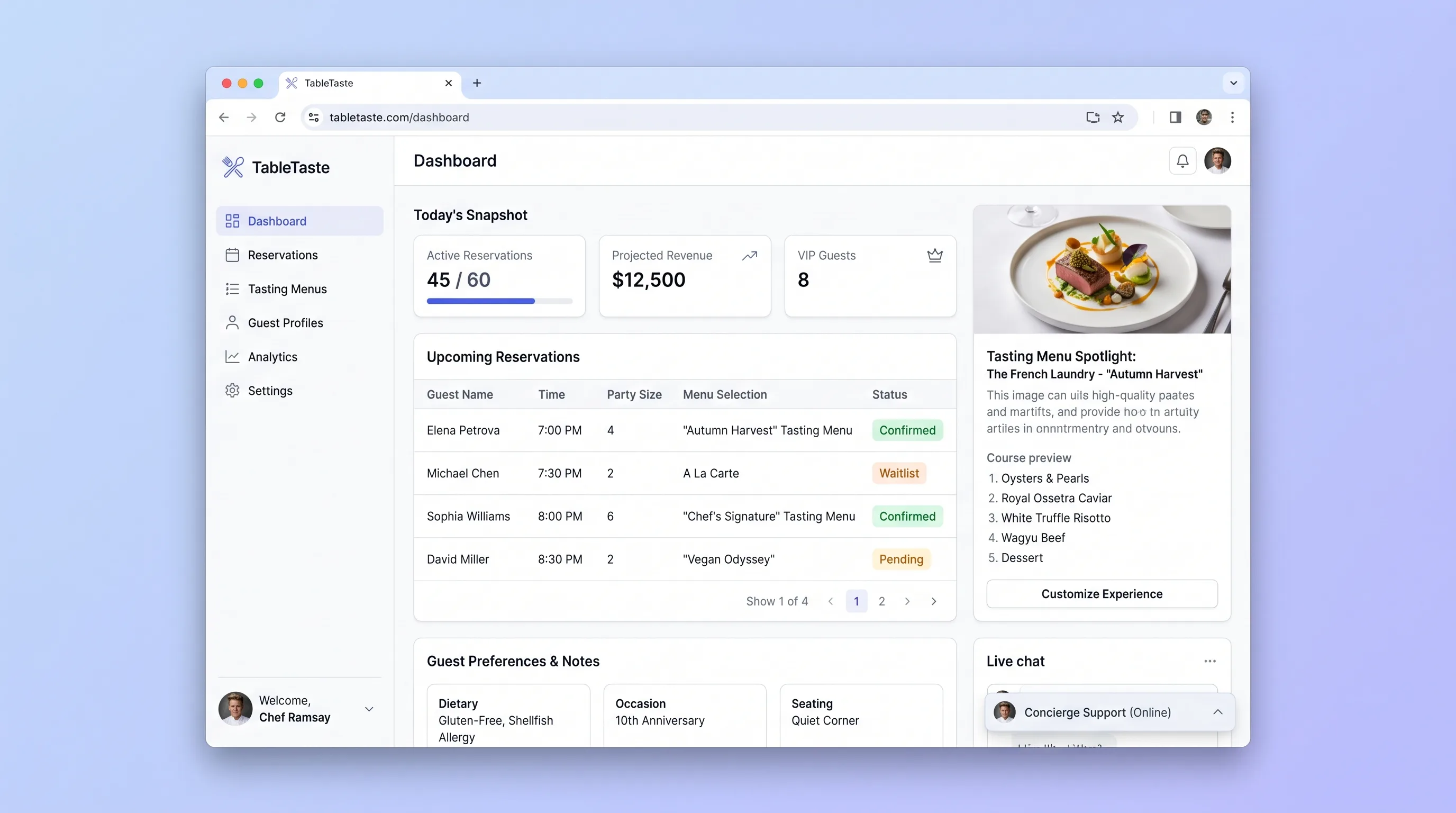
A reservation and tasting-menu showcase platform for upscale restaurants that lets guests preview courses, customize their experience, and book locked time slots while operators manage menus and daily bookings from one screen.
Booking PlatformBeauty & Fashion
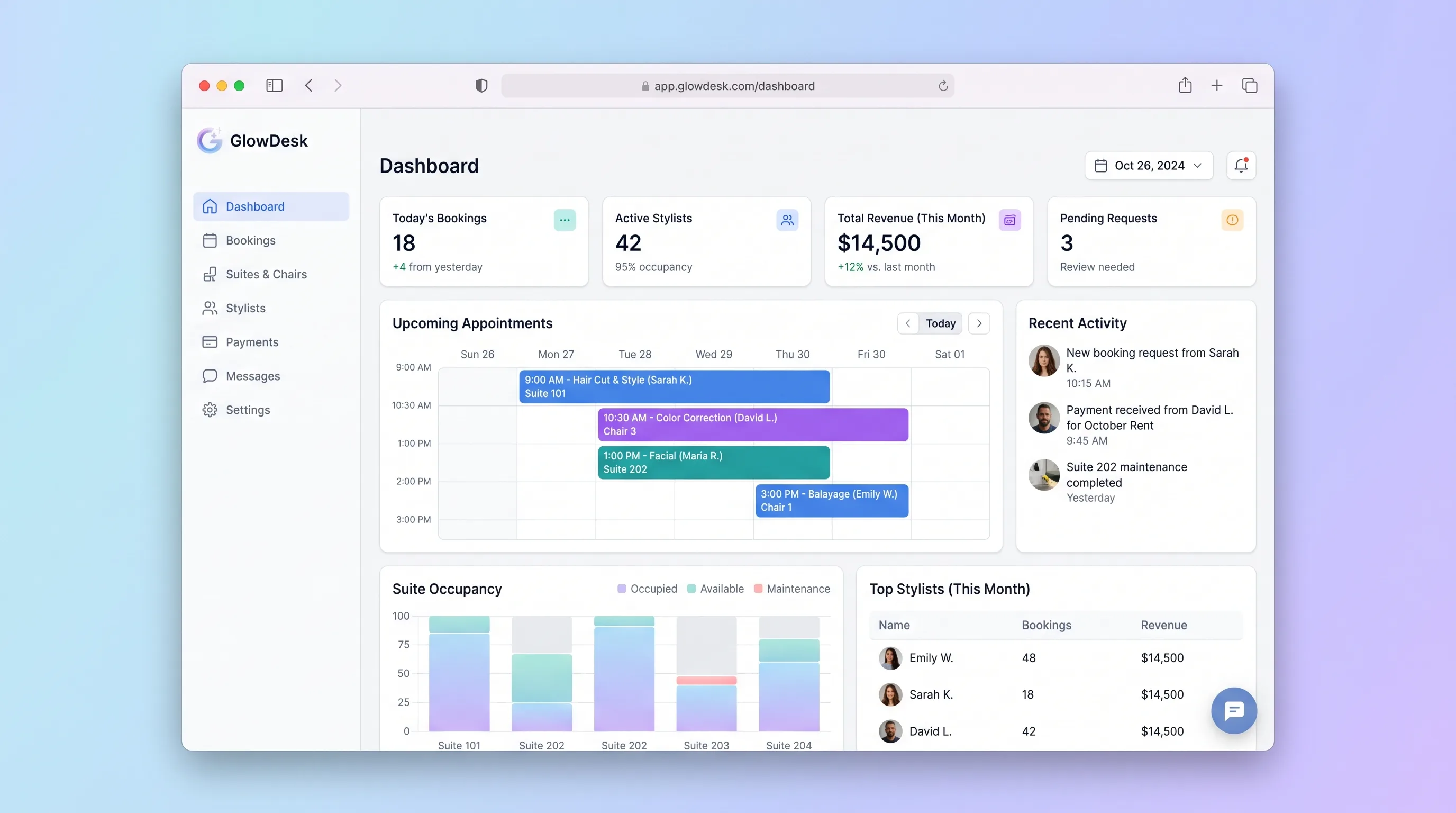
A shared schedule for salon suite owners and independent stylists that separates chair access from client appointments while preventing resource conflicts.
Booking PlatformEducation
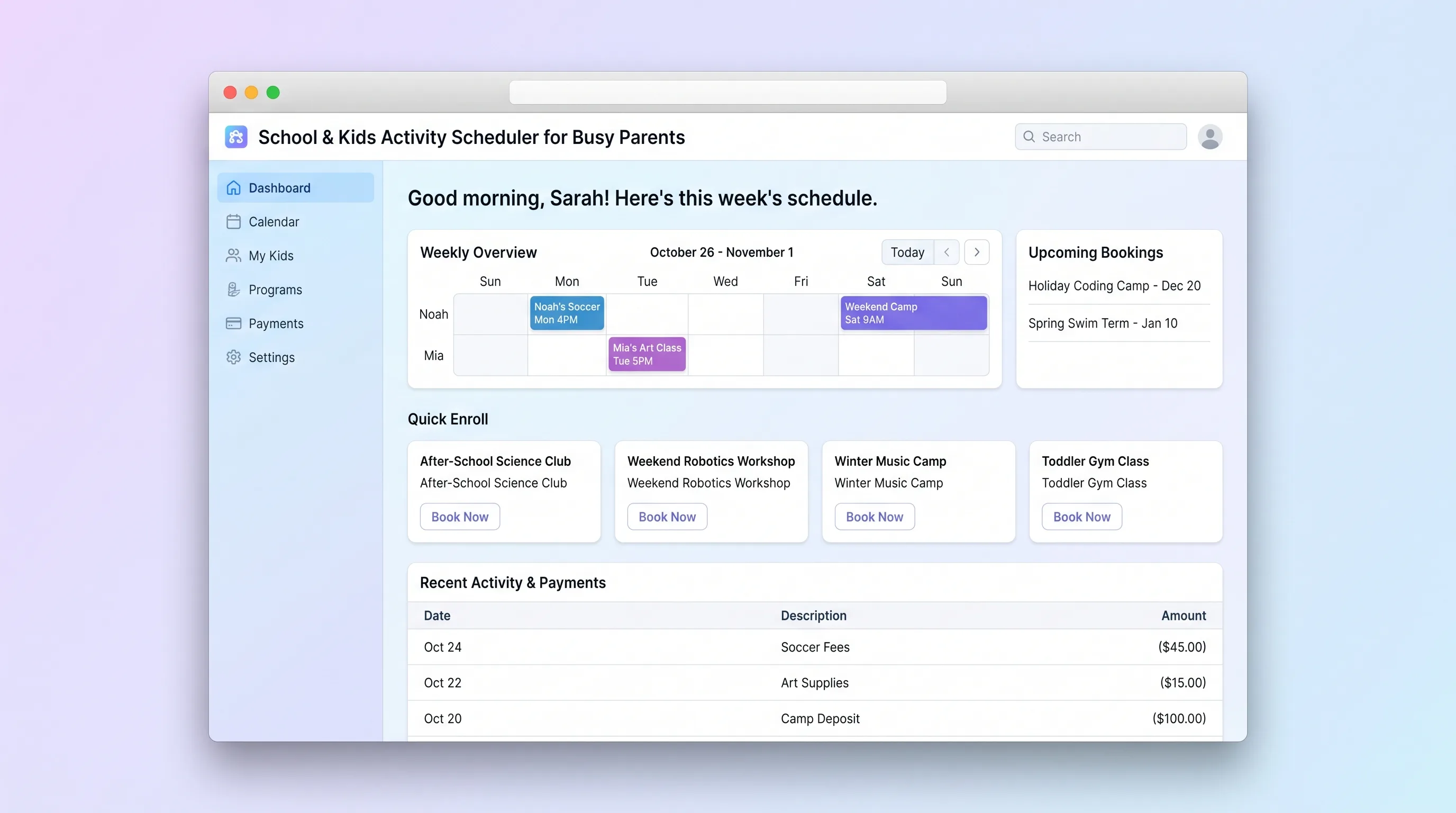
A focused booking platform where parents discover, enroll in, and pay for children's after-school programs, holiday camps, and weekend classes, while operators manage class listings, capacities, and enrollments.
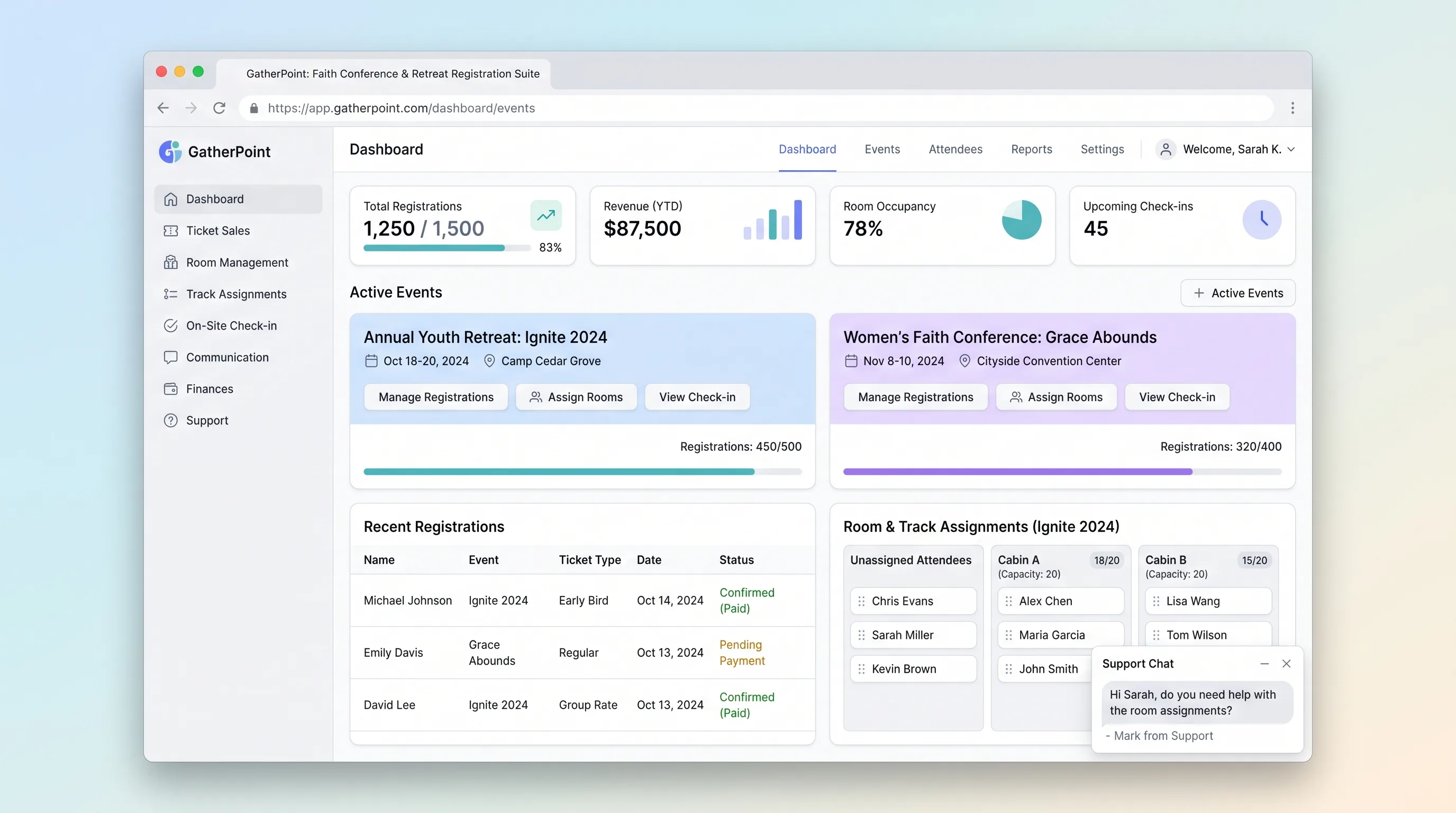
Booking PlatformEvents & Community
A focused registration platform for multi-day church conferences, retreats, and youth camps that handles group sign-ups, lodging and track assignment, and on-site QR-badge check-in.
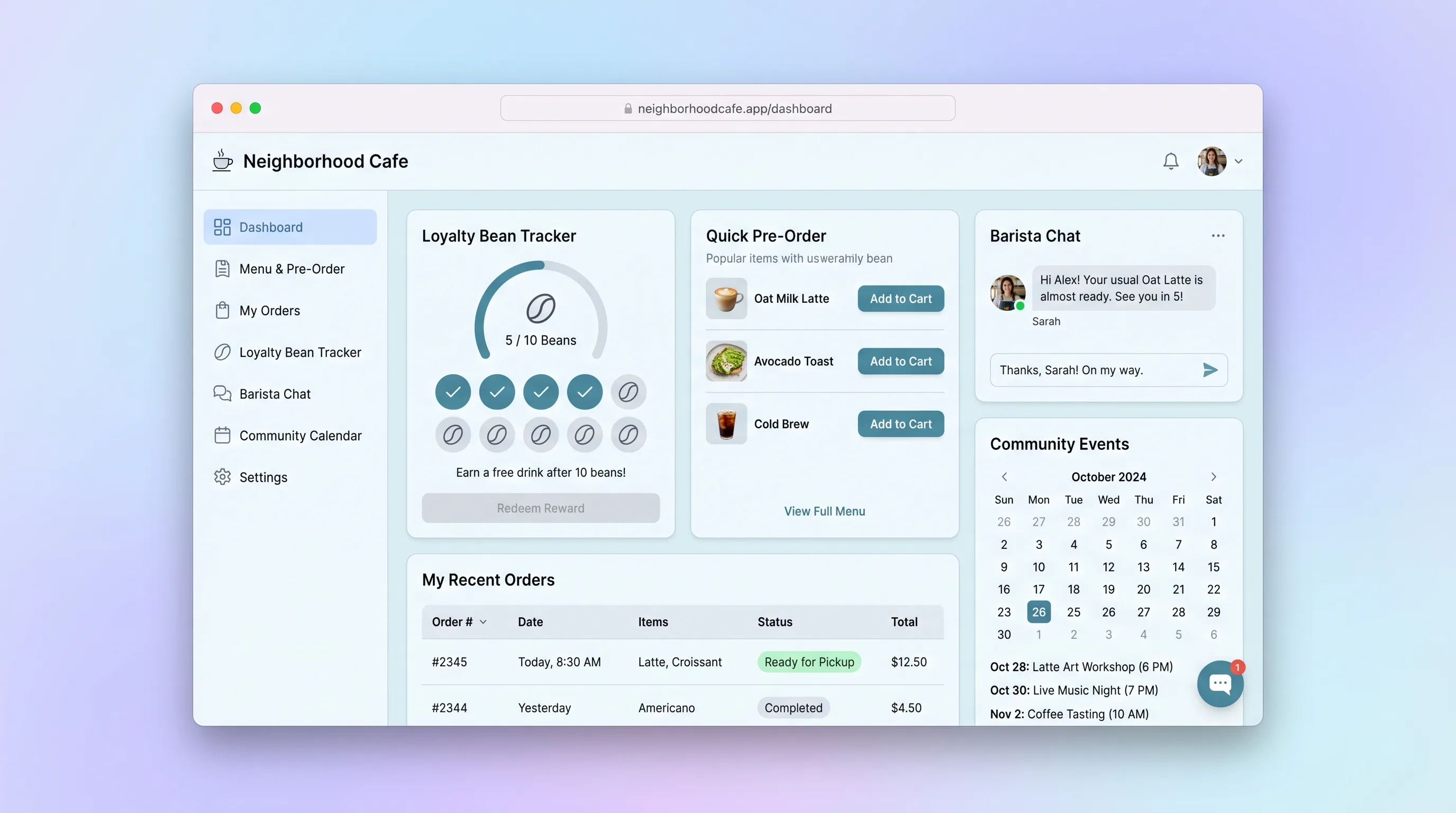
EcommerceFood & Beverage
A single-cafe mobile ordering flow that gives customers reliable pickup timing while staff manage preparation and award loyalty beans after collection.
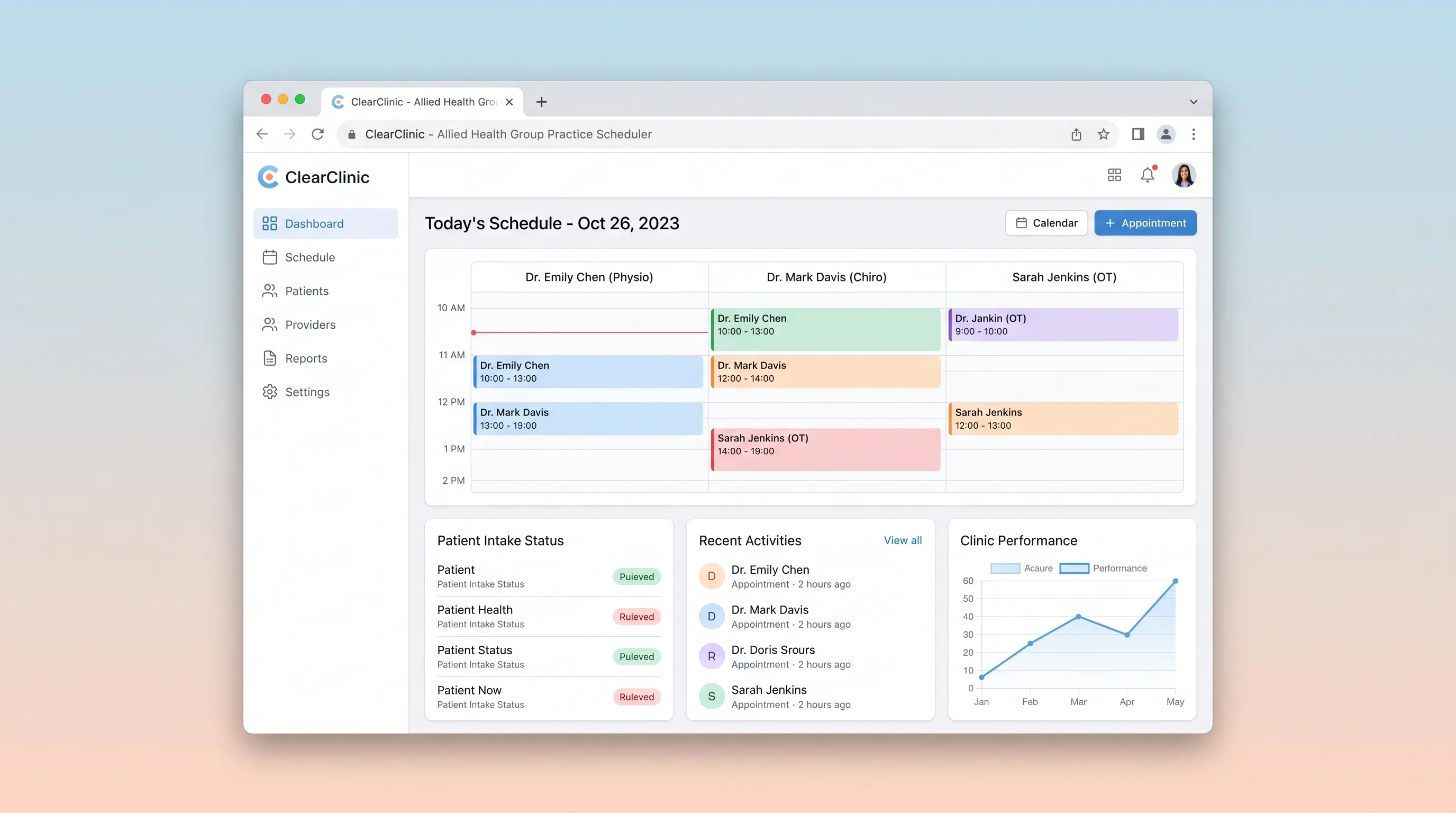
Booking PlatformHealthcare & Wellness
Multi-provider scheduling and patient intake platform for physiotherapy, chiropractic, and allied health group practices.