Build this if
You can recruit a vetted pool of at least 30 freelance creatives with portfolios before launch and validate that indie brands will pay a transaction premium for curated matching.
A curated marketplace where indie brands post a project brief in under four minutes and receive at least three matched, vetted freelance creatives—photographers, copywriters, and designers—for project-based work.
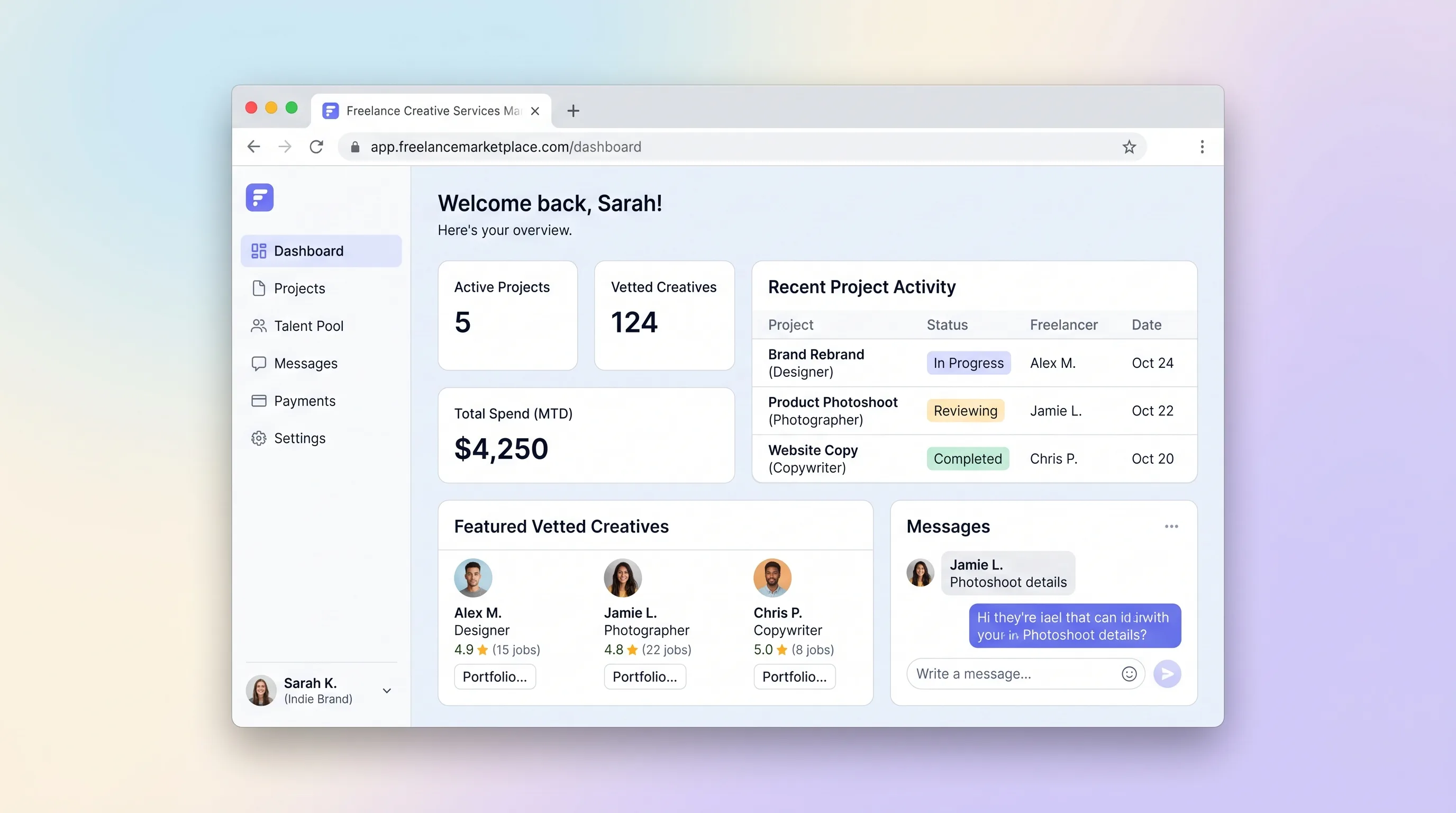
Decision snapshot
You can recruit a vetted pool of at least 30 freelance creatives with portfolios before launch and validate that indie brands will pay a transaction premium for curated matching.
You cannot pre-vet creatives or rely on organic supply to fill the marketplace without manual curation.
Invite 10 indie brands to post a real brief; confirm at least 7 receive 3+ relevant creative matches and 3+ convert to a paid project inquiry within the first week.
Problem and target customer
Indie brands struggle to find vetted freelance creatives for project-based work. Coordination is split across generic job boards, DMs, and spreadsheets, with no structured way to match a brief to relevant portfolios or manage payment and delivery in one place.
Indie brand operators and small marketing teams who need production-ready creative talent—photographers, copywriters, and designers—without sourcing through generic freelance platforms or agencies.
Two-sided curated marketplace. Brands post briefs and pay per project; creatives apply or are matched. Platform takes a transaction fee on completed orders and offers a monthly subscription for operators managing repeat creative needs.
Editorial note
Indie Creative Match focuses on one workflow: a brand posts a brief, the system matches vetted creatives, and the project moves through a tracked lifecycle to payment and review. The MVP deliberately excludes in-app messaging and calendar booking to keep scope tight.
The matching layer uses an LLM to score creative profiles against brief text, returning at least three ranked results with a short rationale. This is the core differentiator over generic job boards where brands sift through unstructured listings.
Payments use Stripe Connect in an escrow pattern: the brand funds the project upfront, the creative delivers, and funds release on approval minus the platform transaction fee. This protects both sides without building custom payment infrastructure.
Choose your next step
Evaluate the operating tradeoffs quickly, or inspect how to build the MVP.
Compare the three operating paths at the default workload before opening the full calculator.
See cost preview Build this ideaInspect the build blueprintReview MVP scope, workflow, states, data rules, architecture, and acceptance criteria.
Open blueprintEvaluation preview
Directional infrastructure estimates for the current 250 assisted transactions assumption. Open the full calculator when you are ready to change it.
Managed app hosting, database, backups, and basic observability for the marketplace workflow.
Lowest operating effortOne small VPS running the app, database, media volume, and backup job.
Lowest baseline costSeparate app, data, storage, and worker capacity for cleaner operations.
Most separation and controlBuild blueprint
Product goal
MVP scope
UX and user flow
Brand selects service type, sets budget range and deadline, writes a short brief with brand context.
Display at least 3 scored creative matches with portfolio previews, match rationale, and starting rates.
Full-bleed portfolio gallery, service tags, past reviews, and starting rate for a single creative.
Track project status from Accepted through Completed with payment status visible.
Brand submits a star rating and written review after project completion.
Core entity outline
Represents a brand's posted brief and its lifecycle.
Vetted creative with service tags, starting rate, and portfolio.
Full-bleed portfolio image with title and description.
Payment and delivery record for a matched project.
Brand feedback after project completion.
Architecture and data flow
Renders brief intake, match results, creative profiles, project tracker, and review screens.
Calls OpenAI API with brief text and creative profile summaries to return ranked matches with rationale.
Stores projects, creative profiles, portfolio items, orders, and reviews with row-level security.
Handles escrow payment holds and split payouts with platform fee deduction.
Listens for project status webhooks and sends email notifications to brand and creative.
Deliverables and acceptance
Recommended stack
Rapid visual build for the editorial, design-forward interface with full-bleed portfolio galleries and brief intake forms.
Relational storage for projects, orders, profiles, and reviews with row-level security for brand vs creative data access.
Escrow-style hold and split payments to creatives with platform transaction fee deduction on release.
Scores creative profiles against brief text using structured prompts to return ranked matches with rationale.
Stores full-bleed portfolio images and brand kit attachments with signed URLs for secure access.
Optional webhook handler that triggers email notifications on project status changes without building a custom notification service.
Lovable handles the editorial front-end quickly. Supabase provides relational durability for projects, orders, and reviews with auth. Stripe Connect handles escrow and fee splits. The OpenAI API powers brief-to-creative matching, which is the core differentiator. Make is bounded to status-change email notifications only.
Copy the build prompt, model the operating cost, and choose where to deploy.
Execution
Once the blueprint is clear, use the prompt, cost model, and deployment options to start building.
Build prompt
Lovable
Build prompt
Open the prompt pack whenever you are ready to take this blueprint into your builder.
Build prompt ready
Copy the prompt into your builder, then use the cost model below to choose how you want to run it.
Use the cost model to choose a deployment path that matches the build plan.
Cost calculator
A technical run-cost estimate for the first production version. Team, acquisition, payment fees, and business COGS are excluded.
$15-$50 per 125 assisted transactions
Low and high values allow for usage variance and plan headroom.
Managed app hosting, database, backups, and basic observability for the marketplace workflow.
50K assisted transactions included, then $8-$20 per 100K assisted transactionsPayment processor is implied by the source workflow or feature list.
100 included, then $0-$5 per 100 assisted transactionsObject storage is implied by the source workflow or feature list.
Monthly allowance from this idea's operating profileThe estimate combines the selected infrastructure path, required operating modules, selected optional modules, and usage above included monthly allowances. Taxes and regional uplifts are excluded.
Deployment options
Choose based on operating preference, not only the headline price.
Fast Docker deployment for the app, database, worker, and preview workflow without managing a VPS.
Usage billing needs active monitoring as traffic and jobs grow.
Run the app, worker, and database on one small Vultr VPS with Docker Compose and explicit backups.
You own patching, backups, monitoring, and incident response.
Separate application, worker, data, storage, and backup responsibilities as the workload grows.
You own server setup, patching, backups, and operational monitoring.
Start building
Create the brief intake form, creative match cards with full-bleed portfolio previews, project status tracker, and review submission screen with an off-white editorial aesthetic.
Open Lovable 02AutomationWire status-change email notificationsConfigure a Make scenario that listens for project status webhooks from Supabase and sends branded email notifications to the brand and creative on each state transition.
Open Make 03DeployDeploy the matching and payment backendHost a lightweight Node or Python service on Railway that calls the OpenAI API for creative matching, integrates Stripe Connect for escrow, and exposes REST endpoints consumed by the Lovable front-end.
Open RailwayKeep exploring
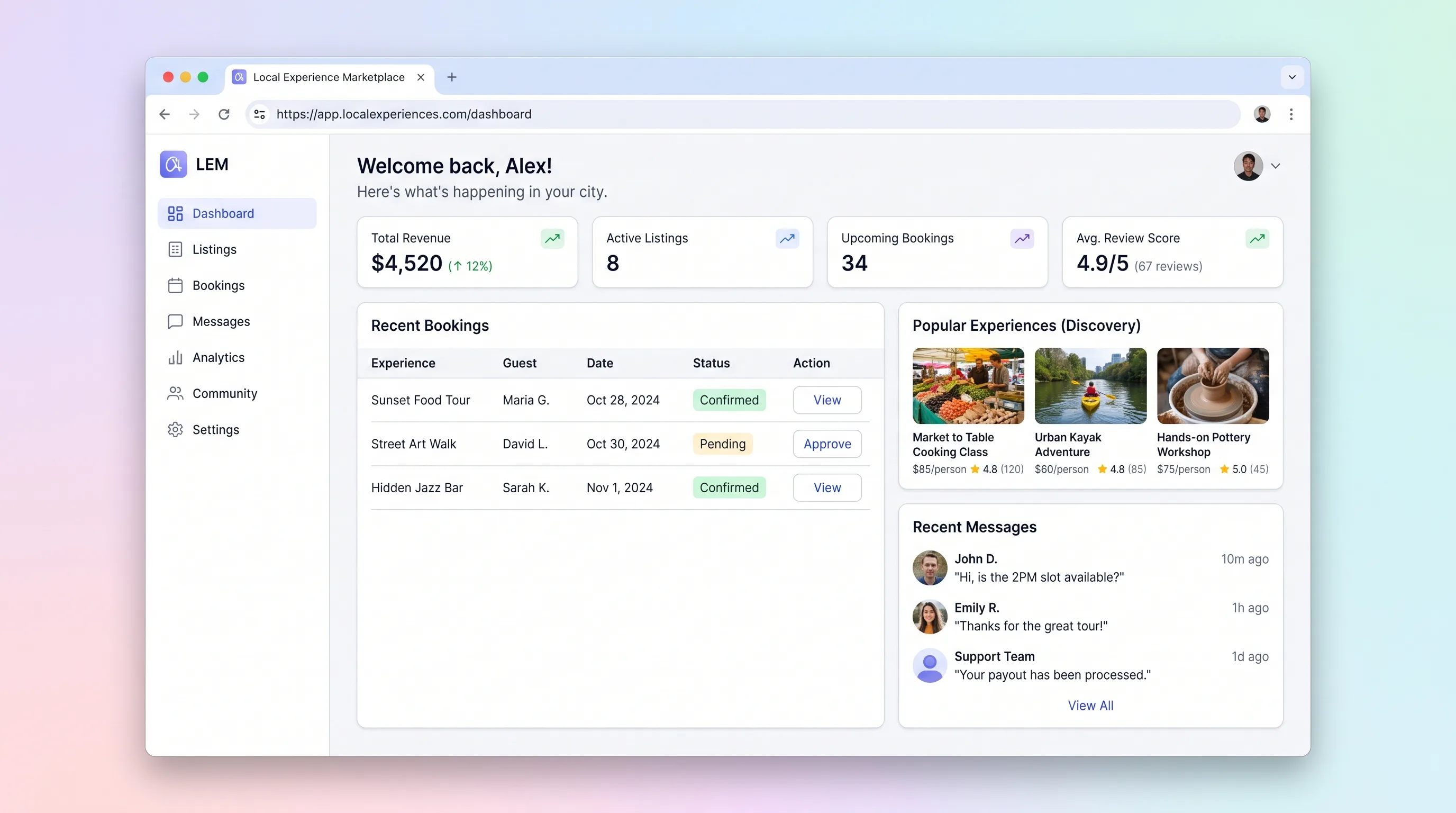
MarketplaceHospitality & Travel
A peer-to-peer marketplace where locals publish city experiences with bookable time slots and travelers search, pay, and receive confirmation without manual coordination.
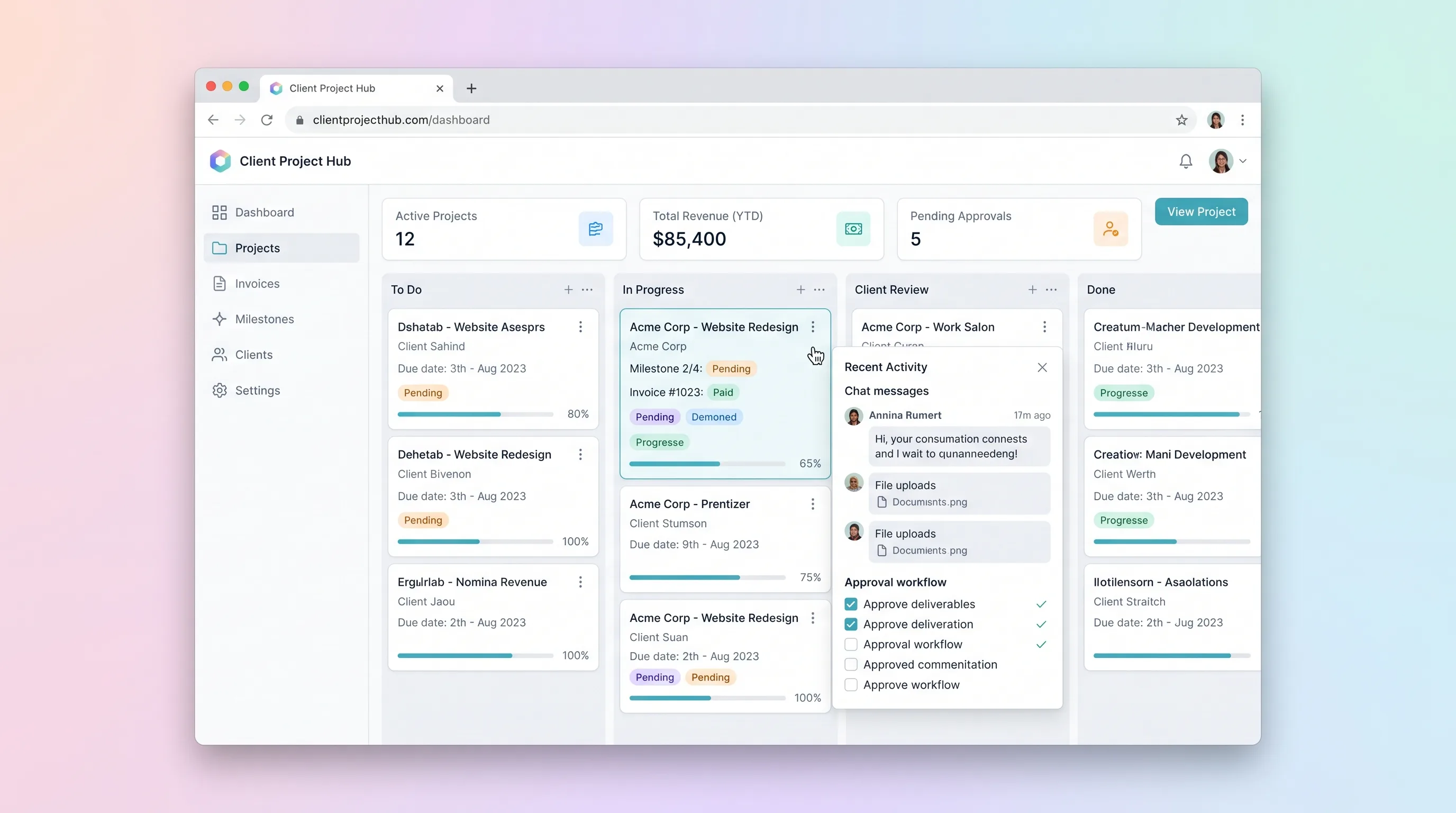
SaaS WorkflowProfessional Services
A kanban-driven workspace where freelancers and small agencies track client project milestones, route deliverables through an approval workflow, and auto-generate invoices upon approval.
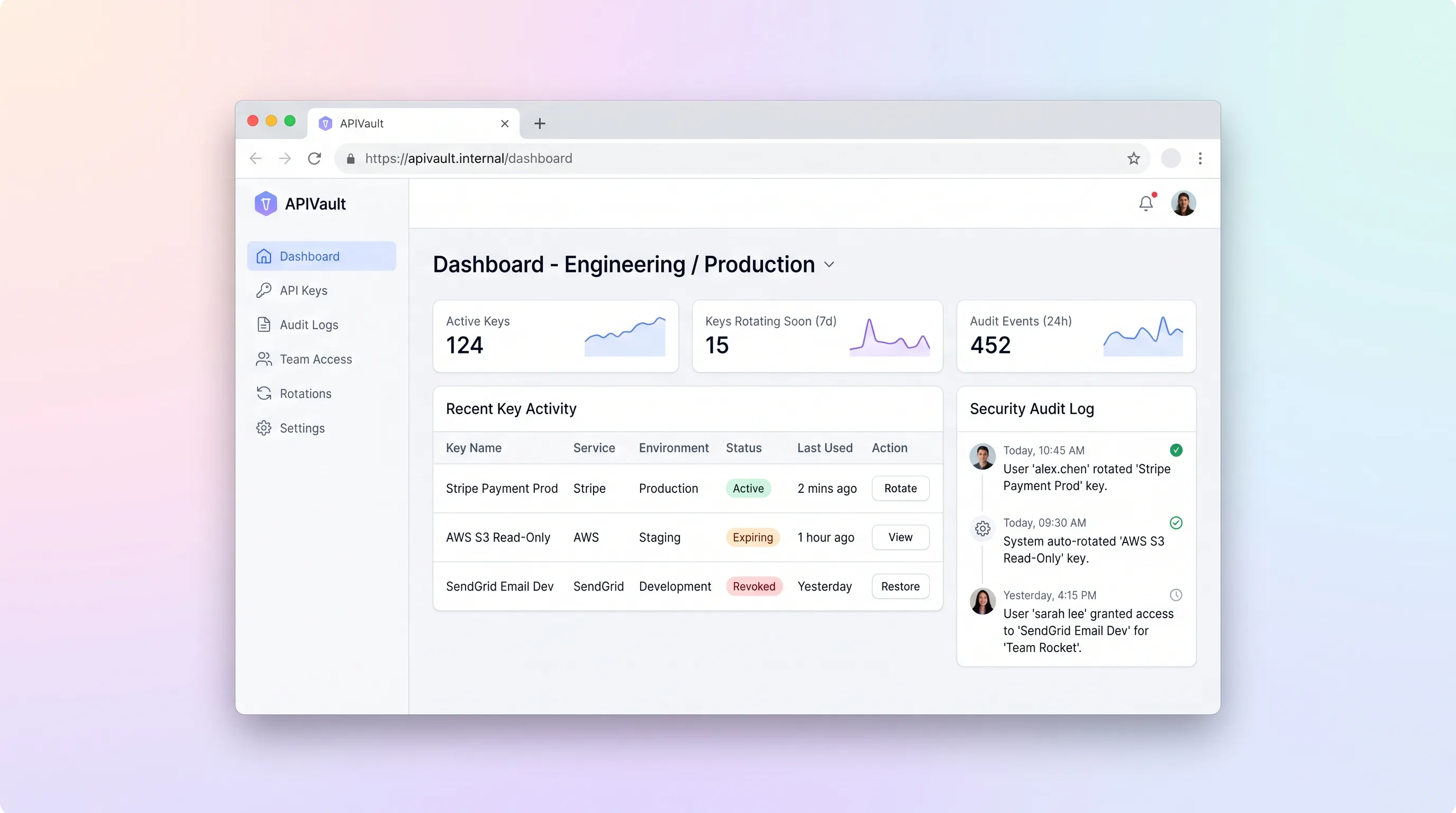
SaaS WorkflowDeveloper & IT Operations
A focused internal tool for indie dev teams to store, rotate, and audit API keys across projects and environments with workspace-level access controls and a full activity trail.
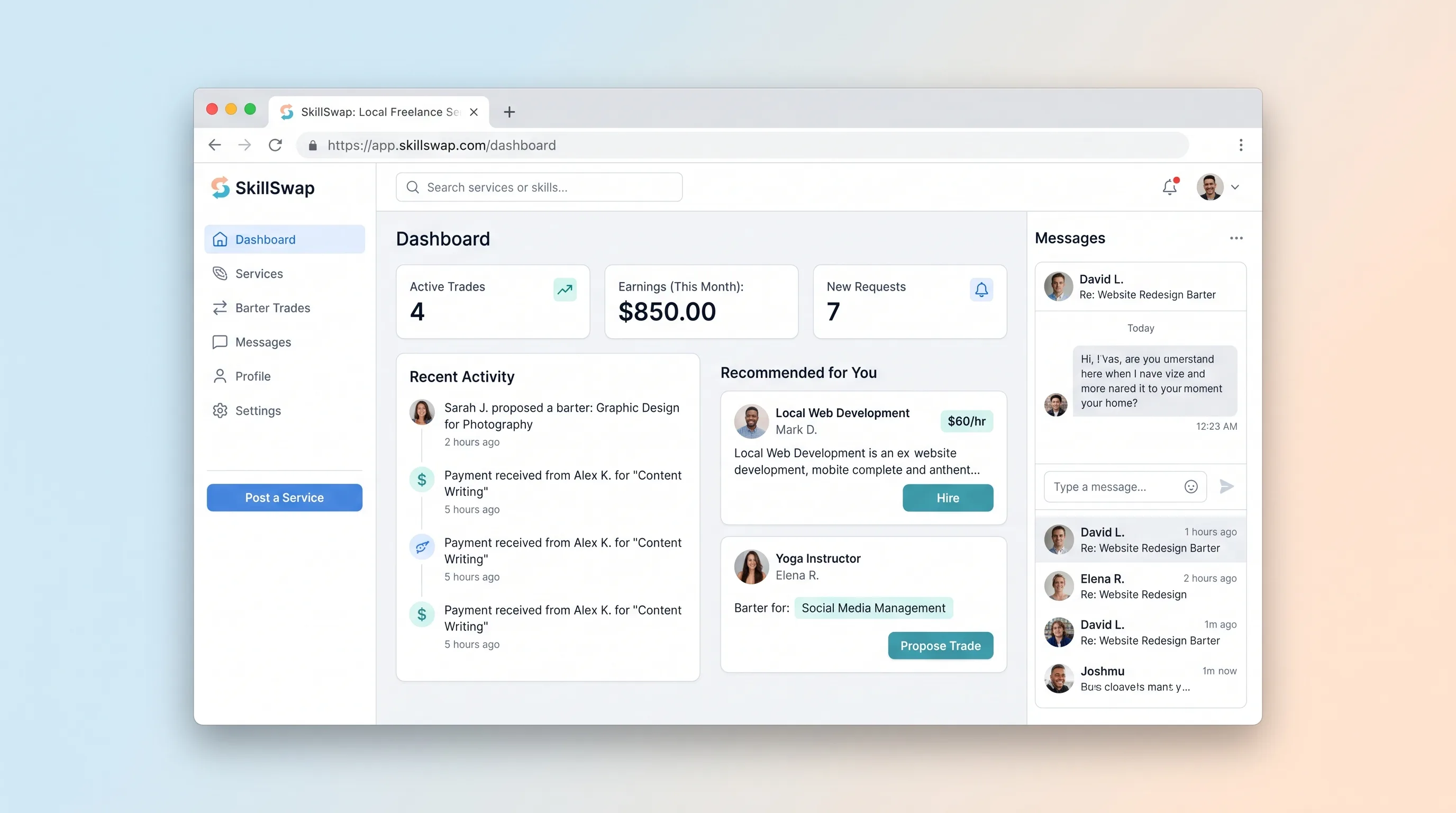
MarketplaceProfessional Services
A local services marketplace where people answer a listing with either a cash offer or a two-sided skill trade, then agree deliverables and milestones.
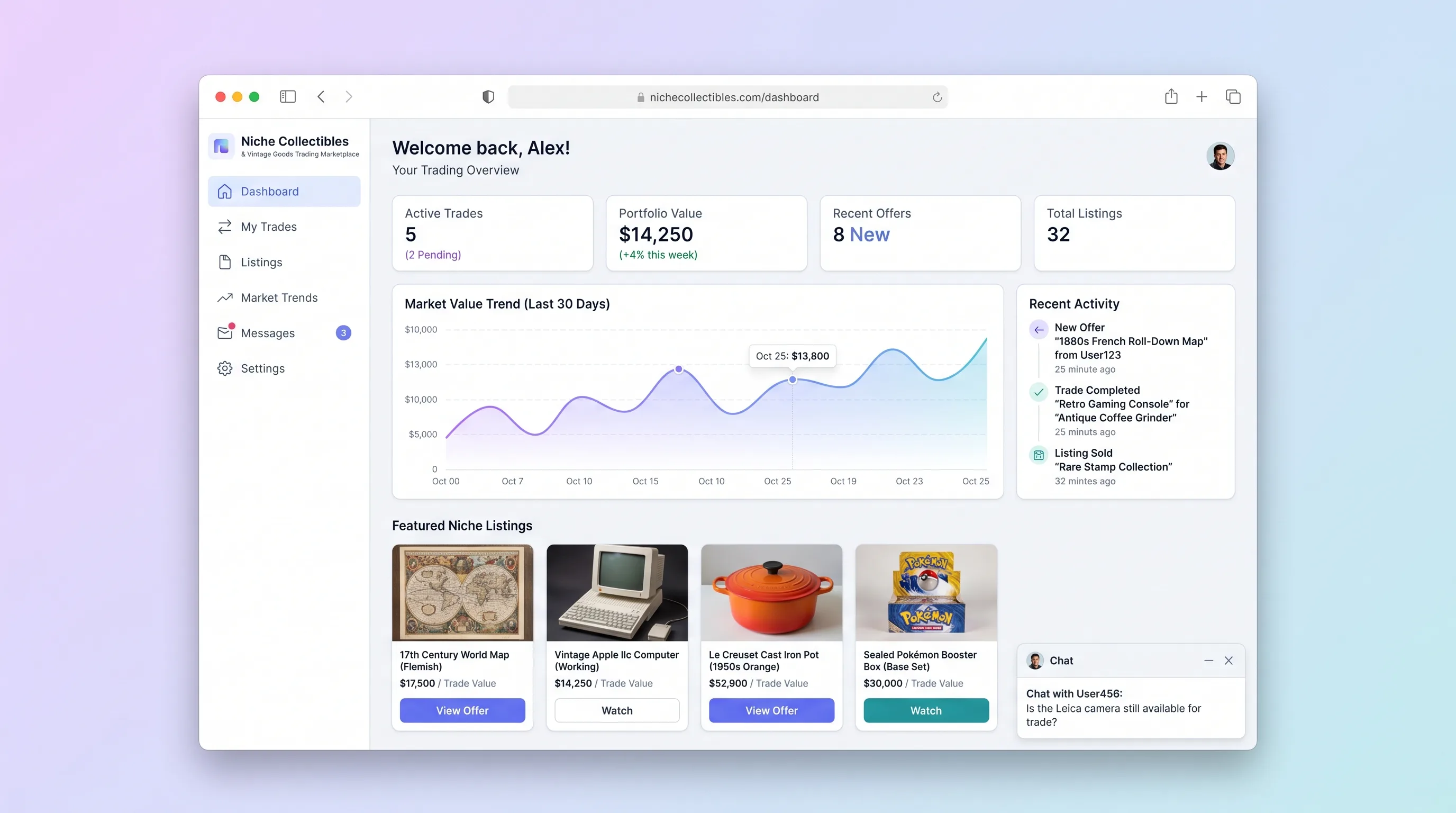
MarketplaceRetail
A focused buy-sell-trade platform for collectors of vintage maps, retro electronics, antique kitchenware, and rare hobby items, with condition grading, saved search alerts, and offer management.
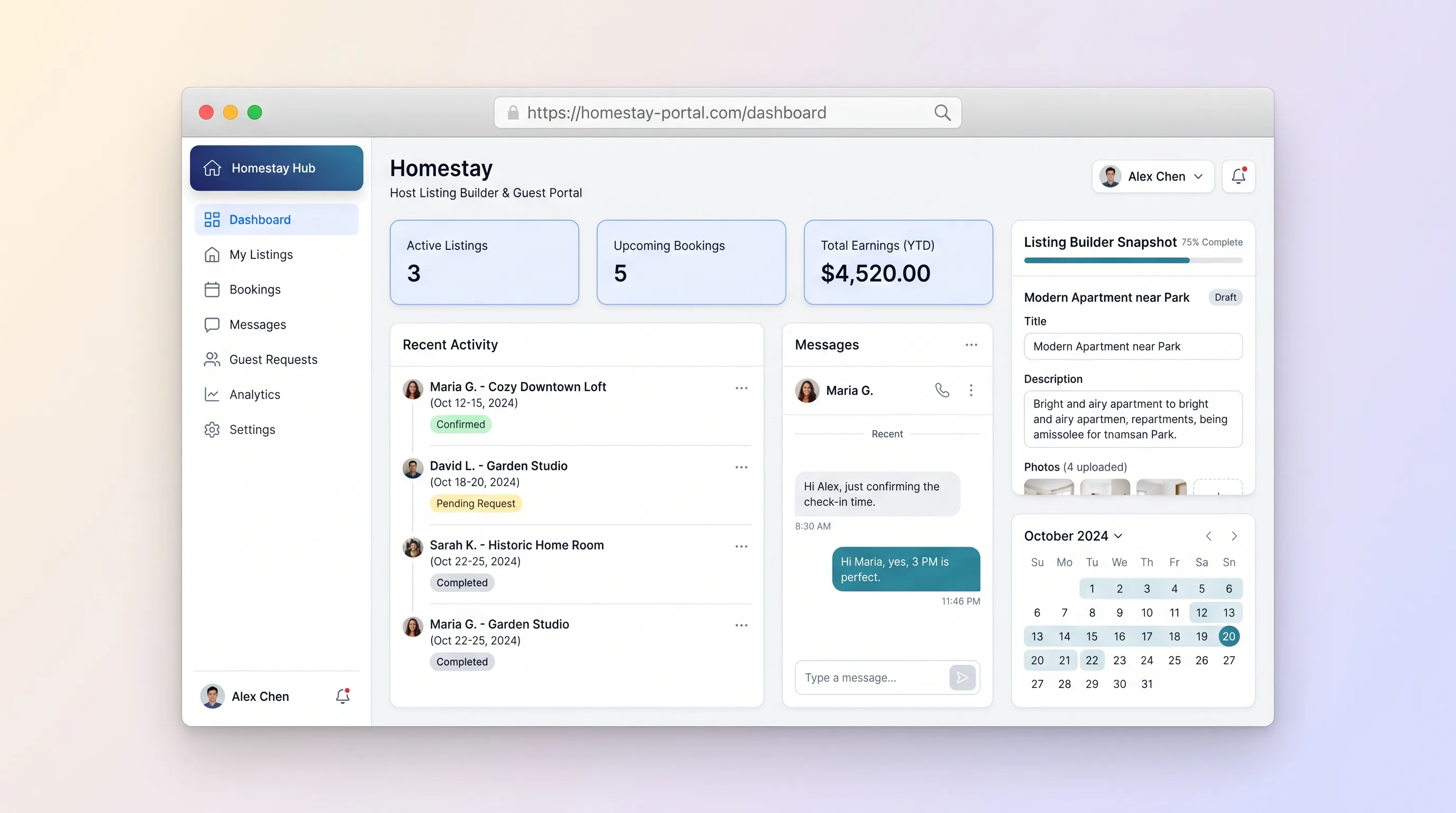
MarketplaceHospitality & Travel
A dual-sided marketplace where homestay hosts create rich property listings with photos, amenities, and pricing, and guests search by location, message hosts, submit booking requests, and track status from pending to confirmed.