Build this if
A founder can map 20 target investors, identify intro paths for 15 of them, and send 10 personalized intro request emails in under an hour.
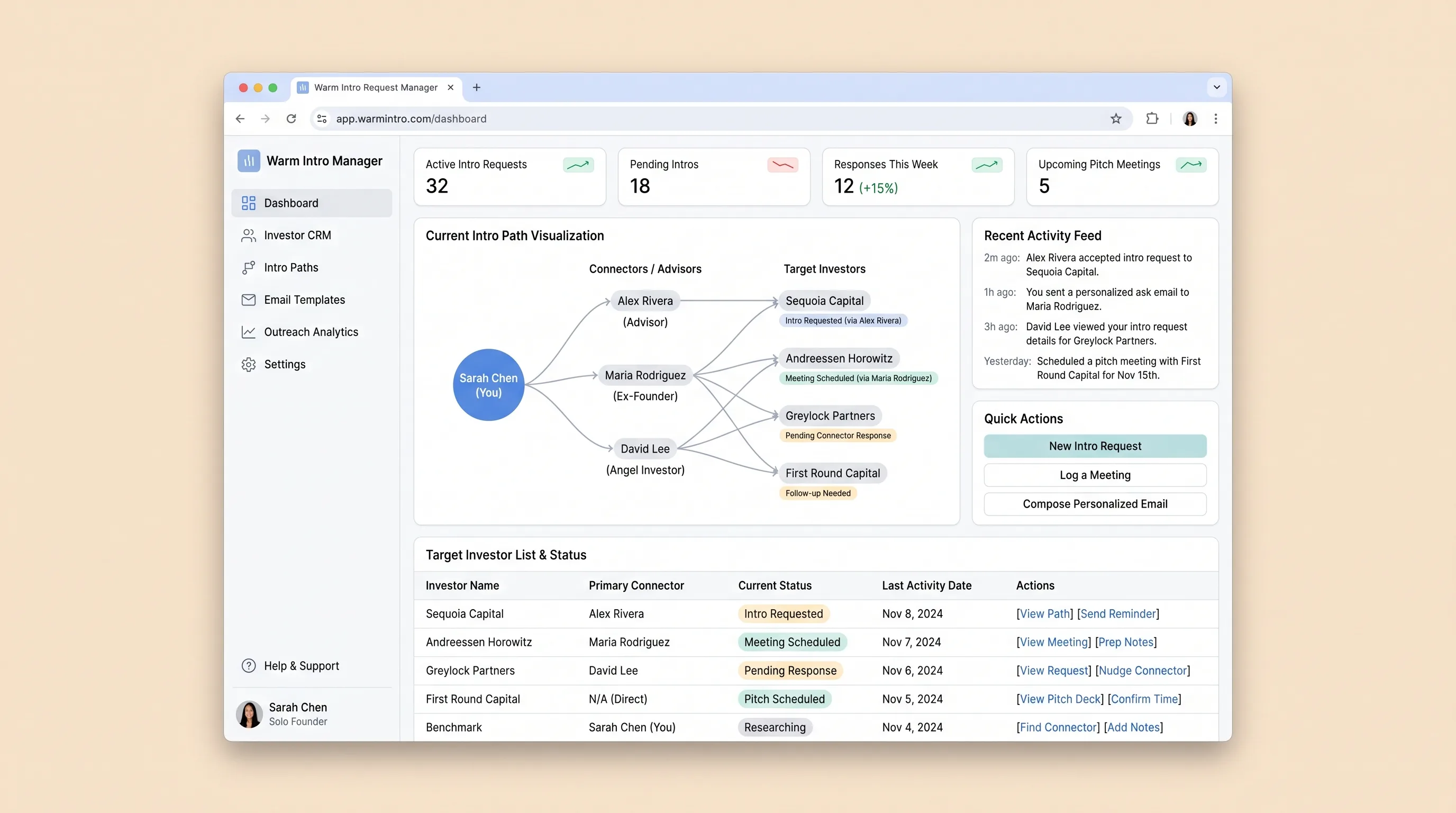
A focused SaaS workspace where solo founders map target investors, identify warm intro paths through connectors, and send personalized ask emails without juggling spreadsheets and generic CRM tools.
Decision snapshot
A founder can map 20 target investors, identify intro paths for 15 of them, and send 10 personalized intro request emails in under an hour.
The target buyer already uses a full investor CRM with relationship mapping and does not need a fundraising-specific workflow.
Onboard 5 solo founders, have each map 20 investors and attempt 10 intro requests; measure time-to-send and email response rate within 14 days.
Problem and target customer
Founders fundraising manually coordinate investor outreach across spreadsheets, email drafts, and contact lists. They lose track of which connector can introduce them to which investor, send inconsistent ask emails, and cannot see the health of their intro pipeline at a glance.
Solo founders and small founding teams actively raising a round who need to manage 15-50 target investors and the connector relationships that unlock warm intros.
Monthly SaaS subscription with usage-based add-ons for email volume and LLM-assisted personalization beyond a base tier.
Editorial note
Fundraising is a relationship problem disguised as a spreadsheet problem. Founders know which investors they want to talk to, but they lose hours tracking who can introduce them, drafting repetitive ask emails, and remembering where each conversation stands.
This workspace collapses that workflow into one place: map your target investors, link the connectors who can open doors, generate a personalized intro request from real context, and send it without leaving the screen. The relationship map makes your intro pipeline visible instead of buried in tabs.
The MVP stays narrow on purpose. No cap tables, no deal rooms, no public investor databases. Just the path from target investor to sent email, tracked end to end.
Choose your next step
Evaluate the operating tradeoffs quickly, or inspect how to build the MVP.
Compare the three operating paths at the default workload before opening the full calculator.
See cost preview Build this ideaInspect the build blueprintReview MVP scope, workflow, states, data rules, architecture, and acceptance criteria.
Open blueprintEvaluation preview
Directional infrastructure estimates for the current 1,500 relationship records assumption. Open the full calculator when you are ready to change it.
Managed app hosting, database, backups, and basic observability for the crm workflow.
Lowest operating effortOne small VPS running the app, database, media volume, and backup job.
Lowest baseline costSeparate app, data, storage, and worker capacity for cleaner operations.
Most separation and controlBuild blueprint
Product goal
MVP scope
UX and user flow
Card grid of target investors with firm, stage, and intro path status
Visual relationship map showing connectors linked to investors
Review and edit AI-generated intro request before sending
Chronological list of sent emails with delivery status and path updates
Core entity outline
Top-level container for a founder's fundraising workspace
Target investor record the founder wants an intro to
A mutual contact who can introduce the founder to a target investor
A specific connector-to-investor introduction route with status
Record of each email sent or attempted for an intro path
Architecture and data flow
Renders investor board, connector map, email editor, and outreach log
Stores all workspace, investor, connector, intro path, and outreach log records
Sends transactional intro request emails and returns delivery webhooks
Generates personalized email drafts from investor and connector context
Deliverables and acceptance
Recommended stack
Rapid card-based UI with cream and deep green theme for investor mapping and dashboard screens.
Relational storage for investors, connectors, intro paths, and outreach logs with row-level security.
Transactional email delivery for personalized intro request sends with delivery tracking.
Generates tailored email drafts from investor and connector context fields.
Optional glue to sync email delivery events back into the outreach log.
Lovable handles the relationship-map UI and dashboard quickly. Supabase provides durable relational storage for the multi-entity workflow. Resend ensures reliable transactional email. OpenAI powers the personalized draft generation that is core to the value proposition. Make is bounded to syncing delivery webhooks into the log, not core product logic.
Copy the build prompt, model the operating cost, and choose where to deploy.
Execution
Once the blueprint is clear, use the prompt, cost model, and deployment options to start building.
Build prompt
Lovable
Build prompt
Open the prompt pack whenever you are ready to take this blueprint into your builder.
Build prompt ready
Copy the prompt into your builder, then use the cost model below to choose how you want to run it.
Use the cost model to choose a deployment path that matches the build plan.
Cost calculator
A technical run-cost estimate for the first production version. Team, acquisition, payment fees, and business COGS are excluded.
$18-$60 per 750 relationship records
Low and high values allow for usage variance and plan headroom.
Managed app hosting, database, backups, and basic observability for the crm workflow.
50K relationship records included, then $8-$20 per 100K relationship recordsTransactional email is implied by the source workflow or feature list.
3K relationship records includedMaps API is implied by the source workflow or feature list.
1K included, then $5-$30 per 1K relationship recordsObject storage is implied by the source workflow or feature list.
Monthly allowance from this idea's operating profileThe estimate combines the selected infrastructure path, required operating modules, selected optional modules, and usage above included monthly allowances. Taxes and regional uplifts are excluded.
Deployment options
Choose based on operating preference, not only the headline price.
Fast Docker deployment for the app, database, worker, and preview workflow without managing a VPS.
Usage billing needs active monitoring as traffic and jobs grow.
Run the app, worker, and database on one small Vultr VPS with Docker Compose and explicit backups.
You own patching, backups, monitoring, and incident response.
Separate application, worker, data, storage, and backup responsibilities as the workload grows.
You own server setup, patching, backups, and operational monitoring.
Start building
Build card-based investor list, connector relationship view, intro path status board, and email draft editor with cream background and deep green accents.
Open Lovable 02AutomationEmail delivery webhook syncConnect Resend delivery events to update outreach log status fields automatically without manual polling.
Open Make 03DeployBackend API and job runnerHost Supabase Edge Functions or a lightweight API for email draft generation calls and scheduled follow-up reminders.
Open RailwayKeep exploring
SaaS WorkflowHospitality & Travel
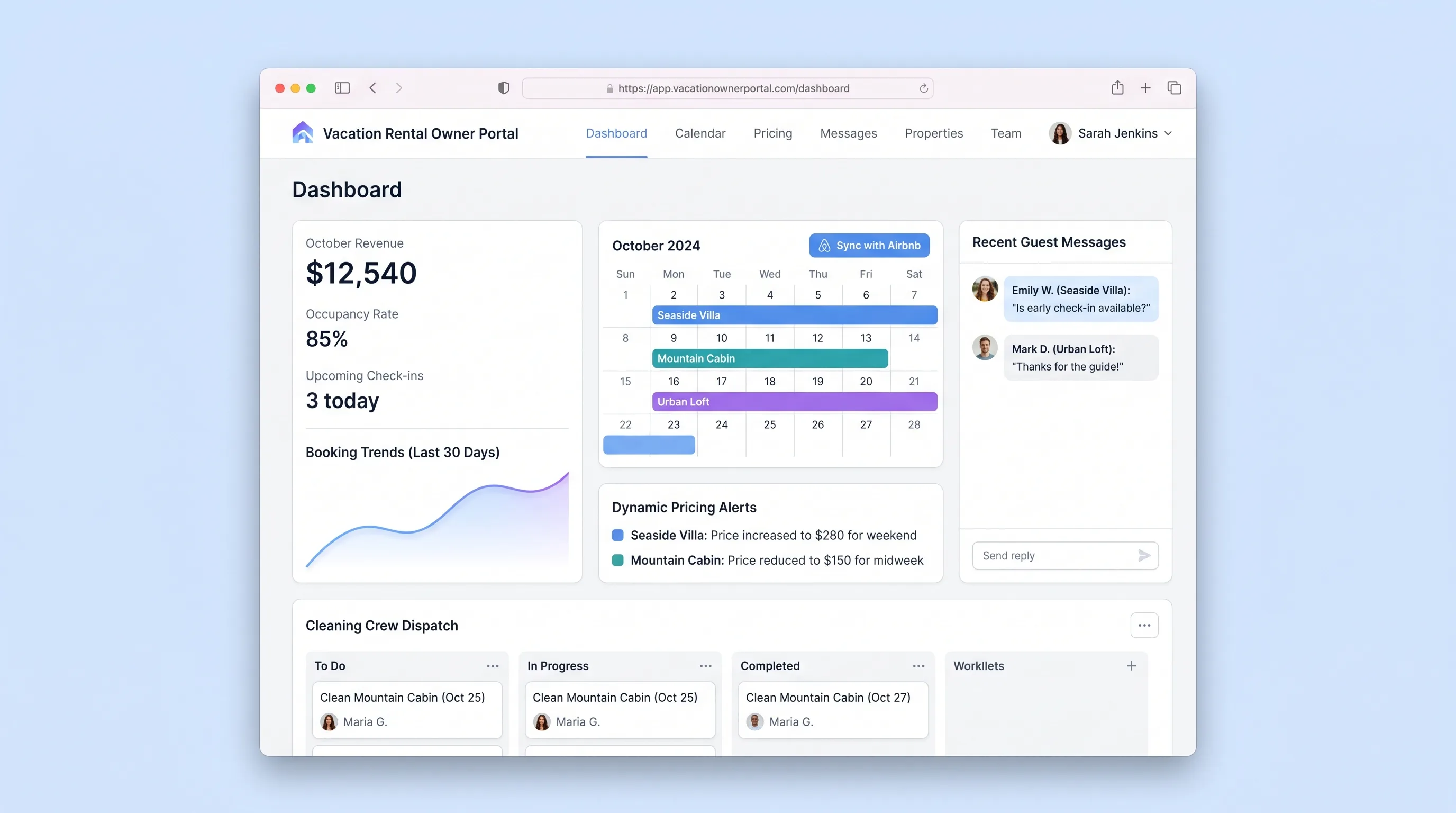
A focused SaaS workflow for short-term rental hosts to manage multiple properties, sync calendars, apply dynamic pricing, automate guest messaging, and dispatch cleaning crews from one dashboard.
AI ToolCreator Economy & Media
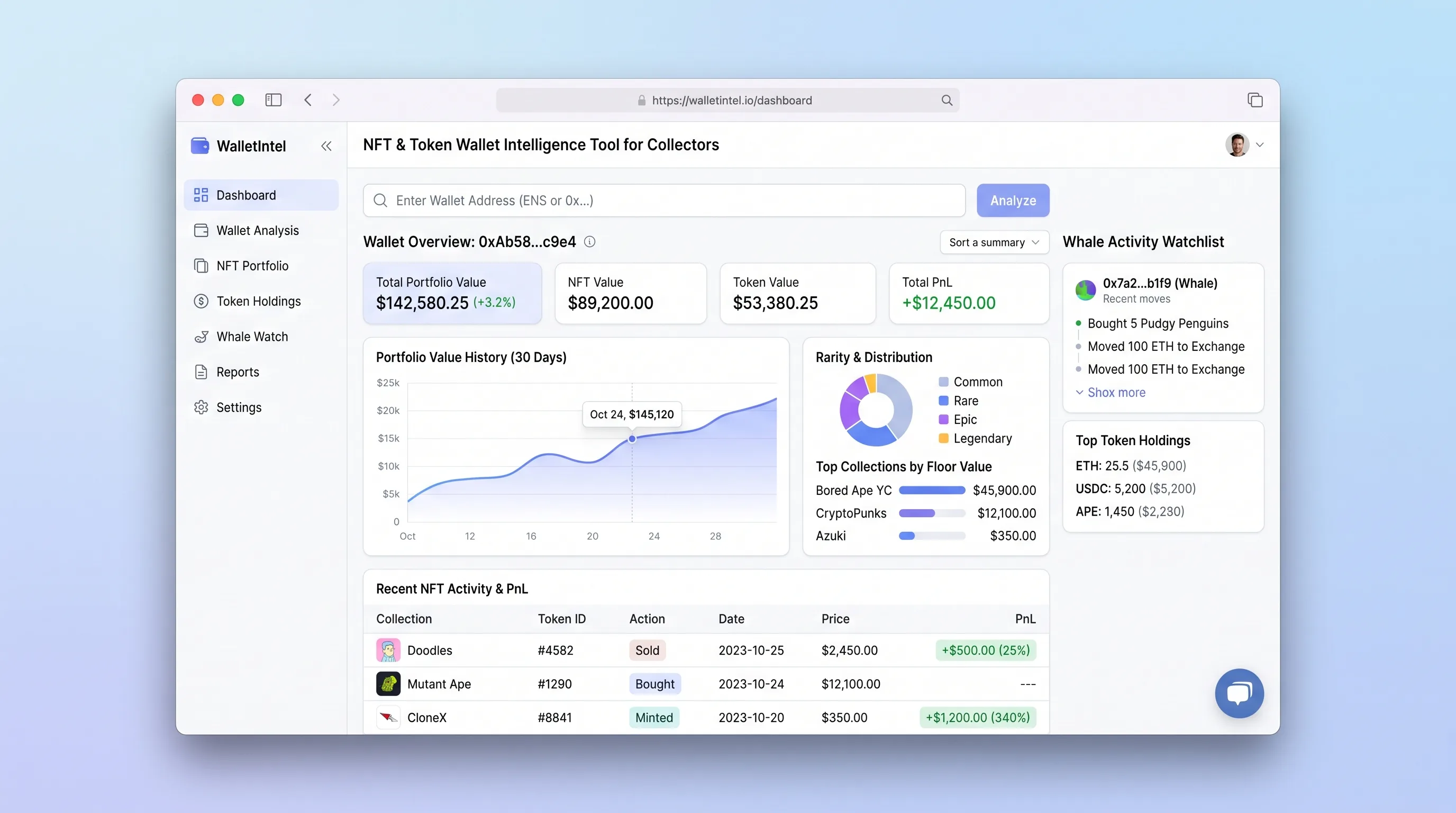
Paste any public wallet address and within seconds see a complete NFT and token breakdown—floor value, rarity, realized PnL, and whale activity—with no login required.
SaaS WorkflowReal Estate
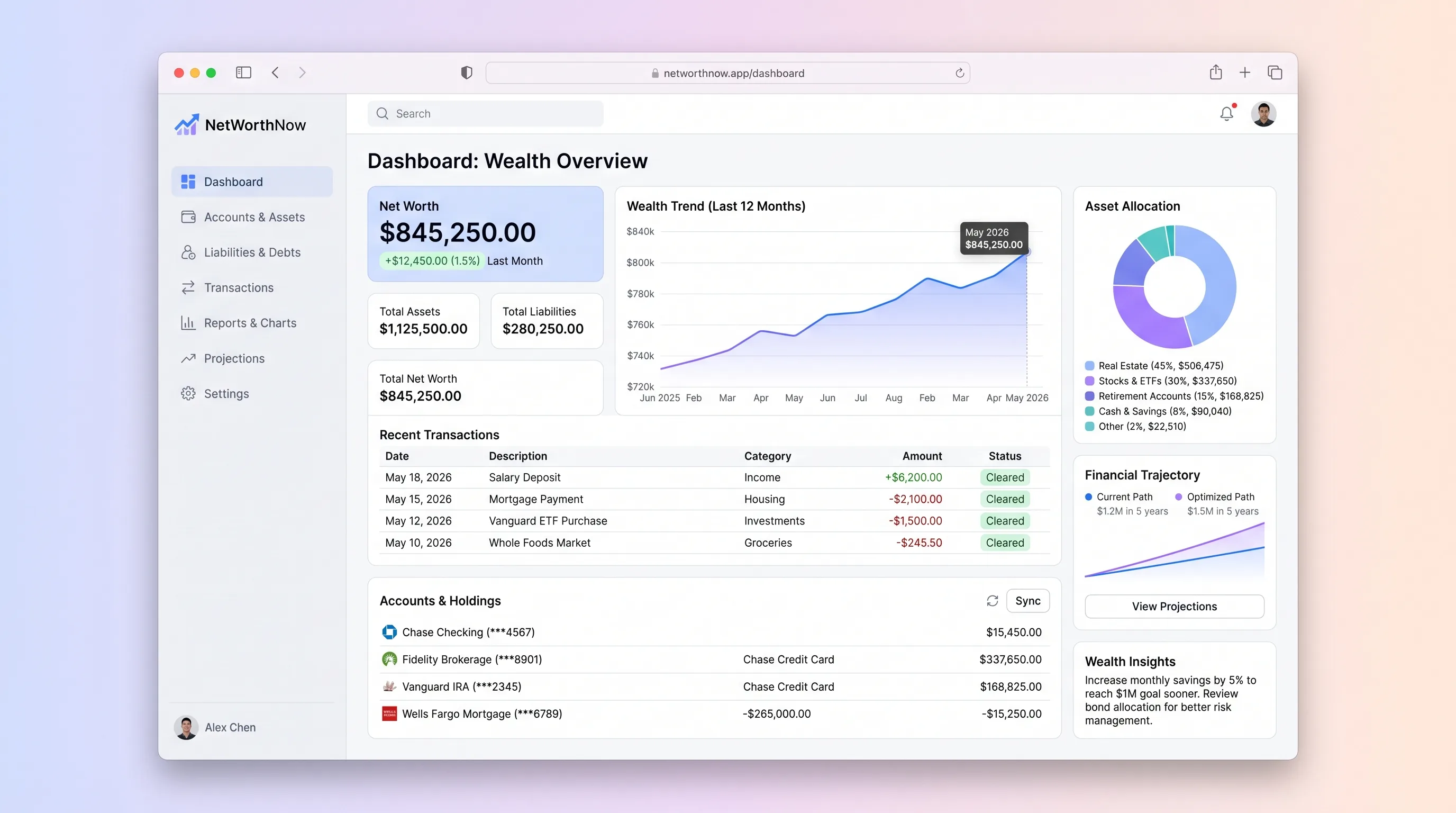
A focused net worth tracker for real estate operators to aggregate property assets and debts, capture monthly snapshots, and visualize wealth trajectory without spreadsheets.
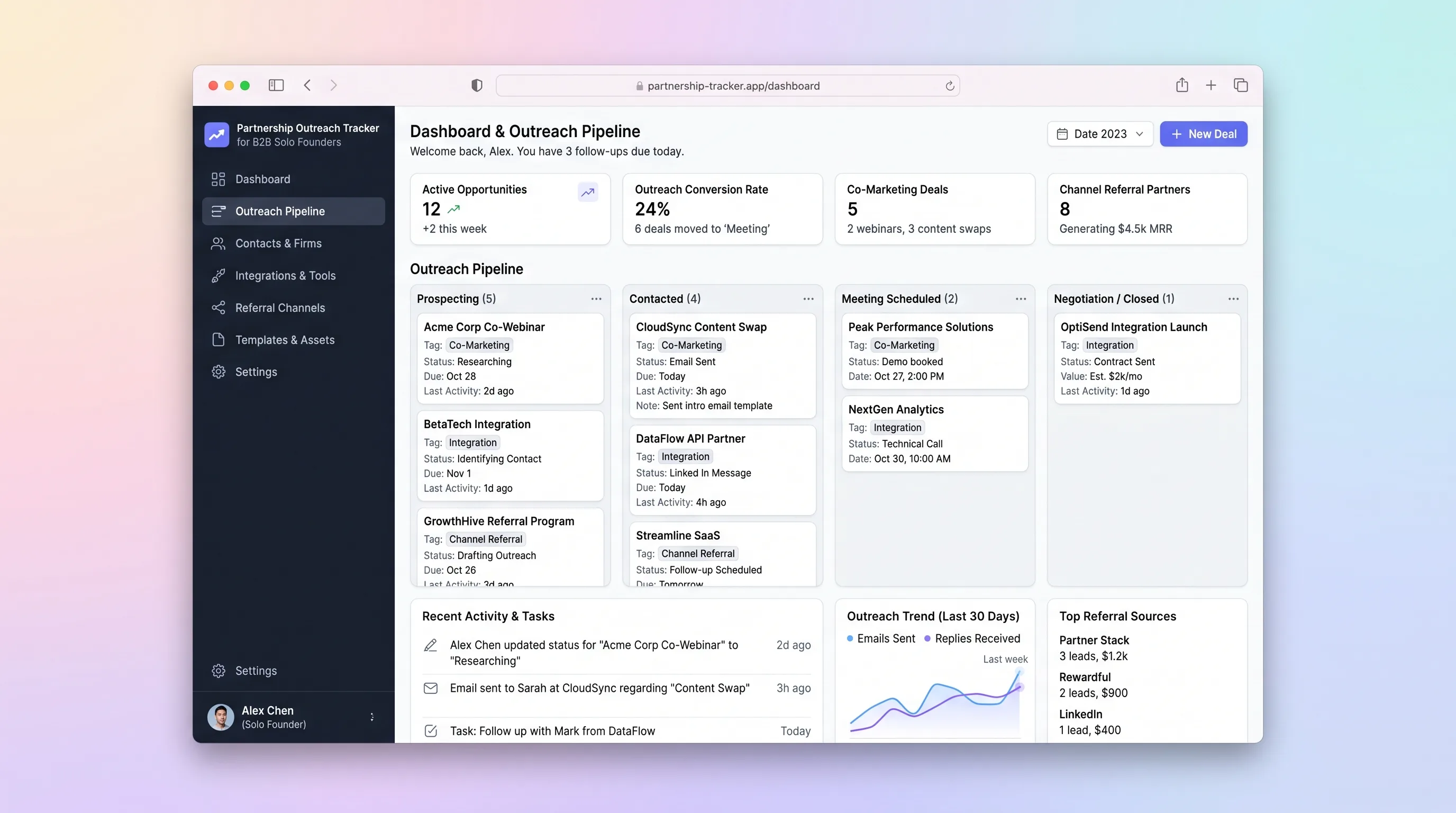
SaaS WorkflowSales & Marketing
A single-workspace outreach tracker that lets a solo B2B founder run a 30-partner campaign, log email replies, schedule follow-ups, and close co-marketing or integration deals without juggling spreadsheets and Gmail.
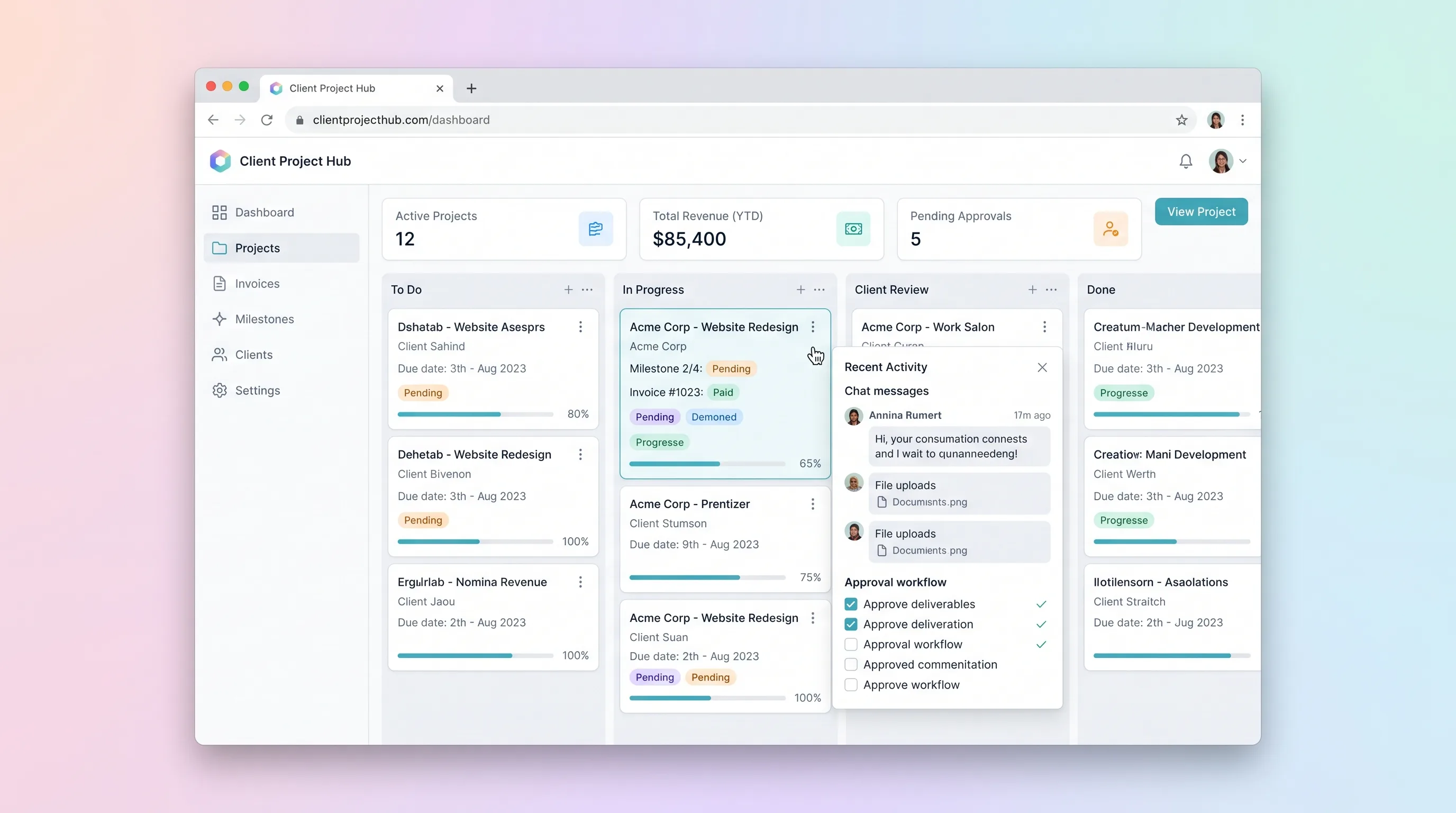
SaaS WorkflowProfessional Services
A kanban-driven workspace where freelancers and small agencies track client project milestones, route deliverables through an approval workflow, and auto-generate invoices upon approval.
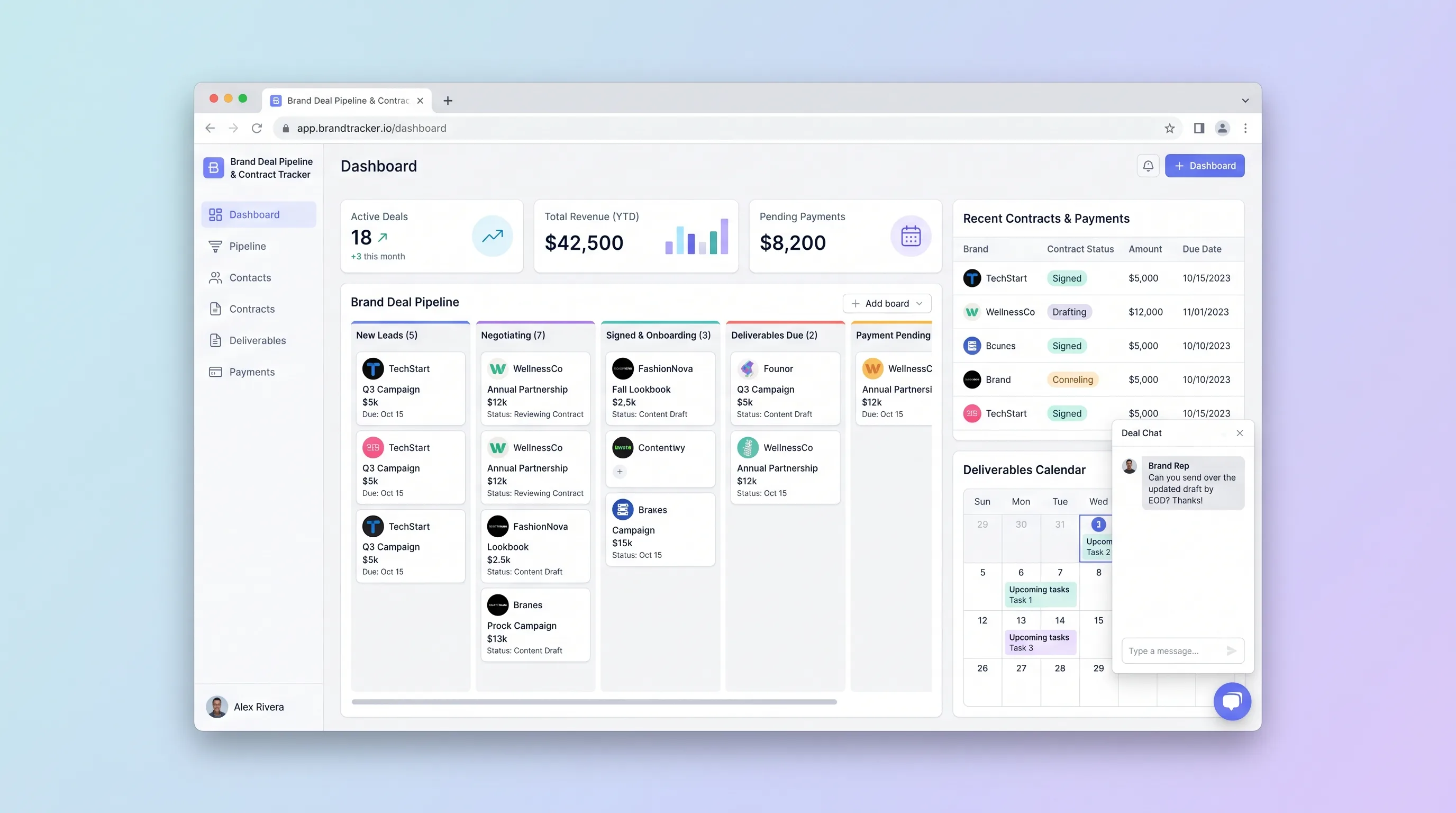
SaaS WorkflowCreator Economy & Media
A focused CRM where solo influencers and small creator teams manage sponsorship leads from first pitch through signed contract, deliverable deadlines, and payment reconciliation.