Build this if
You have at least 20 vetted makers or vintage sellers ready to publish story-driven listings and a buyer audience that values provenance over price.
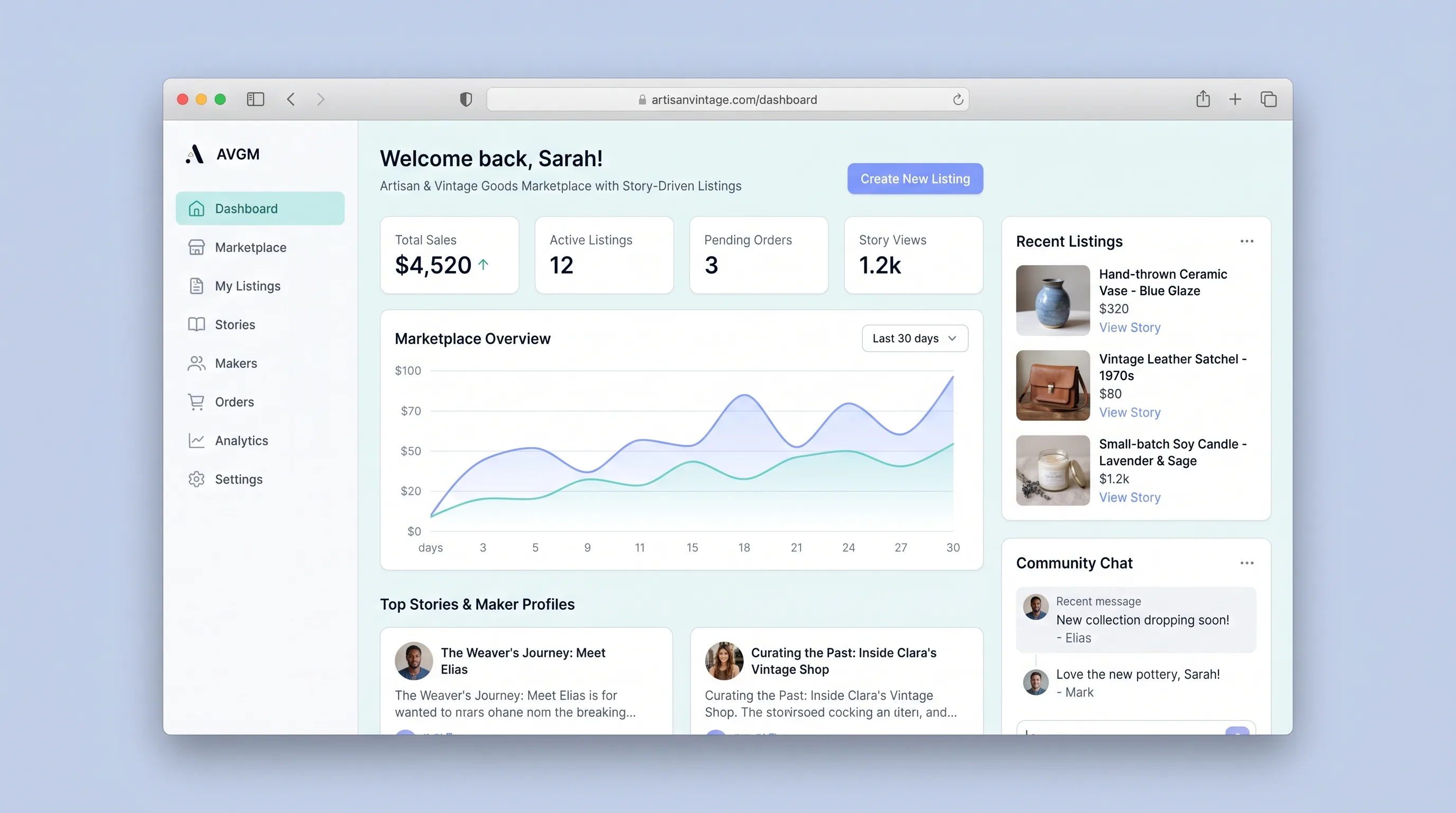
Curated marketplace where independent makers and vintage collectors publish listings with provenance, maker stories, and condition notes, while buyers discover items through editorial collections and trust signals.
Decision snapshot
You have at least 20 vetted makers or vintage sellers ready to publish story-driven listings and a buyer audience that values provenance over price.
Your sellers only need basic classified listings or your buyers expect mass-produced inventory with fast shipping.
Run a 4-week pilot with 20 sellers publishing 5 story-driven listings each; measure completed sales and repeat buyer rate against a control group on a generic marketplace.
Problem and target customer
Independent makers and vintage collectors lose sales on generic marketplaces because their items need provenance, condition notes, and maker backstory that standard product fields cannot express, so buyers hesitate to purchase higher-priced one-of-one goods.
Independent makers and vintage collectors selling handmade crafts, vintage collectibles, and small-batch goods who need a curated channel with story-driven listings and provenance tracking.
Curated marketplace with a transaction fee on completed sales plus a monthly subscription for sellers who want featured placement and unlimited listings.
Editorial note
Editorial collection pages curated by marketplace operators
Maker profile pages with bio, craft specialty, and provenance history
Provenance timeline component embedded in each listing detail page
Choose your next step
Evaluate the operating tradeoffs quickly, or inspect how to build the MVP.
Compare the three operating paths at the default workload before opening the full calculator.
See cost preview Build this ideaInspect the build blueprintReview MVP scope, workflow, states, data rules, architecture, and acceptance criteria.
Open blueprintEvaluation preview
Directional infrastructure estimates for the current 250 assisted transactions assumption. Open the full calculator when you are ready to change it.
Managed app hosting, database, backups, and basic observability for the marketplace workflow.
Lowest operating effortOne small VPS running the app, database, media volume, and backup job.
Lowest baseline costSeparate app, data, storage, and worker capacity for cleaner operations.
Most separation and controlBuild blueprint
Product goal
MVP scope
UX and user flow
Seller application form
Operator review queue
Story-driven listing editor
Listing detail page with maker story and provenance timeline
Editorial collection page
Core entity outline
Seller
Listing
ProvenanceEvent
Collection
Order
Architecture and data flow
Public storefront served by Lovable
Seller dashboard served by Lovable
Marketplace API on Railway
PostgreSQL database on Railway
Object storage on Railway for listing photos and provenance documents
Deliverables and acceptance
Recommended stack
Lovable for the public marketplace frontend and seller dashboard
Railway for the application runtime, PostgreSQL database, and object storage
Make for order notification routing and editorial collection publishing workflows
Lovable covers the buyer-facing storefront and seller dashboard with story-driven listing templates; Railway hosts the API, PostgreSQL for listings and orders, and object storage for listing photos; Make handles bounded glue such as routing new order notifications to seller email and publishing approved editorial collections.
Copy the build prompt, model the operating cost, and choose where to deploy.
Execution
Once the blueprint is clear, use the prompt, cost model, and deployment options to start building.
Build prompt
Lovable
Build prompt
Open the prompt pack whenever you are ready to take this blueprint into your builder.
Build prompt ready
Copy the prompt into your builder, then use the cost model below to choose how you want to run it.
Use the cost model to choose a deployment path that matches the build plan.
Cost calculator
A technical run-cost estimate for the first production version. Team, acquisition, payment fees, and business COGS are excluded.
$15-$45 per 125 assisted transactions
Low and high values allow for usage variance and plan headroom.
Managed app hosting, database, backups, and basic observability for the marketplace workflow.
50K assisted transactions included, then $8-$20 per 100K assisted transactionsTransactional email is implied by the source workflow or feature list.
3K assisted transactions includedObject storage is implied by the source workflow or feature list.
Monthly allowance from this idea's operating profileThe estimate combines the selected infrastructure path, required operating modules, selected optional modules, and usage above included monthly allowances. Taxes and regional uplifts are excluded.
Deployment options
Choose based on operating preference, not only the headline price.
Fast Docker deployment for the app, database, worker, and preview workflow without managing a VPS.
Usage billing needs active monitoring as traffic and jobs grow.
Run the app, worker, and database on one small Vultr VPS with Docker Compose and explicit backups.
You own patching, backups, monitoring, and incident response.
Separate application, worker, data, storage, and backup responsibilities as the workload grows.
You own server setup, patching, backups, and operational monitoring.
Start building
Use Lovable to assemble the public storefront with editorial collection pages, listing detail pages with maker story and provenance timeline, maker profile pages, and the seller dashboard with the story-driven listing editor and order inbox.
Open Lovable 02AutomationWire order notifications and editorial publishing in MakeUse Make as bounded glue to route new order events to seller email, log editorial collection approvals, and sync approved collection metadata into the storefront cache.
Open Make 03DeployHost the API, database, and storage on RailwayDeploy the marketplace API, PostgreSQL schema for sellers, listings, collections, and orders, and object storage for listing photos and provenance documents on Railway.
Open RailwayKeep exploring
MarketplaceBeauty & Fashion
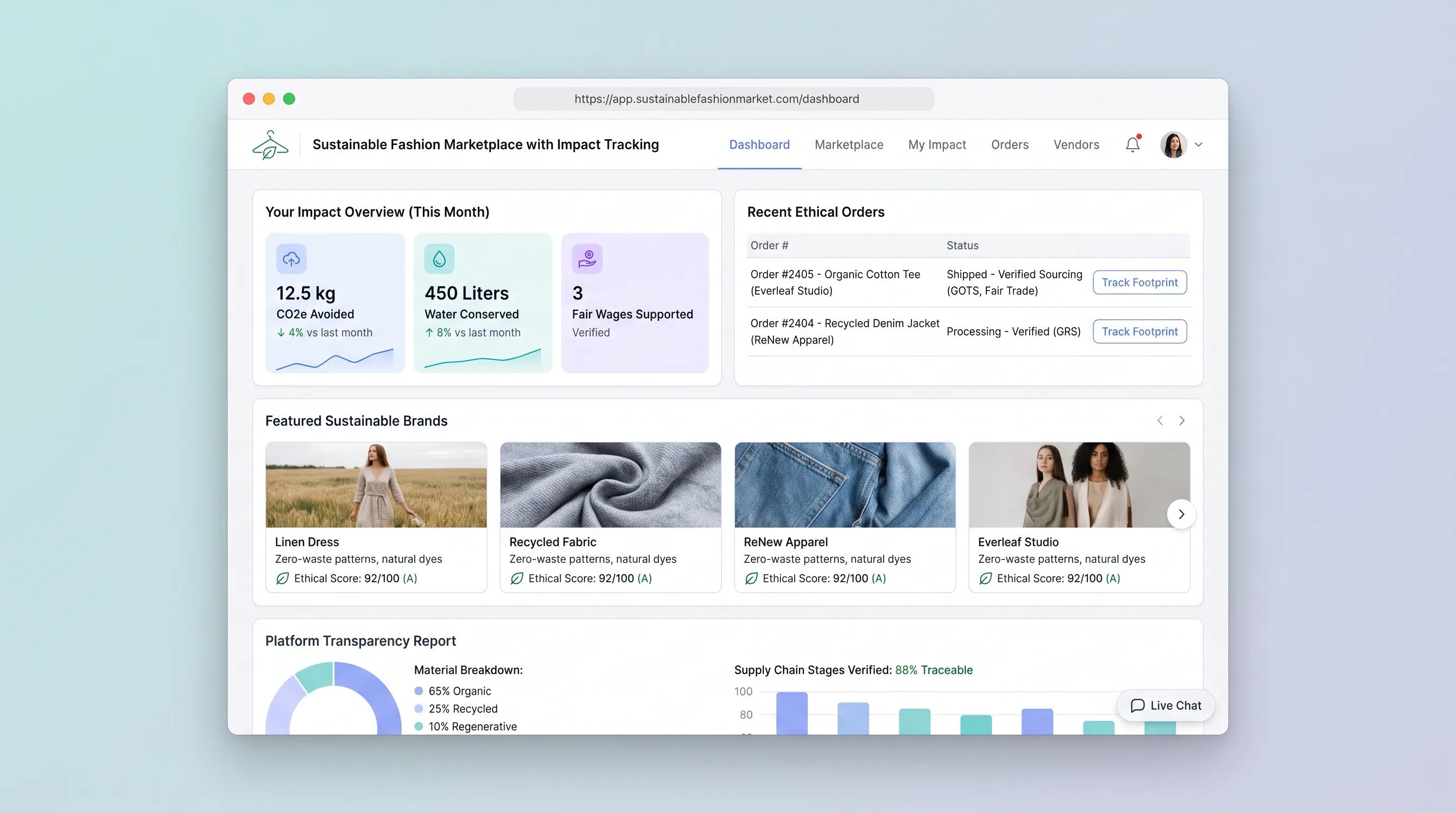
A curated storefront where independent fashion brands publish product evidence and shoppers compare item-level impact details before purchasing.
MarketplaceHome & Local Services
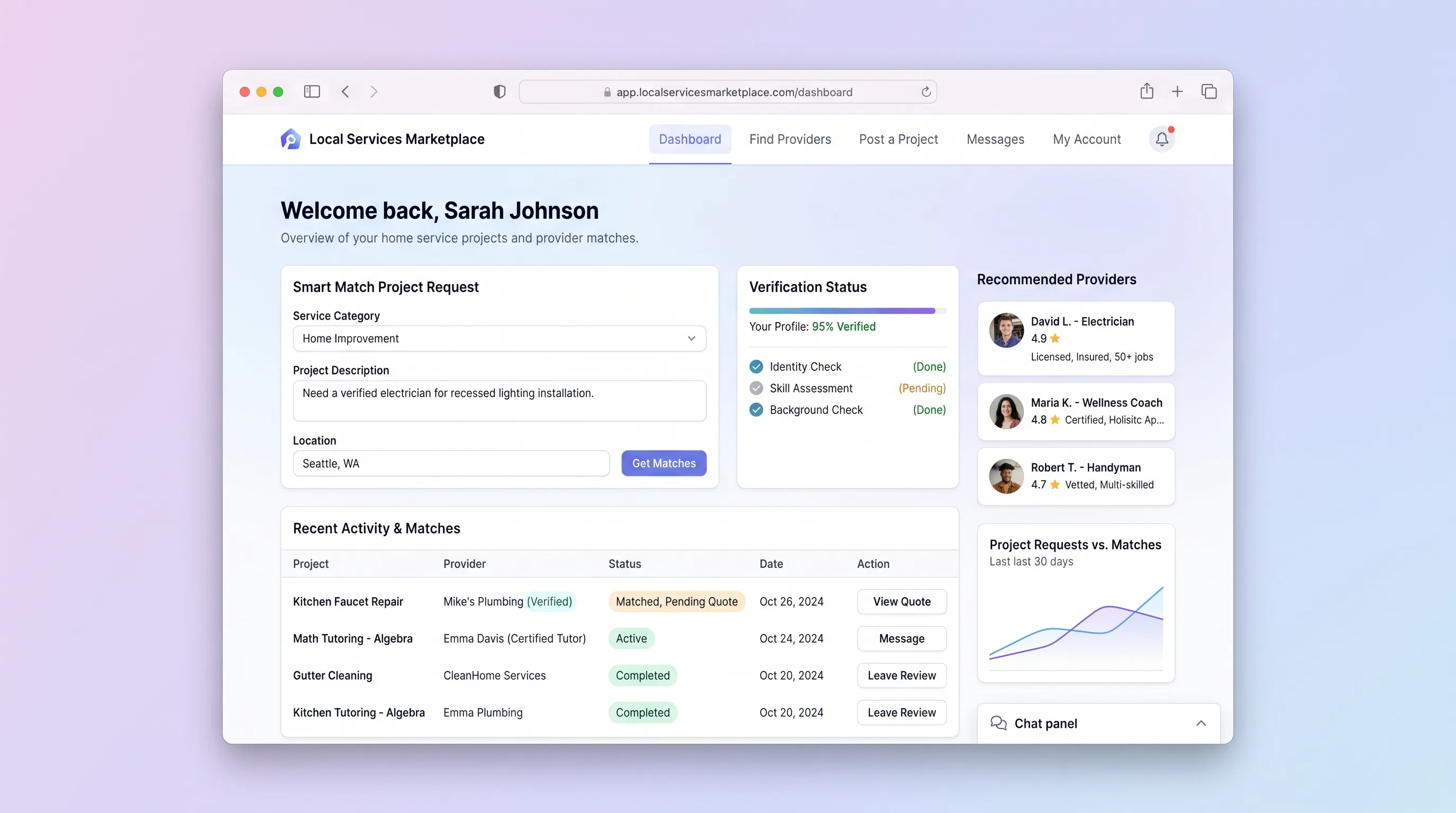
A trust-first marketplace that verifies provider claims, scopes homeowner projects, explains nearby candidate fit, and controls the contact handoff.
MarketplaceCreator Economy & Media
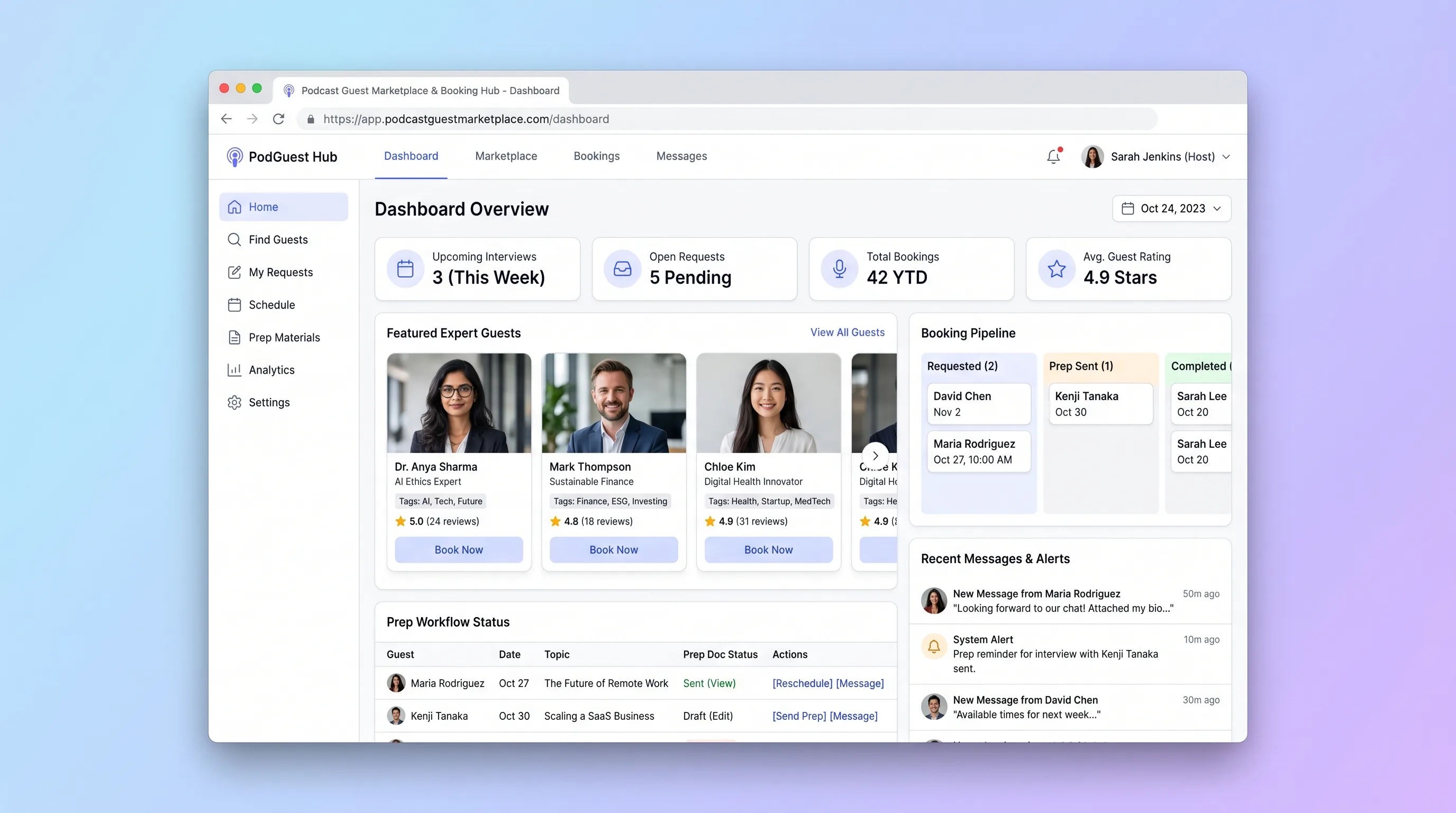
A marketplace connecting podcast hosts with vetted expert guests, streamlining discovery, booking requests, confirmation, and prep-kit generation into a single workflow.
MarketplaceRetail
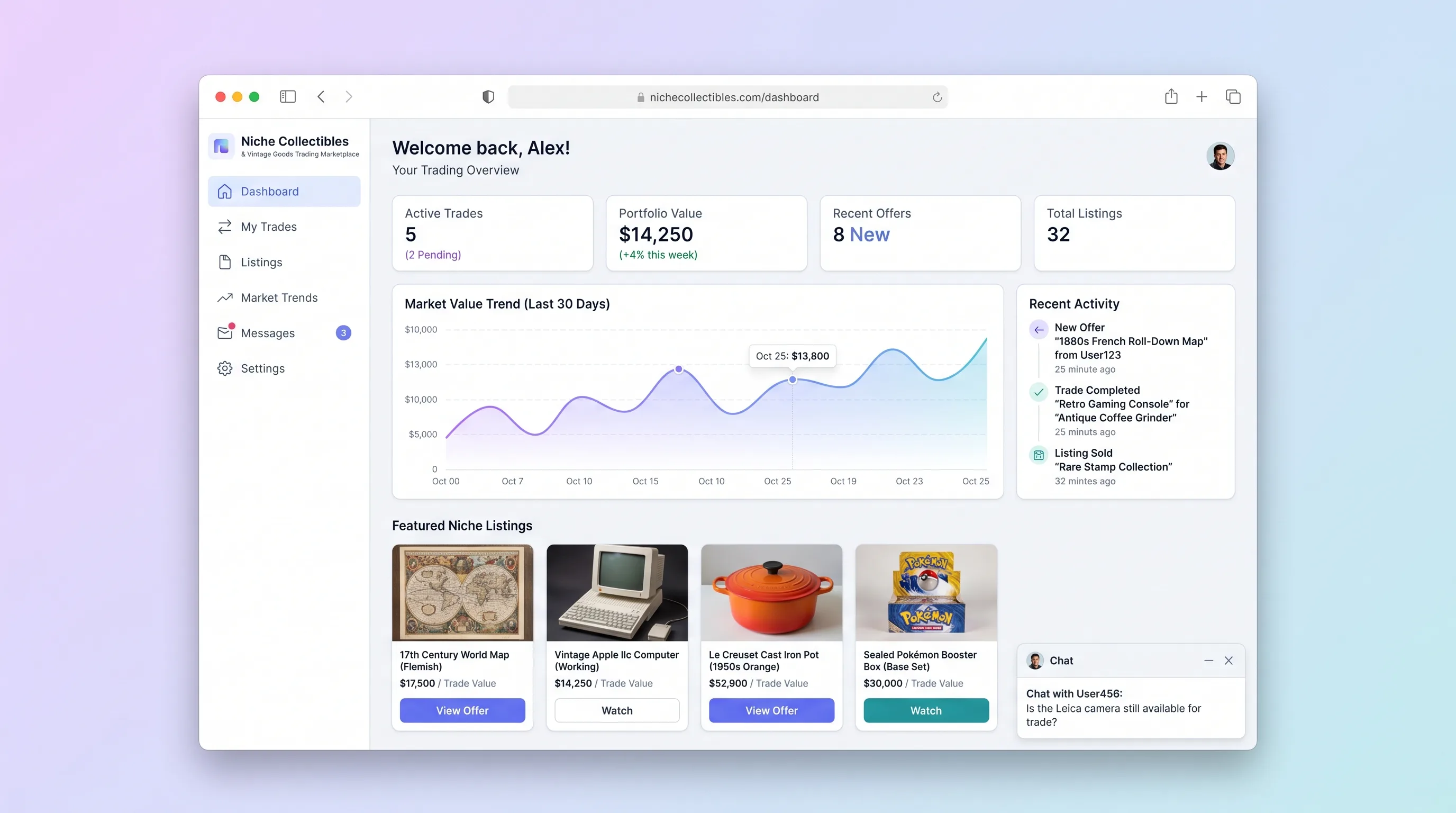
A focused buy-sell-trade platform for collectors of vintage maps, retro electronics, antique kitchenware, and rare hobby items, with condition grading, saved search alerts, and offer management.
MarketplaceProfessional Services
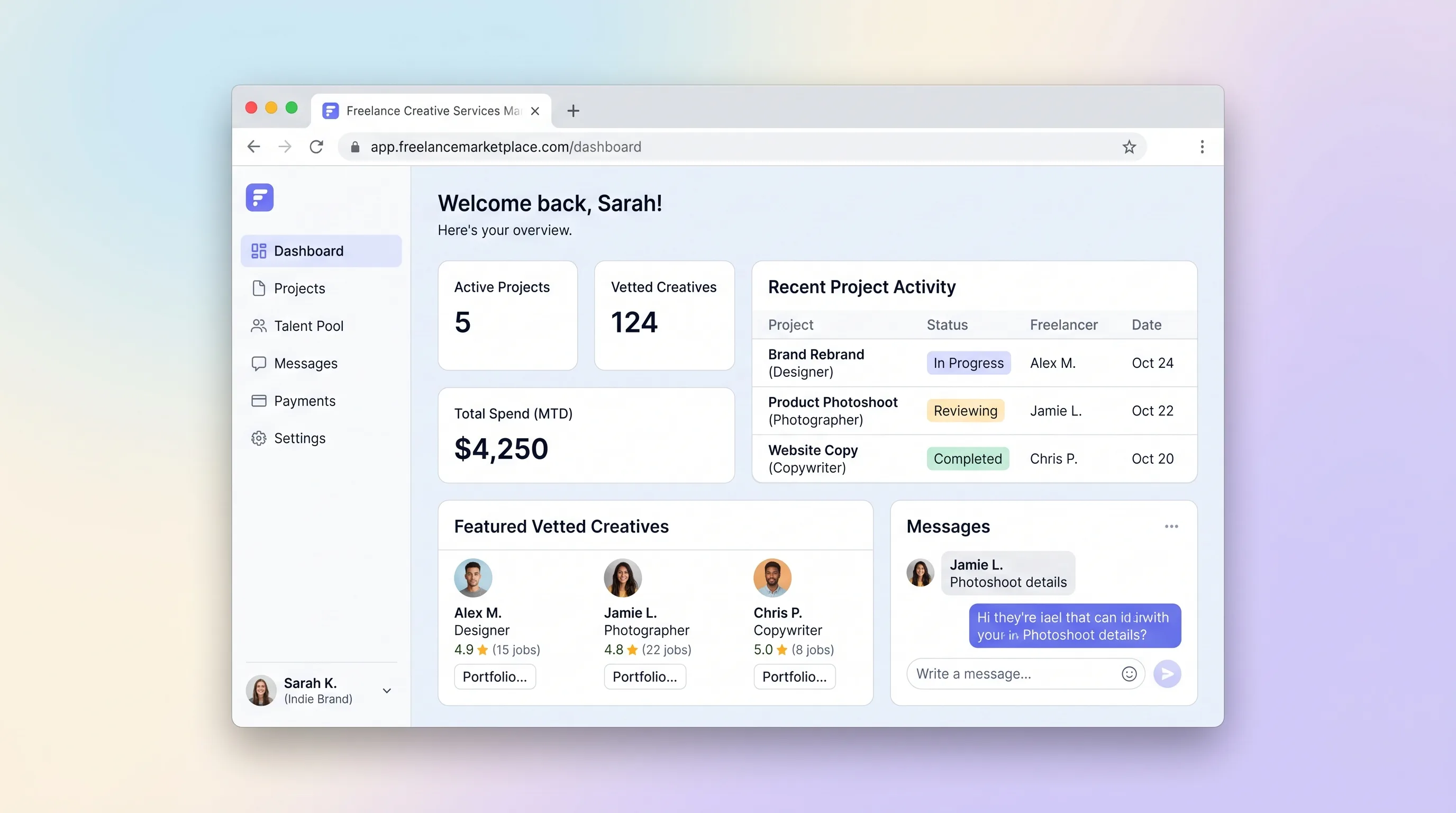
A curated marketplace where indie brands post a project brief in under four minutes and receive at least three matched, vetted freelance creatives—photographers, copywriters, and designers—for project-based work.
MarketplaceHospitality & Travel
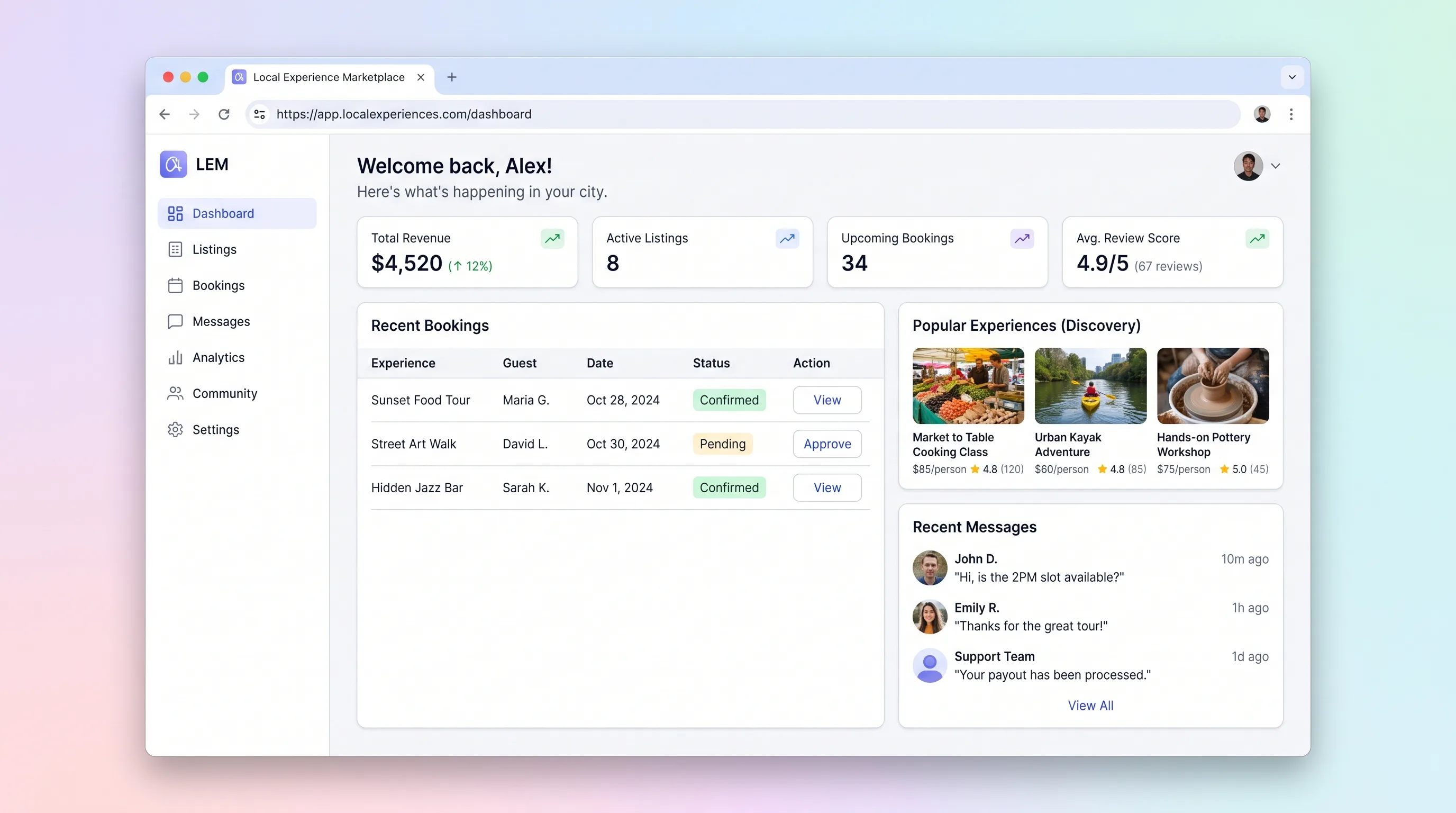
A peer-to-peer marketplace where locals publish city experiences with bookable time slots and travelers search, pay, and receive confirmation without manual coordination.