Build this if
You can recruit 30+ vetted expert guest profiles before launch and hosts confirm bookings at least weekly.
A marketplace connecting podcast hosts with vetted expert guests, streamlining discovery, booking requests, confirmation, and prep-kit generation into a single workflow.
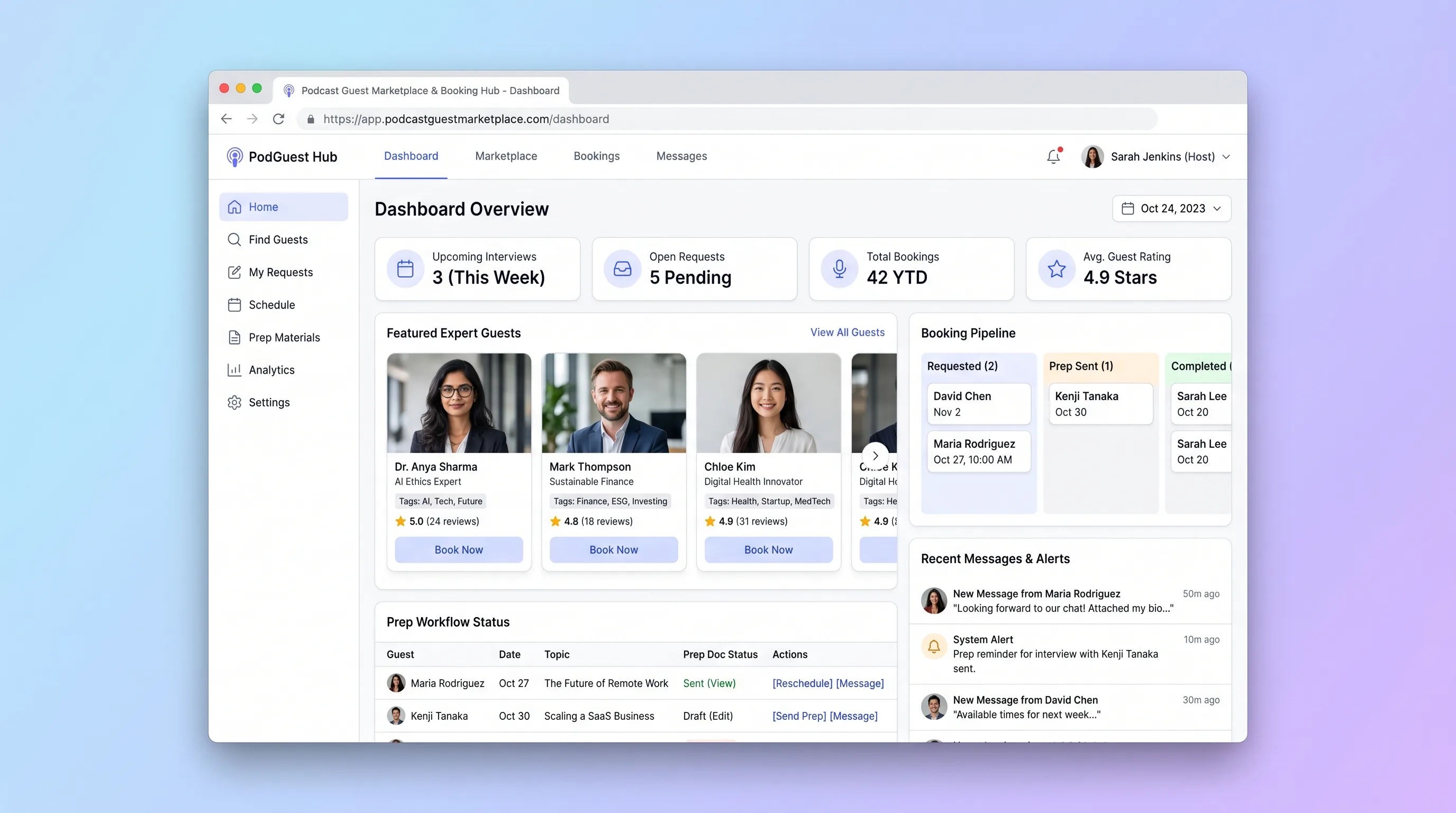
Decision snapshot
You can recruit 30+ vetted expert guest profiles before launch and hosts confirm bookings at least weekly.
You cannot curate guest quality or lack access to a podcast host audience for initial supply.
Invite 10 hosts to request bookings with 20 vetted guests; measure whether 5+ bookings confirm within 14 days.
Problem and target customer
Podcast hosts spend hours coordinating guest outreach across email, spreadsheets, and scheduling tools, with no centralized way to vet experts, confirm bookings, or prepare interview questions before recording.
Independent podcast hosts and small podcast production teams who book 4-20 guest interviews per month and need a repeatable discovery-to-prep workflow.
Two-sided marketplace where hosts subscribe monthly for booking access and the platform takes a transaction fee on confirmed bookings.
Editorial note
Podcast hosts lose hours coordinating guest outreach across disconnected tools. This marketplace consolidates discovery, booking, and prep into one workflow so a host can find a vetted expert, confirm a time slot, and receive a generated prep kit without leaving the platform.
The MVP focuses on a single host workflow: search guests, request a booking, get confirmation, and receive a prep kit. Episode publishing, audio editing, and guest payments are explicitly excluded to keep the first version shippable and testable with real hosts.
Choose your next step
Evaluate the operating tradeoffs quickly, or inspect how to build the MVP.
Compare the three operating paths at the default workload before opening the full calculator.
See cost preview Build this ideaInspect the build blueprintReview MVP scope, workflow, states, data rules, architecture, and acceptance criteria.
Open blueprintEvaluation preview
Directional infrastructure estimates for the current 250 content jobs assumption. Open the full calculator when you are ready to change it.
Managed app hosting, database, backups, and basic observability for the content workflow.
Lowest operating effortOne small VPS running the app, database, media volume, and backup job.
Lowest baseline costSeparate app, data, storage, and worker capacity for cleaner operations.
Most separation and controlBuild blueprint
Product goal
MVP scope
UX and user flow
Host searches and browses vetted expert guest profiles by category
Host submits episode topic, proposed time slots, and message to guest
Guest reviews request and confirms or declines the booking
Host reviews generated interview questions and talking points
Host tracks all pending and confirmed bookings with prep kit status
Core entity outline
Stores vetted expert guest information for marketplace discovery
Tracks the host-to-guest booking lifecycle from request to confirmation
Stores LLM-generated interview questions and talking points for a confirmed booking
Links a confirmed booking to a podcast episode record
Represents podcast hosts and guests with role-based profile data
Architecture and data flow
Renders guest discovery, booking request, confirmation, prep kit, and timeline screens
Validates booking requests, manages status transitions, and enforces business rules
Calls LLM API with guest profile and episode topic to produce structured interview prep content
Sends booking request and confirmation notifications to hosts and guests
Deliverables and acceptance
Recommended stack
Rapid build of the two-tone card grid, search bar, and booking timeline UI with Supabase auth and data bindings.
Relational storage for guest profiles, booking requests, and prep kits with row-level security for host vs guest data access.
Orchestrates calendar invite creation and prep kit generation triggers on booking confirmation without custom backend workers.
Generates interview prep kits from guest profile data and episode topic, producing structured questions and talking points.
Stores guest headshots, show logos, and generated prep kit PDFs alongside the relational records.
Lovable handles the visual marketplace UI with deep teal theme and card grid. Supabase provides relational integrity for booking state machines. Make bridges calendar and LLM calls on confirmation events. OpenAI powers prep kit generation, the core differentiator from generic scheduling tools.
Copy the build prompt, model the operating cost, and choose where to deploy.
Execution
Once the blueprint is clear, use the prompt, cost model, and deployment options to start building.
Build prompt
lovable
Build prompt
Open the prompt pack whenever you are ready to take this blueprint into your builder.
Build prompt ready
Copy the prompt into your builder, then use the cost model below to choose how you want to run it.
Use the cost model to choose a deployment path that matches the build plan.
Cost calculator
A technical run-cost estimate for the first production version. Team, acquisition, payment fees, and business COGS are excluded.
$15-$60 per 125 content jobs
Low and high values allow for usage variance and plan headroom.
Managed app hosting, database, backups, and basic observability for the content workflow.
50K content jobs included, then $8-$20 per 100K content jobsPayment processor is implied by the source workflow or feature list.
100 included, then $0-$5 per 100 content jobsCalendar API is implied by the source workflow or feature list.
Monthly allowance from this idea's operating profileObject storage is implied by the source workflow or feature list.
Monthly allowance from this idea's operating profileThe estimate combines the selected infrastructure path, required operating modules, selected optional modules, and usage above included monthly allowances. Taxes and regional uplifts are excluded.
Deployment options
Choose based on operating preference, not only the headline price.
Fast Docker deployment for the app, database, worker, and preview workflow without managing a VPS.
Usage billing needs active monitoring as traffic and jobs grow.
Run the app, worker, and database on one small Vultr VPS with Docker Compose and explicit backups.
You own patching, backups, monitoring, and incident response.
Separate application, worker, data, storage, and backup responsibilities as the workload grows.
You own server setup, patching, backups, and operational monitoring.
Start building
Create the two-tone white and deep teal interface with guest card grid, search bar, booking request form, guest confirmation page, and host timeline dashboard. Wire all screens to Supabase tables.
Open Lovable 02AutomationAutomate confirmation and prep kit triggersSet up a Make scenario that listens for booking confirmation status changes, calls the LLM API to generate a prep kit, stores the result, and sends calendar invites via the Calendar API.
Open Make 03DeployDeploy backend and databaseHost Supabase or a Postgres instance on Railway with tables for guest profiles, booking requests, prep kits, and episodes. Configure row-level security policies for host and guest access.
Open RailwayKeep exploring
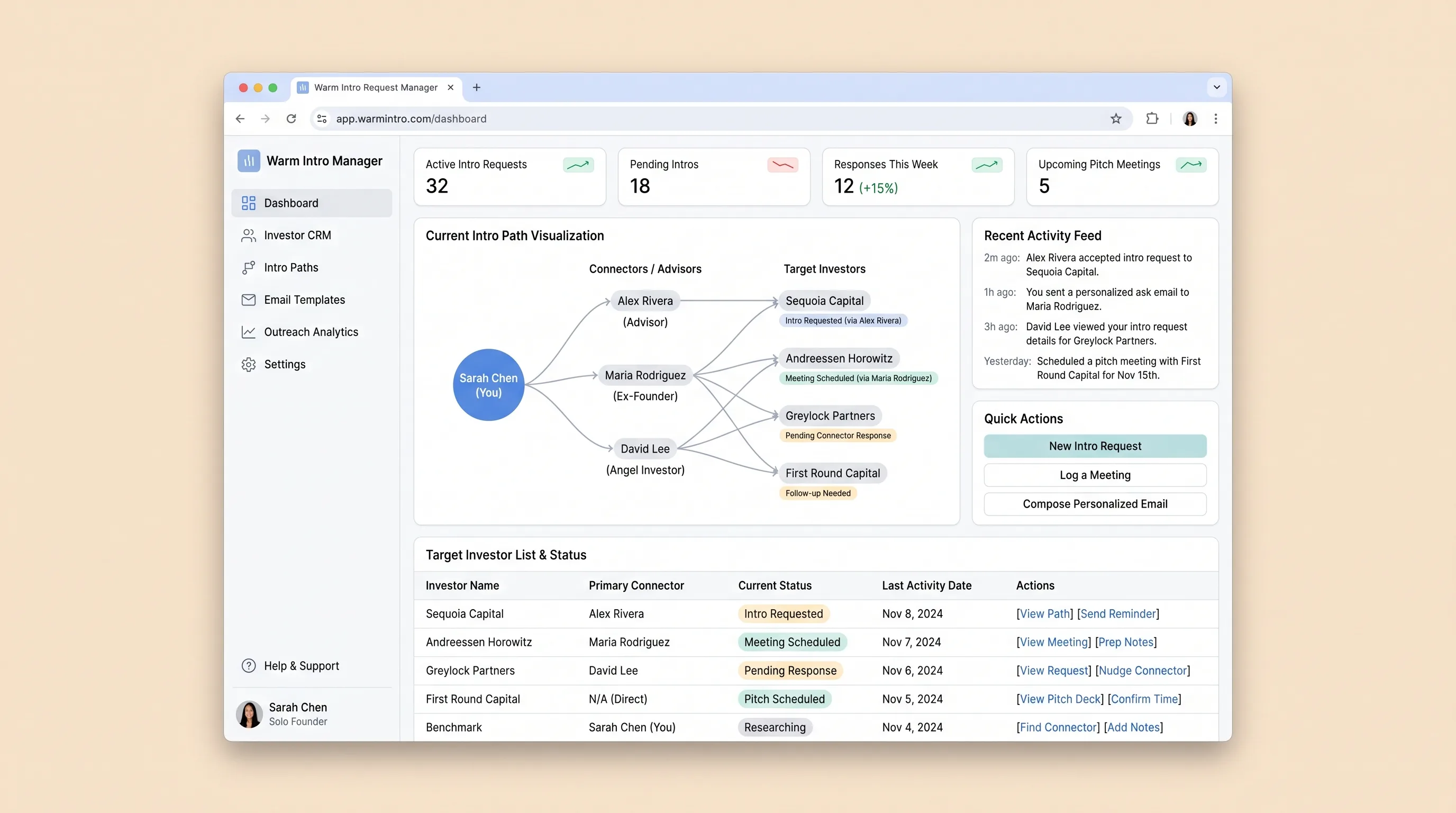
SaaS WorkflowSales & Marketing
A focused SaaS workspace where solo founders map target investors, identify warm intro paths through connectors, and send personalized ask emails without juggling spreadsheets and generic CRM tools.
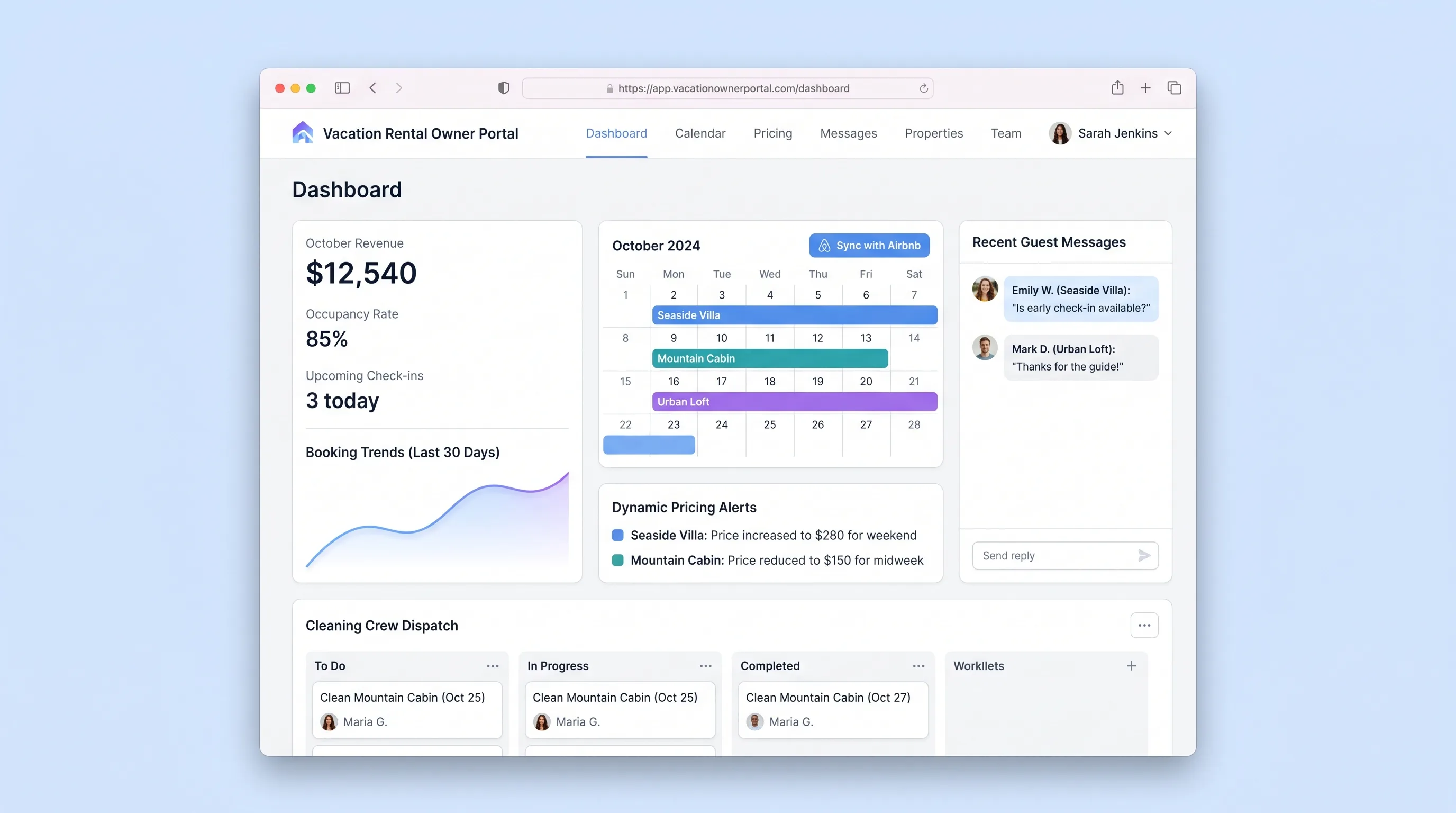
SaaS WorkflowHospitality & Travel
A focused SaaS workflow for short-term rental hosts to manage multiple properties, sync calendars, apply dynamic pricing, automate guest messaging, and dispatch cleaning crews from one dashboard.
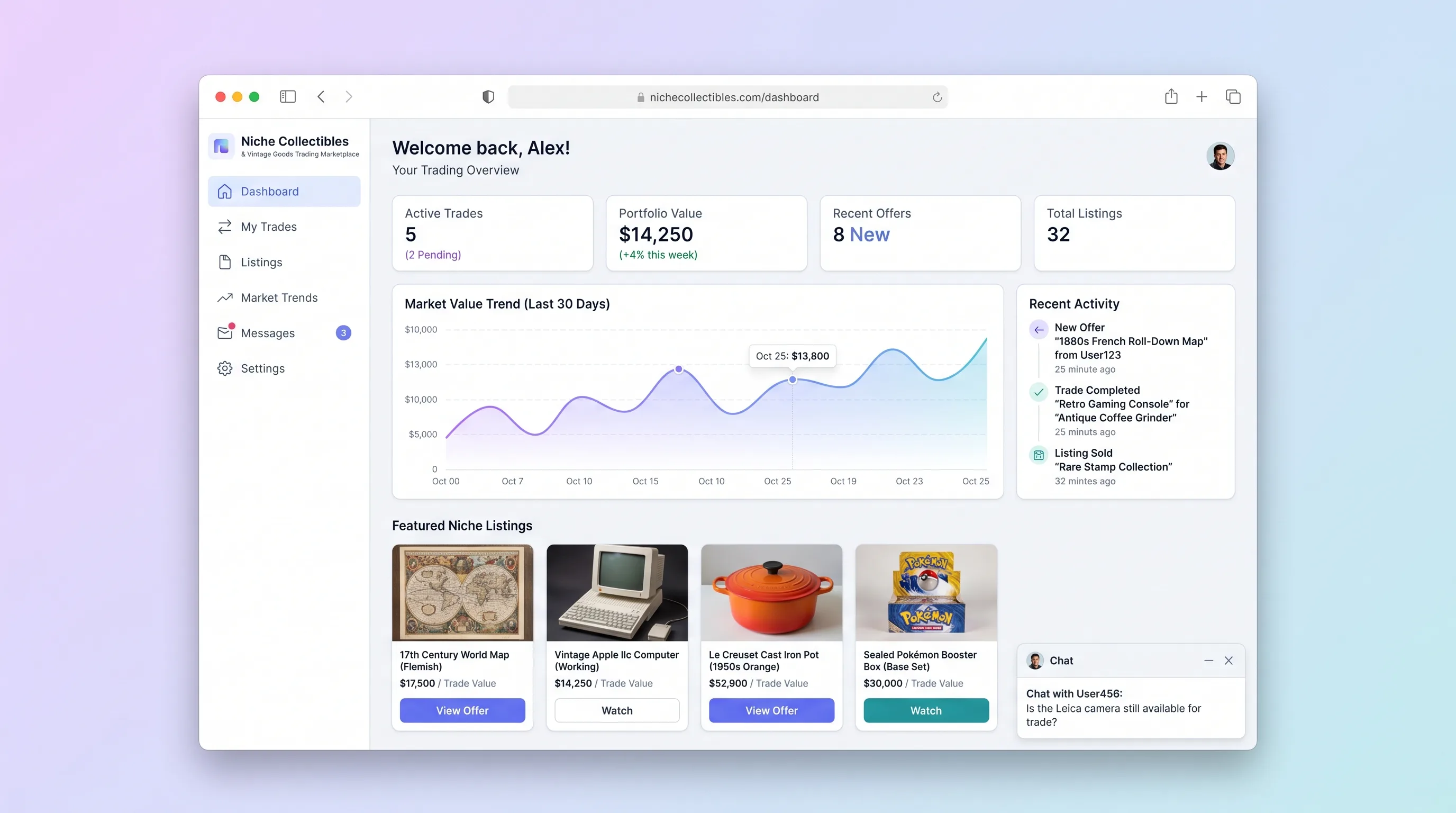
MarketplaceRetail
A focused buy-sell-trade platform for collectors of vintage maps, retro electronics, antique kitchenware, and rare hobby items, with condition grading, saved search alerts, and offer management.
MarketplaceHospitality & Travel
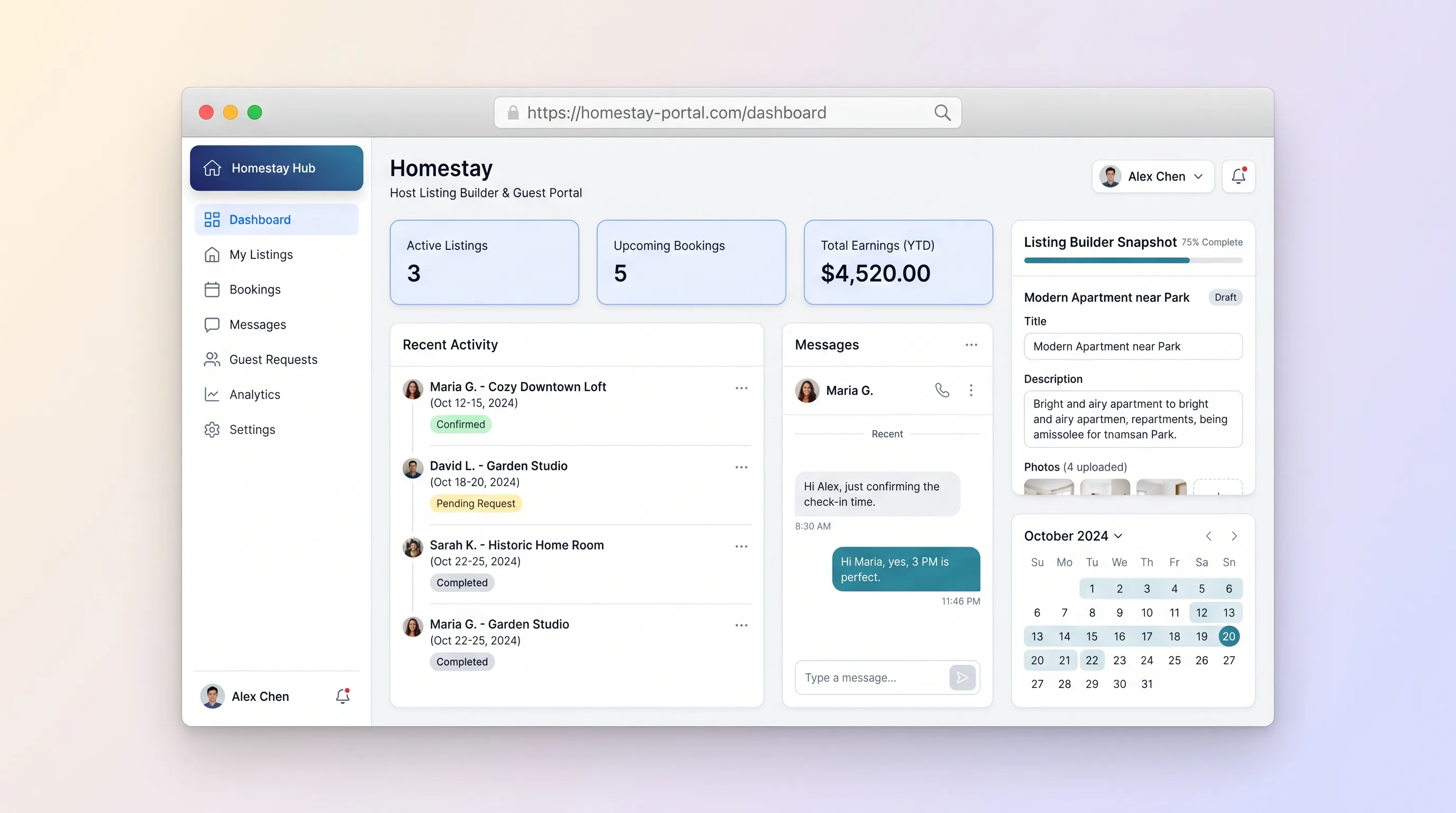
A dual-sided marketplace where homestay hosts create rich property listings with photos, amenities, and pricing, and guests search by location, message hosts, submit booking requests, and track status from pending to confirmed.
MarketplaceCreator Economy & Media
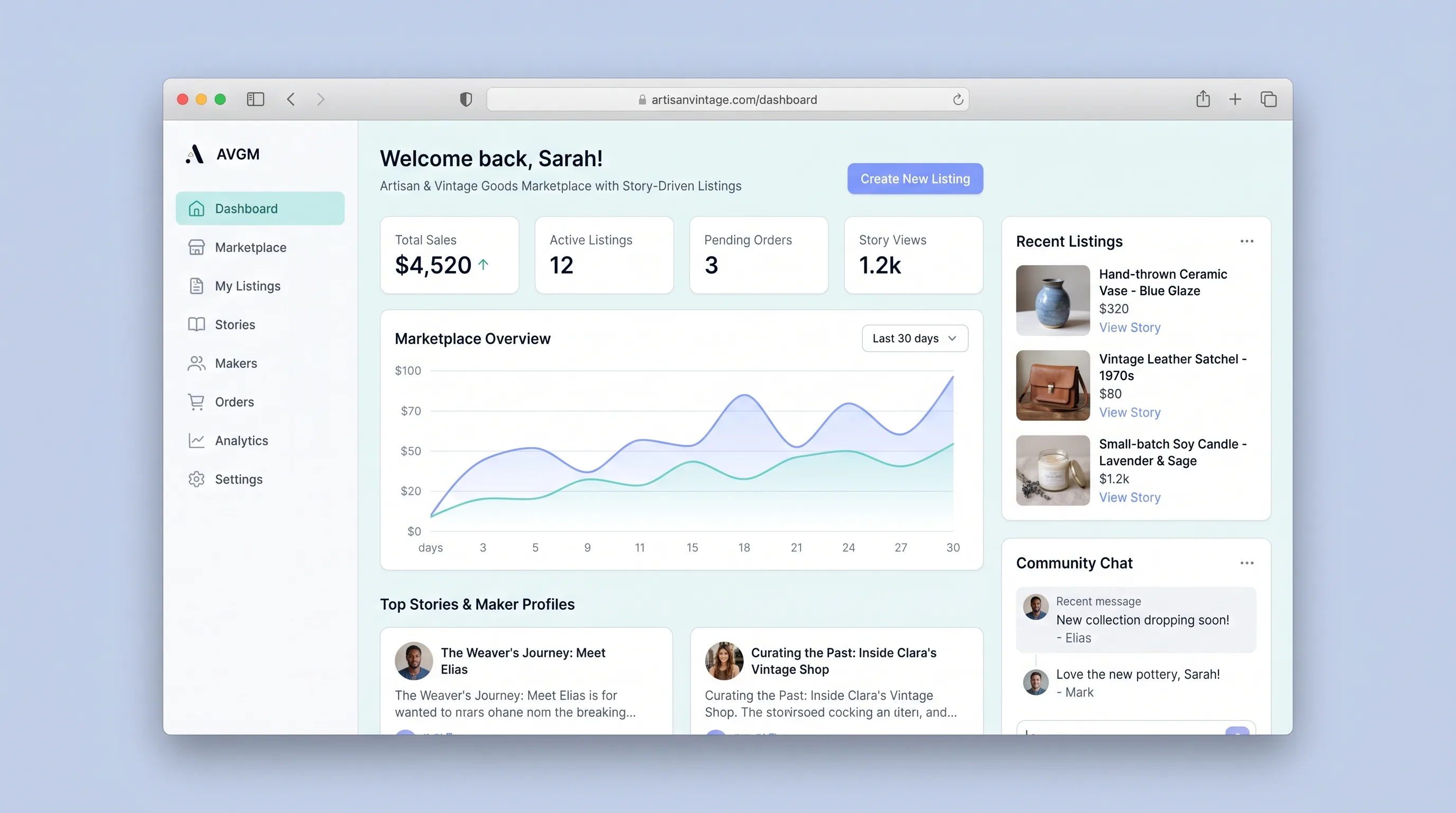
Curated marketplace where independent makers and vintage collectors publish listings with provenance, maker stories, and condition notes, while buyers discover items through editorial collections and trust signals.
MarketplaceHospitality & Travel
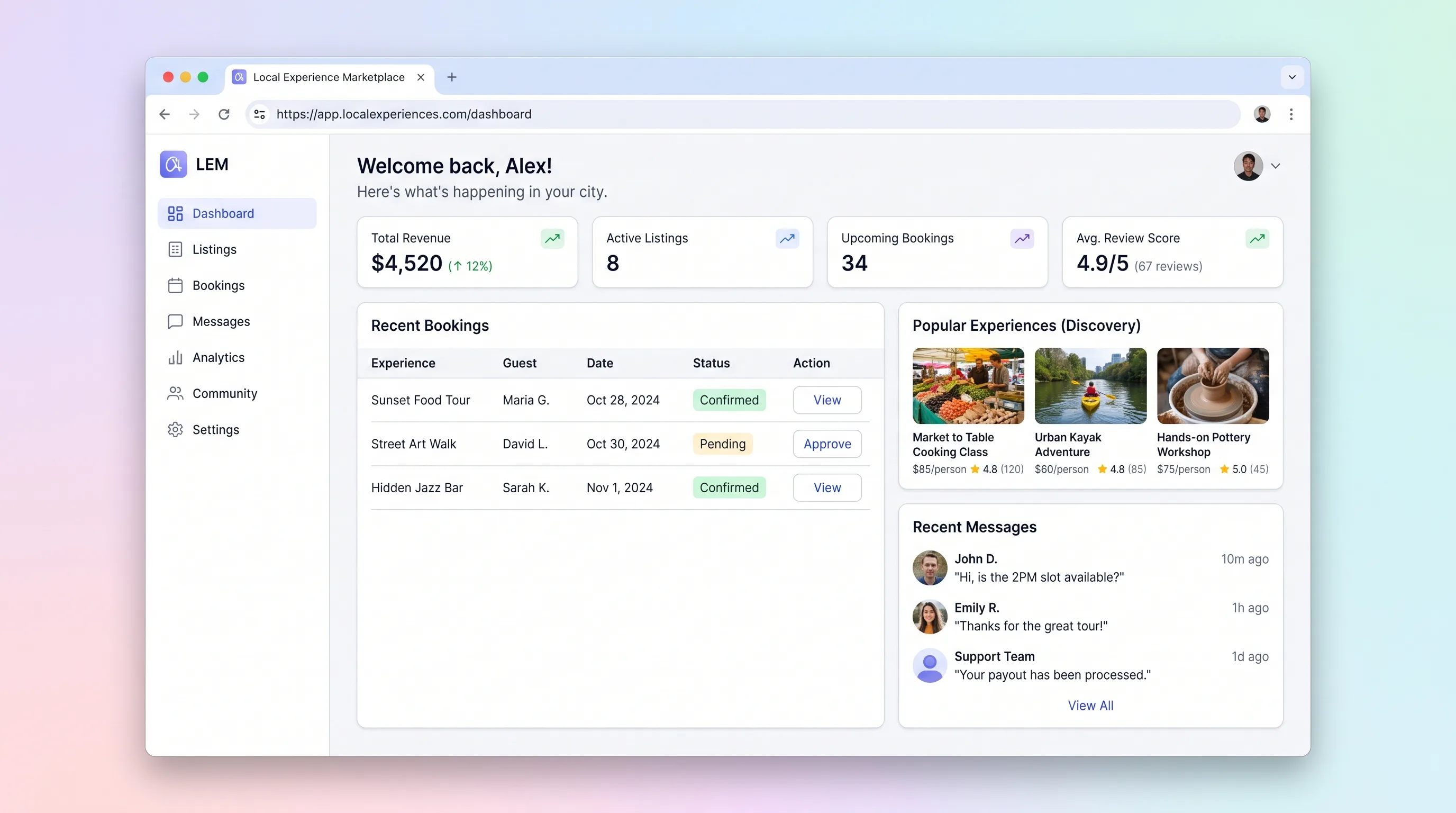
A peer-to-peer marketplace where locals publish city experiences with bookable time slots and travelers search, pay, and receive confirmation without manual coordination.