Build this if
The operator can manually verify the first provider cohort and focus demand on one service category and geography.
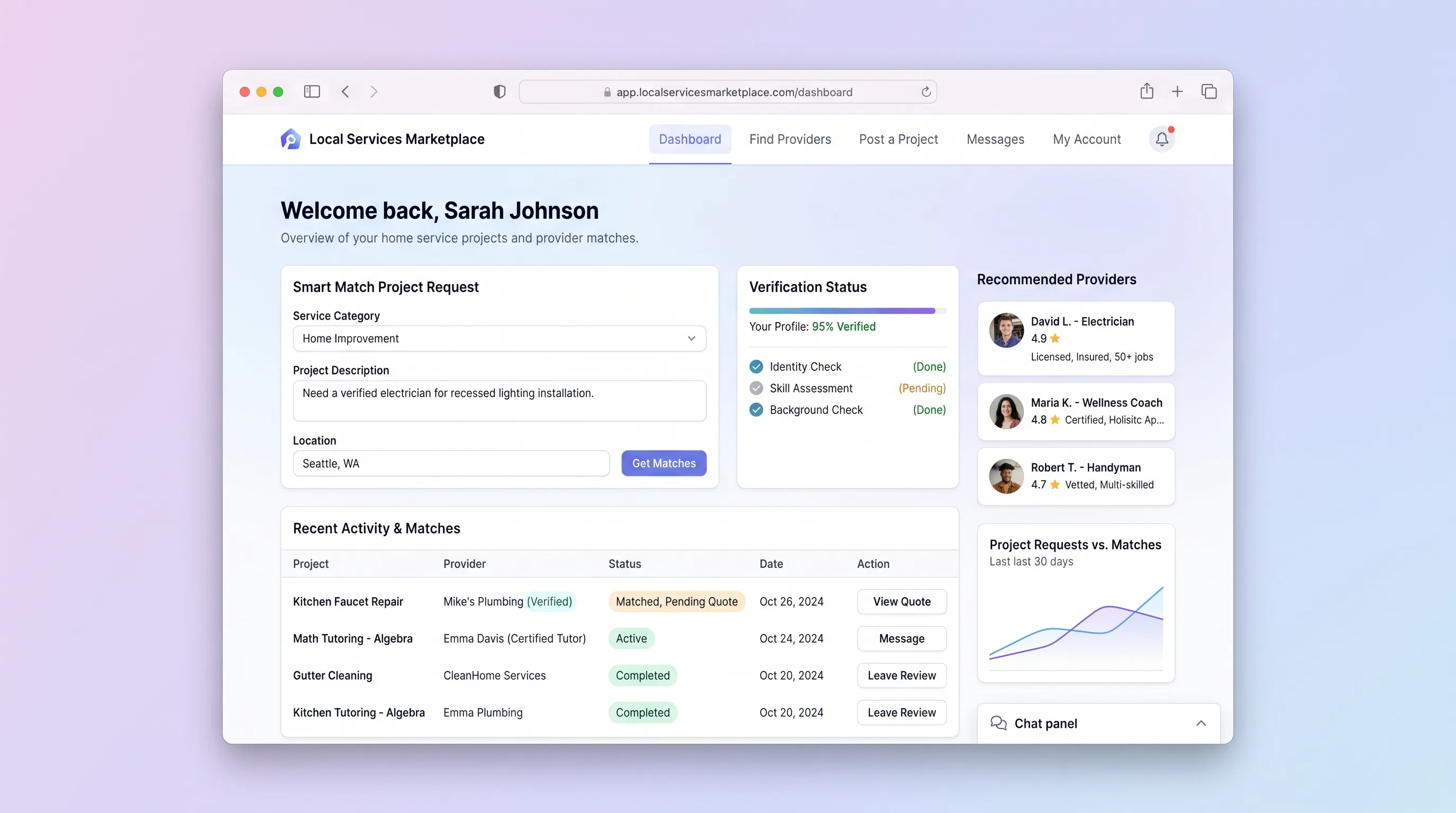
A trust-first marketplace that verifies provider claims, scopes homeowner projects, explains nearby candidate fit, and controls the contact handoff.
Decision snapshot
The operator can manually verify the first provider cohort and focus demand on one service category and geography.
The launch requires automated background checks, guaranteed work quality, escrow, or many unrelated service categories.
Verify twenty providers, submit ten representative homeowner requests, and inspect match usefulness plus introduction acceptance before charging.
Problem and target customer
Homeowners must often choose from generic listings without knowing whether a provider's claimed skill, service radius, timing, and project fit have been checked.
A city or regional marketplace operator launching one home-service category for homeowners and independent providers.
Provider subscription or fee for accepted introductions
Editorial note
Verification should mean a specific claim was reviewed against specific evidence, not that the platform guarantees every future job. Expiry and rejection reasons keep that boundary honest.
The launch should stay within one category and geography. That constraint makes request questions, evidence standards, and match quality measurable before the marketplace adds payments or broader supply.
Choose your next step
Evaluate the operating tradeoffs quickly, or inspect how to build the MVP.
Compare the three operating paths at the default workload before opening the full calculator.
See cost preview Build this ideaInspect the build blueprintReview MVP scope, workflow, states, data rules, architecture, and acceptance criteria.
Open blueprintEvaluation preview
Directional infrastructure estimates for the current 500 match requests assumption. Open the full calculator when you are ready to change it.
Run the web app and Postgres as managed services with capacity for the first match requests.
Lowest operating effortOperate the app, database, and scheduled jobs on one small server with manual backups.
Lowest baseline costSeparate application and data capacity, add managed database backups, and retain room for a worker.
Most separation and controlBuild blueprint
Product goal
MVP scope
UX and user flow
Collect services, operating radius, availability, and supporting evidence.
Let authorized operators approve, reject, or expire each claimed skill with a reason.
Capture a homeowner's category, location, timing, budget band, and scope details.
Show only eligible candidates with explicit fit reasons and verified-skill status.
Track provider response and homeowner contact consent.
Core entity outline
Stores provider identity, service area, availability, and public profile details.
Represents one category or skill claimed by a provider.
Stores a private file reference and metadata used by an operator.
Captures a homeowner's scoped need and approximate location.
Preserves one rules-based eligibility result and visible fit reasons.
Tracks consented contact handoff and provider response.
Architecture and data flow
Provides provider, homeowner, and operator experiences with role-specific navigation.
Validates requests and computes deterministic eligibility and fit reasons.
Stores provider claims, review decisions, requests, candidates, and introductions.
Holds verification evidence behind short-lived operator-only URLs.
Geocodes approximate service areas and computes distance consistently.
Deliverables and acceptance
Recommended stack
Supports public discovery plus authenticated homeowner, provider, and operator routes.
Keeps review decisions, private requests, and contact-release rules enforceable.
Normalizes service areas and supplies map context for explicit distance rules.
Supports expiring operator-only access to uploaded verification documents.
The marketplace's value depends on auditable verification and deterministic eligibility, so permissions and state transitions belong in the relational core while maps and storage stay narrow external boundaries.
Copy the build prompt, model the operating cost, and choose where to deploy.
Execution
Once the blueprint is clear, use the prompt, cost model, and deployment options to start building.
Build prompt
Use Lovable to test the homeowner request and provider-card experience, then implement verification, geographic eligibility, and match state transitions in a server-side rules layer.
Build prompt
Open the prompt pack whenever you are ready to take this blueprint into your builder.
Build prompt ready
Copy the prompt into your builder, then use the cost model below to choose how you want to run it.
Use the cost model to choose a deployment path that matches the build plan.
Cost calculator
A technical run-cost estimate for the first production version. Team, acquisition, payment fees, and business COGS are excluded.
$20-$70 per 1,000 match requests
Low and high values allow for usage variance and plan headroom.
Run the web app and Postgres as managed services with capacity for the first match requests.
5K match requests included, then $5-$15 per 5K match requestsCovers billable map or geocoding events after the applicable free usage cap; actual SKU mix changes the rate.
10K match requests includedThe estimate combines the selected infrastructure path, required operating modules, selected optional modules, and usage above included monthly allowances. Taxes and regional uplifts are excluded.
Deployment options
Choose based on operating preference, not only the headline price.
Deploy the local service matching marketplace with managed runtime, Postgres, environment variables, and logs in one project.
Usage-based compute can become less predictable as traffic grows.
Run the app, worker, and database on one small Vultr VPS with Docker Compose and explicit backups.
The operator owns database maintenance, monitoring, and recovery drills.
Separate application, worker, data, storage, and backup responsibilities as the workload grows.
More components increase setup and operational work.
Start building
Build provider onboarding, evidence review, homeowner request scoping, explainable candidate ranking, and introduction states.
Open Lovable 02AutomationNotify parties after a matchUse Make for optional email or CRM notifications after an introduction; provider verification and ranking rules remain in the marketplace.
Open Make 03DeployDeploy the matching serviceRun role-based onboarding, document review, geographic filtering, match ranking, and event processing on Railway.
Open RailwayKeep exploring
MarketplaceHome & Local Services
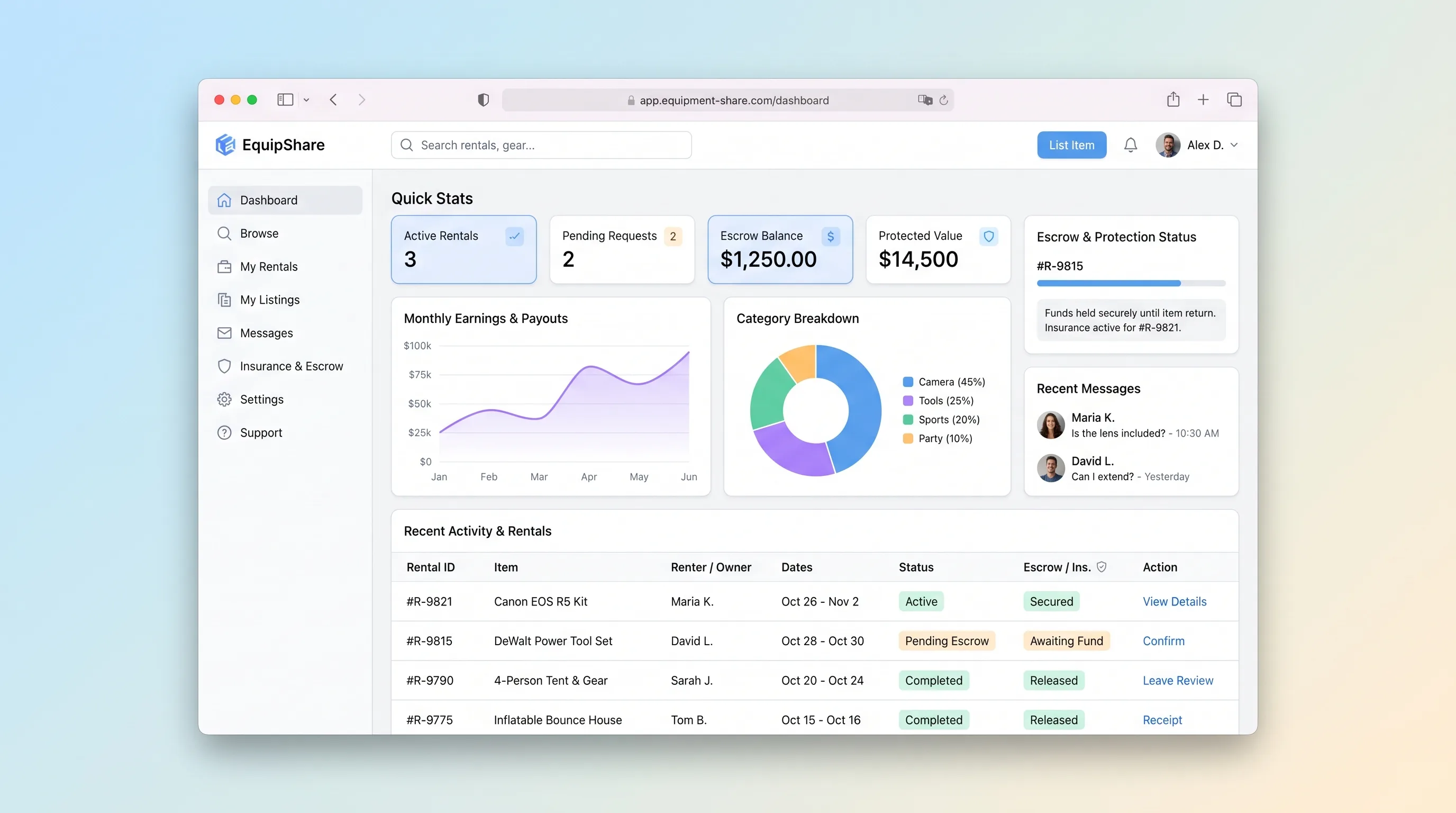
A local rental marketplace that coordinates availability, identity, authorized payment, pickup evidence, return inspection, and owner payout without claiming legal escrow or insurance.
MarketplaceHome & Local Services
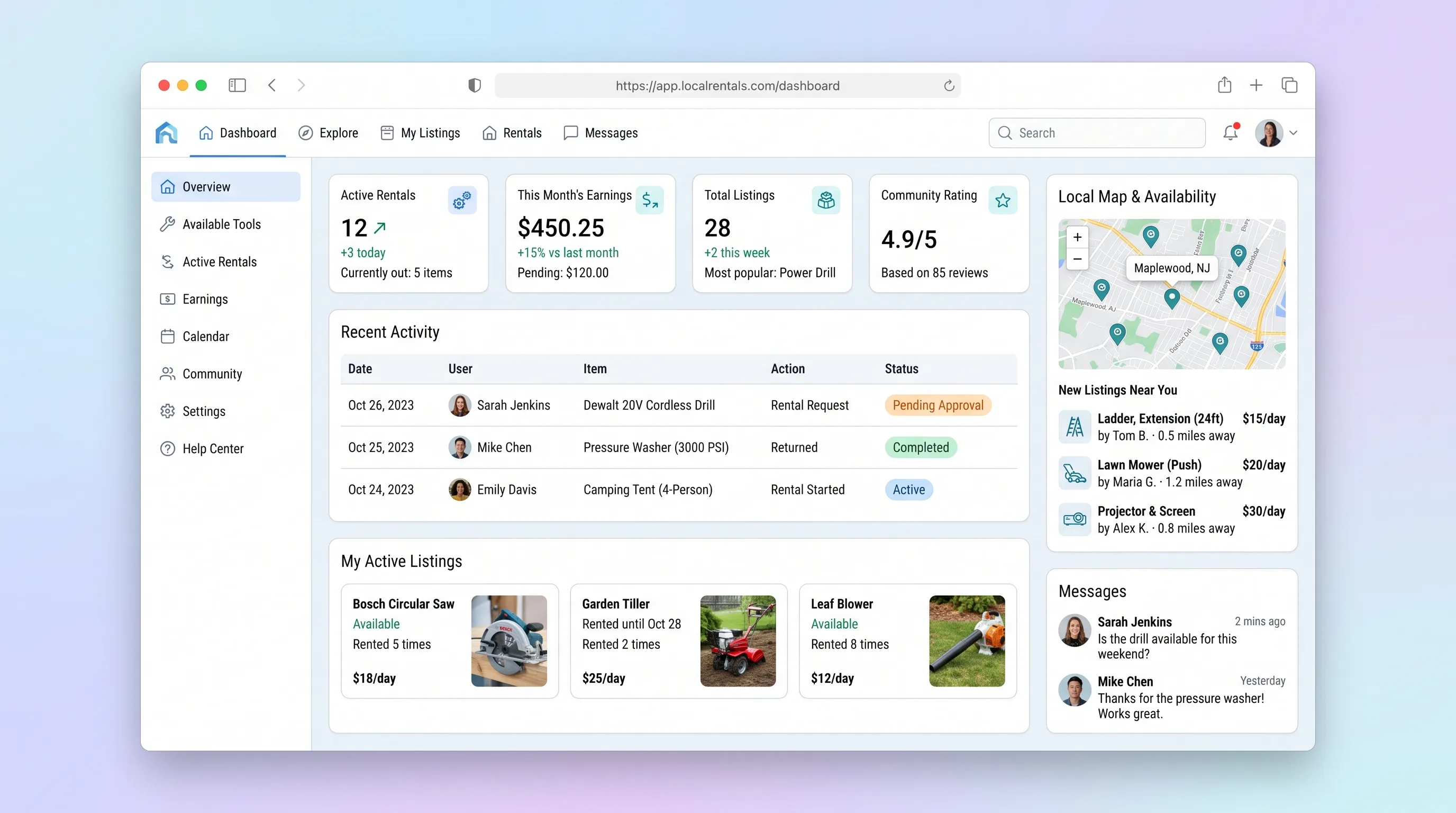
A hyper-local marketplace where homeowners list tools and equipment for short-term rental, neighbors search by radius, book through a calendar, pay securely, and owners receive automatic payout once the renter confirms return.
MarketplaceProfessional Services
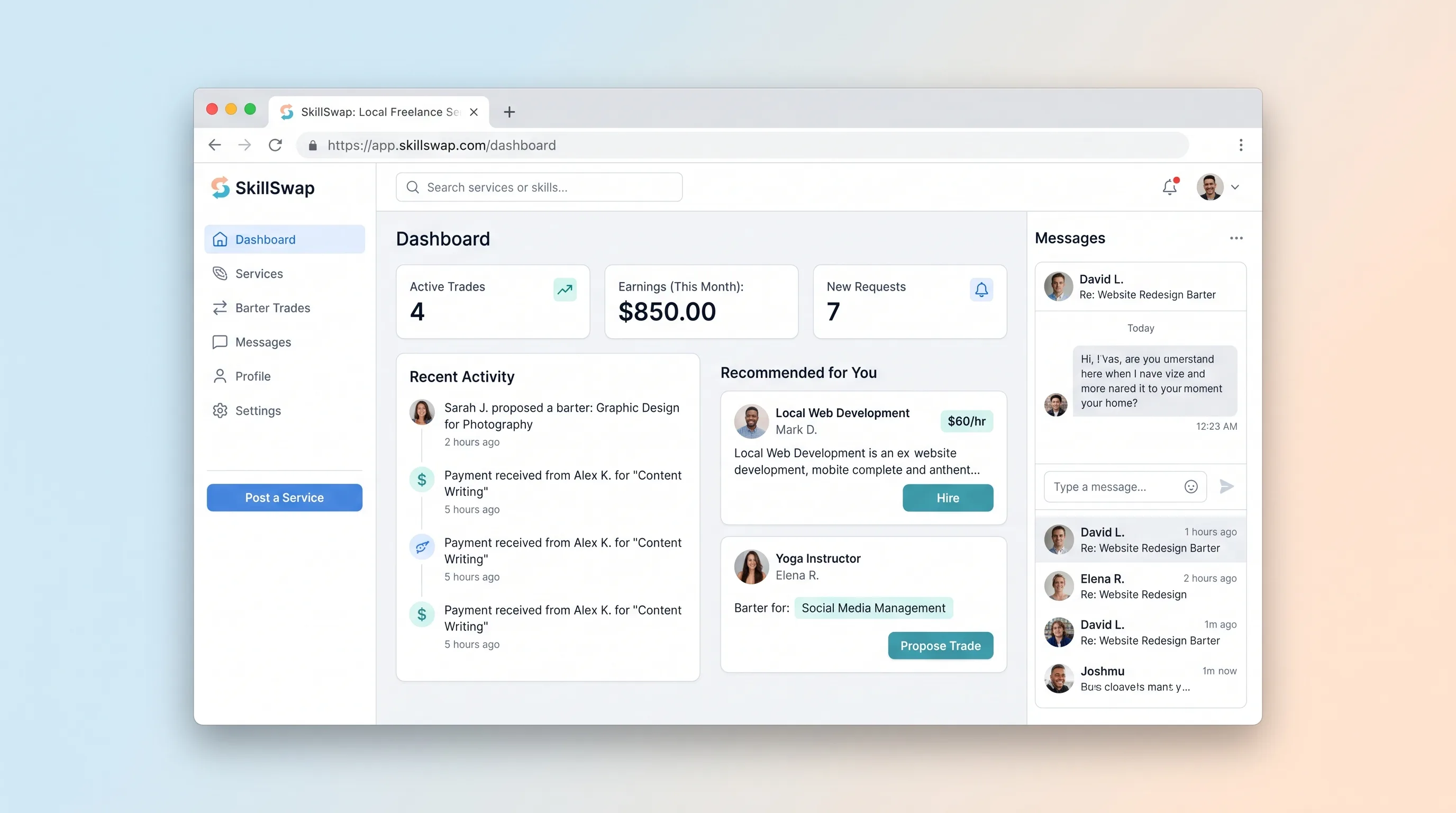
A local services marketplace where people answer a listing with either a cash offer or a two-sided skill trade, then agree deliverables and milestones.
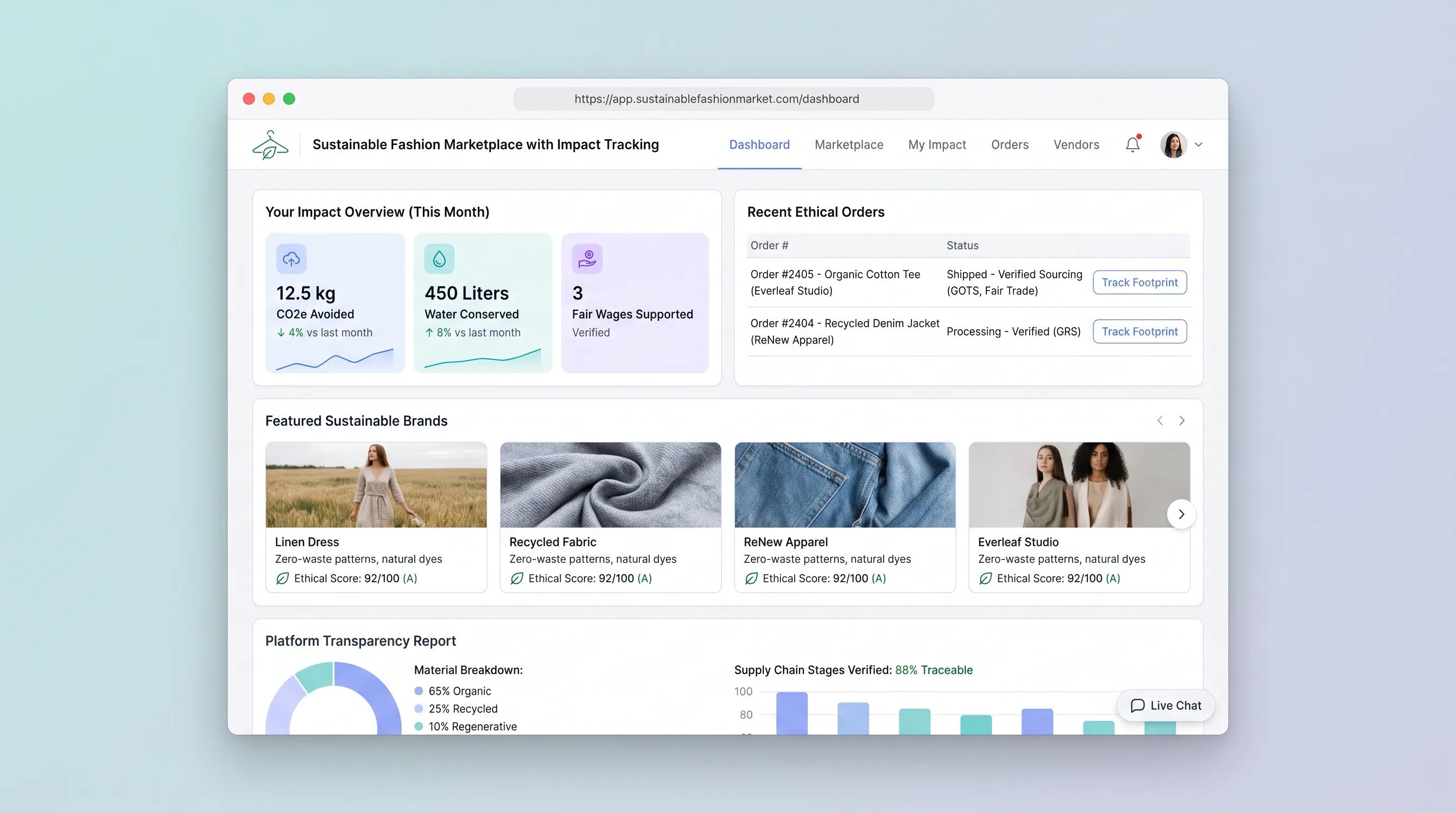
MarketplaceBeauty & Fashion
A curated storefront where independent fashion brands publish product evidence and shoppers compare item-level impact details before purchasing.
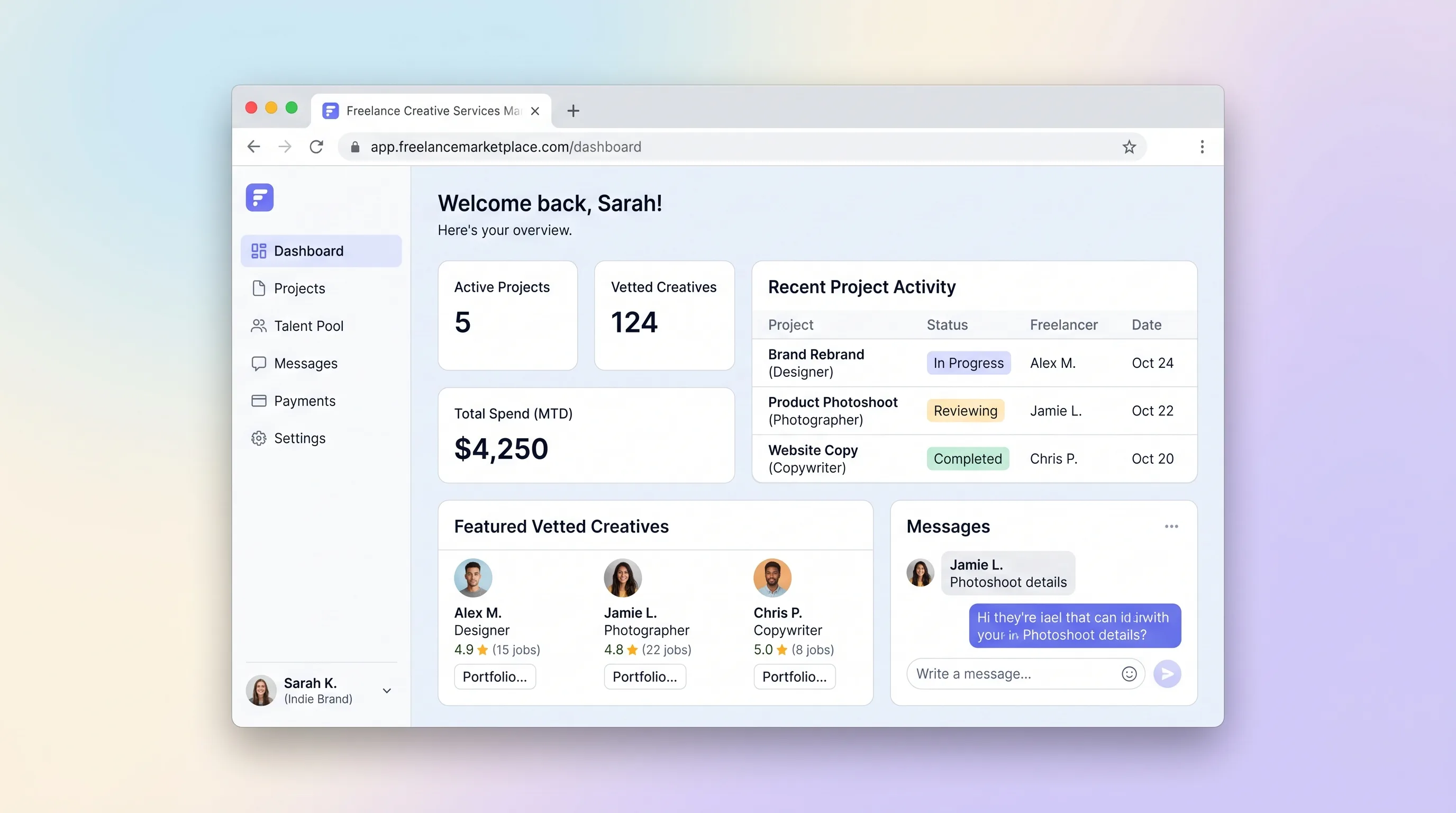
MarketplaceProfessional Services
A curated marketplace where indie brands post a project brief in under four minutes and receive at least three matched, vetted freelance creatives—photographers, copywriters, and designers—for project-based work.
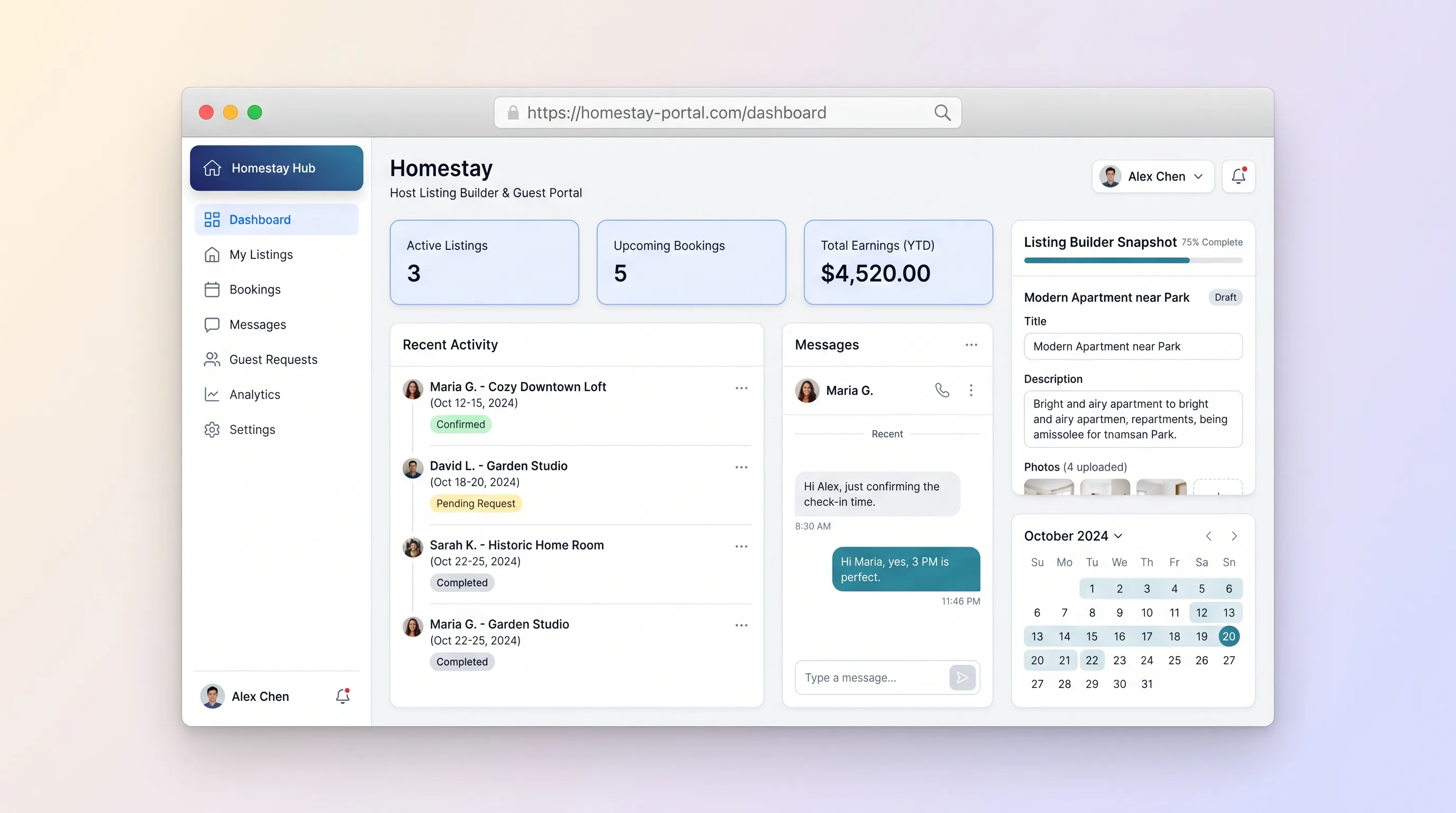
MarketplaceHospitality & Travel
A dual-sided marketplace where homestay hosts create rich property listings with photos, amenities, and pricing, and guests search by location, message hosts, submit booking requests, and track status from pending to confirmed.