Build this if
A narrow local market has enough repeat rental demand and an operator willing to mediate handoffs, payments, and disputes.
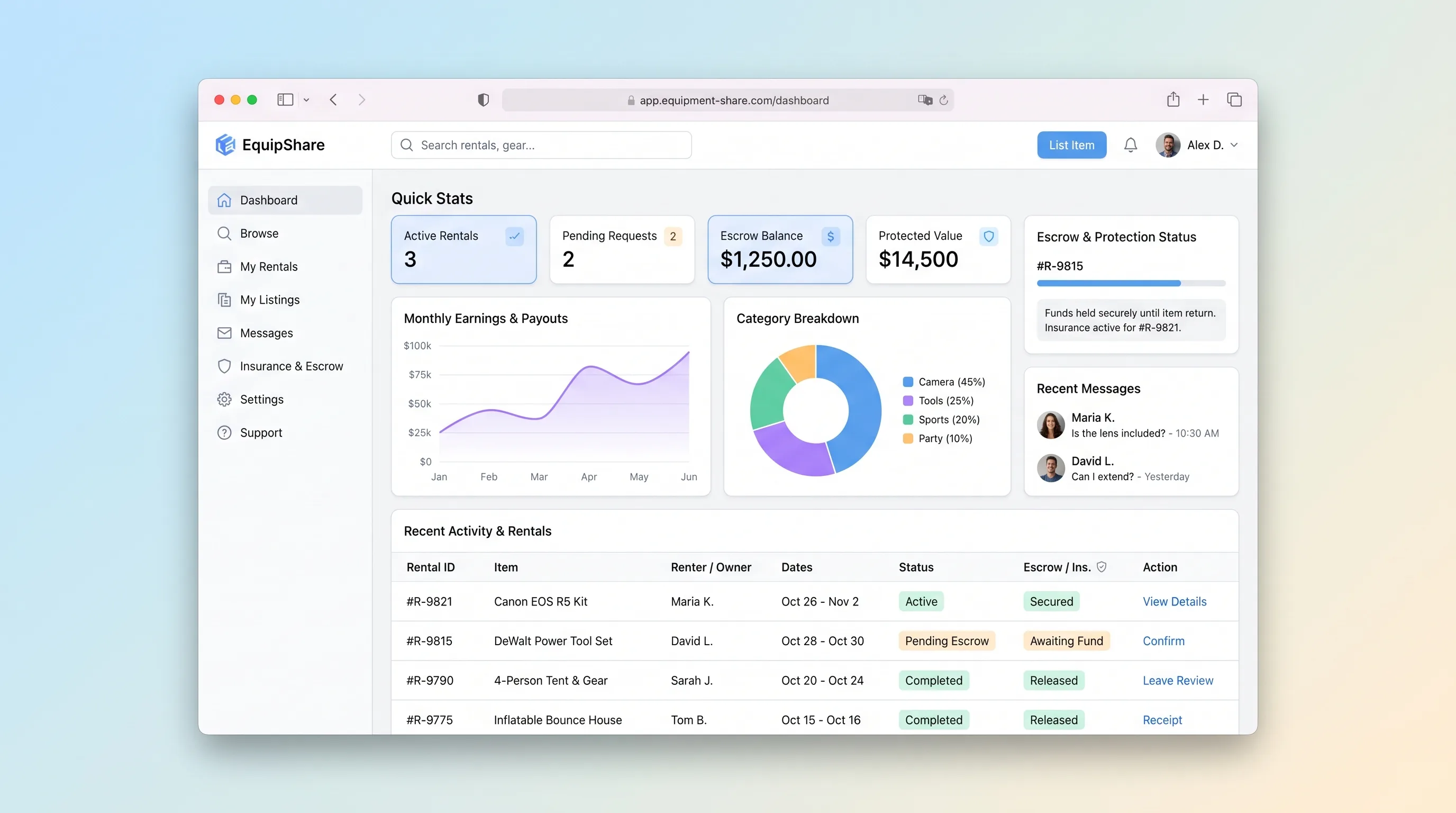
A local rental marketplace that coordinates availability, identity, authorized payment, pickup evidence, return inspection, and owner payout without claiming legal escrow or insurance.
Decision snapshot
A narrow local market has enough repeat rental demand and an operator willing to mediate handoffs, payments, and disputes.
The launch depends on claiming insured rentals or regulated escrow before licensed partners and legal structure are in place.
Run ten supervised rentals in one category and verify availability locking, evidence completion, payment-event idempotency, clean payout, and one simulated claim recovery.
Problem and target customer
People own useful cameras, tools, sports gear, and event equipment that sits idle, but informal rentals lack reliable date blocking, condition evidence, payment handling, and a clear process when an item returns late or damaged.
Operators launching a city- or category-focused rental marketplace for individual equipment owners and local renters.
Marketplace fee on completed rentals, with payment-provider and any third-party protection costs disclosed separately.
Editorial note
The public promise must match the financial mechanism. Delayed payout and payment authorization are implementable marketplace controls; calling them escrow would create a legal claim the source does not support.
Condition evidence should be captured at both handoffs, not uploaded only after a dispute. Matching checklists give the operator a bounded record for review without pretending software can determine damage automatically.
Start with one city or equipment category. Marketplace breadth matters less than proving that owners accept requests, renters complete handoffs, and clean returns reach payout reliably.
Choose your next step
Evaluate the operating tradeoffs quickly, or inspect how to build the MVP.
Compare the three operating paths at the default workload before opening the full calculator.
See cost preview Build this ideaInspect the build blueprintReview MVP scope, workflow, states, data rules, architecture, and acceptance criteria.
Open blueprintEvaluation preview
Directional infrastructure estimates for the current 500 completed rentals assumption. Open the full calculator when you are ready to change it.
Managed application, database, and worker for bookings, evidence, and payment events.
Lowest operating effortOperator-managed application, database, and background jobs on one instance.
Lowest baseline costSeparate application, database, and media capacity for more marketplace transactions.
Most separation and controlBuild blueprint
Product goal
MVP scope
UX and user flow
Find available items for exact dates without exposing a private pickup address.
Show price components, availability, owner rules, cancellation terms, and booking request.
Capture item identity, included parts, condition photos, meter values, and both parties' pickup or return confirmation.
Show booking state, deadlines, payment status, messages, and next required action.
Let an operator compare before and after evidence and record a bounded payout decision.
Core entity outline
Defines one rentable item, owner terms, pricing, location area, and publication state.
Stores requested dates, price snapshot, parties, payment references, deadlines, and rental state.
Captures a pickup or return checklist and party confirmations.
Stores a labeled photo, component check, meter value, or condition note for a handoff.
Tracks one disputed return and the operator's reasoned financial decision.
Architecture and data flow
Provide discovery, listing, booking, timeline, handoff, and claim interfaces.
Enforce date locks, calculate price snapshots, authorize actions, and drive booking transitions.
Store listings, availability, bookings, handoffs, claims, messages, and payment event IDs.
Keep listing media and restricted condition evidence with signed access.
Verify payment, refund, dispute, and payout events idempotently.
Deliverables and acceptance
Recommended stack
Support responsive marketplace discovery and camera-heavy handoff screens.
Enforce date overlaps, party roles, booking state, and provider event idempotency.
Use marketplace account, authorization, refund, and delayed-payout primitives after legal and provider review.
Store listing photos and restricted condition evidence through signed access.
Handle expirations, reminders, media scans, and payout retries outside requests.
The hard parts are double-booking prevention, payment state, and trustworthy handoff evidence. Those require transactional records and idempotent provider events; insurance and escrow claims must remain outside the product until contractually supported.
Copy the build prompt, model the operating cost, and choose where to deploy.
Execution
Once the blueprint is clear, use the prompt, cost model, and deployment options to start building.
Build prompt
Build a responsive Next.js marketplace with PostgreSQL, private evidence storage, and Stripe Connect or another reviewed marketplace-payments provider. Use delayed payout language, not escrow, and treat protection as a policy and claims workflow unless a licensed partner is contracted.
Build prompt
Open the prompt pack whenever you are ready to take this blueprint into your builder.
Build prompt ready
Copy the prompt into your builder, then use the cost model below to choose how you want to run it.
Use the cost model to choose a deployment path that matches the build plan.
Cost calculator
A technical run-cost estimate for the first production version. Team, acquisition, payment fees, and business COGS are excluded.
$5-$30 per 500 completed rentals
Low and high values allow for usage variance and plan headroom.
Managed application, database, and worker for bookings, evidence, and payment events.
5K completed rentals included, then $5-$15 per 5K completed rentalsPrivate object storage for listing, pickup, return, and claim images after the free allowance.
Monthly allowance from this idea's operating profileThe estimate combines the selected infrastructure path, required operating modules, selected optional modules, and usage above included monthly allowances. Taxes and regional uplifts are excluded.
Deployment options
Choose based on operating preference, not only the headline price.
Host the marketplace, database, worker, and webhook receiver with a short deployment path.
Payment and identity provider obligations remain separate from application hosting.
Run the app, worker, and database on one small Vultr VPS with Docker Compose and explicit backups.
The operator owns security updates, backups, monitoring, and restore drills.
Separate application, worker, data, storage, and backup responsibilities as the workload grows.
Additional components increase setup and incident response work.
Start building
Use Lovable to test listing discovery, date availability, booking price, owner acceptance, pickup checklist, return inspection, and claim review before onboarding payments.
Open Lovable 02AutomationNotify parties at handoff deadlinesUse Make as optional glue for pickup, overdue-return, or claim-review reminders after the marketplace's own booking states are authoritative.
Open Make 03DeployRun bookings and evidence togetherDeploy the marketplace app, database, worker, webhook receiver, and media credentials on Railway with payment secrets kept server-side.
Open RailwayKeep exploring
MarketplaceProfessional Services
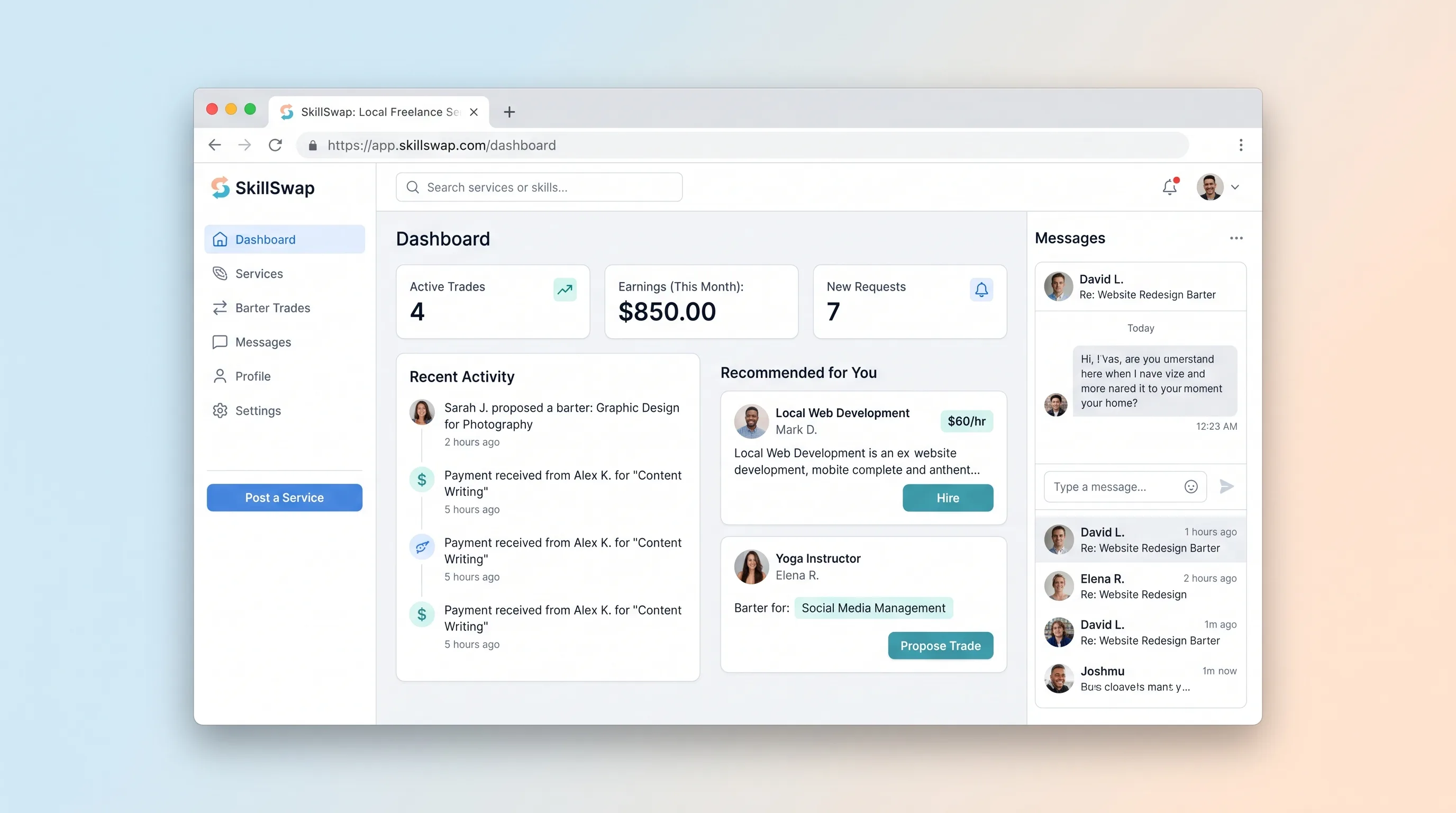
A local services marketplace where people answer a listing with either a cash offer or a two-sided skill trade, then agree deliverables and milestones.
MarketplaceHome & Local Services
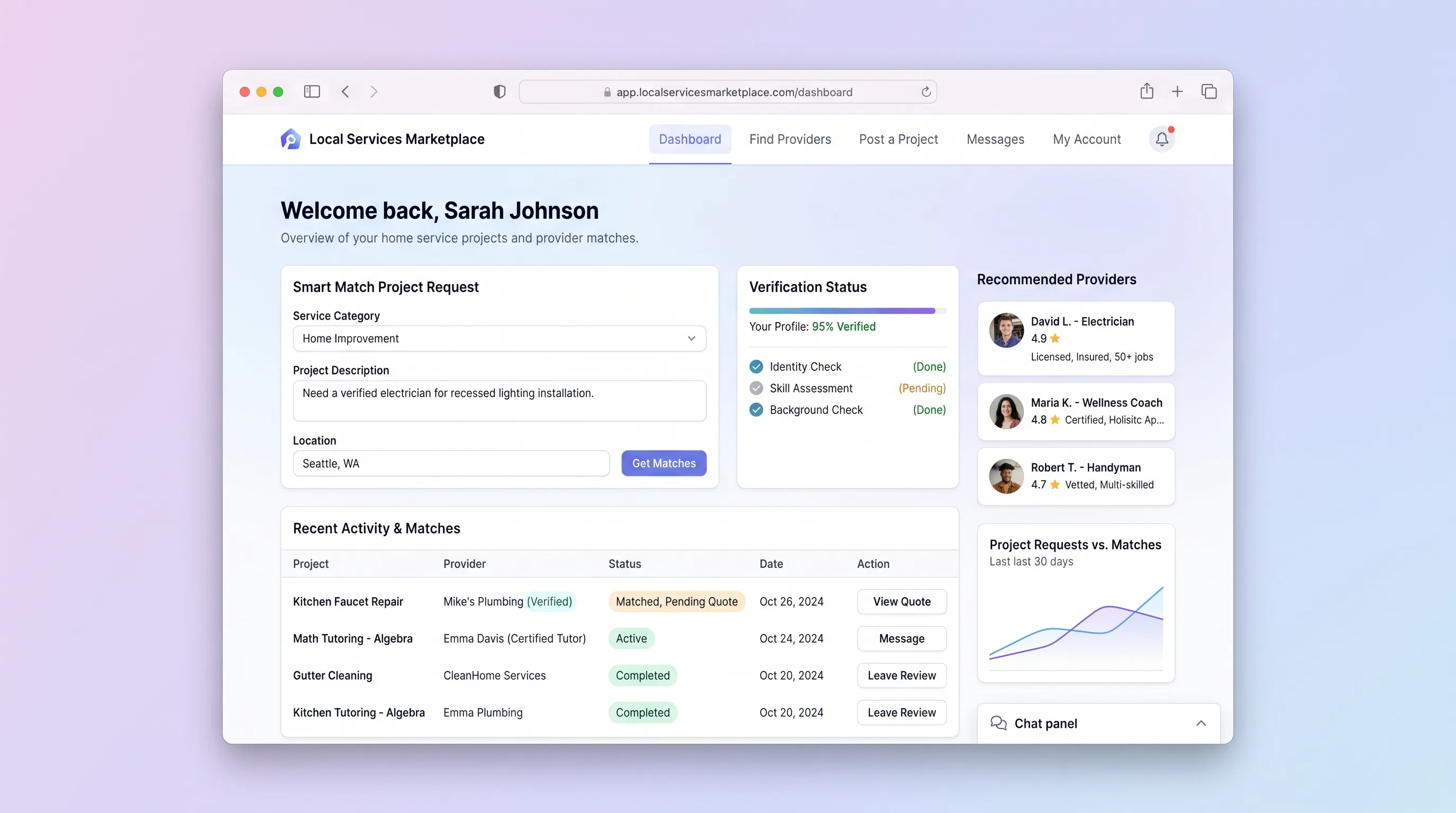
A trust-first marketplace that verifies provider claims, scopes homeowner projects, explains nearby candidate fit, and controls the contact handoff.
MarketplaceHome & Local Services
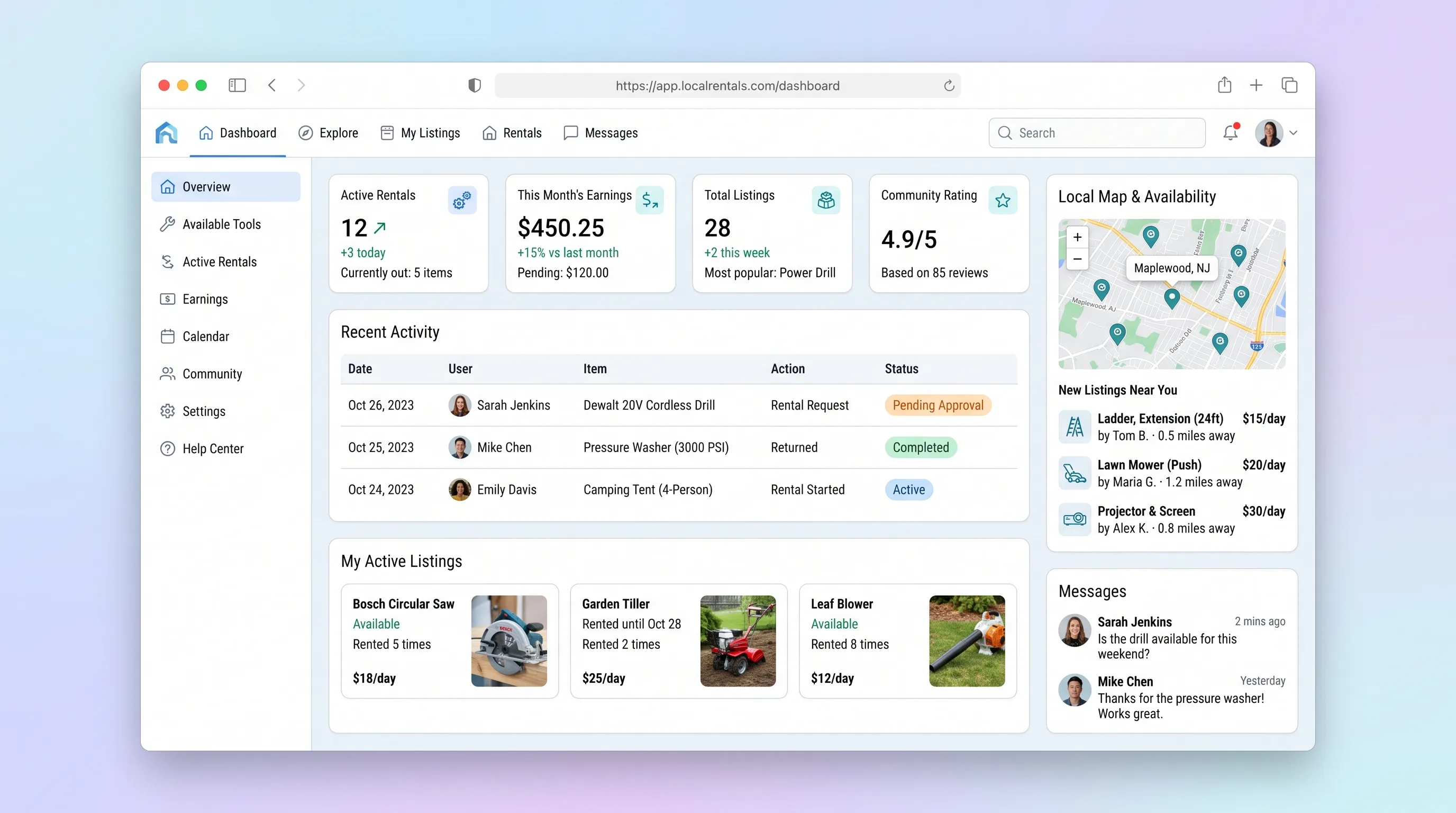
A hyper-local marketplace where homeowners list tools and equipment for short-term rental, neighbors search by radius, book through a calendar, pay securely, and owners receive automatic payout once the renter confirms return.
MarketplaceHospitality & Travel
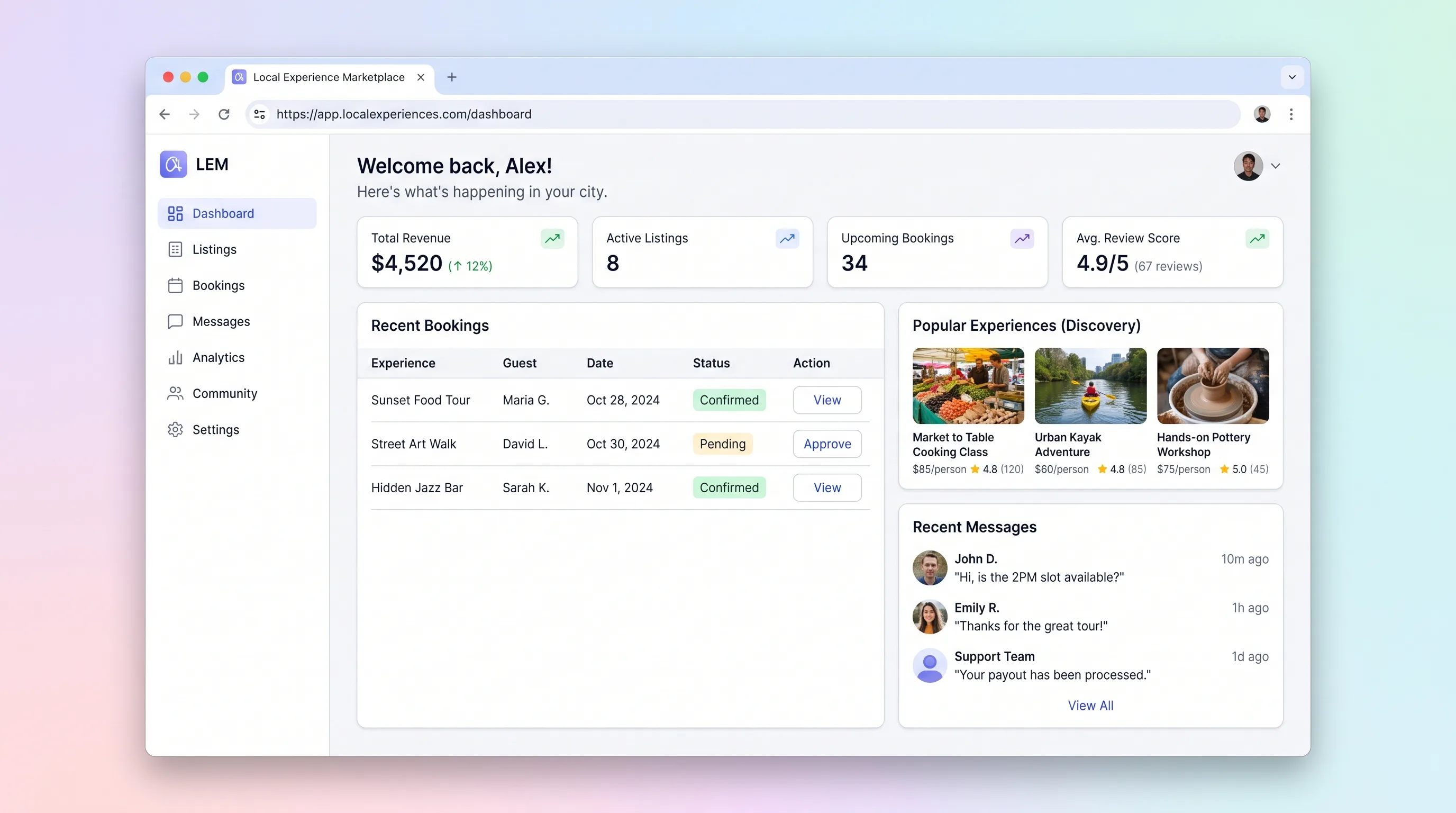
A peer-to-peer marketplace where locals publish city experiences with bookable time slots and travelers search, pay, and receive confirmation without manual coordination.
MarketplaceHospitality & Travel
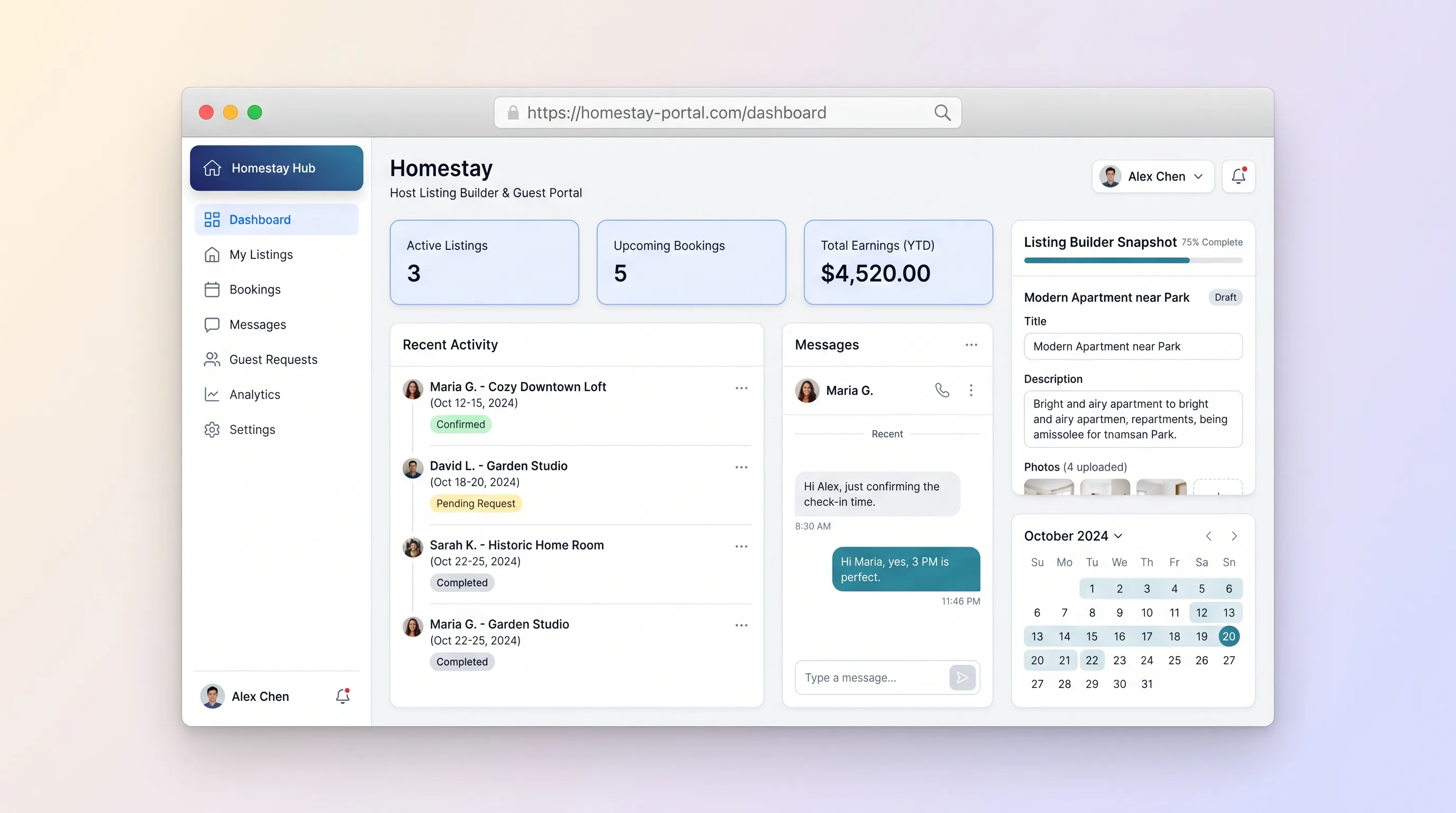
A dual-sided marketplace where homestay hosts create rich property listings with photos, amenities, and pricing, and guests search by location, message hosts, submit booking requests, and track status from pending to confirmed.
MarketplaceEducation
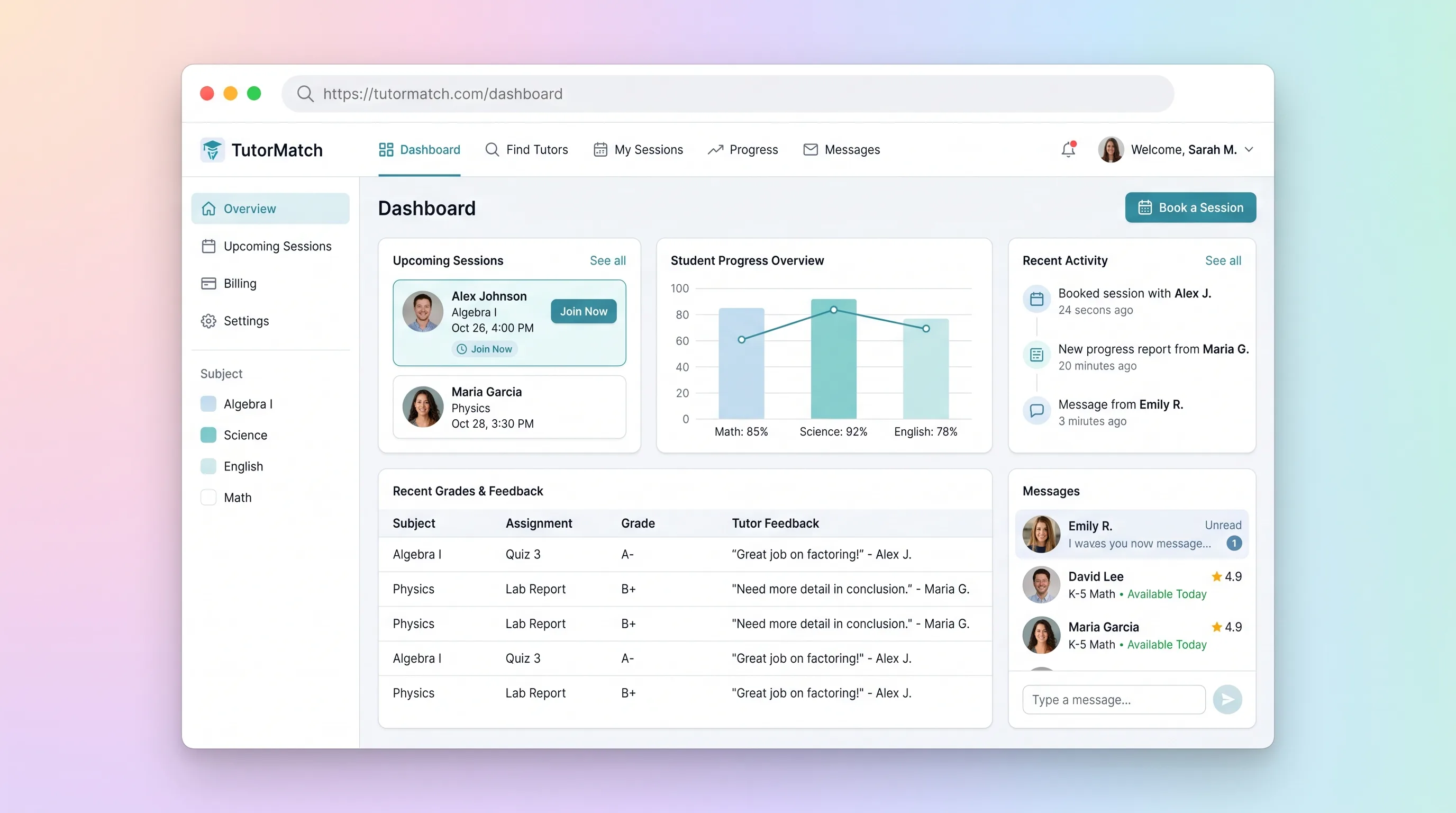
A tutor marketplace where parents compare vetted subject specialists, book and pay for sessions, then review tutor-authored progress notes.