Build this if
You can recruit 30-50 tool owners in one metro area before launch and verify that renters will pay a daily rate plus deposit for neighborhood pickup.
A hyper-local marketplace where homeowners list tools and equipment for short-term rental, neighbors search by radius, book through a calendar, pay securely, and owners receive automatic payout once the renter confirms return.
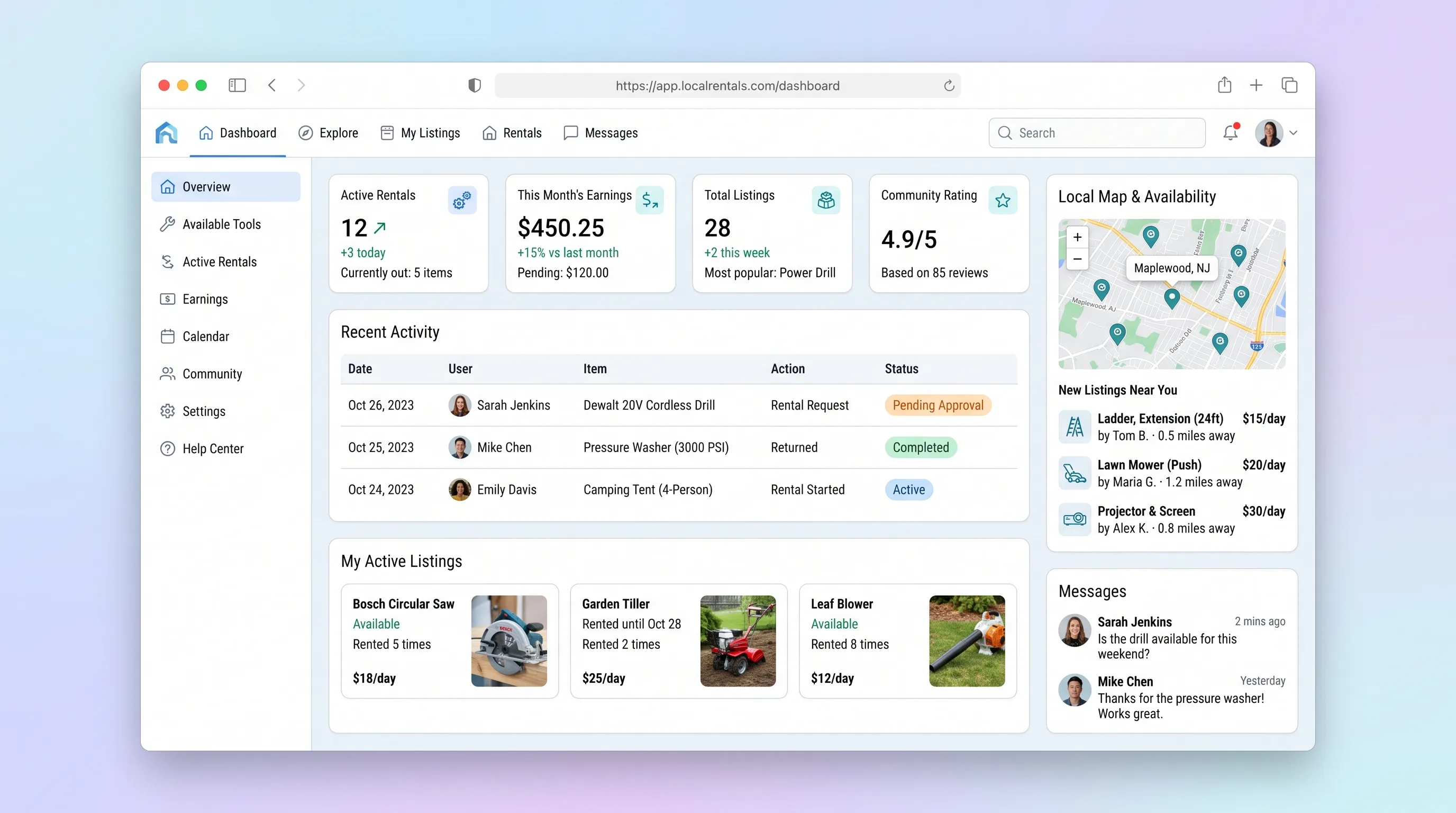
Decision snapshot
You can recruit 30-50 tool owners in one metro area before launch and verify that renters will pay a daily rate plus deposit for neighborhood pickup.
You cannot secure a payment processor for peer-to-peer payouts in your region or lack a concentrated local user base to seed both sides.
List 20 real tools from 10 owners, invite 50 neighbors, and measure whether at least 15 bookings complete with return confirmation within the first month.
Problem and target customer
Owners of idle tools have no fast, trusted way to lend them to nearby neighbors for income, and renters needing a tool for a one-off project resort to buying or visiting a big-box rental counter. Coordination is scattered across texts, spreadsheets, and cash, with no deposit protection or return confirmation.
Homeowners and DIYers in a single metro area who own underused tools or equipment and want to earn rental income, and neighbors who need a specific tool for a short project and want to find one within walking or driving distance.
Two-sided local marketplace with a transaction fee on each completed rental and an optional monthly subscription for owners who list five or more items, unlocking priority placement and calendar sync.
Editorial note
NeighborTool targets a concrete gap: homeowners own expensive tools that sit idle most of the year, while nearby neighbors buy or rent from big-box stores for one-off projects. The MVP narrows to a single metro area, pickup-only exchanges, and one booking flow—list, search, book, pay, return, review—so both sides of the marketplace can transact without manual coordination.
The platform fee and optional owner subscription create a clear revenue path, but the first milestone is liquidity: enough listings in one area that a renter searching within a five-mile radius finds a relevant tool. The LLM-assisted listing description is a small but meaningful friction reducer, helping an owner publish a drill listing in under three minutes.
Scope discipline matters. Delivery logistics, insurance products, identity verification, and native mobile apps are deliberately excluded. The deposit held in escrow and mutual reviews build enough trust for a neighborhood pilot, and the return-confirmation trigger ensures owners get paid without manual intervention.
Choose your next step
Evaluate the operating tradeoffs quickly, or inspect how to build the MVP.
Compare the three operating paths at the default workload before opening the full calculator.
See cost preview Build this ideaInspect the build blueprintReview MVP scope, workflow, states, data rules, architecture, and acceptance criteria.
Open blueprintEvaluation preview
Directional infrastructure estimates for the current 250 assisted transactions assumption. Open the full calculator when you are ready to change it.
Managed app hosting, database, backups, and basic observability for the marketplace workflow.
Lowest operating effortOne small VPS running the app, database, media volume, and backup job.
Lowest baseline costSeparate app, data, storage, and worker capacity for cleaner operations.
Most separation and controlBuild blueprint
Product goal
MVP scope
UX and user flow
Renter enters tool keyword and radius; views card-based results on a Mapbox map with distance badges.
Shows tool photos, description, daily rate, availability calendar, owner rating, and pickup location.
Renter reviews rental total and deposit, pays via Stripe, and sees escrow confirmation.
Owner manages listings, views incoming booking requests, accepts or declines, and sees payout status.
Parties exchange pickup details; renter taps Confirm Return to release deposit and trigger payout.
Core entity outline
Represents a tool or equipment item available for rent.
Tracks a rental request from a renter through return and payout.
Stores in-app communication between owner and renter for a booking.
Captures mutual star ratings and optional text after a rental closes.
Records escrow hold, deposit refund, and owner payout for a booking.
Architecture and data flow
Renders search, listing, booking, messaging, and return-confirmation screens; calls backend API.
Manages listings, bookings, messages, reviews, and payment state; enforces business rules.
Stores all entities with relational integrity and status tracking.
Holds escrow deposits, processes renter charges, and transfers payouts to owners.
Geocodes pickup addresses and powers radius-based listing search.
Generates a draft listing description from tool title and category.
Sends booking, return, and review notifications and syncs accepted bookings to owner calendars.
Deliverables and acceptance
Recommended stack
Mobile-first responsive UI with card-based listings, Mapbox integration, and booking flow built rapidly from a structured prompt.
Hosts listing, booking, payment, and review entities with relational integrity and durable status tracking.
Handles peer-to-peer escrow, refundable deposits, and automatic payouts to owners on return confirmation.
Provides location radius filtering and geocoding for hyper-local tool discovery.
Syncs booking events to owner calendars and sends email or SMS notifications on booking, return, and review prompts.
Generates a draft listing description from tool name and category to help owners publish in under 3 minutes.
Lovable accelerates the mobile-first listing and booking UI; Railway provides a reliable relational backend for transactional booking states; Stripe Connect is purpose-built for two-sided marketplace payouts and escrow; Mapbox powers the core hyper-local radius search; Make handles bounded notification and calendar-sync glue without custom infrastructure; OpenAI reduces listing friction for owners.
Copy the build prompt, model the operating cost, and choose where to deploy.
Execution
Once the blueprint is clear, use the prompt, cost model, and deployment options to start building.
Build prompt
Lovable
Build prompt
Open the prompt pack whenever you are ready to take this blueprint into your builder.
Build prompt ready
Copy the prompt into your builder, then use the cost model below to choose how you want to run it.
Use the cost model to choose a deployment path that matches the build plan.
Cost calculator
A technical run-cost estimate for the first production version. Team, acquisition, payment fees, and business COGS are excluded.
$13-$48 per 125 assisted transactions
Low and high values allow for usage variance and plan headroom.
Managed app hosting, database, backups, and basic observability for the marketplace workflow.
50K assisted transactions included, then $8-$20 per 100K assisted transactionsPayment processor is implied by the source workflow or feature list.
100 included, then $0-$5 per 100 assisted transactionsCalendar API is implied by the source workflow or feature list.
Monthly allowance from this idea's operating profileMaps API is implied by the source workflow or feature list.
1K assisted transactions includedThe estimate combines the selected infrastructure path, required operating modules, selected optional modules, and usage above included monthly allowances. Taxes and regional uplifts are excluded.
Deployment options
Choose based on operating preference, not only the headline price.
Fast Docker deployment for the app, database, worker, and preview workflow without managing a VPS.
Usage billing needs active monitoring as traffic and jobs grow.
Run the app, worker, and database on one small Vultr VPS with Docker Compose and explicit backups.
You own patching, backups, monitoring, and incident response.
Separate application, worker, data, storage, and backup responsibilities as the workload grows.
You own server setup, patching, backups, and operational monitoring.
Start building
Create a mobile-first responsive app with Mapbox radius search, card-based listings, a per-listing availability calendar, booking request flow, in-app messaging, and a return-confirmation action.
Open Lovable 02AutomationWire notifications and calendar syncConnect booking, return, and review events to email/SMS notifications and sync accepted bookings to owner calendars via a Calendar API.
Open Make 03DeployDeploy backend API and databaseHost a Node.js API with PostgreSQL for listings, bookings, messages, reviews, and payment state; integrate Stripe Connect for escrow deposits and owner payouts.
Open RailwayKeep exploring
SaaS WorkflowHome & Local Services
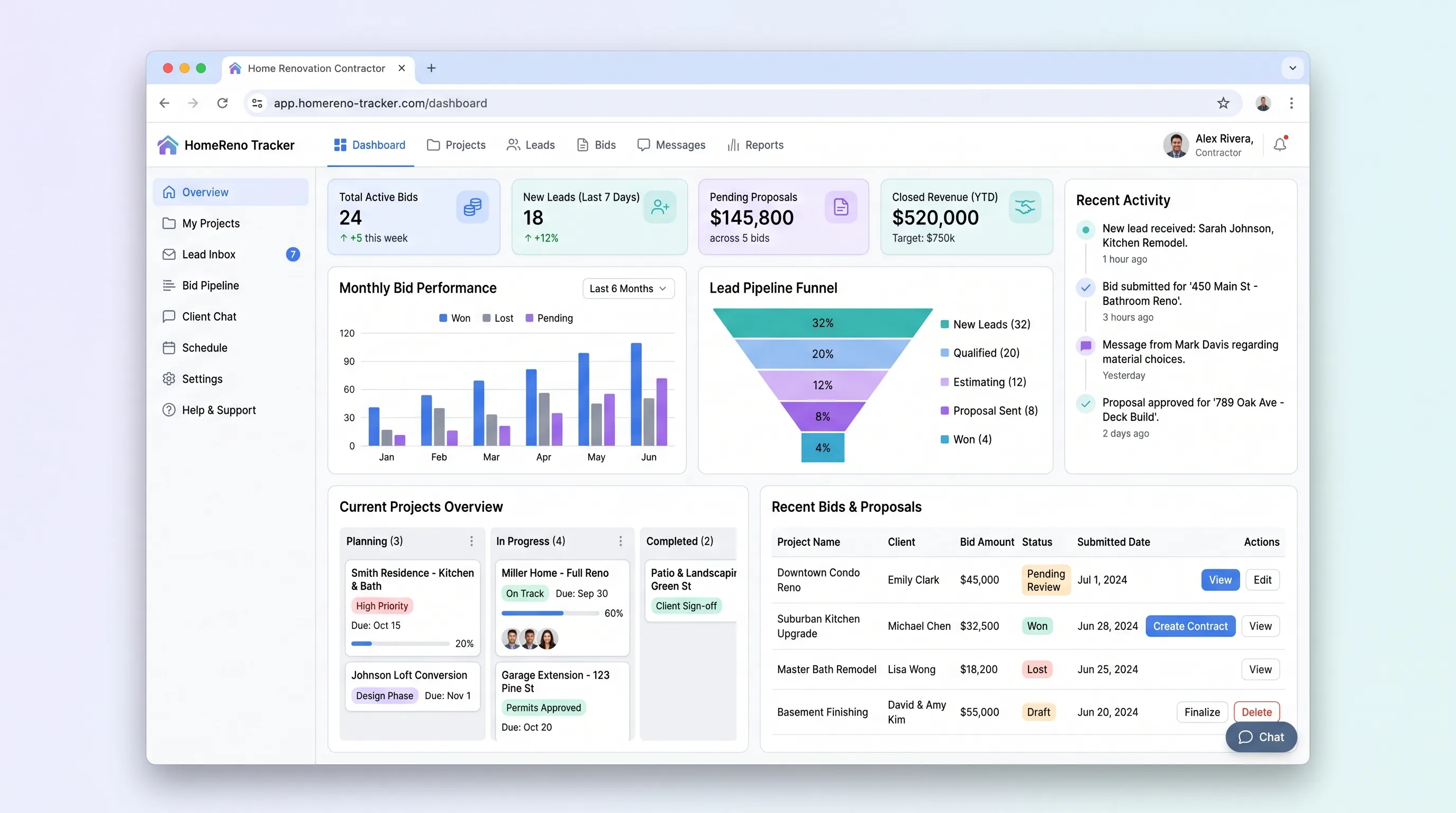
A focused SaaS workflow for indie renovation contractors to display past projects, capture homeowner project inquiries in under four minutes, and track bid requests through a status pipeline with email notifications.
SaaS WorkflowProfessional Services
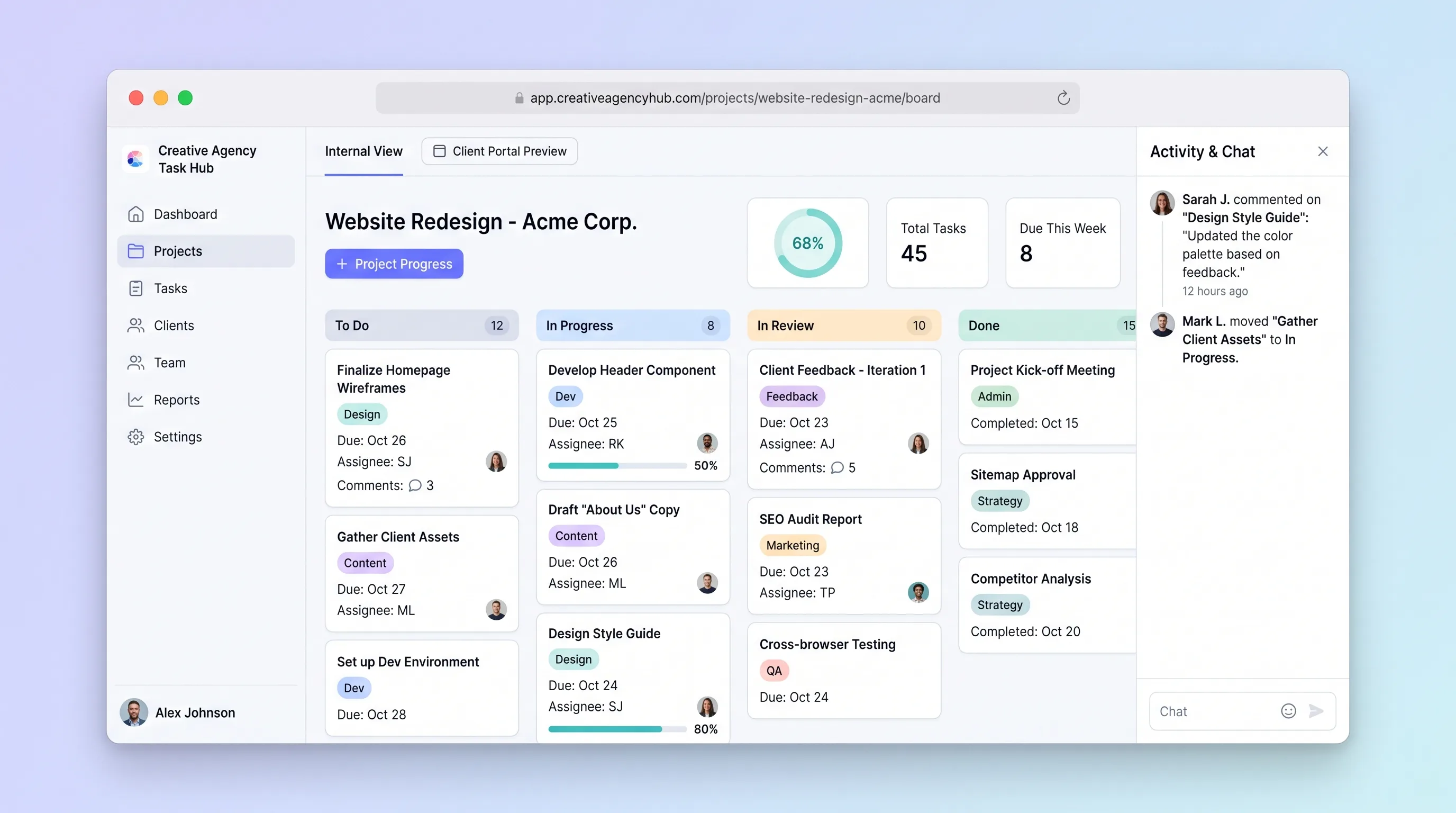
A focused project tracker where small creative agencies manage deliverables on an internal kanban board and share branded client portals for progress review and approvals without email chains.
SaaS WorkflowReal Estate
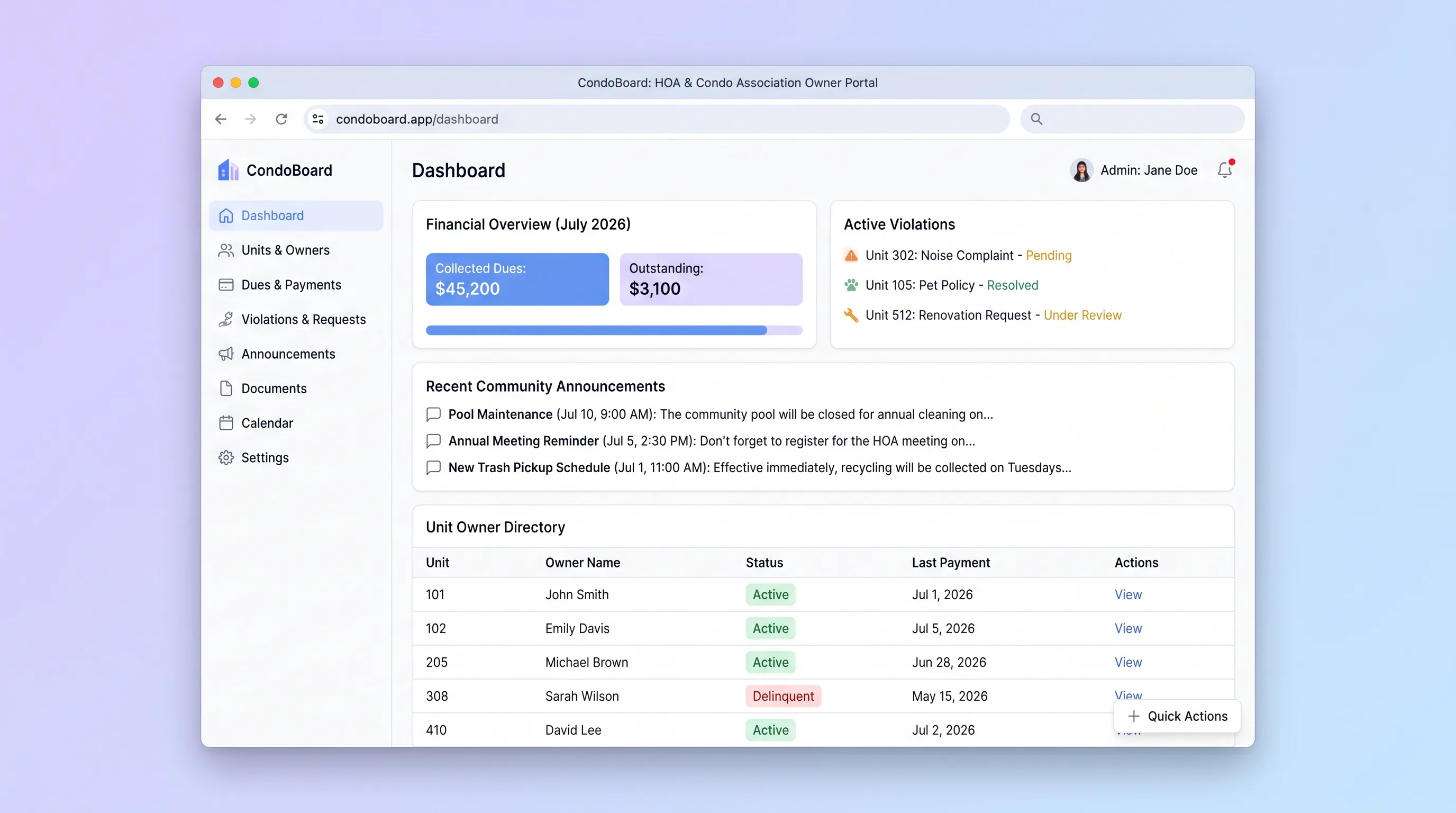
Self-service portal where condo association boards manage unit owners, track dues payments, log violations, and publish community announcements without spreadsheets or email threads.
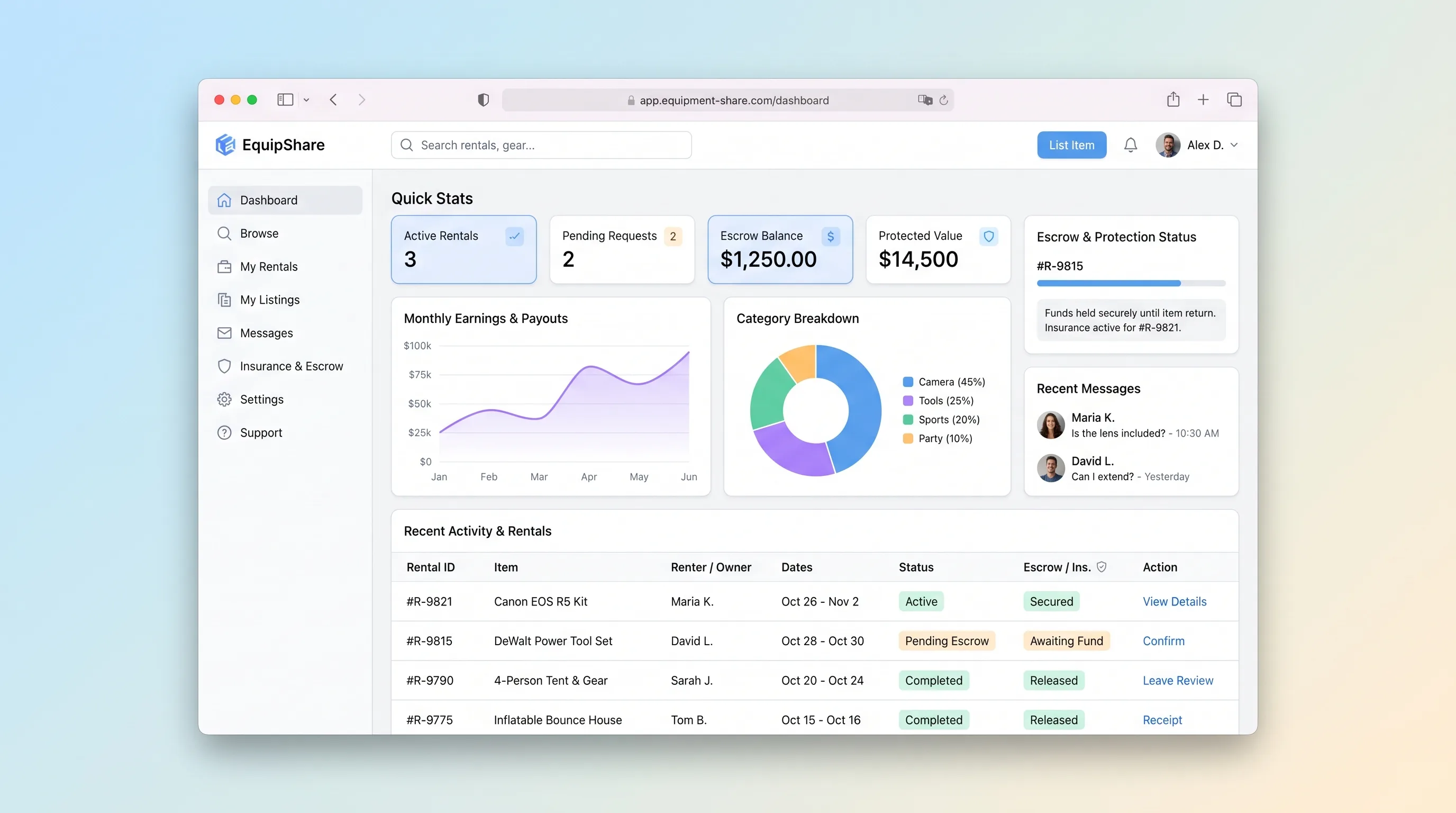
MarketplaceHome & Local Services
A local rental marketplace that coordinates availability, identity, authorized payment, pickup evidence, return inspection, and owner payout without claiming legal escrow or insurance.
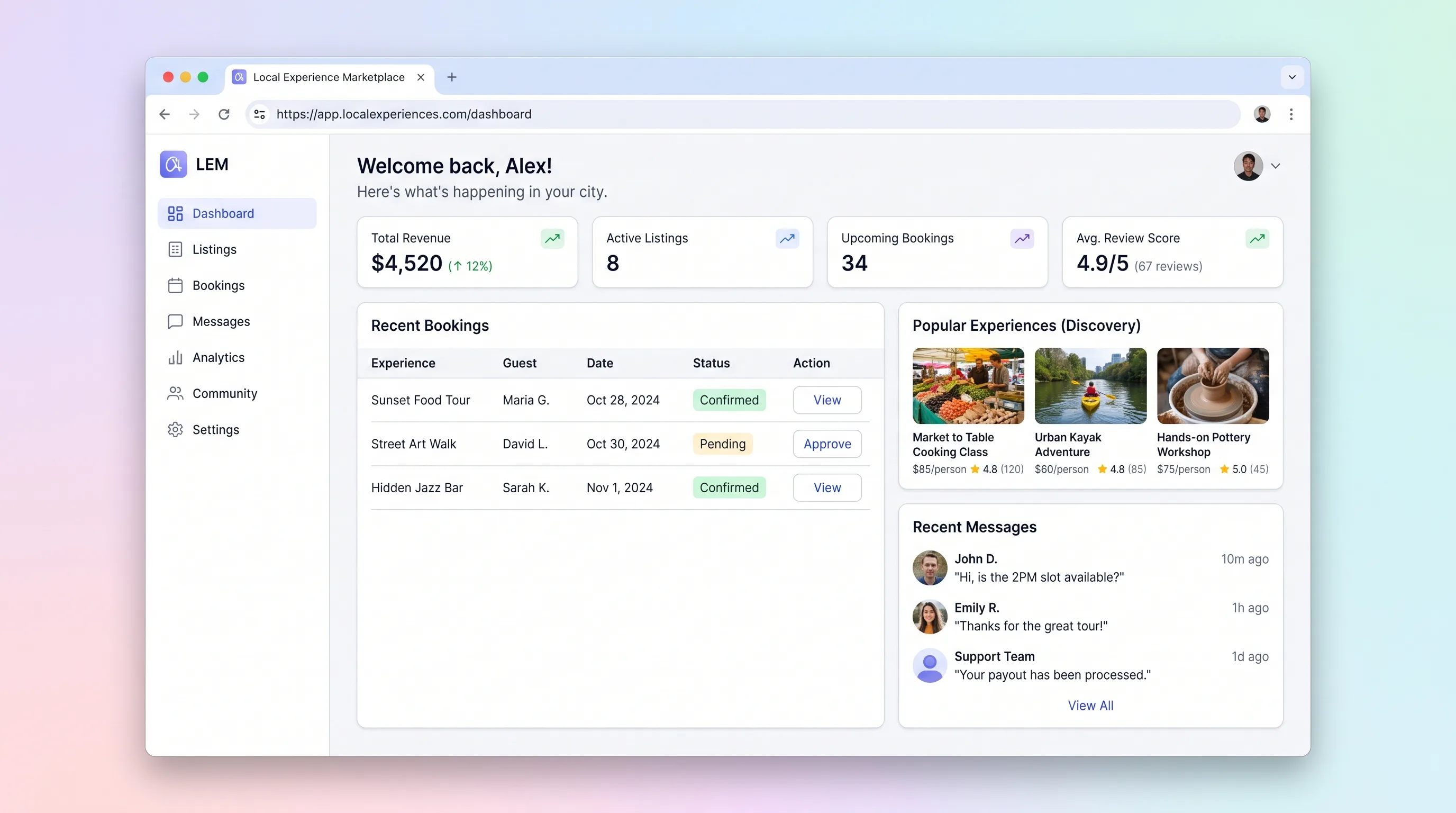
MarketplaceHospitality & Travel
A peer-to-peer marketplace where locals publish city experiences with bookable time slots and travelers search, pay, and receive confirmation without manual coordination.
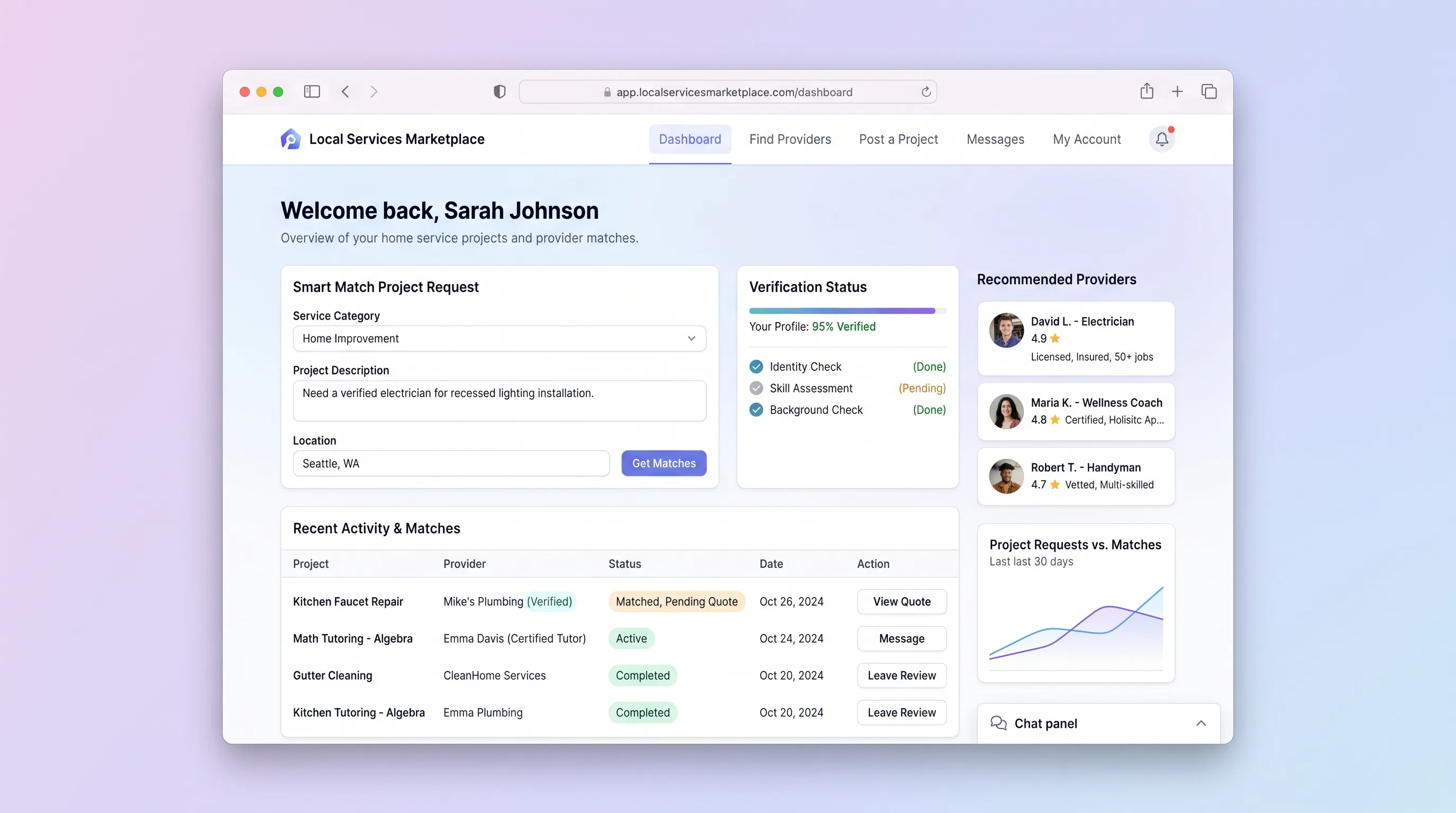
MarketplaceHome & Local Services
A trust-first marketplace that verifies provider claims, scopes homeowner projects, explains nearby candidate fit, and controls the contact handoff.