Build this if
You can reach HOA boards or property managers managing 20+ units who currently rely on spreadsheets and email for dues, violations, and announcements.
Self-service portal where condo association boards manage unit owners, track dues payments, log violations, and publish community announcements without spreadsheets or email threads.
Decision snapshot
You can reach HOA boards or property managers managing 20+ units who currently rely on spreadsheets and email for dues, violations, and announcements.
Your target segment is single-unit landlords or large commercial property portfolios with existing enterprise management platforms.
Onboard 3 condo associations, confirm at least 80% of owners view an announcement and 60% of dues are logged through the portal within 60 days.
Problem and target customer
HOA boards manage unit owners, dues, violations, and announcements across scattered email threads, paper notices, and spreadsheets, causing missed payments, unresolved violations, and poor owner communication.
Property managers and HOA board members running condo associations of 20-200 units who need a focused operational portal instead of generic property management software.
Monthly subscription per association workspace with a paid tier for larger unit counts and additional board seats.
Editorial note
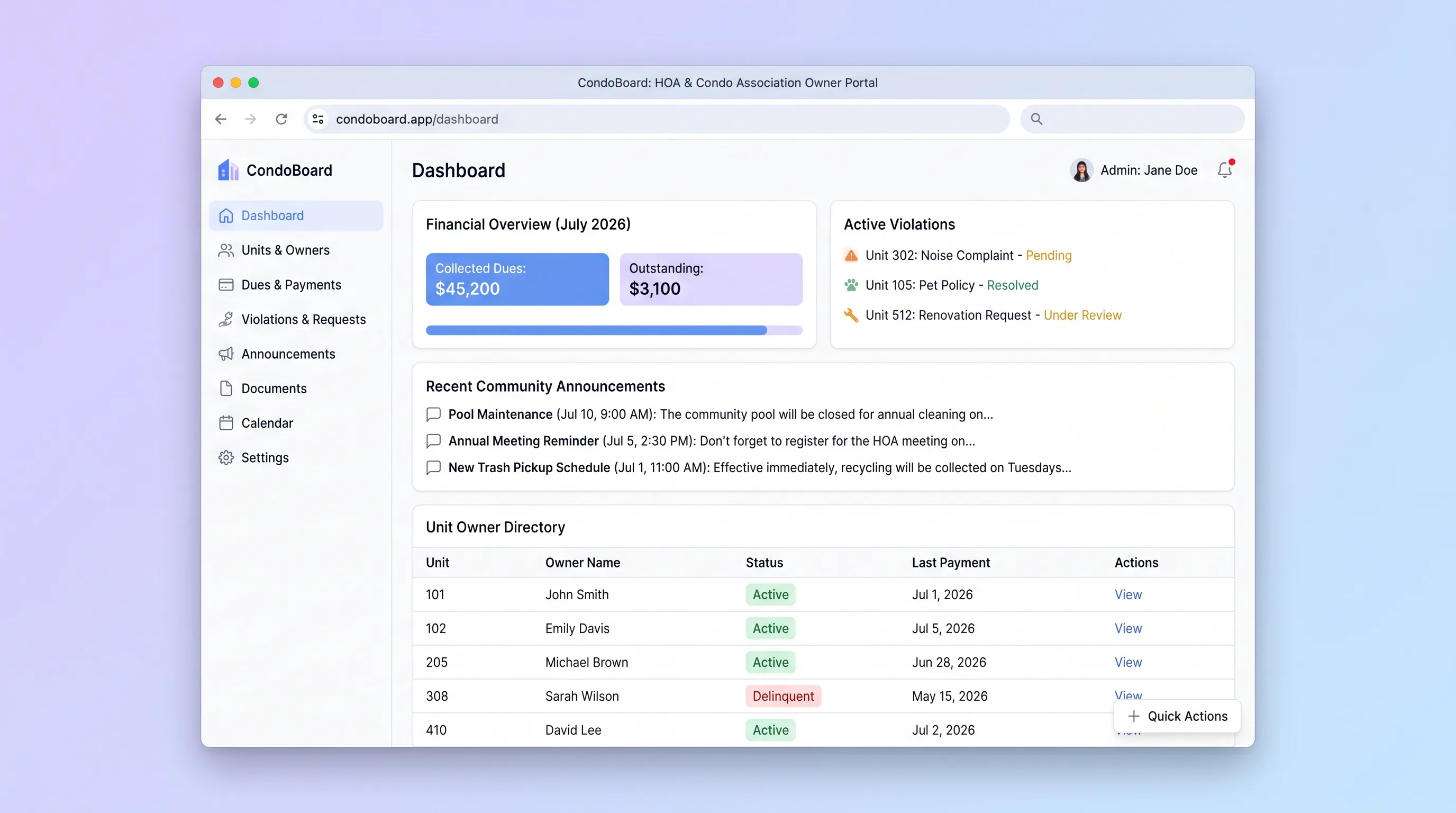
CondoBoard replaces the spreadsheet-and-email stack that most condo associations use for routine management. The MVP focuses on four operational objects—units, dues, violations, and announcements—wired into a single portal where board admins work and owners self-serve.
The portal uses a civic visual language: light gray backgrounds, navy blue primary actions, and gold accents for status highlights. This signals trust and formality, which matters when handling dues and violations that carry financial and legal weight for owners.
The LLM is scoped narrowly to drafting violation notices from a description and template, not to making automated decisions about penalties or owner communications. Board admins review and edit every generated notice before publishing.
Choose your next step
Evaluate the operating tradeoffs quickly, or inspect how to build the MVP.
Compare the three operating paths at the default workload before opening the full calculator.
See cost preview Build this ideaInspect the build blueprintReview MVP scope, workflow, states, data rules, architecture, and acceptance criteria.
Open blueprintEvaluation preview
Directional infrastructure estimates for the current 1,000 generated outputs assumption. Open the full calculator when you are ready to change it.
Managed app hosting, database, backups, and basic observability for the ai-generation workflow.
Lowest operating effortOne small VPS running the app, database, media volume, and backup job.
Lowest baseline costSeparate app, data, storage, and worker capacity for cleaner operations.
Most separation and controlBuild blueprint
Product goal
MVP scope
UX and user flow
Overview of association status: total units, outstanding dues, open violations, recent announcements
List all units with owner name, email, activation status, and dues balance
Per-unit dues assessments with payment status badges and overdue indicators
List of violation tickets linked to units with status and notice history
Composer and history of community announcements with delivery status
Core entity outline
Represents a condo unit with number, owner reference, and association workspace
Unit owner with portal access, contact info, and activation state
Dues assessment or payment record for a unit
Policy violation ticket linked to a unit with notice history
Community announcement published to all activated owners
Architecture and data flow
Board admin and owner-facing UI built in Lovable with Supabase auth
Primary data store for units, owners, dues, violations, announcements, and activity log
Make scenarios triggered by Supabase webhooks for invites, reminders, notices, and announcements
Railway Node service processing CSV uploads and creating validated unit records
Railway cron job checking overdue dues daily and queuing reminder emails
OpenAI API call to generate violation notice text from description and template
Deliverables and acceptance
Recommended stack
Rapid build of the board admin dashboard and owner portal with Supabase auth and data binding.
Durable storage for units, owners, dues, violations, and announcements with row-level security for owner-scoped access.
Glue layer for sending owner invite, dues reminder, violation notice, and announcement emails triggered by Supabase webhooks.
Drafts violation notice text from a template and violation description to reduce board admin writing effort.
Hosts a lightweight Node service for CSV import processing and scheduled dues reminder cron jobs.
Lovable handles the portal UI and Supabase integration directly. Make provides bounded email automation glue between database events and the transactional email provider. Railway runs the CSV import worker and cron-based reminder scheduler that do not fit in a frontend-only build. The LLM is used narrowly for violation notice drafting, not as a core data path.
Copy the build prompt, model the operating cost, and choose where to deploy.
Execution
Once the blueprint is clear, use the prompt, cost model, and deployment options to start building.
Build prompt
Lovable
Build prompt
Open the prompt pack whenever you are ready to take this blueprint into your builder.
Build prompt ready
Copy the prompt into your builder, then use the cost model below to choose how you want to run it.
Use the cost model to choose a deployment path that matches the build plan.
Cost calculator
A technical run-cost estimate for the first production version. Team, acquisition, payment fees, and business COGS are excluded.
$13-$33 per 500 generated outputs
Low and high values allow for usage variance and plan headroom.
Managed app hosting, database, backups, and basic observability for the ai-generation workflow.
50K generated outputs included, then $8-$20 per 100K generated outputsTransactional email is implied by the source workflow or feature list.
3K generated outputs includedThe estimate combines the selected infrastructure path, required operating modules, selected optional modules, and usage above included monthly allowances. Taxes and regional uplifts are excluded.
Deployment options
Choose based on operating preference, not only the headline price.
Fast Docker deployment for the app, database, worker, and preview workflow without managing a VPS.
Usage billing needs active monitoring as traffic and jobs grow.
Run the app, worker, and database on one small Vultr VPS with Docker Compose and explicit backups.
You own patching, backups, monitoring, and incident response.
Separate application, worker, data, storage, and backup responsibilities as the workload grows.
You own server setup, patching, backups, and operational monitoring.
Start building
Create the board admin dashboard, owner portal, unit import flow, dues ledger, violation tickets, and announcement board in Lovable with Supabase auth and Postgres tables.
Open Lovable 02AutomationWire Email AutomationConfigure Make scenarios to send owner invites, dues reminders, violation notices, and announcement broadcasts when Supabase row changes trigger webhooks.
Open Make 03DeployDeploy Import Worker and CronHost a Node service on Railway that processes CSV unit imports asynchronously and runs a daily cron job to flag overdue dues and queue reminder emails.
Open RailwayKeep exploring
SaaS WorkflowHealthcare & Wellness
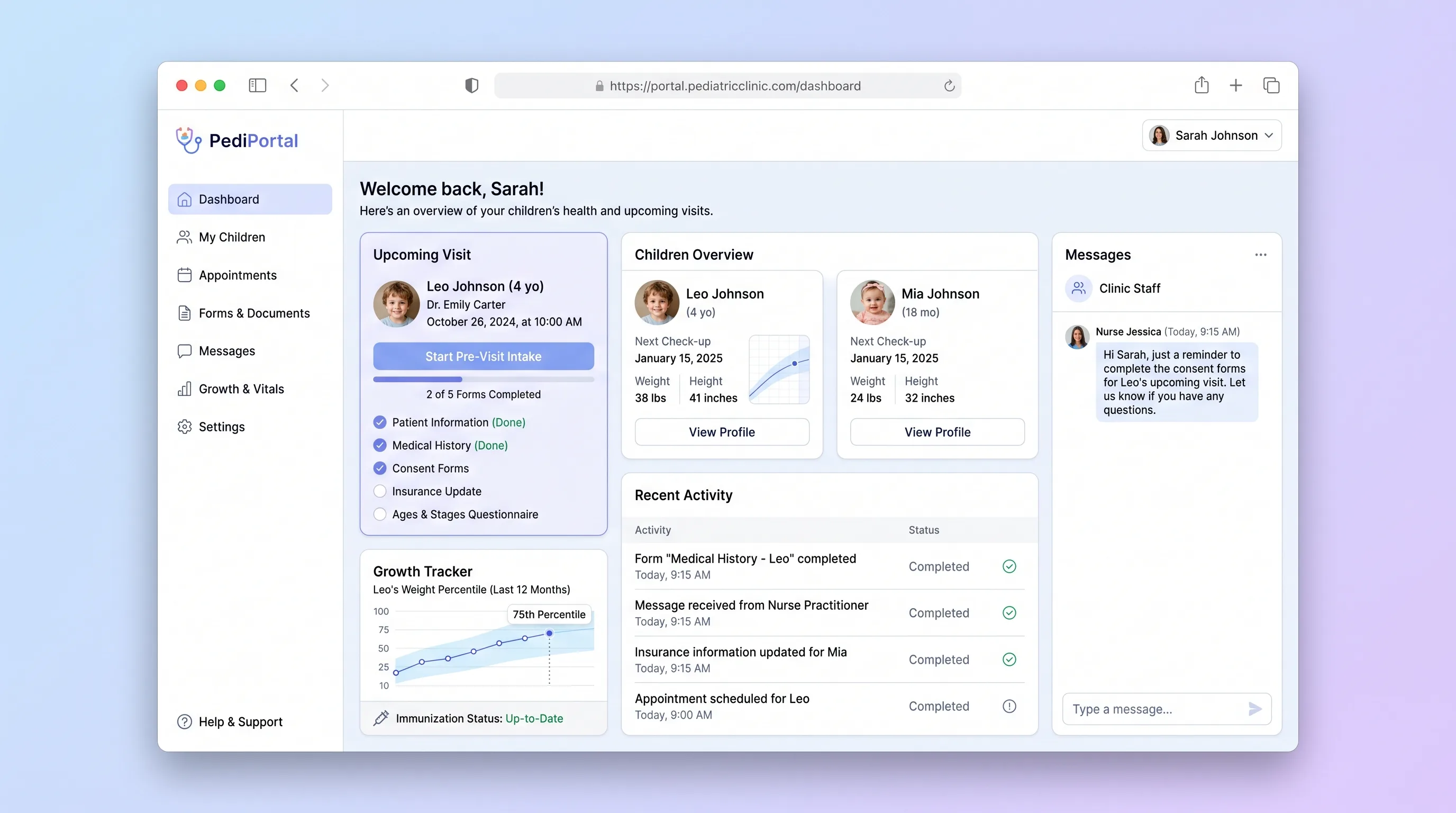
A parent-facing intake portal for pediatric clinics that digitizes pre-visit forms, tracks child immunization status, and delivers a visit prep checklist before families arrive.
Booking PlatformEvents & Community
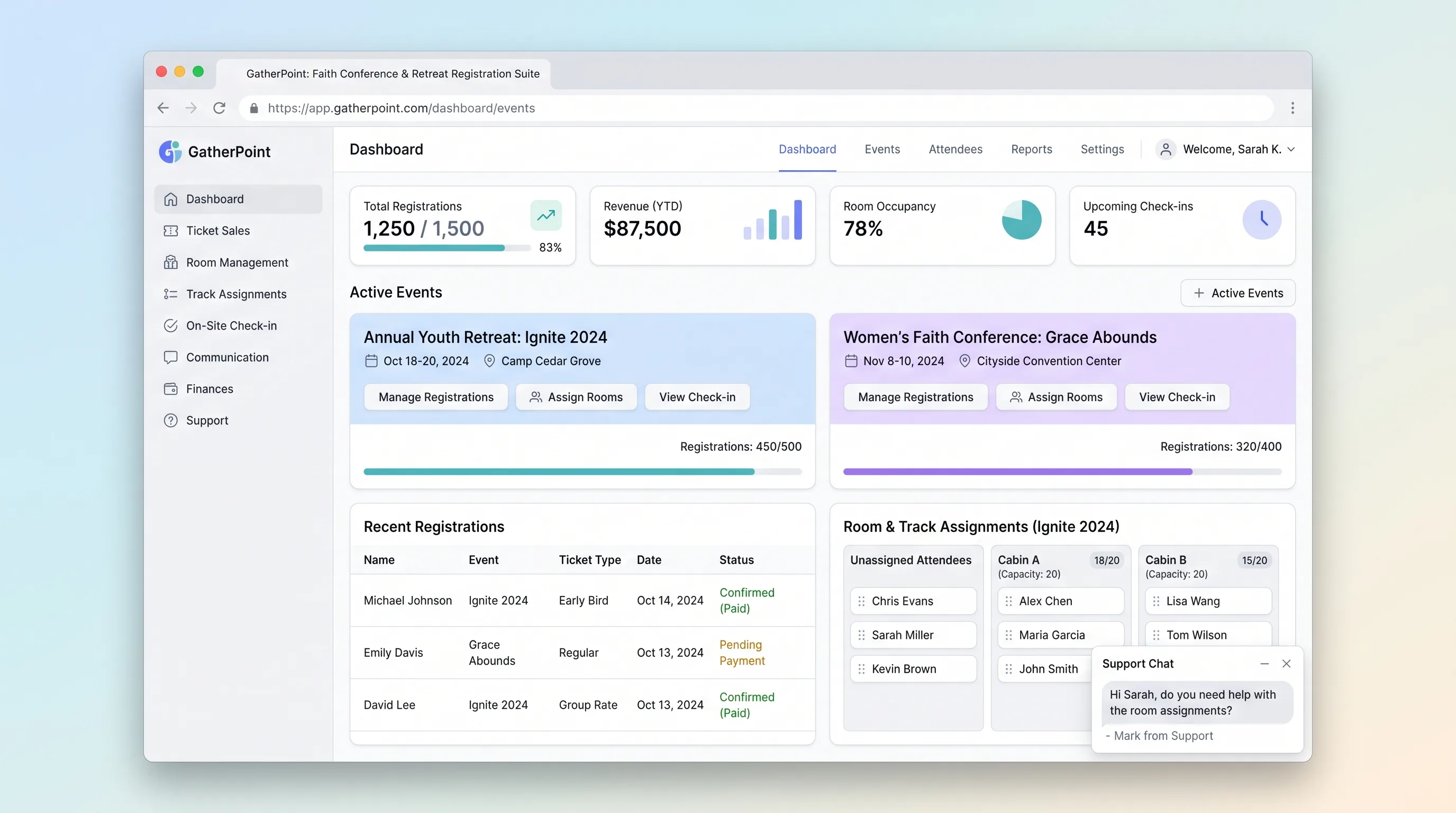
A focused registration platform for multi-day church conferences, retreats, and youth camps that handles group sign-ups, lodging and track assignment, and on-site QR-badge check-in.
SaaS WorkflowProfessional Services
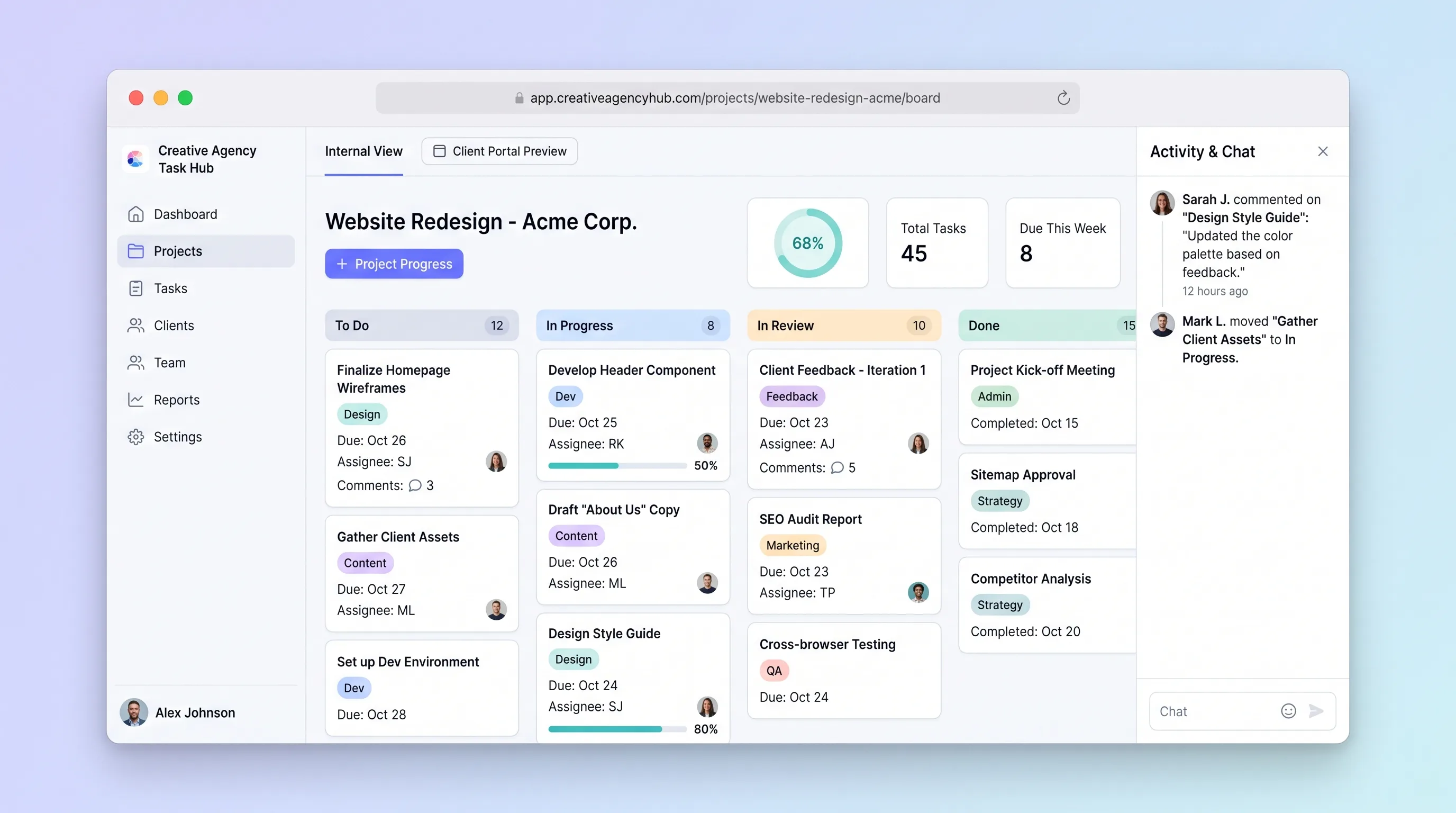
A focused project tracker where small creative agencies manage deliverables on an internal kanban board and share branded client portals for progress review and approvals without email chains.
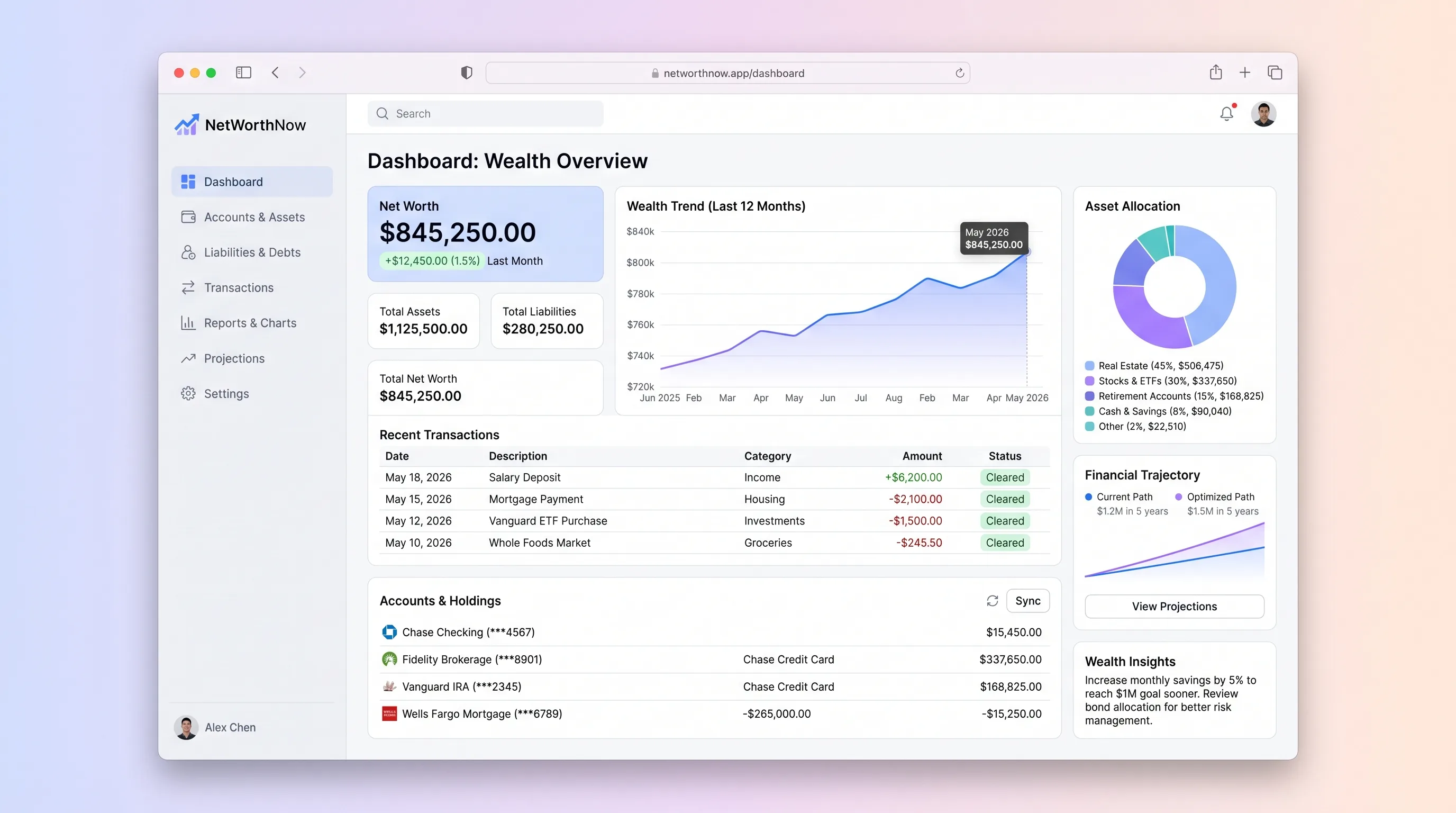
SaaS WorkflowReal Estate
A focused net worth tracker for real estate operators to aggregate property assets and debts, capture monthly snapshots, and visualize wealth trajectory without spreadsheets.
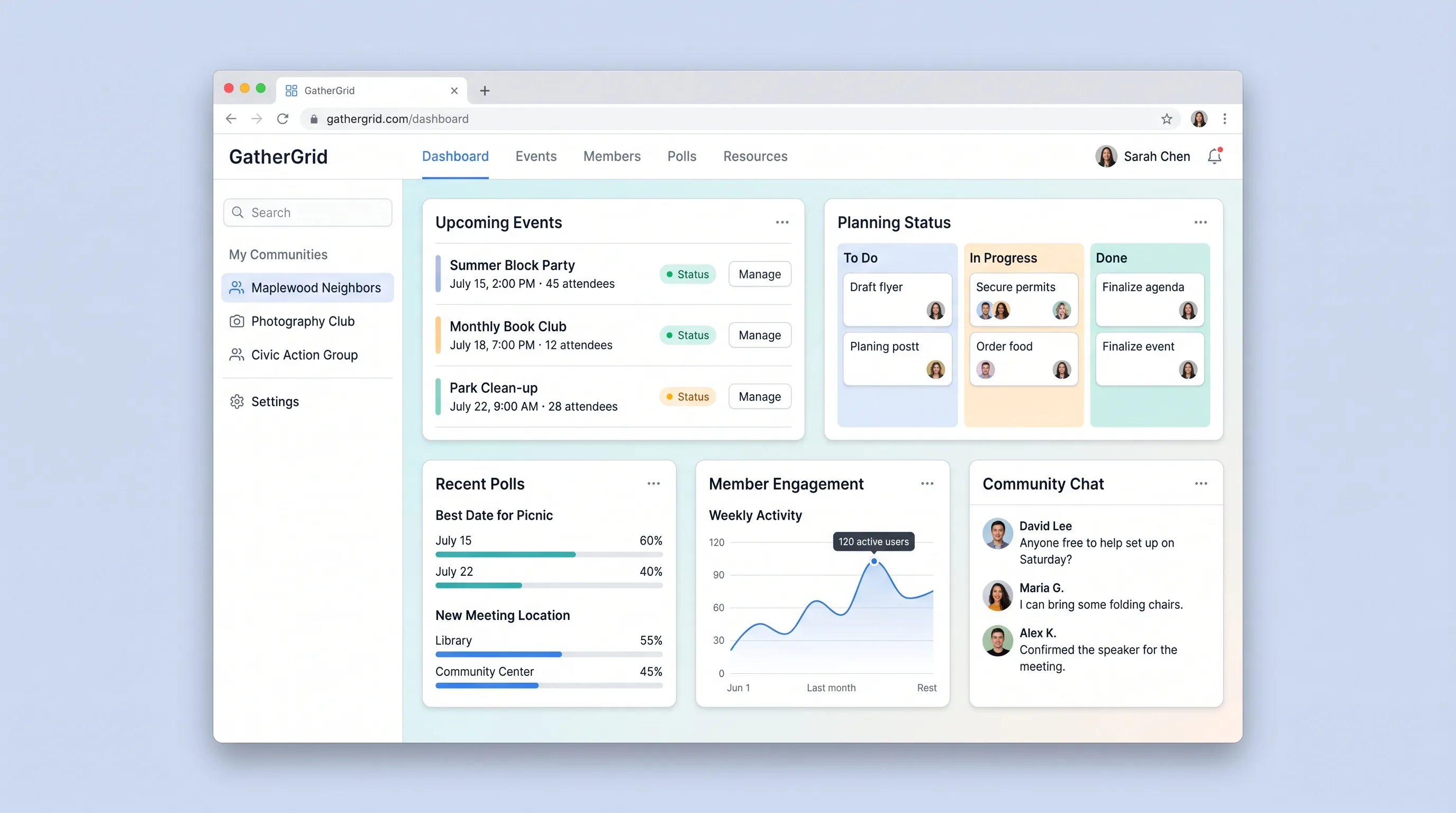
SaaS WorkflowEvents & Community
A focused event coordination tool for neighborhood associations, hobby clubs, and civic groups to propose dates, poll members, confirm gatherings, and manage RSVPs in one place.
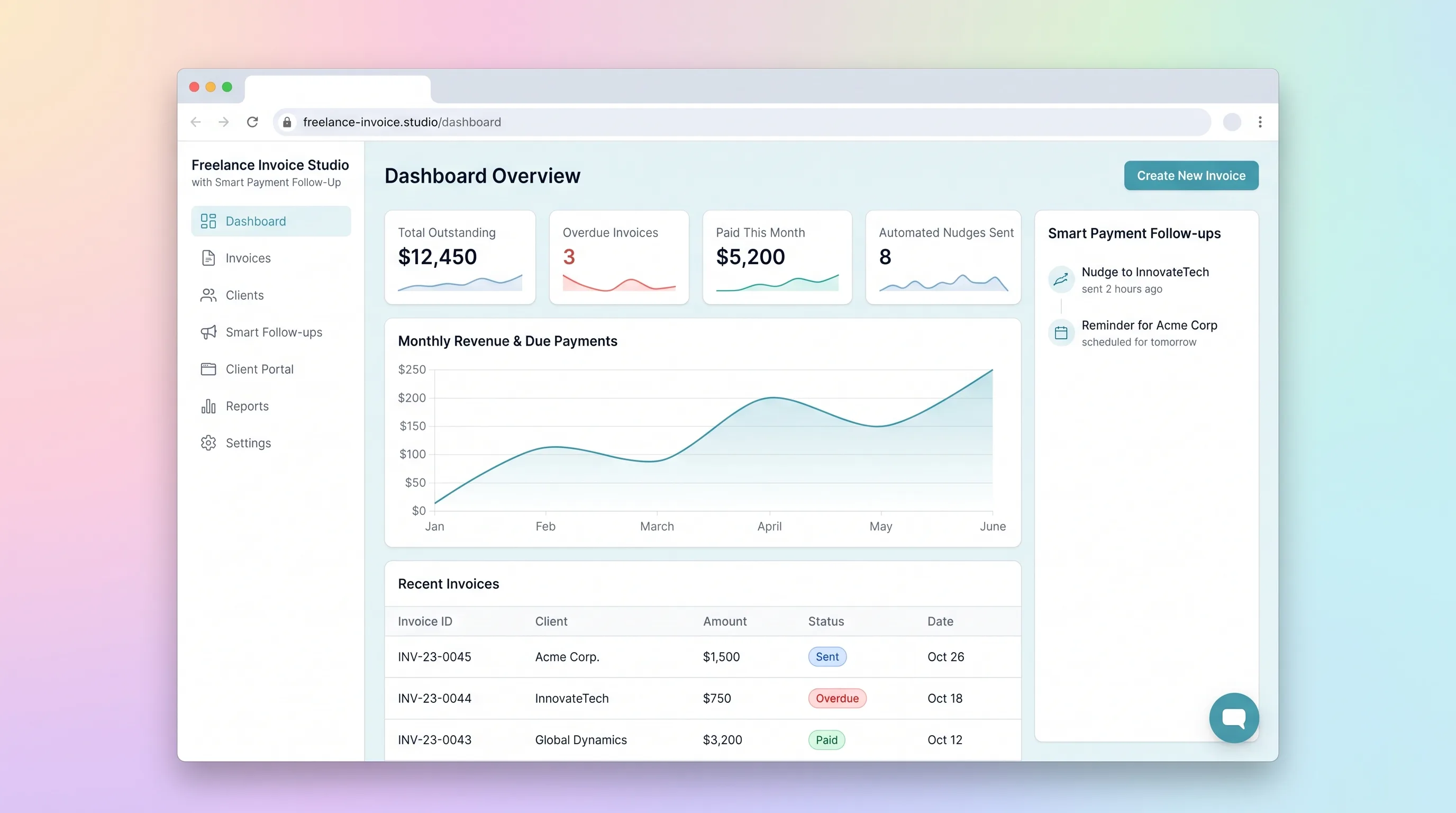
SaaS WorkflowBusiness Operations
A focused invoicing workflow for freelancers to create, send, and track invoices with automated late-payment reminders and a client-facing payment portal.