Build this if
Trainers already deliver structured programs and need cleaner assignment, completion, and revision history.
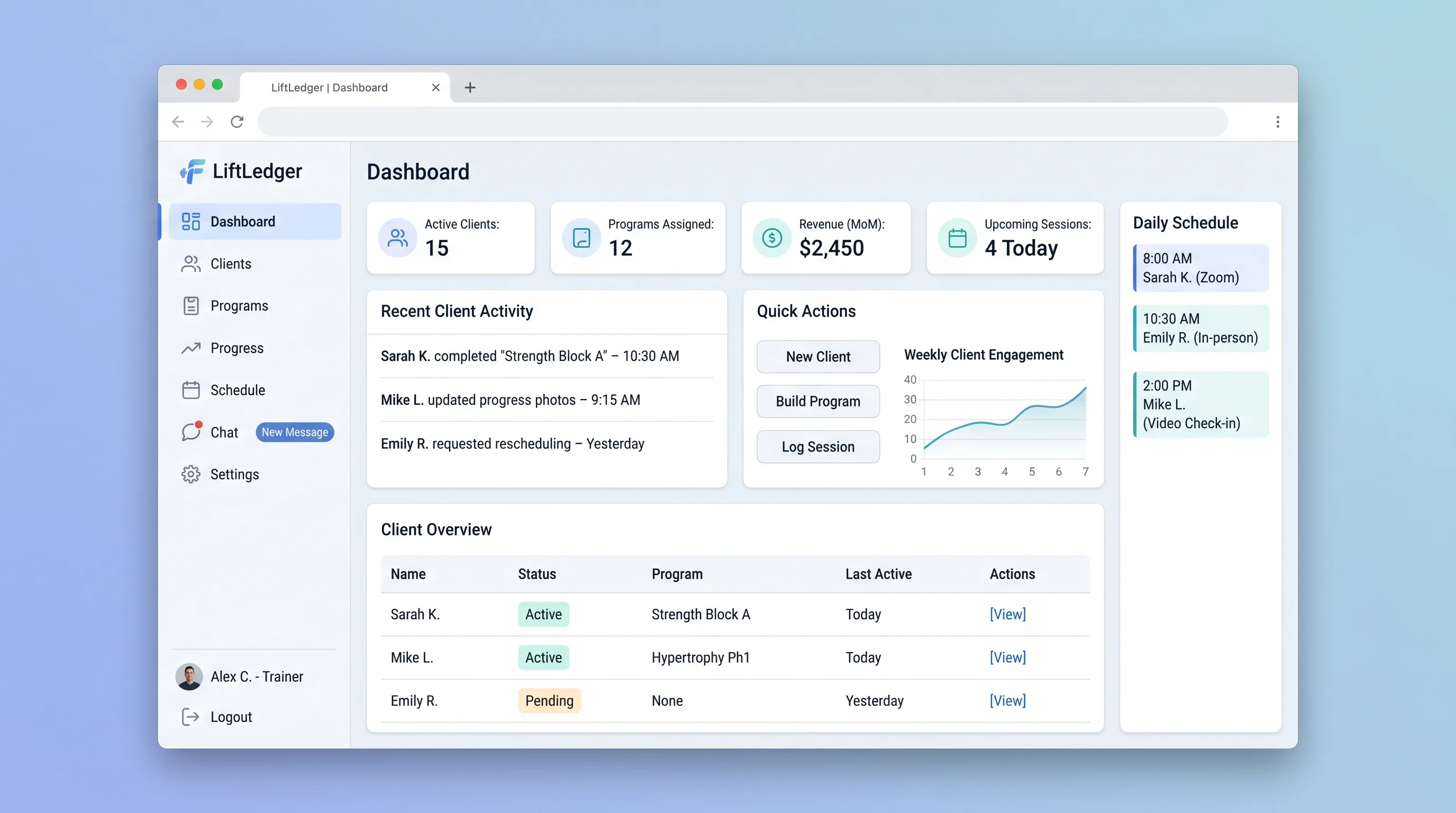
A two-sided coaching workspace where trainers publish versioned programs, clients log actual workouts, and both can review progress against the original plan.
Decision snapshot
Trainers already deliver structured programs and need cleaner assignment, completion, and revision history.
The first sale depends on meal planning, telehealth, a trainer marketplace, or automated exercise prescriptions.
Pilot with three trainers and measure time to assign a program, client workout completion rate, and how often actuals are lost or clarified by message.
Problem and target customer
Independent trainers lose coaching context when intake answers, workout documents, completed sets, measurements, and follow-up notes live in separate tools.
Independent personal trainers and small coaching studios with recurring clients and individualized workout programming.
Monthly subscription per trainer with client-count tiers
Editorial note
The critical distinction is between the workout that was prescribed and the work the client actually completed. Versioned programs and append-only session results preserve that coaching evidence.
A polished CRM shell is secondary. The beta should prove that clients can log a workout quickly and that trainers can make the next adjustment without reconstructing history from chat.
Choose your next step
Evaluate the operating tradeoffs quickly, or inspect how to build the MVP.
Compare the three operating paths at the default workload before opening the full calculator.
See cost preview Build this ideaInspect the build blueprintReview MVP scope, workflow, states, data rules, architecture, and acceptance criteria.
Open blueprintEvaluation preview
Directional infrastructure estimates for the current 1,000 completed workout sessions assumption. Open the full calculator when you are ready to change it.
Run the web app and Postgres as managed services with capacity for the first completed workout sessions.
Lowest operating effortOperate the app, database, and scheduled jobs on one small server with manual backups.
Lowest baseline costSeparate application and data capacity, add managed database backups, and retain room for a worker.
Most separation and controlBuild blueprint
Product goal
MVP scope
UX and user flow
Show each coaching client, current program, last session, and attention state.
Capture goals, constraints, schedule, and informed notes before assignment.
Compose workout days from exercises and publish a version to one client.
Present one assigned day and capture actual sets, effort, notes, and completion.
Compare prescribed and completed work alongside selected measurements.
Core entity outline
Stores coaching status, goals, schedule, and trainer-owned notes.
Defines a reusable movement and coaching instructions.
Preserves a published weekly prescription independently from later edits.
Places an exercise in a day with ordered sets, reps, rest, load guidance, and notes.
Captures actual work against one assigned program day.
Stores a dated metric chosen by the trainer and client.
Architecture and data flow
Manages clients, templates, assignments, measurements, and progress review.
Shows the active program and captures actual sessions with minimal input.
Enforces trainer ownership, assignment access, immutable versions, and session transitions.
Stores prescriptions, versions, assignments, actual performance, and measurements.
Sends optional scheduled nudges and trainer attention notifications.
Deliverables and acceptance
Recommended stack
Supports distinct trainer and client routes plus an installable mobile-friendly workout view.
Fits program versioning, row-level client access, and structured session history.
Keeps an in-progress workout usable through short mobile connectivity failures.
Handles invitations and optional reminders without blocking workout actions.
Relational versioning protects coaching history, while an offline-tolerant client logger addresses the most likely field failure: unreliable connectivity during a workout.
Copy the build prompt, model the operating cost, and choose where to deploy.
Execution
Once the blueprint is clear, use the prompt, cost model, and deployment options to start building.
Build prompt
Use Lovable to prototype both the trainer and client paths because the primary validation is whether a trainer can assign a clear program and receive usable completion data with little client friction.
Build prompt
Open the prompt pack whenever you are ready to take this blueprint into your builder.
Build prompt ready
Copy the prompt into your builder, then use the cost model below to choose how you want to run it.
Use the cost model to choose a deployment path that matches the build plan.
Cost calculator
A technical run-cost estimate for the first production version. Team, acquisition, payment fees, and business COGS are excluded.
$10-$35 per 1,000 completed workout sessions
Low and high values allow for usage variance and plan headroom.
Run the web app and Postgres as managed services with capacity for the first completed workout sessions.
5K completed workout sessions included, then $5-$15 per 5K completed workout sessionsThe estimate combines the selected infrastructure path, required operating modules, selected optional modules, and usage above included monthly allowances. Taxes and regional uplifts are excluded.
Deployment options
Choose based on operating preference, not only the headline price.
Deploy the trainer and client program manager with managed runtime, Postgres, environment variables, and logs in one project.
Usage-based compute can become less predictable as traffic grows.
Run the app, worker, and database on one small Vultr VPS with Docker Compose and explicit backups.
The operator owns database maintenance, monitoring, and recovery drills.
Separate application, worker, data, storage, and backup responsibilities as the workload grows.
More components increase setup and operational work.
Start building
Build client onboarding, program templates, assignment, session logging, and progress review with distinct trainer and client views.
Open Lovable 02AutomationConnect optional trainer remindersUse Make for bounded booking reminders or a notification when a client submits a session; program versions stay inside LiftLedger.
Open Make 03DeployDeploy the coaching workspaceRun role-based portals, program versioning, session logs, and scheduled reminders with Postgres on Railway.
Open RailwayKeep exploring
Internal ToolHealthcare & Wellness
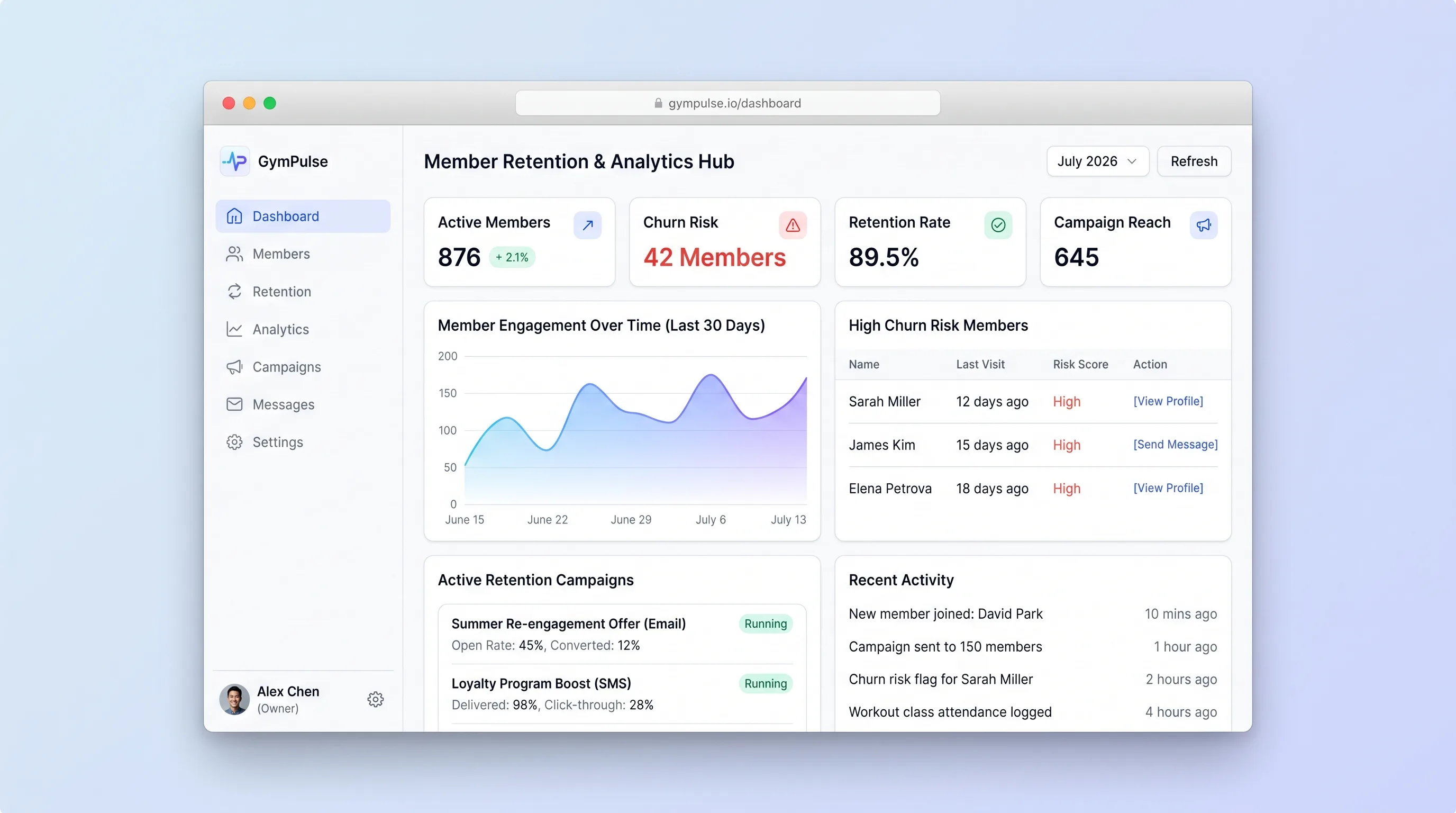
A manager-facing hub that explains attendance-based risk flags, supports consent-checked outreach, and records member responses in one place.
SaaS WorkflowHealthcare & Wellness
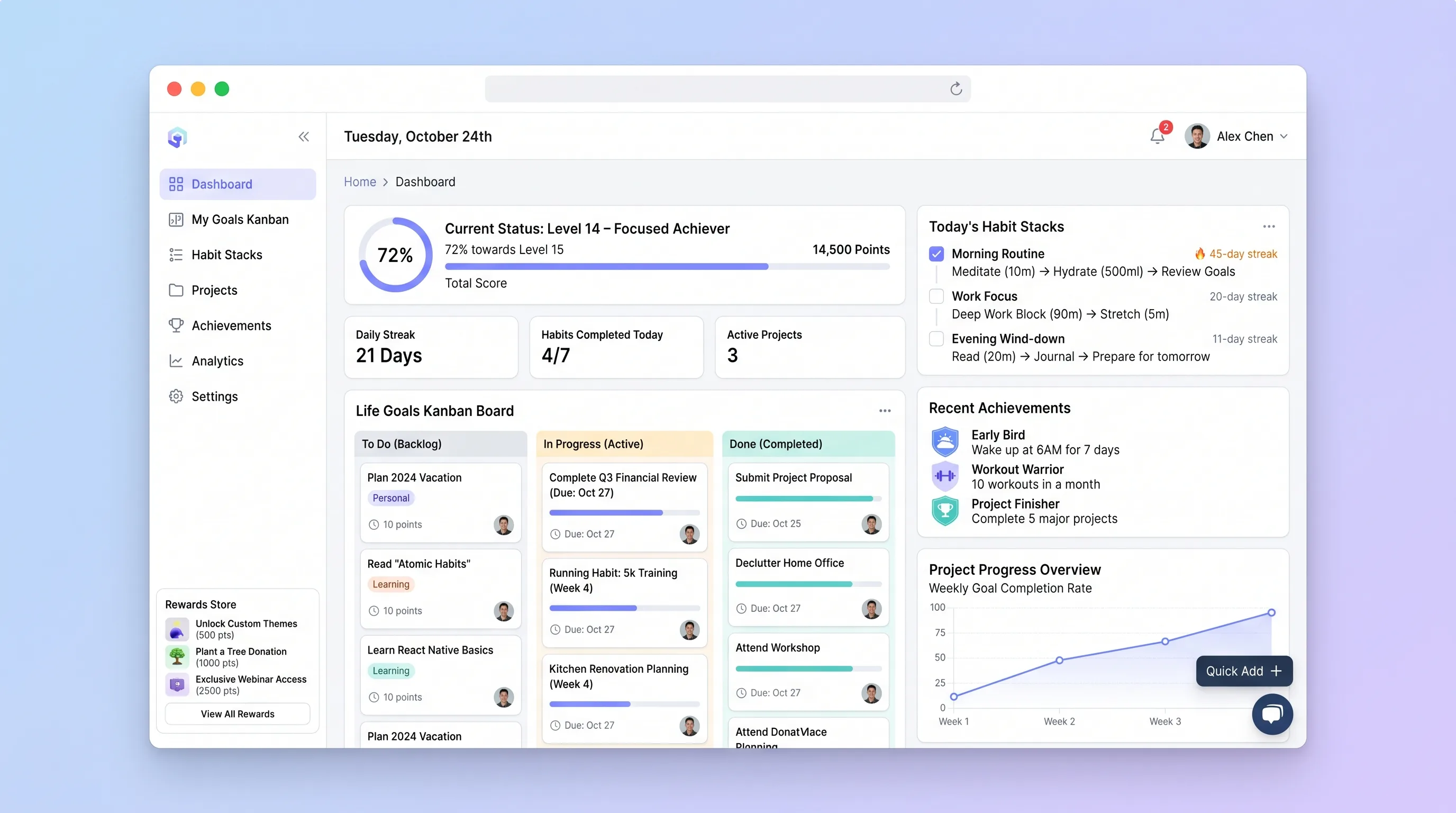
A private progress board that connects long-term goals to repeatable habit sequences, daily evidence, milestones, streaks, and user-defined rewards.
SaaS WorkflowHealthcare & Wellness
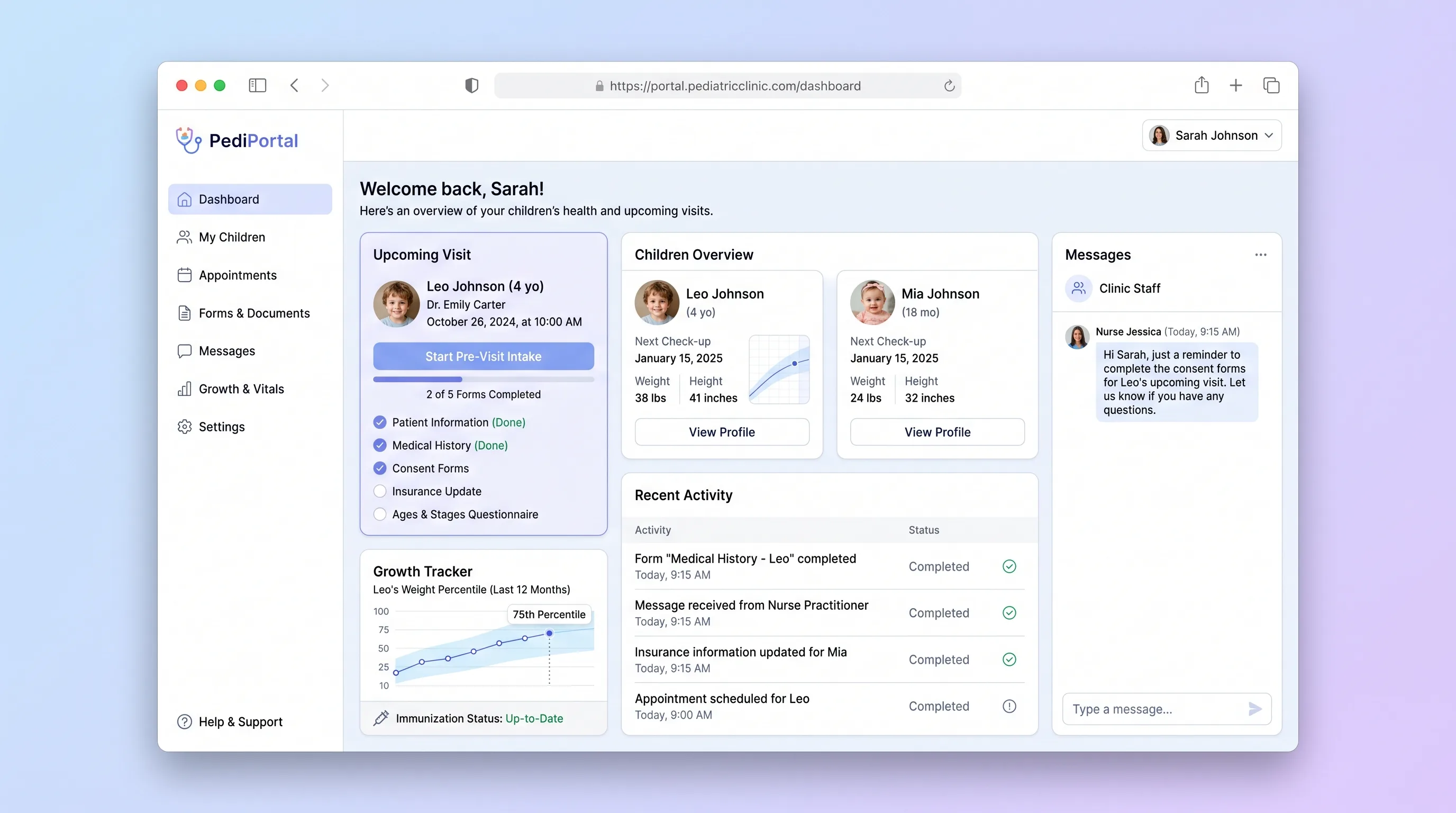
A parent-facing intake portal for pediatric clinics that digitizes pre-visit forms, tracks child immunization status, and delivers a visit prep checklist before families arrive.
SaaS WorkflowHealthcare & Wellness
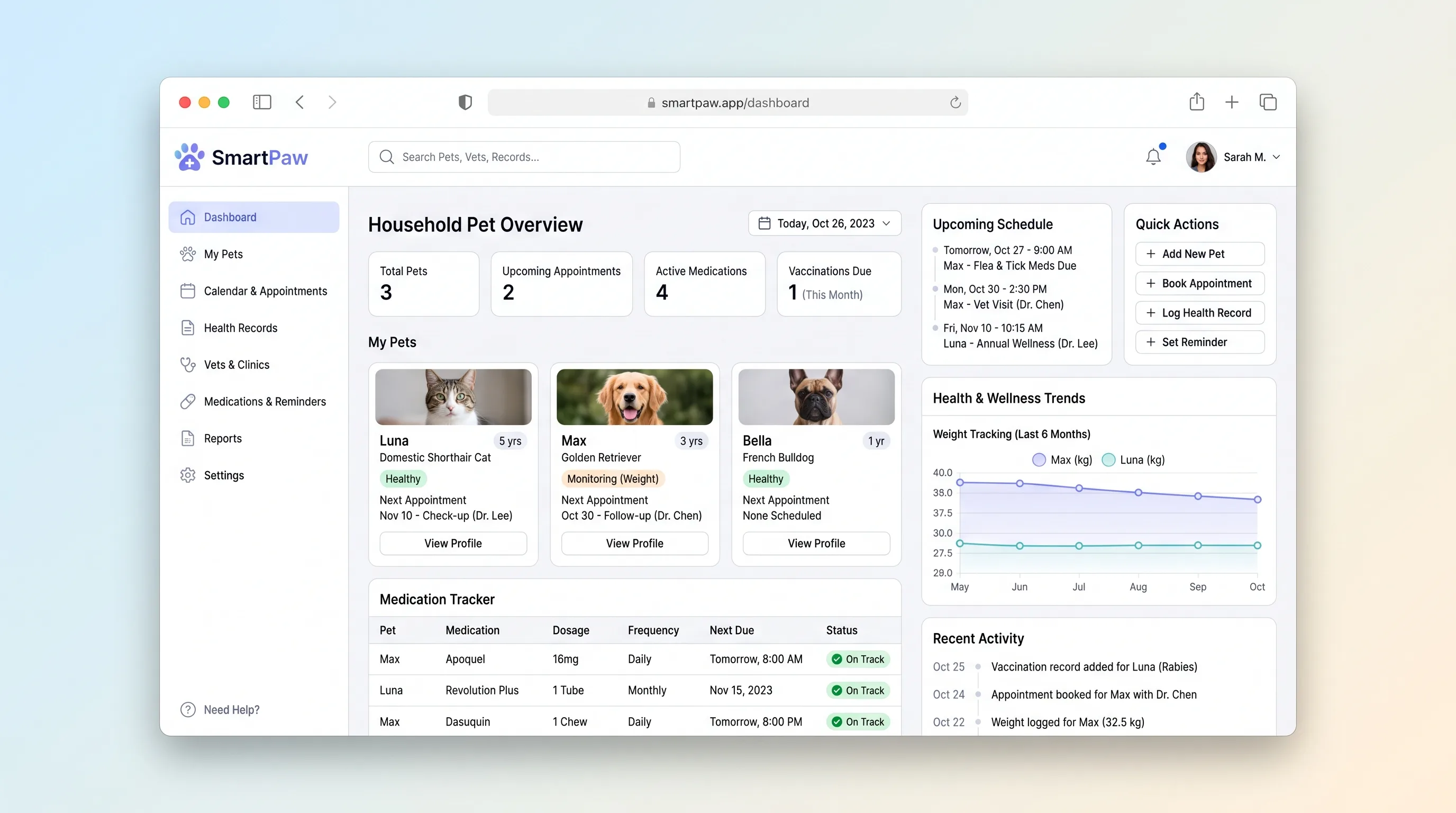
A household pet health hub where multi-pet owners track vaccination schedules, log medications, review vet visit history, book appointments, and share emergency care cards with sitters.
SaaS WorkflowProfessional Services
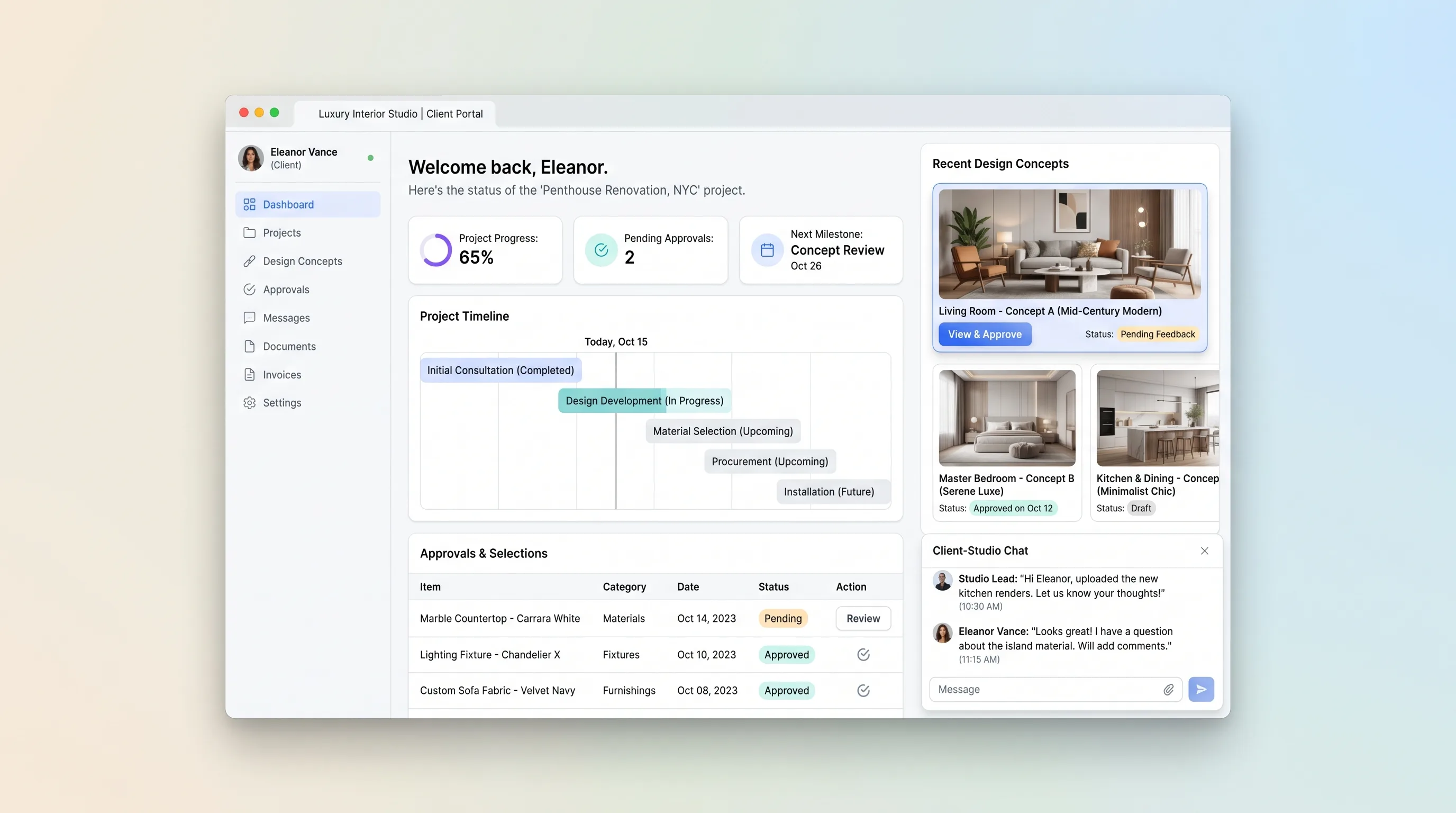
A private project space where interior studios publish concept versions, clients make item-level decisions, and both track milestones and procurement exceptions.
SaaS WorkflowProfessional Services
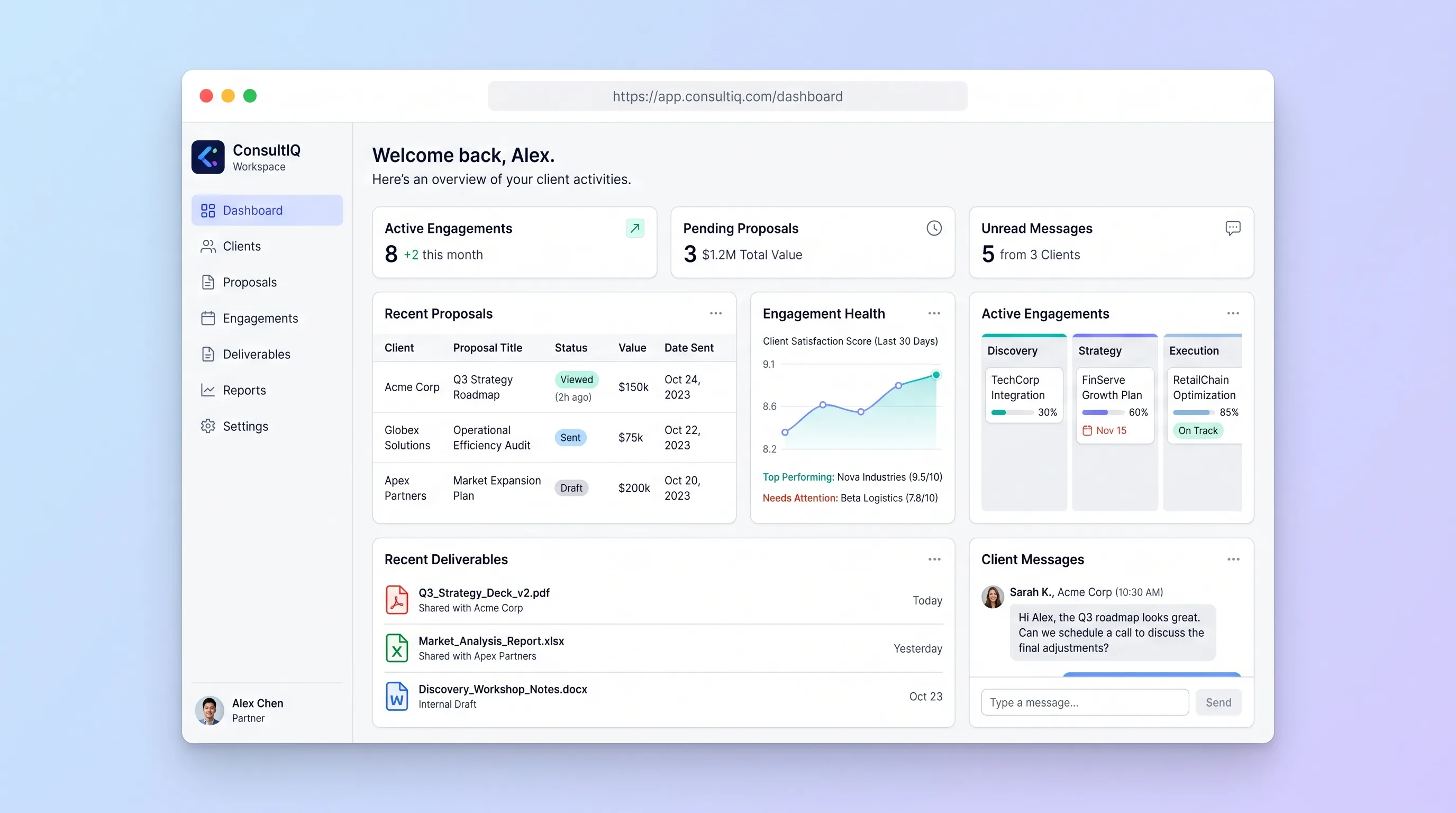
A branded workspace for boutique consultancies to move a prospect from proposal approval into a controlled engagement with milestones, files, and client sign-offs.