Build this if
Users want to connect a small set of meaningful goals to repeatable daily actions and transparent progress rules.
A private progress board that connects long-term goals to repeatable habit sequences, daily evidence, milestones, streaks, and user-defined rewards.
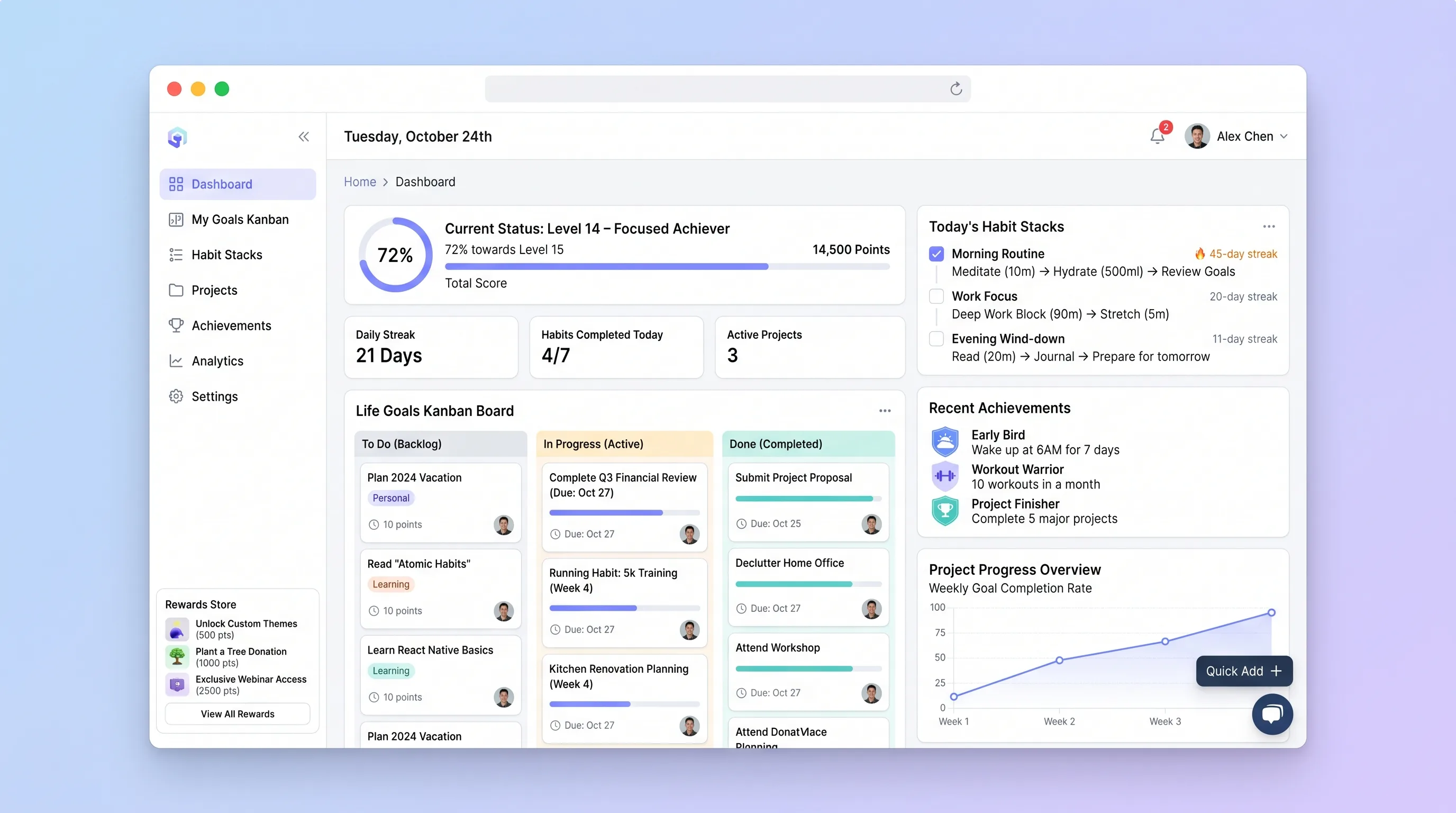
Decision snapshot
Users want to connect a small set of meaningful goals to repeatable daily actions and transparent progress rules.
The main need is clinical care, team project management, social competition, or automated coaching.
Ask ten users to run one two-step stack for two weeks and confirm they understand due days, misses, milestone movement, and reward state without explanation from the builder.
Problem and target customer
Goal lists describe outcomes but rarely connect them to small recurring actions. Habit apps can count isolated streaks while projects and milestones live elsewhere, so missed days feel like failure rather than information for adjusting the plan.
Individuals who prefer visual planning and want to connect personal projects and wellbeing goals to a small daily routine without social competition.
Freemium personal subscription with paid history, additional active goals, and export or customization features.
Editorial note
The product connects two time horizons: a goal that may take months and a small action due today. Milestones and habit links make that connection explicit without pretending every life outcome can be computed automatically.
Streaks need an inspectable schedule. Counting only consecutive calendar days punishes routines that were never intended to happen daily and makes a motivating feature feel arbitrary.
Rewards are personal commitments rather than financial incentives. The beta should test whether users return to review and adjust their plan, not whether more badges can manufacture motivation.
Choose your next step
Evaluate the operating tradeoffs quickly, or inspect how to build the MVP.
Compare the three operating paths at the default workload before opening the full calculator.
See cost preview Build this ideaInspect the build blueprintReview MVP scope, workflow, states, data rules, architecture, and acceptance criteria.
Open blueprintEvaluation preview
Directional infrastructure estimates for the current 10,000 habit check-ins assumption. Open the full calculator when you are ready to change it.
Managed runtime and database for schedules, check-ins, and progress history.
Lowest operating effortOperator-managed application and database on one instance.
Lowest baseline costSeparate application and database capacity for more accounts and history.
Most separation and controlBuild blueprint
Product goal
MVP scope
UX and user flow
Show active, paused, and completed goals with milestone and habit contribution.
Order small habits around a clear trigger and choose days, evidence, and point values.
Present only due stack steps and let the user complete, skip, or defer with minimal friction.
Explain milestone progress, streak calculation, point ledger, and unlocked personal rewards.
Help the user compare intended and actual action and revise an unrealistic stack.
Core entity outline
Defines a personal outcome and its lifecycle.
Represents an observable checkpoint within a goal.
Defines a scheduled action and its contribution to a goal.
Orders habits that should follow one trigger sequence.
Stores one completion, skip, or undo for a scheduled habit occurrence.
Defines a personal non-cash reward and point threshold.
Architecture and data flow
Render goals, stack builder, Today, progress, rewards, and reflections.
Generate due occurrences, enforce one check-in, calculate streaks, and write ledger reversals.
Persist goals, schedules, check-ins, point entries, rewards, and reflections.
Send only user-configured daily or weekly notices in local time.
Deliverables and acceptance
Recommended stack
Support quick mobile check-ins and richer desktop planning in one codebase.
Model schedules, reversals, milestone rules, and private ownership relationally.
Calculate due occurrences and timezone changes explicitly rather than relying on server local time.
Provide optional daily and weekly reminders with observable failure state.
The product needs precise local-date and ledger behavior, not AI. A single relational application can explain every streak, point, and unlock while keeping reflections private.
Copy the build prompt, model the operating cost, and choose where to deploy.
Execution
Once the blueprint is clear, use the prompt, cost model, and deployment options to start building.
Build prompt
Build a mobile-first Next.js application with PostgreSQL and local-time-aware check-ins. Keep scoring deterministic, rewards user-defined, and the language supportive rather than clinical.
Build prompt
Open the prompt pack whenever you are ready to take this blueprint into your builder.
Build prompt ready
Copy the prompt into your builder, then use the cost model below to choose how you want to run it.
Use the cost model to choose a deployment path that matches the build plan.
Cost calculator
A technical run-cost estimate for the first production version. Team, acquisition, payment fees, and business COGS are excluded.
$5-$25 per 10,000 habit check-ins
Low and high values allow for usage variance and plan headroom.
Managed runtime and database for schedules, check-ins, and progress history.
50K habit check-ins included, then $5-$15 per 50K habit check-insThe estimate combines the selected infrastructure path, required operating modules, selected optional modules, and usage above included monthly allowances. Taxes and regional uplifts are excluded.
Deployment options
Choose based on operating preference, not only the headline price.
Host the private web app and database with minimal operations.
Usage billing may rise as history and active accounts grow.
Run the app, worker, and database on one small Vultr VPS with Docker Compose and explicit backups.
The operator is responsible for privacy, backups, updates, and recovery.
Separate application, worker, data, storage, and backup responsibilities as the workload grows.
More components add operational work.
Start building
Use Lovable to test goal setup, habit-stack ordering, the Today check-in, milestone evidence, reward unlocks, and weekly reflection on mobile and desktop.
Open Lovable 02AutomationAdd an optional daily nudgeUse Make only as optional glue for one user-scheduled reminder or a weekly reflection prompt; all progress calculations remain inside the app.
Open Make 03DeployHost private progress historyDeploy the web app and database on Railway so check-ins, streak rules, rewards, and exports share a simple operational boundary.
Open RailwayKeep exploring
SaaS WorkflowEducation
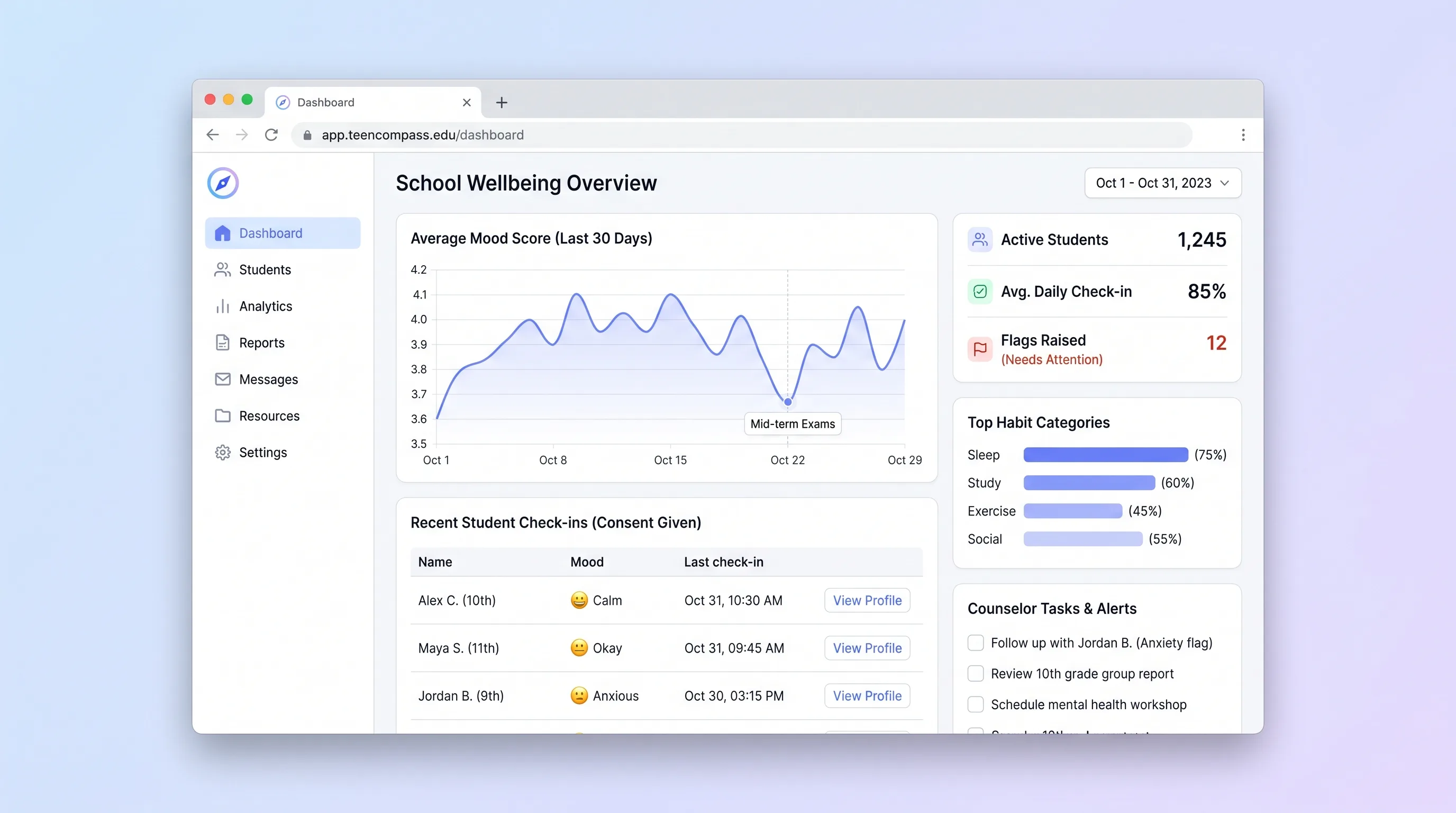
A consent-based school check-in tool that helps counselors review student-reported mood and habit patterns, document follow-up, and protect privacy.
Internal ToolBusiness Operations
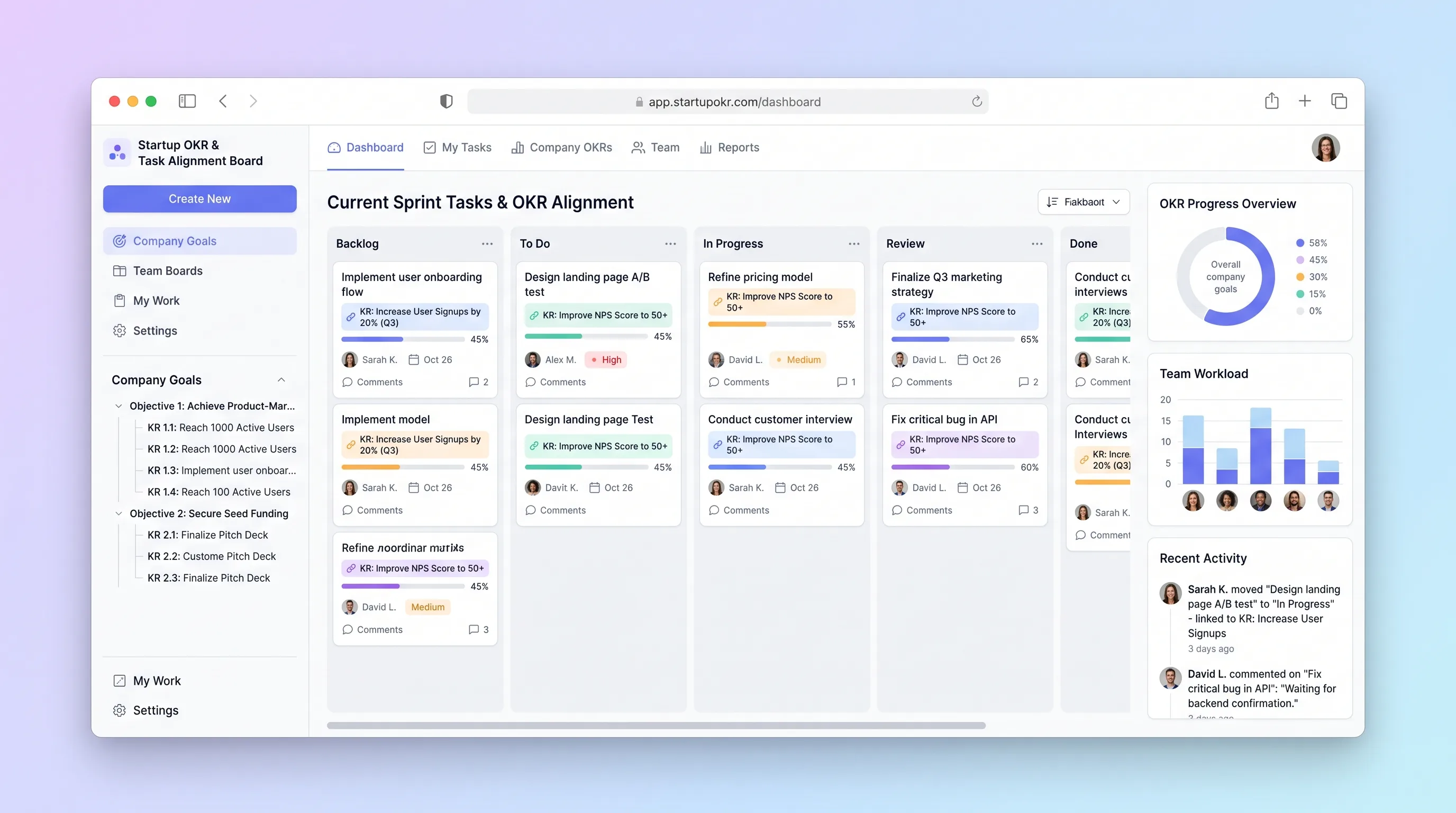
A planning board for small startup teams to connect daily tasks to measurable key results, update confidence weekly, and expose unaligned work.
SaaS WorkflowHealthcare & Wellness
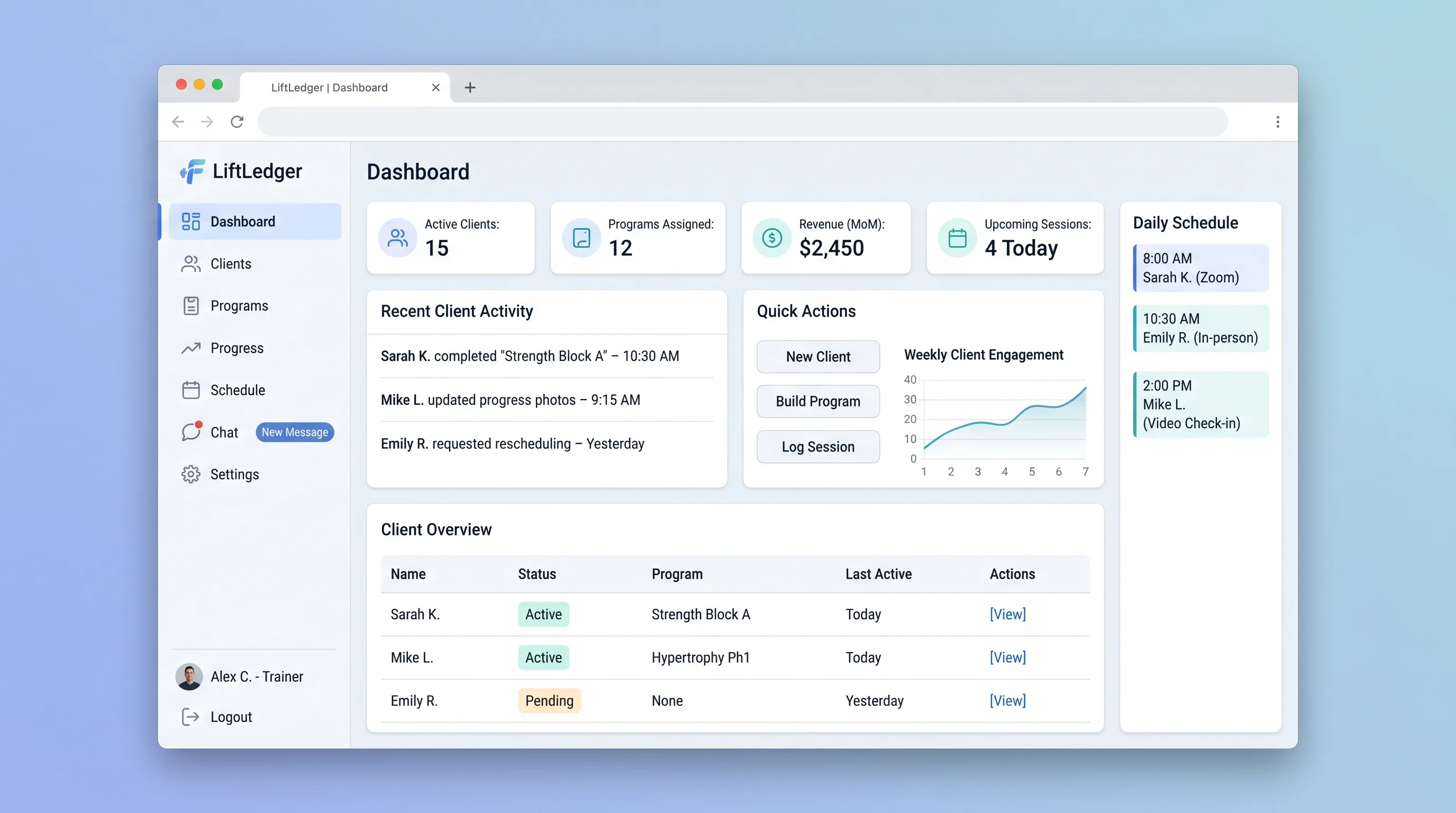
A two-sided coaching workspace where trainers publish versioned programs, clients log actual workouts, and both can review progress against the original plan.
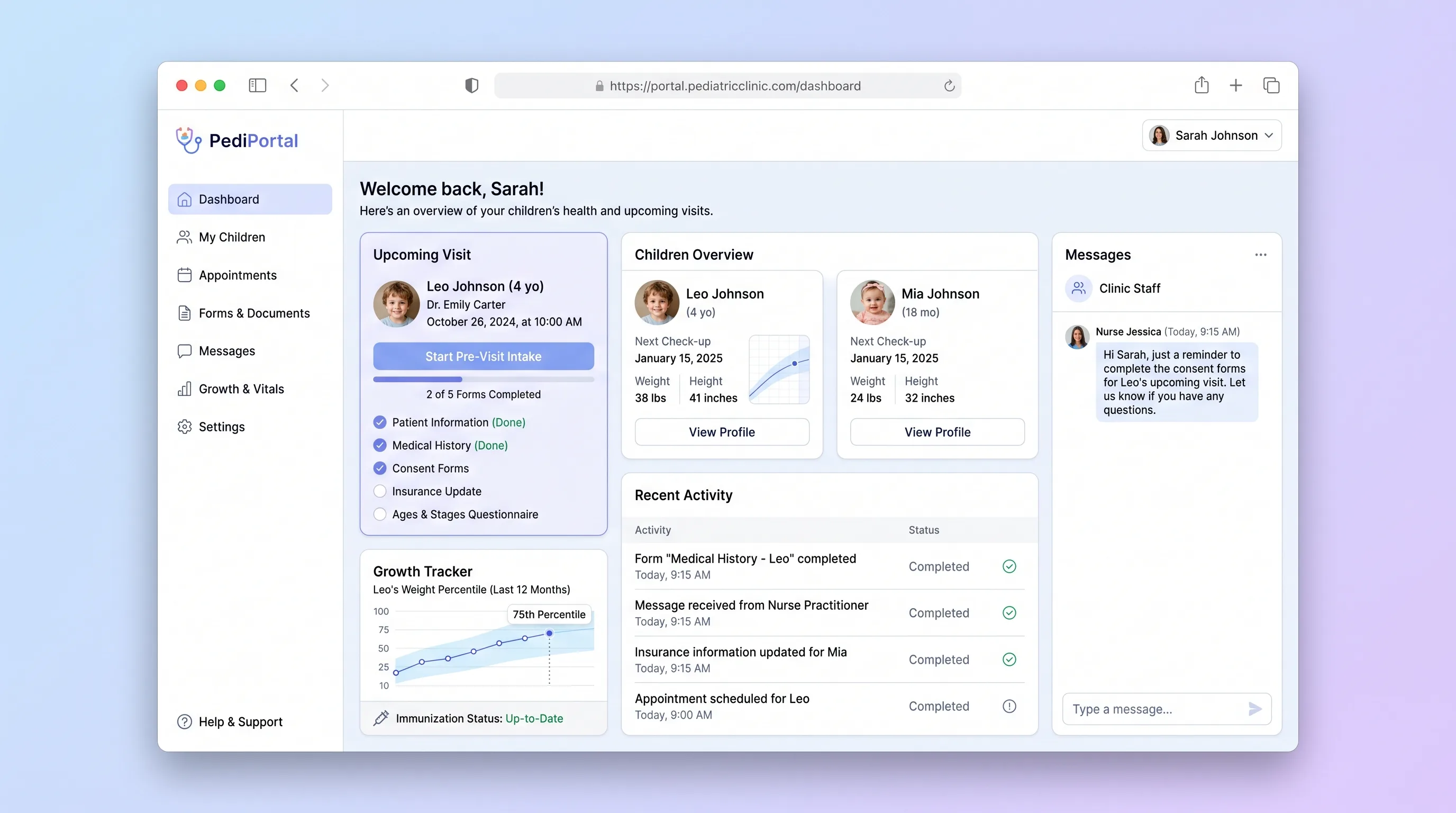
SaaS WorkflowHealthcare & Wellness
A parent-facing intake portal for pediatric clinics that digitizes pre-visit forms, tracks child immunization status, and delivers a visit prep checklist before families arrive.
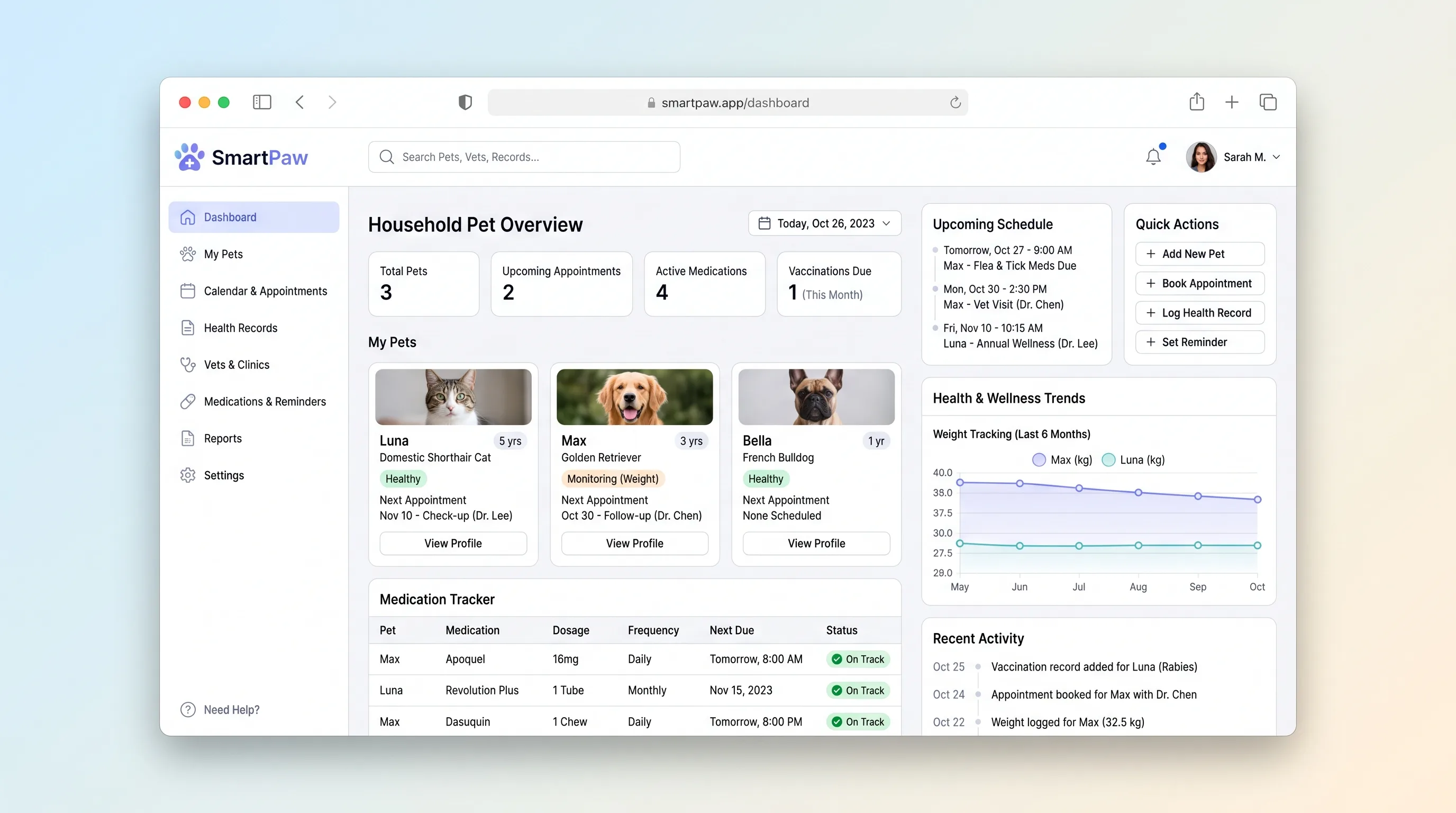
SaaS WorkflowHealthcare & Wellness
A household pet health hub where multi-pet owners track vaccination schedules, log medications, review vet visit history, book appointments, and share emergency care cards with sitters.
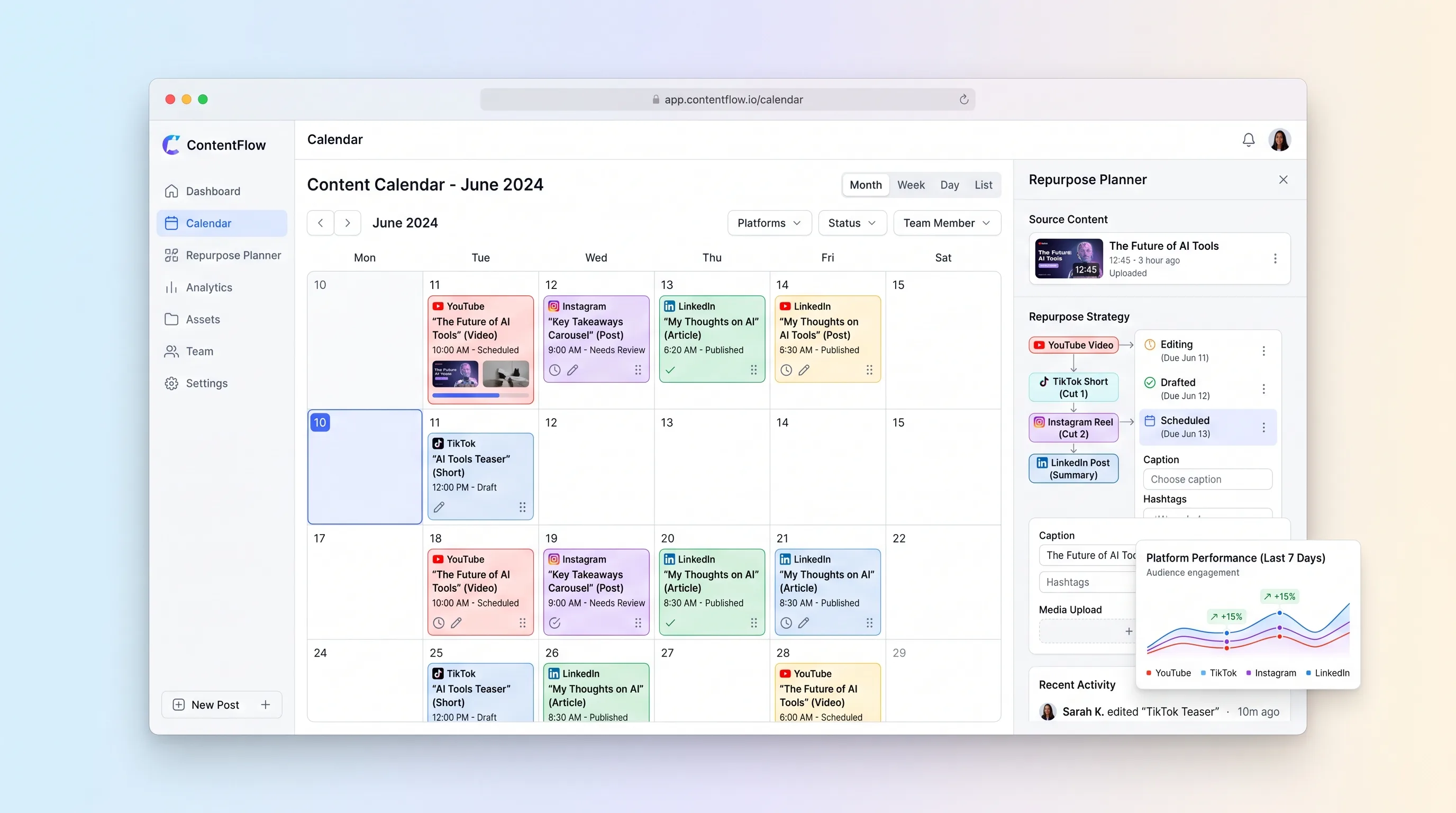
SaaS WorkflowCreator Economy & Media
A visual planning workspace that connects each long-form asset to channel-specific derivatives, dates, owners, and publishing status.