Build this if
You maintain an open-source project with frequent releases and want community contributors to improve docs without granting repo write access.
A hosted documentation platform where open-source maintainers publish versioned docs and API references while community contributors submit wiki edits through a review queue.
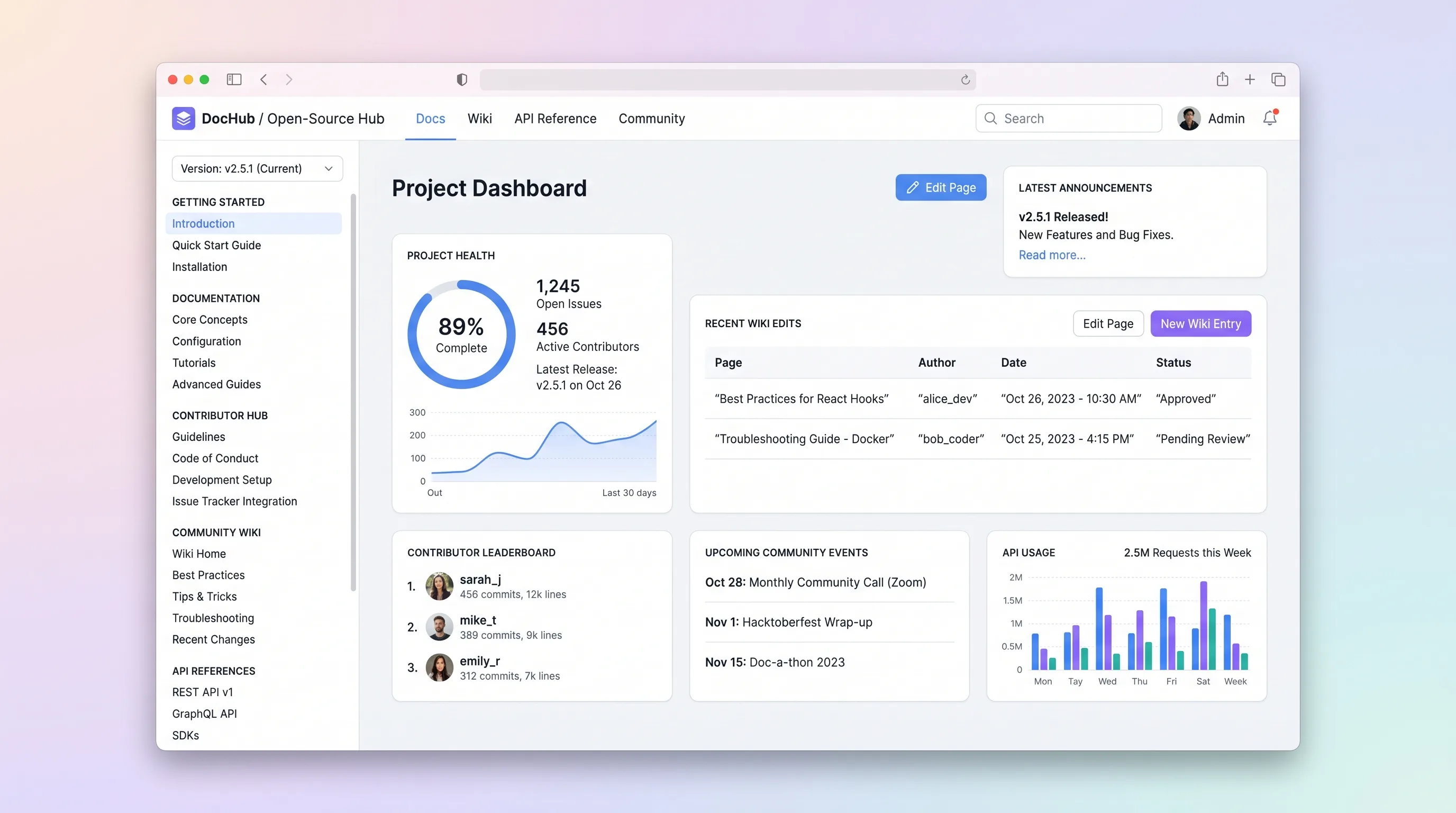
Decision snapshot
You maintain an open-source project with frequent releases and want community contributors to improve docs without granting repo write access.
Your project ships infrequently or your team already has a mature docs-as-code pipeline with CI-based contribution review.
Recruit 5 open-source maintainers with active GitHub projects; ask them to import one release's docs and invite 2 contributors to submit wiki edits. Measure whether at least 3 complete the full publish-and-review cycle within one week.
Problem and target customer
Open-source maintainers split documentation across static-site generators, GitHub wikis, and spreadsheets, making it hard to keep versioned docs in sync with releases or let contributors improve guidelines without write access to the repo.
Indie open-source maintainers and small dev-tool teams who need a production-ready public docs site with a structured contributor workflow but cannot justify building custom documentation infrastructure.
Monthly subscription with a free tier for public projects and a paid workspace tier for private documentation and custom domains.
Editorial note
Open-source maintainers routinely ship releases faster than they ship documentation. The gap between a new version landing in GitHub and the public docs reflecting it erodes contributor trust and increases support burden.
DocHub narrows the problem to two workflows: maintainers publishing versioned docs tied to semantic releases, and community contributors improving wiki content through a structured review queue. The LLM layer is intentionally thin, generating API reference stubs from OpenAPI specs so maintainers spend time editing, not writing boilerplate.
The MVP excludes real-time collaboration, multi-language translation, and custom theming. These are post-validation features that add infrastructure complexity without testing the core hypothesis: that maintainers will pay for a hosted docs hub that treats community contributions as first-class.
Choose your next step
Evaluate the operating tradeoffs quickly, or inspect how to build the MVP.
Compare the three operating paths at the default workload before opening the full calculator.
See cost preview Build this ideaInspect the build blueprintReview MVP scope, workflow, states, data rules, architecture, and acceptance criteria.
Open blueprintEvaluation preview
Directional infrastructure estimates for the current 250 content jobs assumption. Open the full calculator when you are ready to change it.
Managed app hosting, database, backups, and basic observability for the content workflow.
Lowest operating effortOne small VPS running the app, database, media volume, and backup job.
Lowest baseline costSeparate app, data, storage, and worker capacity for cleaner operations.
Most separation and controlBuild blueprint
Product goal
MVP scope
UX and user flow
Overview of doc versions, pending wiki contributions, and subscriber count.
Write and edit markdown doc pages with live preview and API reference rendering.
List pending wiki contributions with diffs for maintainer approval or rejection.
Rendered read-only documentation with version switcher and wiki pages.
Core entity outline
Represents an open-source project with documentation.
A versioned set of documentation pages tied to a semantic release tag.
Community-editable wiki content for contributor guidelines and notes.
A proposed wiki edit submitted by a community contributor.
A user who opted in to receive notifications about doc updates.
Architecture and data flow
CRUD for projects, doc versions, wiki pages, and contributions; serves public docs site content.
Processes contribution approvals and rejections, merges approved content, and triggers notification dispatch.
Parses uploaded OpenAPI spec files and sends endpoint metadata to the LLM for reference stub generation.
Sends email notifications to subscribers when versions are published or wiki edits are merged.
Deliverables and acceptance
Recommended stack
Rapidly build the markdown editor, review queue UI, and public docs rendering with version switching without custom frontend infrastructure.
Host a Node or Python API and Postgres for durable storage of projects, doc versions, wiki contributions, and subscriber records.
Sync webhook events from GitHub releases to trigger doc version creation and dispatch subscriber notification emails without writing custom cron jobs.
Store uploaded OpenAPI spec files and doc assets like images and diagrams with low-cost egress for public docs.
Generate human-readable API reference descriptions from OpenAPI spec fields to reduce manual writing for maintainers.
Lovable handles the editor-heavy frontend and public site rendering. Railway provides the durable backend for versioned content and the contribution review pipeline. Make bridges GitHub release webhooks to doc-version creation and notification dispatch. R2 stores spec files and doc assets. The LLM is scoped narrowly to auto-generating API reference descriptions from OpenAPI fields, not generating full documentation.
Copy the build prompt, model the operating cost, and choose where to deploy.
Execution
Once the blueprint is clear, use the prompt, cost model, and deployment options to start building.
Build prompt
Lovable
Build prompt
Open the prompt pack whenever you are ready to take this blueprint into your builder.
Build prompt ready
Copy the prompt into your builder, then use the cost model below to choose how you want to run it.
Use the cost model to choose a deployment path that matches the build plan.
Cost calculator
A technical run-cost estimate for the first production version. Team, acquisition, payment fees, and business COGS are excluded.
$15-$45 per 125 content jobs
Low and high values allow for usage variance and plan headroom.
Managed app hosting, database, backups, and basic observability for the content workflow.
50K content jobs included, then $8-$20 per 100K content jobsObject storage is implied by the source workflow or feature list.
Monthly allowance from this idea's operating profileThe estimate combines the selected infrastructure path, required operating modules, selected optional modules, and usage above included monthly allowances. Taxes and regional uplifts are excluded.
Deployment options
Choose based on operating preference, not only the headline price.
Fast Docker deployment for the app, database, worker, and preview workflow without managing a VPS.
Usage billing needs active monitoring as traffic and jobs grow.
Run the app, worker, and database on one small Vultr VPS with Docker Compose and explicit backups.
You own patching, backups, monitoring, and incident response.
Separate application, worker, data, storage, and backup responsibilities as the workload grows.
You own server setup, patching, backups, and operational monitoring.
Start building
Create the project dashboard, markdown editor with live preview, API reference renderer, contribution review queue UI, and public docs site with version switcher in Lovable.
Open Lovable 02AutomationWire GitHub release sync and notificationsConfigure Make scenarios to listen for GitHub release webhooks, create a new doc version record via the backend API, and send subscriber email notifications when versions are published or wiki edits are merged.
Open Make 03DeployDeploy backend API and PostgresHost a Node or Python API on Railway with a Postgres database storing projects, doc versions, wiki pages, contributions, and subscribers. Expose REST endpoints for the frontend and Make scenarios.
Open RailwayKeep exploring
SaaS WorkflowEvents & Community
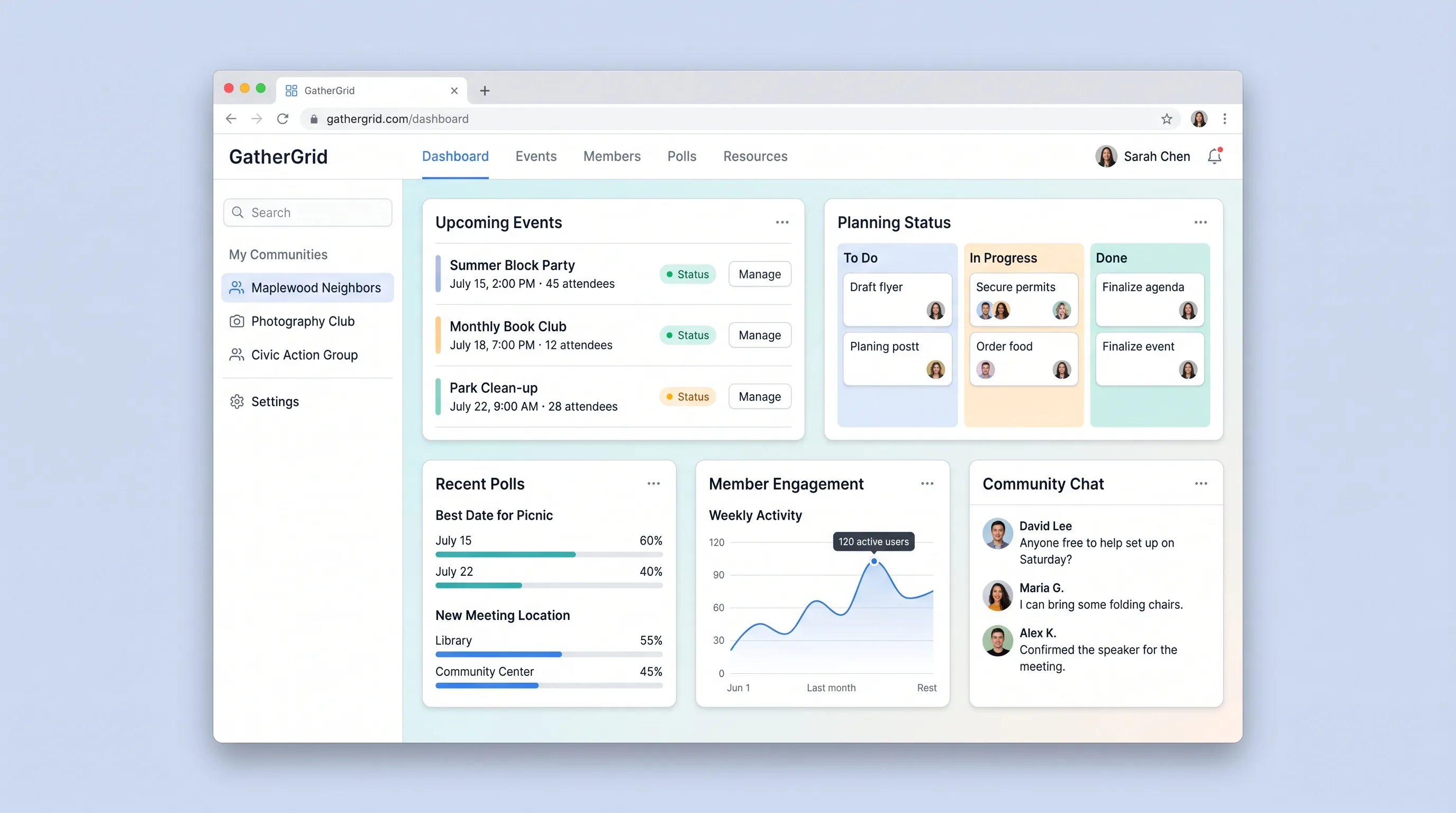
A focused event coordination tool for neighborhood associations, hobby clubs, and civic groups to propose dates, poll members, confirm gatherings, and manage RSVPs in one place.
AI ToolBusiness Operations
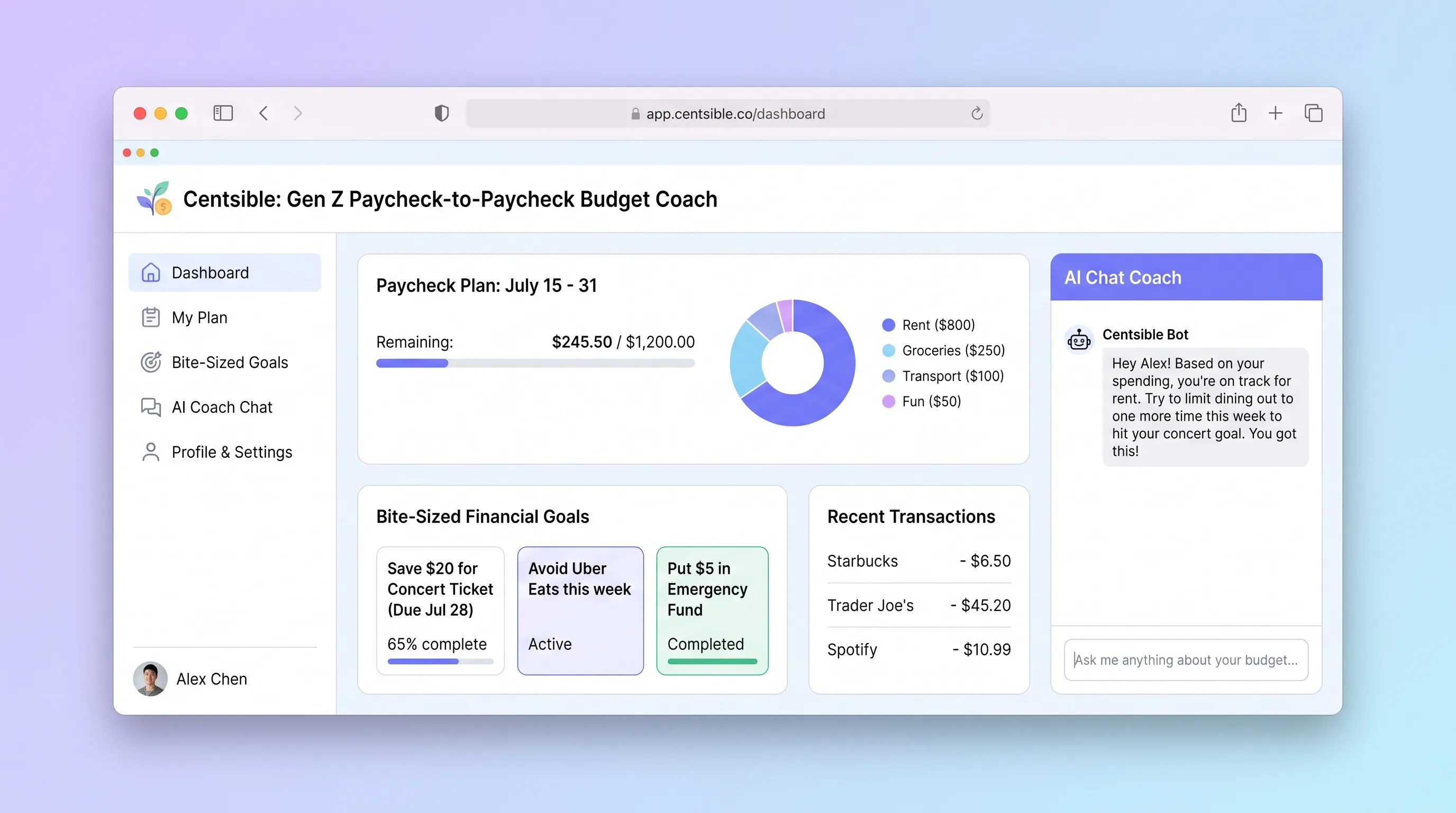
An AI-guided mobile budgeting app that helps Gen Z adults living paycheck to paycheck log expenses in seconds, understand their remaining budget instantly, and receive one plain-English money decision per week.
SaaS WorkflowDeveloper & IT Operations
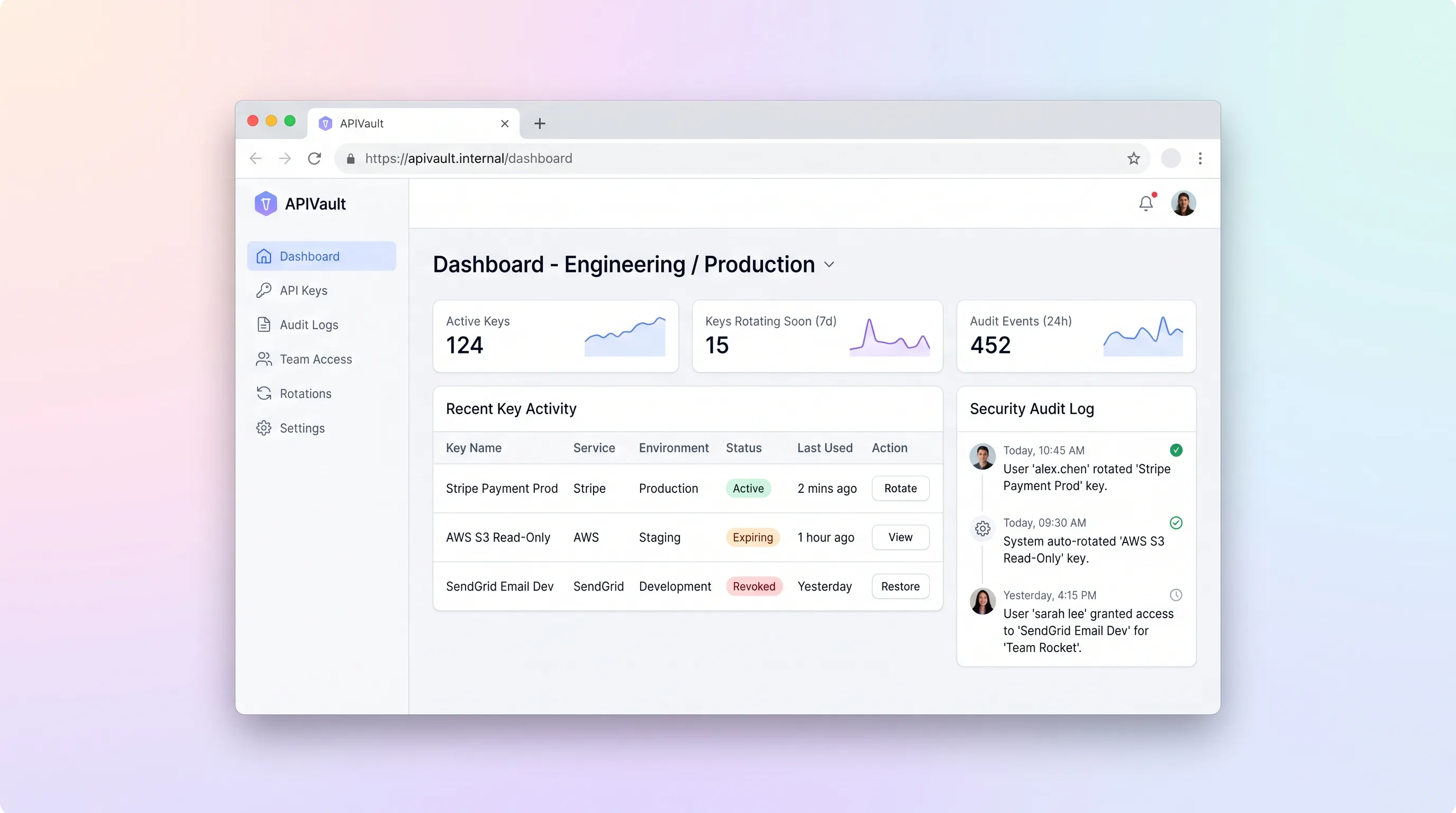
A focused internal tool for indie dev teams to store, rotate, and audit API keys across projects and environments with workspace-level access controls and a full activity trail.
SaaS WorkflowBusiness Operations
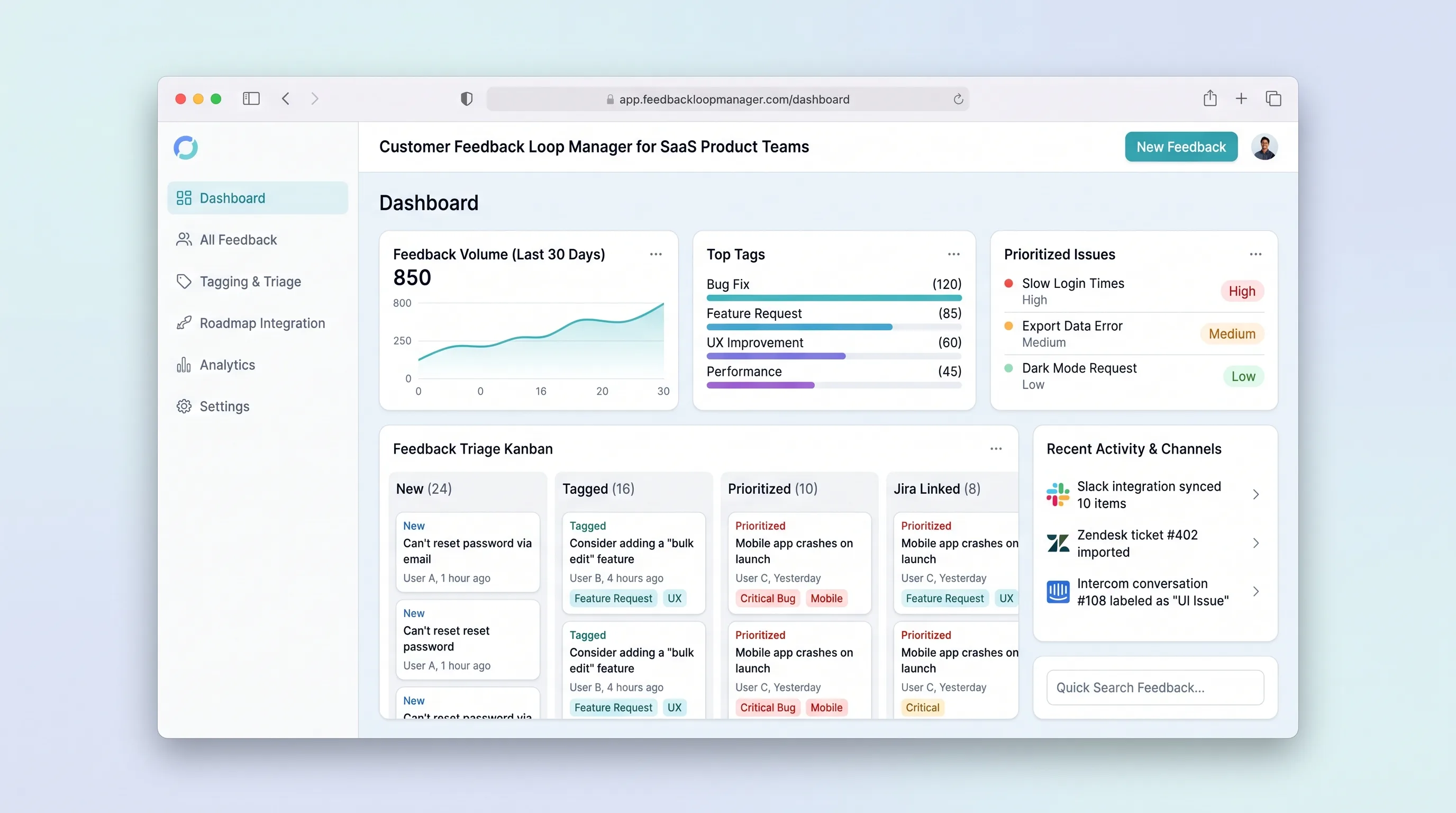
Collect, tag, and prioritize user feedback from multiple channels into a single prioritized backlog that feeds roadmap decisions with traceable evidence.
SaaS WorkflowProfessional Services
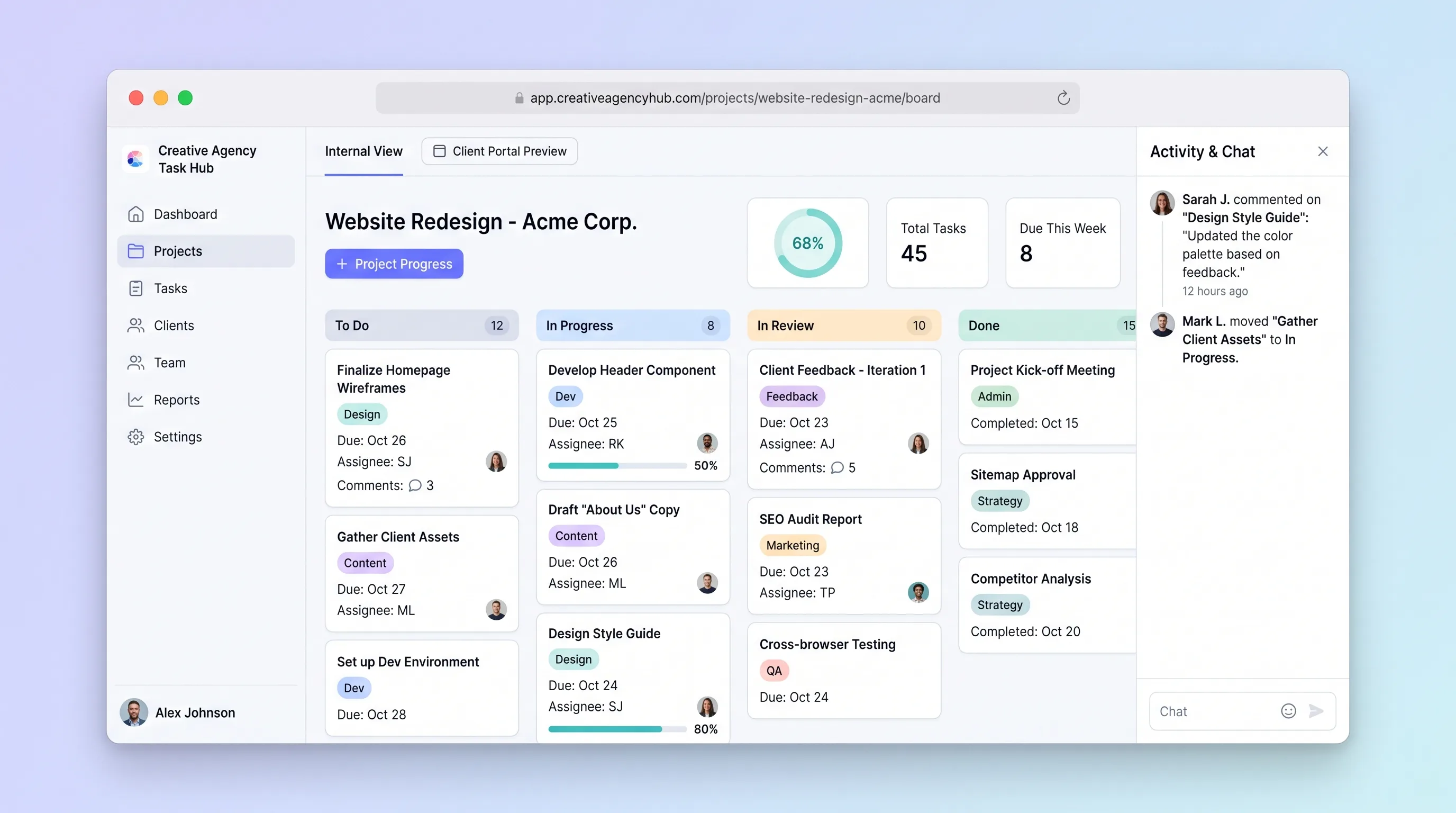
A focused project tracker where small creative agencies manage deliverables on an internal kanban board and share branded client portals for progress review and approvals without email chains.
SaaS WorkflowProfessional Services
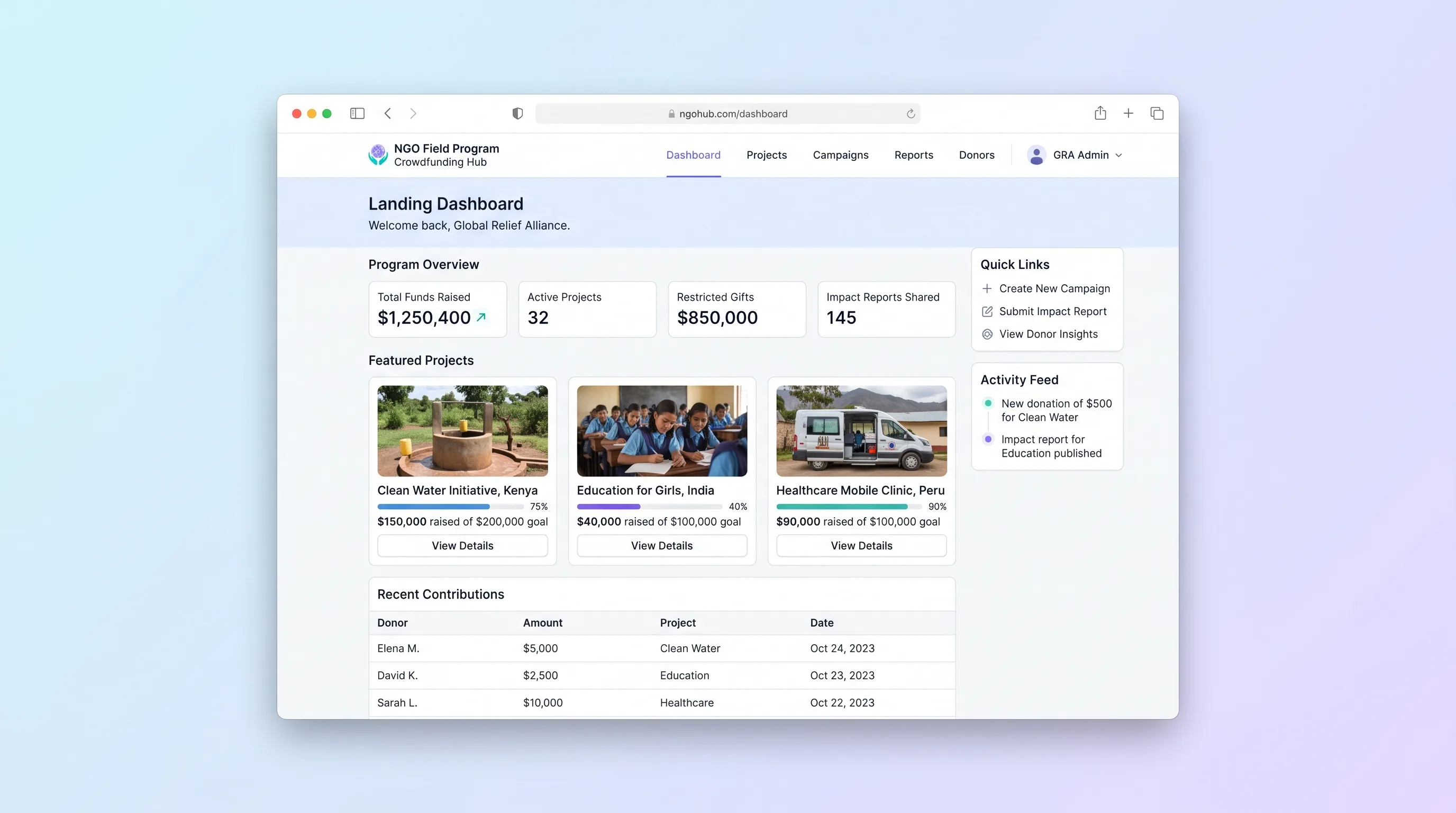
A multi-project crowdfunding portal where NGOs publish field programs, collect restricted gifts with donor dedications, and send field updates back to funders through a branded donor portal.