Build this if
You already run paid creative cohorts and critique coordination is the clearest operational bottleneck.
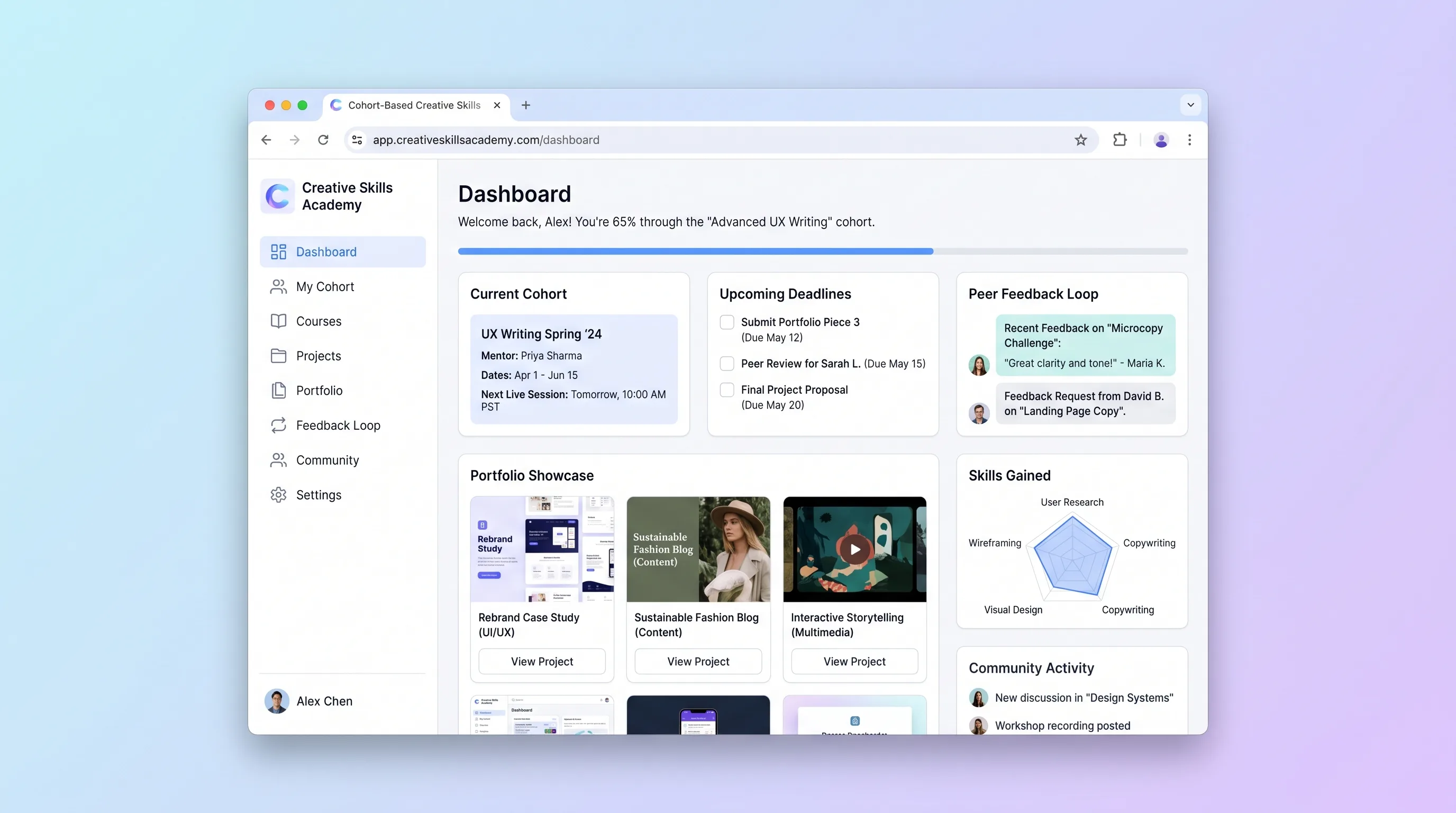
A course workspace for independent creative educators to run timed cohorts, organize peer critiques, and turn approved student work into public portfolios.
Decision snapshot
You already run paid creative cohorts and critique coordination is the clearest operational bottleneck.
Your program is primarily self-paced video consumption with no peer review or portfolio outcome.
Run one cohort of 10-20 learners and verify that at least 80% complete both assigned critiques without the instructor maintaining a separate tracker.
Problem and target customer
Creative cohort operators often coordinate lessons, submission deadlines, critique partners, and final showcases across video tools, forms, chat threads, and portfolio sites. Instructors lose visibility, while students receive uneven feedback and rebuild their work elsewhere after graduation.
Independent design, writing, or multimedia educators who sell cohort-based programs and need one structured path from assignment to public showcase.
Per-cohort fee or monthly subscription for instructors, with student seats included in each cohort.
Editorial note
The narrow product is not another course library. Its value sits in the period between a learner uploading work and deciding that the work is ready to represent them publicly. That makes critique accountability and creator-controlled visibility the two decisions worth validating first.
Start with one creative discipline and one rubric format. Different media can share the same submission state model, but trying to support every file type, teaching style, and accreditation path in the pilot would hide whether structured peer feedback actually improves cohort completion.
Choose your next step
Evaluate the operating tradeoffs quickly, or inspect how to build the MVP.
Compare the three operating paths at the default workload before opening the full calculator.
See cost preview Build this ideaInspect the build blueprintReview MVP scope, workflow, states, data rules, architecture, and acceptance criteria.
Open blueprintEvaluation preview
Directional infrastructure estimates for the current 500 assignment submissions assumption. Open the full calculator when you are ready to change it.
Railway hosts the web app, worker, database, and small persistent volume.
Lowest operating effortA Hetzner shared cloud server runs Docker services; R2 holds student media.
Lowest baseline costLarger or dedicated cloud instances isolate database and worker capacity.
Most separation and controlBuild blueprint
Product goal
MVP scope
UX and user flow
Show lessons, deadlines, submission status, and critique completion by learner.
Present the assigned project, rubric prompts, feedback status, and revision response.
Turn selected submissions into ordered public case studies with creator-controlled visibility.
Core entity outline
Defines the program dates, instructor, curriculum order, and enrolled learners.
Stores a learner's work, version, deadline status, and instructor decision.
Records a peer assignment and structured feedback against the instructor's rubric.
Keeps the public narrative and visibility settings for an approved piece.
Architecture and data flow
Serve instructor, learner, critique, and public portfolio experiences with role-aware routing.
Persist enrollment, assignment, submission, critique, and publication state atomically.
Issue signed upload and download URLs for student work without exposing storage credentials.
Send deadline and critique reminders from an idempotent job queue.
Deliverables and acceptance
Recommended stack
One codebase can serve authenticated cohort tools and indexable public portfolios.
Relational constraints fit enrollments, reviewer eligibility, and submission states.
Direct signed uploads keep large creative files away from the application server.
Deadline reminders need retries and idempotency, not a separate automation platform.
The first release needs reliable permissions and state transitions more than real-time collaboration. A relational monolith plus direct object uploads keeps the critique loop auditable and the public showcase simple.
Copy the build prompt, model the operating cost, and choose where to deploy.
Execution
Once the blueprint is clear, use the prompt, cost model, and deployment options to start building.
Build prompt
Start with a full-stack TypeScript app because cohort permissions, critique assignments, deadlines, and portfolio publishing share one transactional data model.
Build prompt
Open the prompt pack whenever you are ready to take this blueprint into your builder.
Build prompt ready
Copy the prompt into your builder, then use the cost model below to choose how you want to run it.
Use the cost model to choose a deployment path that matches the build plan.
Cost calculator
A technical run-cost estimate for the first production version. Team, acquisition, payment fees, and business COGS are excluded.
$5-$35 per 500 assignment submissions
Low and high values allow for usage variance and plan headroom.
Railway hosts the web app, worker, database, and small persistent volume.
500 assignment submissions included, then $2-$8 per 500 assignment submissionsEnrollment, deadline, and critique messages; the free tier covers the default pilot volume.
3K assignment submissions includedEstimate assumes compressed submission files and portfolio images backed by R2 storage and operations.
500 assignment submissions includedThe estimate combines the selected infrastructure path, required operating modules, selected optional modules, and usage above included monthly allowances. Taxes and regional uplifts are excluded.
Deployment options
Choose based on operating preference, not only the headline price.
Deploy the app and worker quickly while keeping media in R2.
Resource usage can grow beyond the plan minimum.
Run the app, worker, and database on one small Vultr VPS with Docker Compose and explicit backups.
The operator owns patching, backups, and recovery drills.
Separate application, worker, data, storage, and backup responsibilities as the workload grows.
Higher operations burden than a managed platform.
Start building
Use Lovable to shape the cohort timeline, critique queue, submission review, and portfolio publishing screens before wiring production services.
Open Lovable 02AutomationAdd deadline reminders after validationUse Make as optional glue for assignment reminders and instructor alerts; critique matching and submission state remain inside the app.
Open Make 03DeployDeploy the cohort workspaceRun the web app, relational data, and background notifications together while storing portfolio media in object storage.
Open RailwayKeep exploring
Learning PlatformEducation
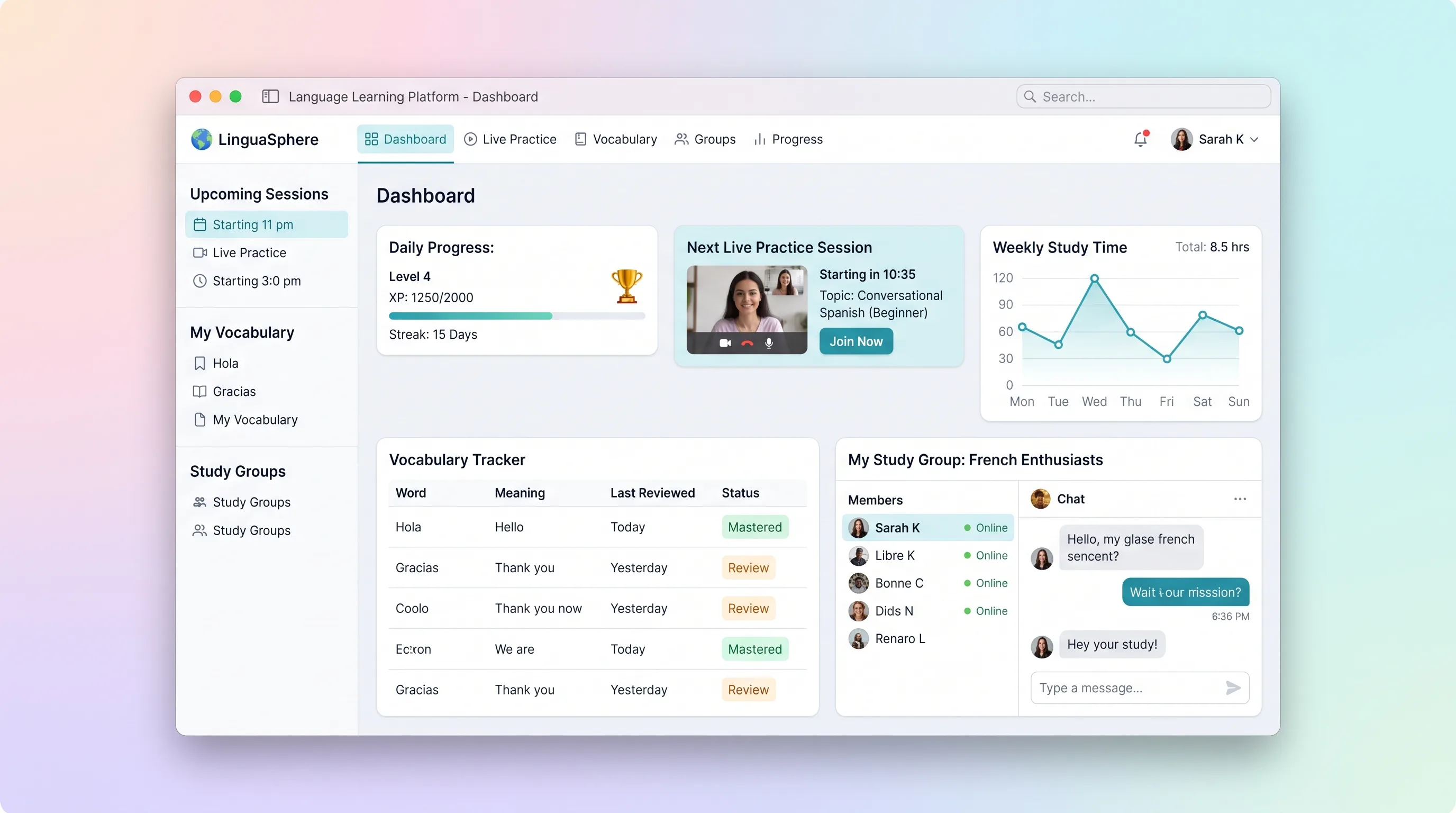
A practice-focused learning space that connects vocabulary review, timezone-safe session booking, embedded conversation rooms, and weekly progress.
Learning PlatformEducation
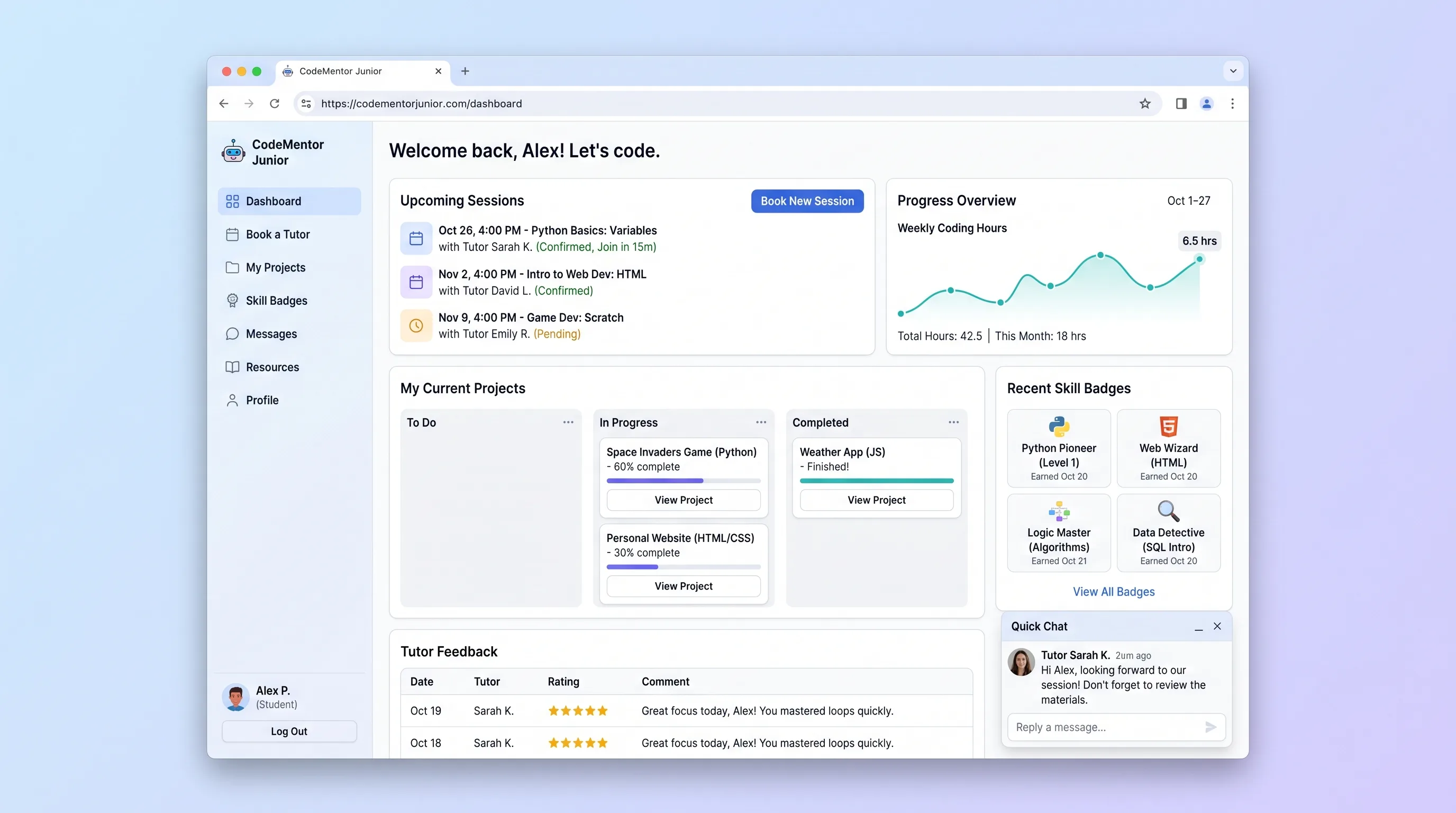
A focused booking and progress hub where parents schedule 1-on-1 coding tutors for children aged 7-17, follow project milestones, and collect skill badges.
Learning PlatformHR & Recruiting
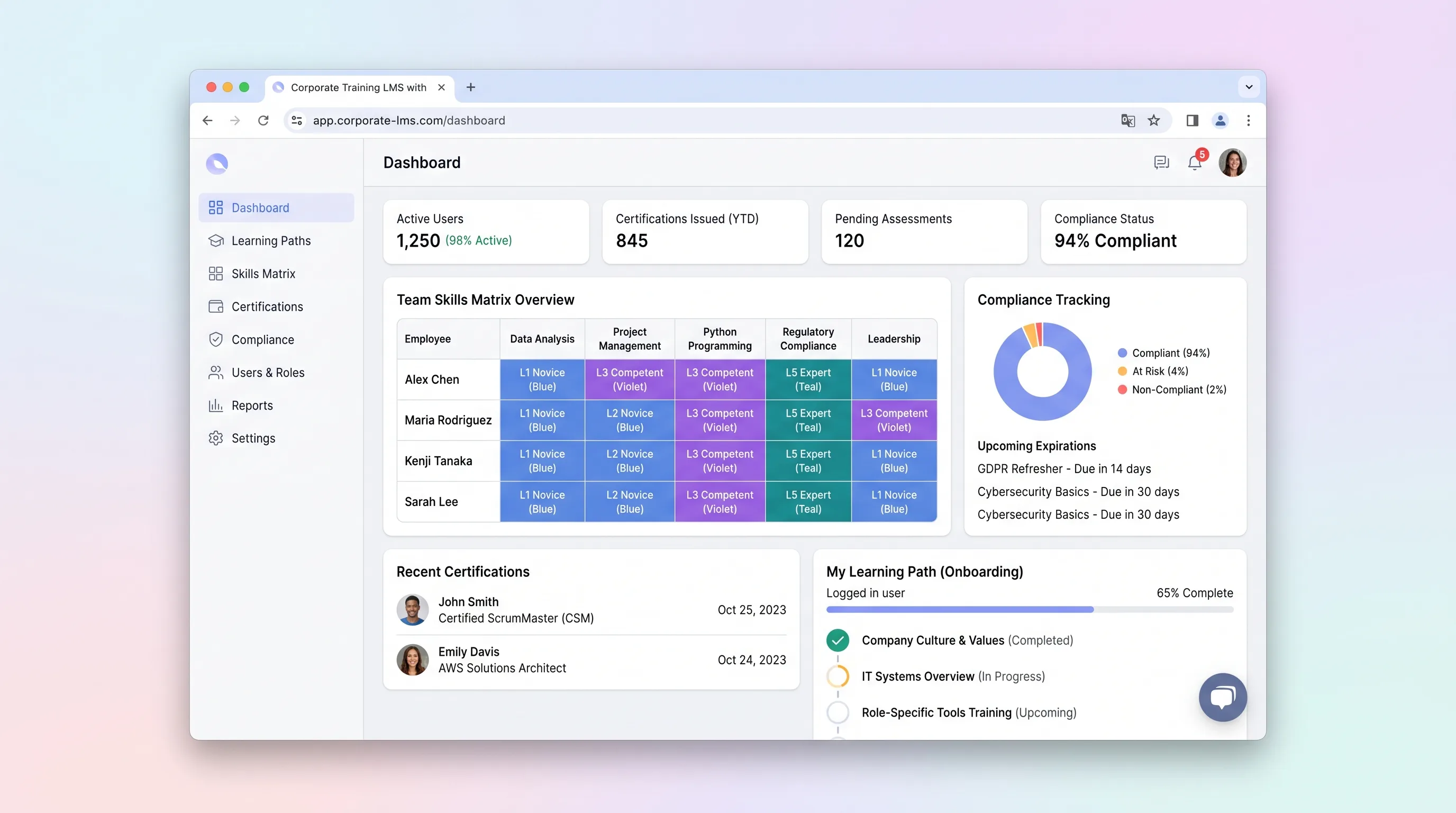
An internal learning system that maps role requirements to employee skills, assigns targeted training, and gives program managers evidence of certification status.
Booking PlatformEducation
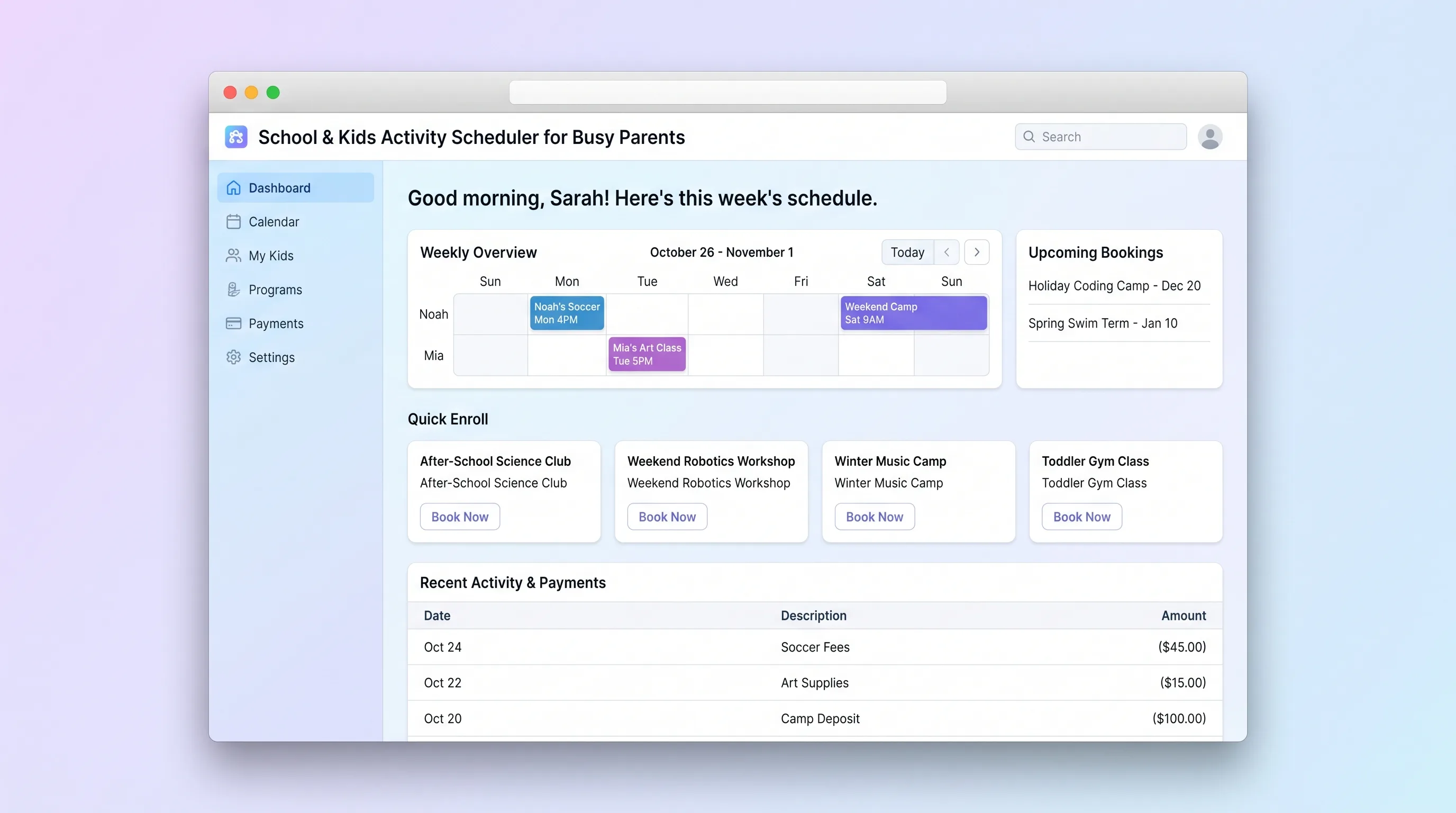
A focused booking platform where parents discover, enroll in, and pay for children's after-school programs, holiday camps, and weekend classes, while operators manage class listings, capacities, and enrollments.
SaaS WorkflowEducation
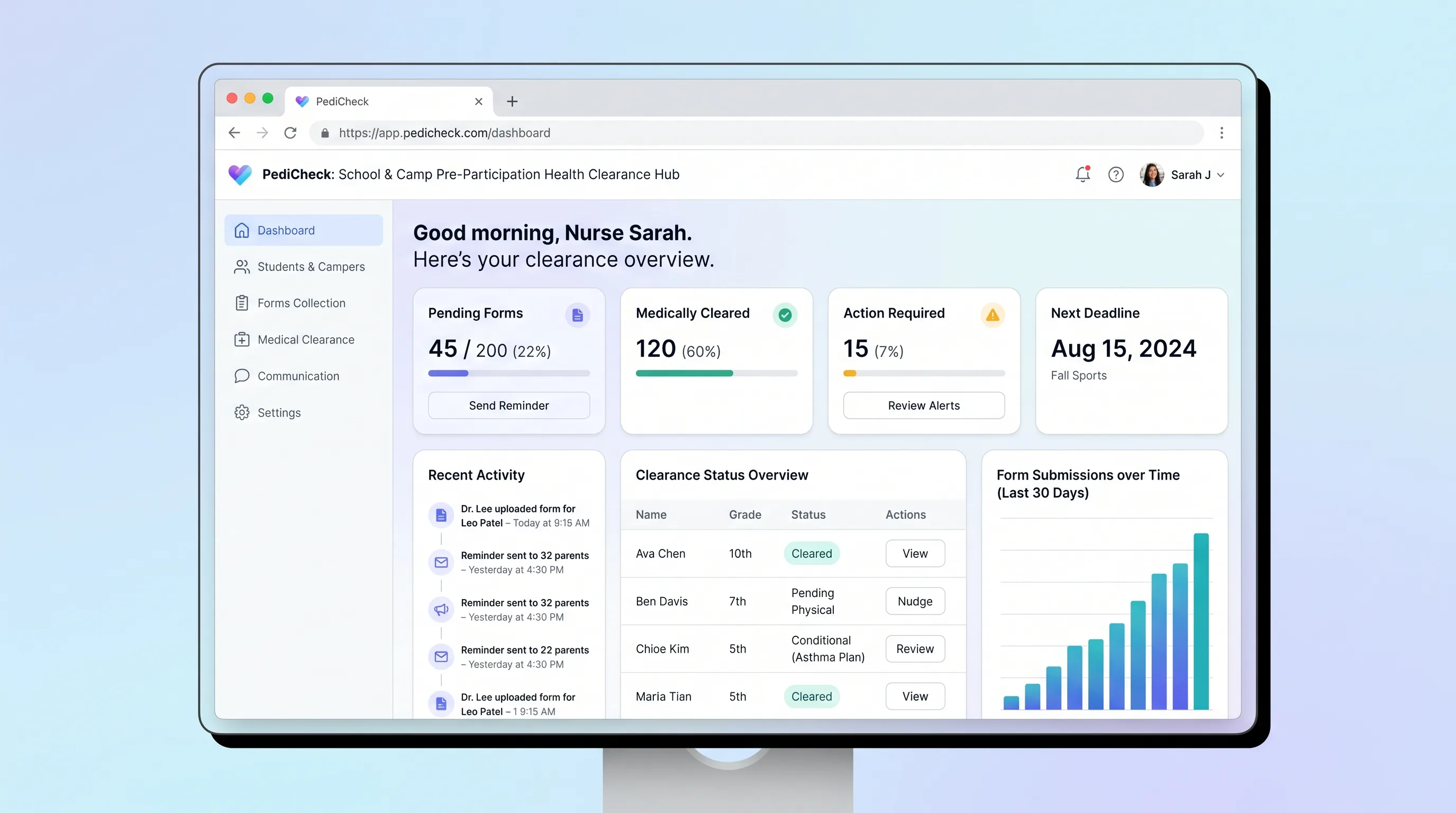
A secure packet and review workflow for schools and camps to collect family-submitted health forms and track clinician-recorded participation decisions.
MarketplaceEducation
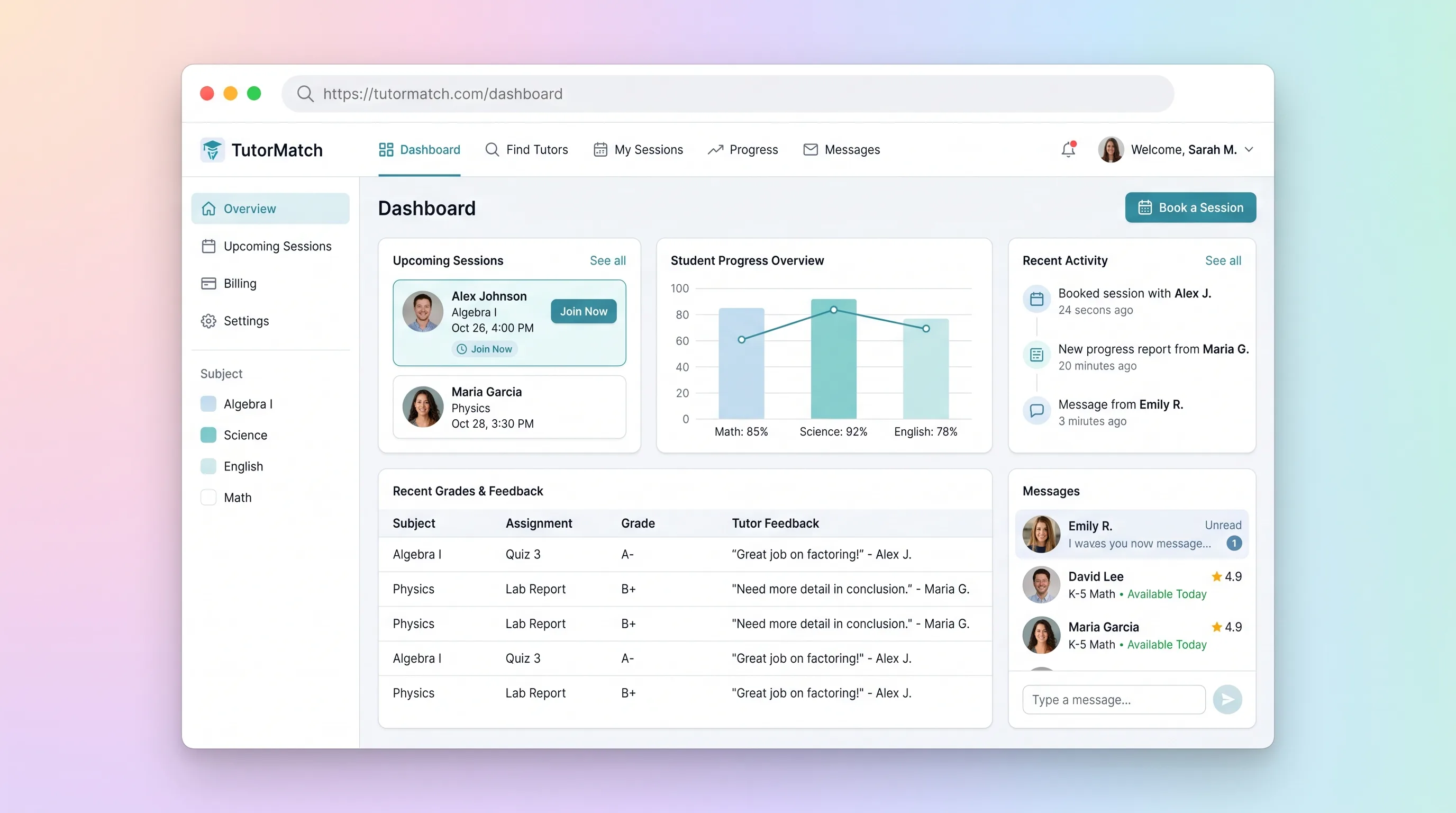
A tutor marketplace where parents compare vetted subject specialists, book and pay for sessions, then review tutor-authored progress notes.