Build this if
A small team already estimates work and wants a faster sprint commitment and retrospective record than its current board provides.
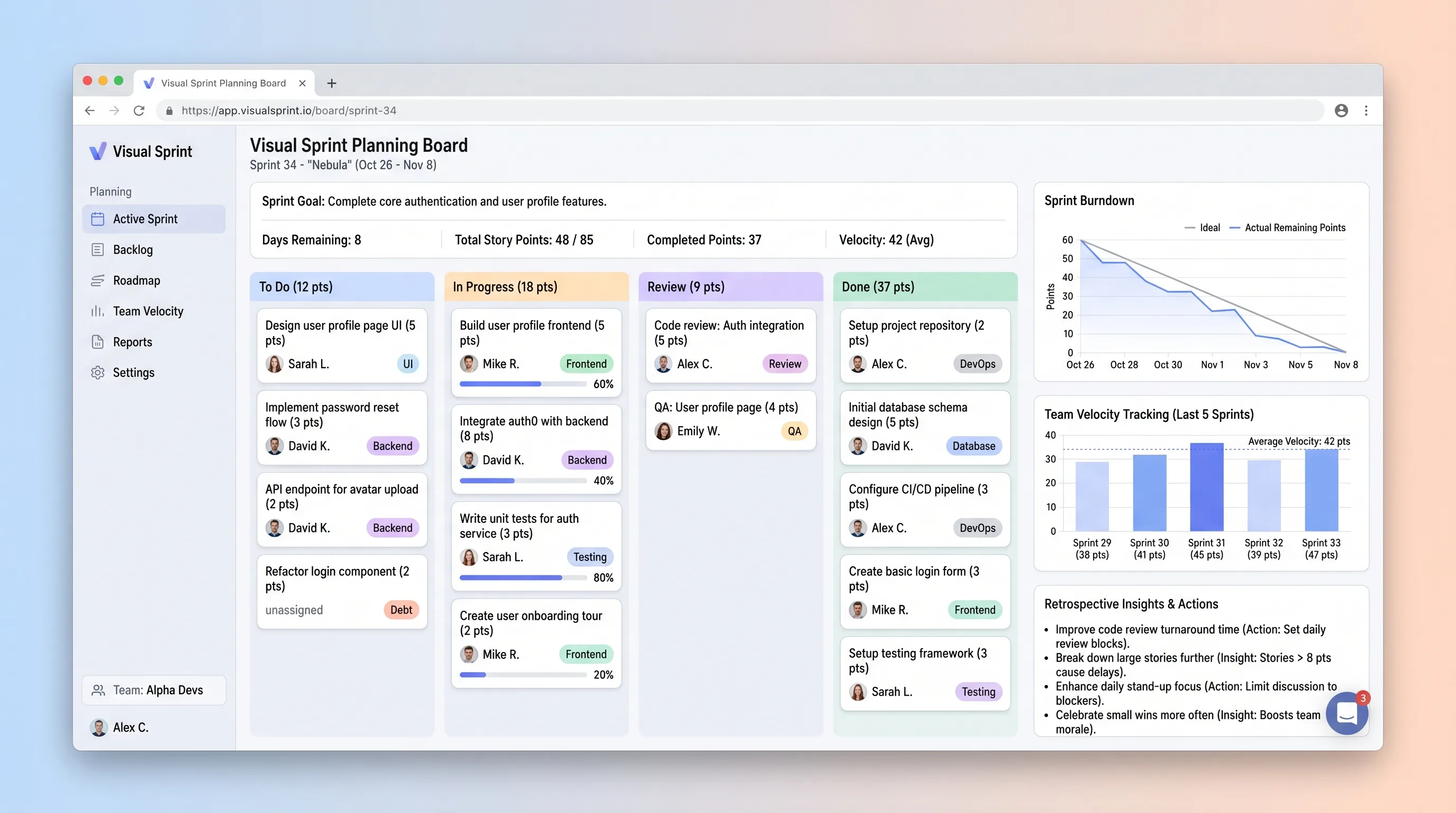
A sprint board that helps small development teams commit work against recent capacity, track story-point movement, and carry evidence into retrospectives.
Decision snapshot
A small team already estimates work and wants a faster sprint commitment and retrospective record than its current board provides.
The buyer needs enterprise portfolio management, source-control automation, or velocity as an employee performance score.
Run three real sprints with one team and verify that planning records committed scope in under ten minutes and the retrospective uses captured scope changes and carryover.
Problem and target customer
Teams plan from optimistic backlog totals, lose scope-change history during the sprint, and discuss velocity without a consistent record of committed, completed, and carried work.
Small software teams running time-boxed sprints that need a focused planning and retrospective tool without a full enterprise issue tracker.
Monthly workspace subscription tiered by active delivery teams.
Editorial note
Velocity is useful here as planning context, not as a target. The product should preserve what the team committed and how scope changed so the number can support a better conversation rather than reward point inflation.
The decisive behavior is whether the team plans and closes inside this board for three sprints. Integrations and portfolio features should wait until commitment history and carryover evidence are trusted.
Choose your next step
Evaluate the operating tradeoffs quickly, or inspect how to build the MVP.
Compare the three operating paths at the default workload before opening the full calculator.
See cost preview Build this ideaInspect the build blueprintReview MVP scope, workflow, states, data rules, architecture, and acceptance criteria.
Open blueprintEvaluation preview
Directional infrastructure estimates for the current 5,000 story transitions assumption. Open the full calculator when you are ready to change it.
App, database, backups, and logs for interactive sprint boards and immutable story events with minimal platform operations.
Lowest operating effortA small cloud server runs interactive sprint boards and immutable story events, PostgreSQL, and scheduled backups.
Lowest baseline costSeparate web, data, and background capacity for interactive sprint boards and immutable story events when operational isolation matters.
Most separation and controlBuild blueprint
Product goal
MVP scope
UX and user flow
Balance prioritized stories against available capacity and recent completion range.
Advance committed work while exposing blocked and scope-changed items.
Compare commitment, completion, carryover, and burndown before saving notes.
Core entity outline
Defines dates, capacity, status, and immutable commitment totals.
Connects a backlog story to one sprint with estimate and delivery state.
Preserves state, estimate, scope, and block changes for metrics and recovery.
Architecture and data flow
Create commitment snapshots and calculate visible capacity context.
Apply authorized story transitions with optimistic concurrency.
Derive burndown, scope change, completion, and carryover from events.
Deliverables and acceptance
Recommended stack
Supports a responsive drag board, planning view, and charts in one application.
Stores sprints, stories, estimates, state events, and immutable commitment snapshots.
Provides accessible drag-and-drop with keyboard alternatives and server confirmation.
Renders burndown and velocity ranges from persisted sprint events.
Event history around a relational sprint model is sufficient for reliable planning metrics. The product does not need AI or external integrations to calculate commitment, burndown, and carryover.
Copy the build prompt, model the operating cost, and choose where to deploy.
Execution
Once the blueprint is clear, use the prompt, cost model, and deployment options to start building.
Build prompt
Use a TypeScript relational application with an append-only transition history; prototype the board in Lovable, then harden concurrency and accessibility.
Build prompt
Open the prompt pack whenever you are ready to take this blueprint into your builder.
Build prompt ready
Copy the prompt into your builder, then use the cost model below to choose how you want to run it.
Use the cost model to choose a deployment path that matches the build plan.
Cost calculator
A technical run-cost estimate for the first production version. Team, acquisition, payment fees, and business COGS are excluded.
$10-$33 per 2,500 story transitions
Low and high values allow for usage variance and plan headroom.
App, database, backups, and logs for interactive sprint boards and immutable story events with minimal platform operations.
50K story transitions included, then $8-$20 per 50K story transitionsThe estimate combines the selected infrastructure path, required operating modules, selected optional modules, and usage above included monthly allowances. Taxes and regional uplifts are excluded.
Deployment options
Choose based on operating preference, not only the headline price.
Deploy the sprint board, event history, and planning reports with managed services, environment variables, logs, and a short path from prototype to beta.
Usage-based compute needs budget alerts as activity grows.
Run the app, worker, and database on one small Vultr VPS with Docker Compose and explicit backups.
The operator owns database maintenance and incident response.
Separate application, worker, data, storage, and backup responsibilities as the workload grows.
More moving parts increase setup and observability work.
Start building
Design capacity context, backlog pull, board states, scope-change markers, burndown, and retrospective views.
Open Lovable 02AutomationKeep notifications optionalUse Make only for a sprint-start or retrospective reminder after the product owns dates and participant settings.
Open Make 03DeployDeploy the planning boardHost the interactive app and PostgreSQL with connection limits, backups, and monitoring for failed state updates.
Open RailwayKeep exploring
Internal ToolDeveloper & IT Operations
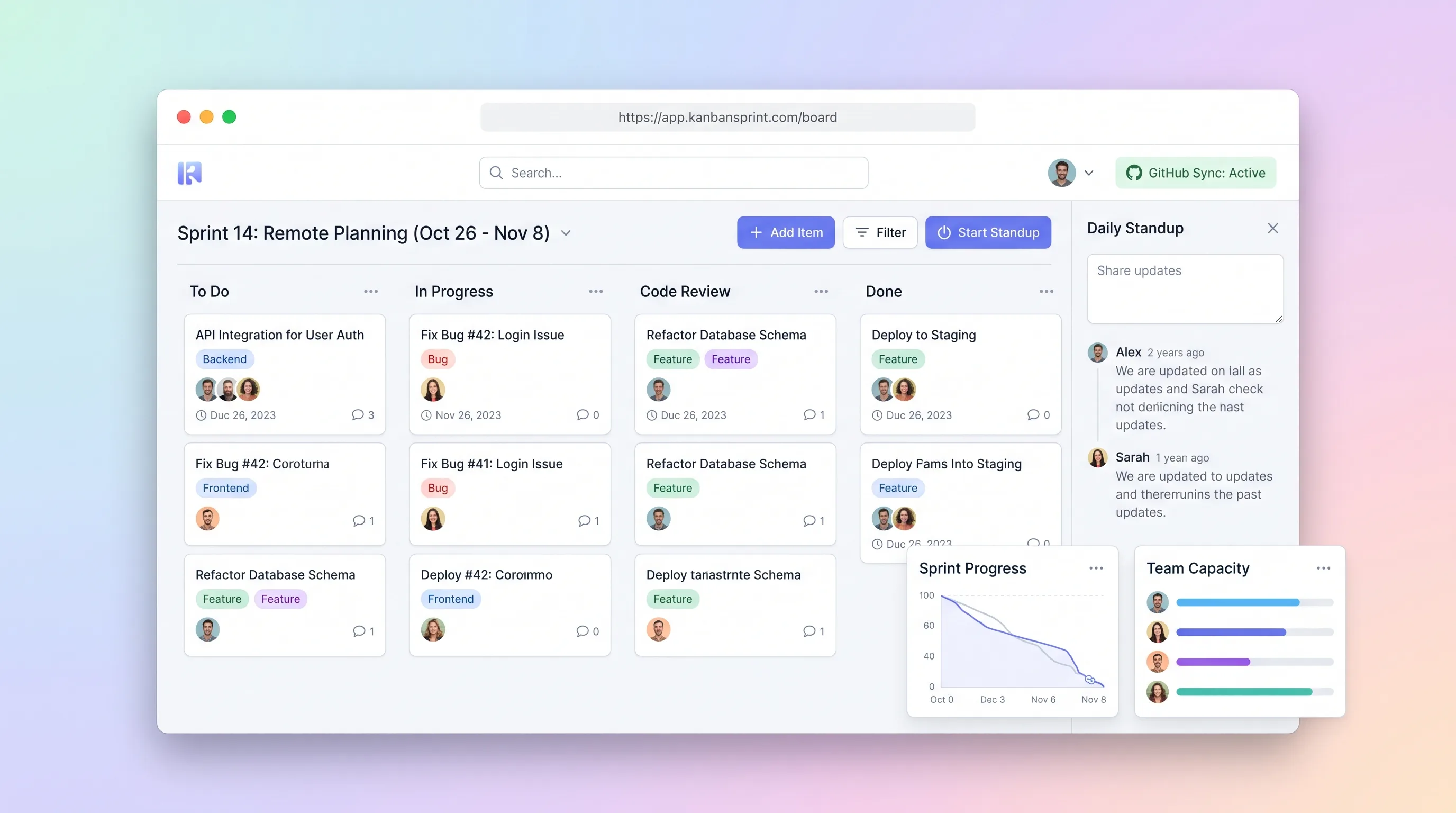
A compact planning workspace that keeps sprint commitments, GitHub issue state, board movement, daily blockers, and end-of-sprint carryover aligned.
Internal ToolDeveloper & IT Operations
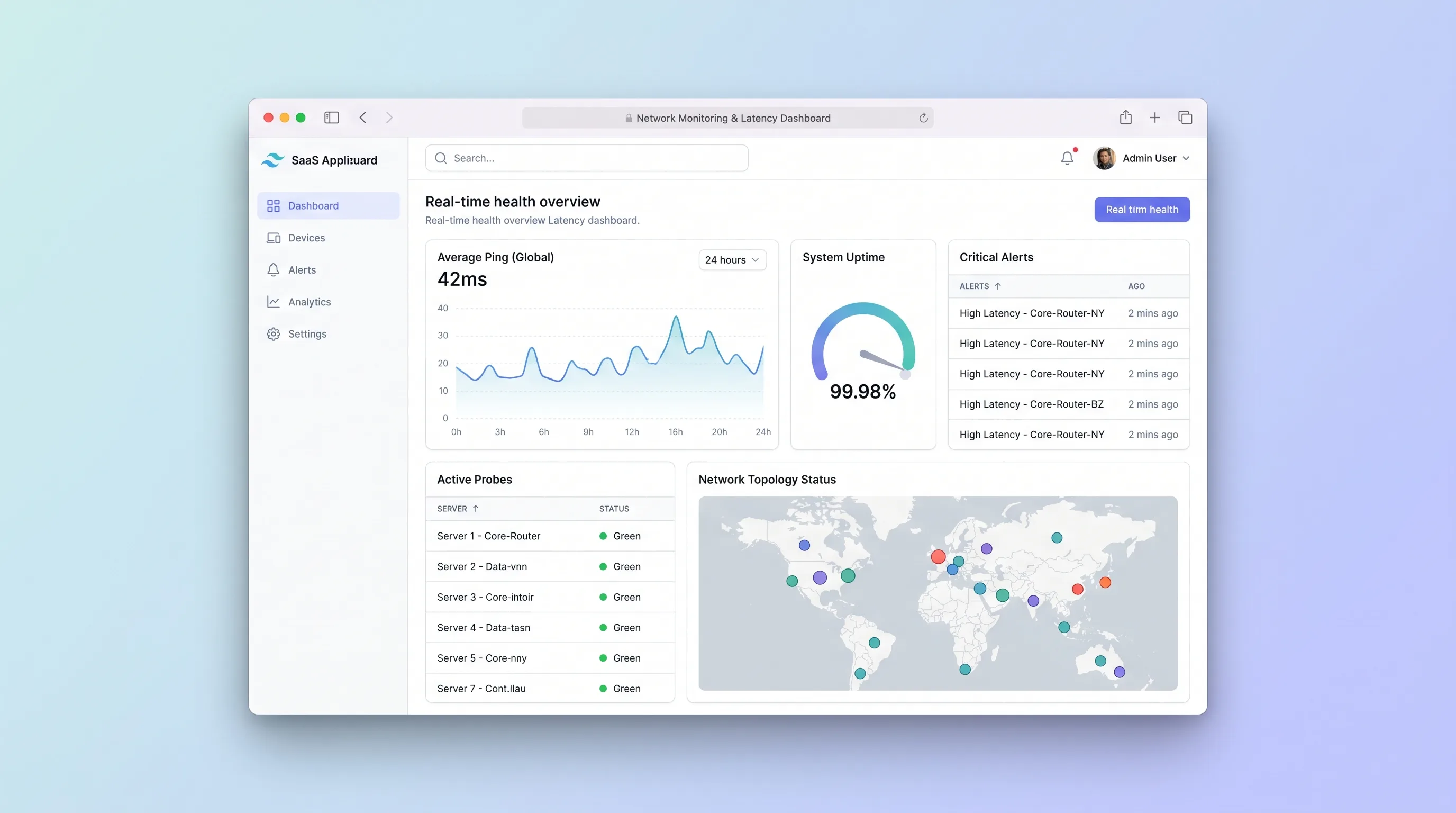
A focused uptime monitor for small IT teams that schedules endpoint checks, separates transient failures from incidents, and preserves alert and latency history.
Internal ToolDeveloper & IT Operations
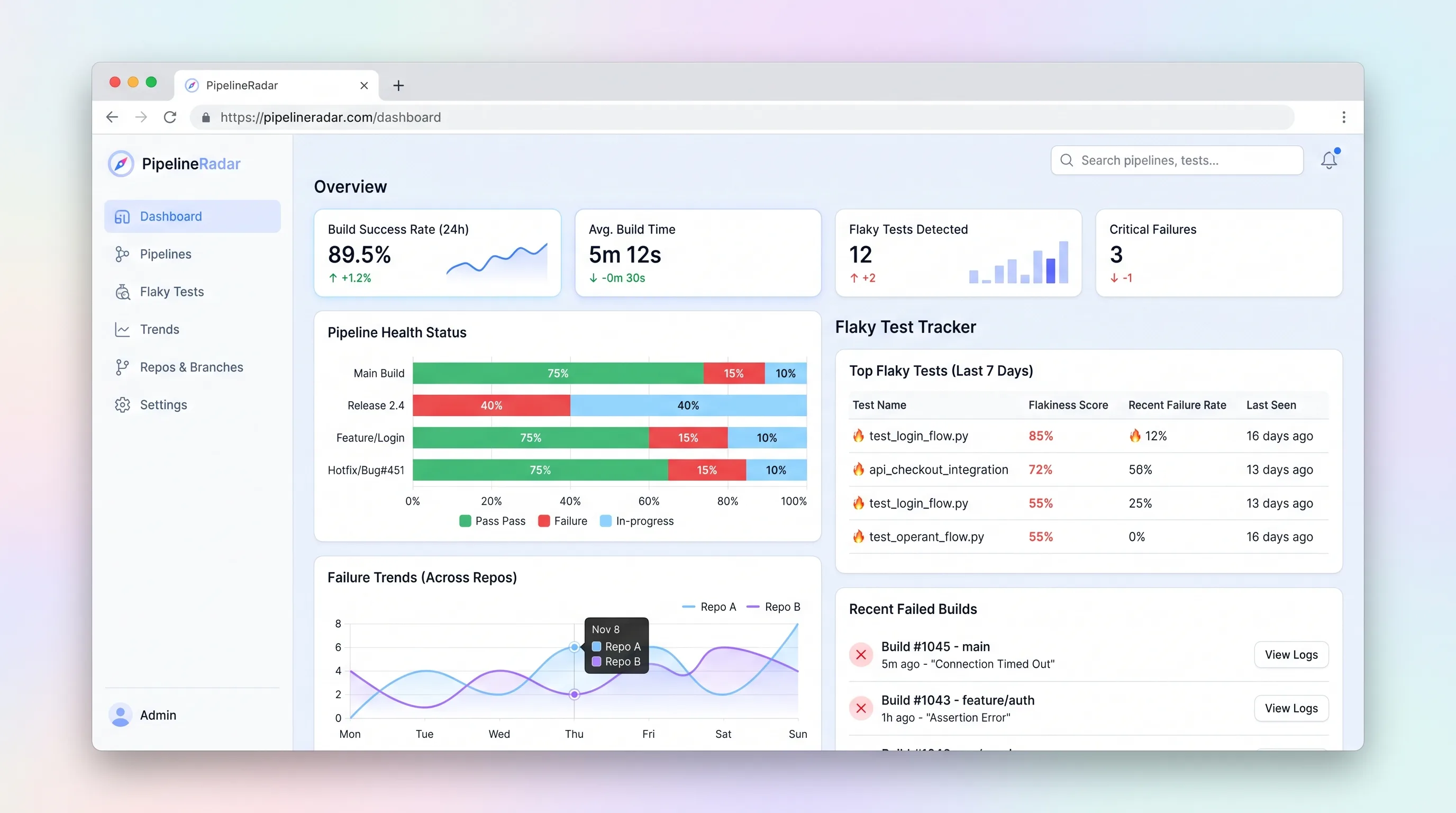
A focused CI/CD pipeline health monitor and flaky test tracker that ingests build events, ranks the top three flakiest tests per repo in under sixty seconds, and surfaces branch-level failure trends for indie developers and small.
Internal ToolDeveloper & IT Operations
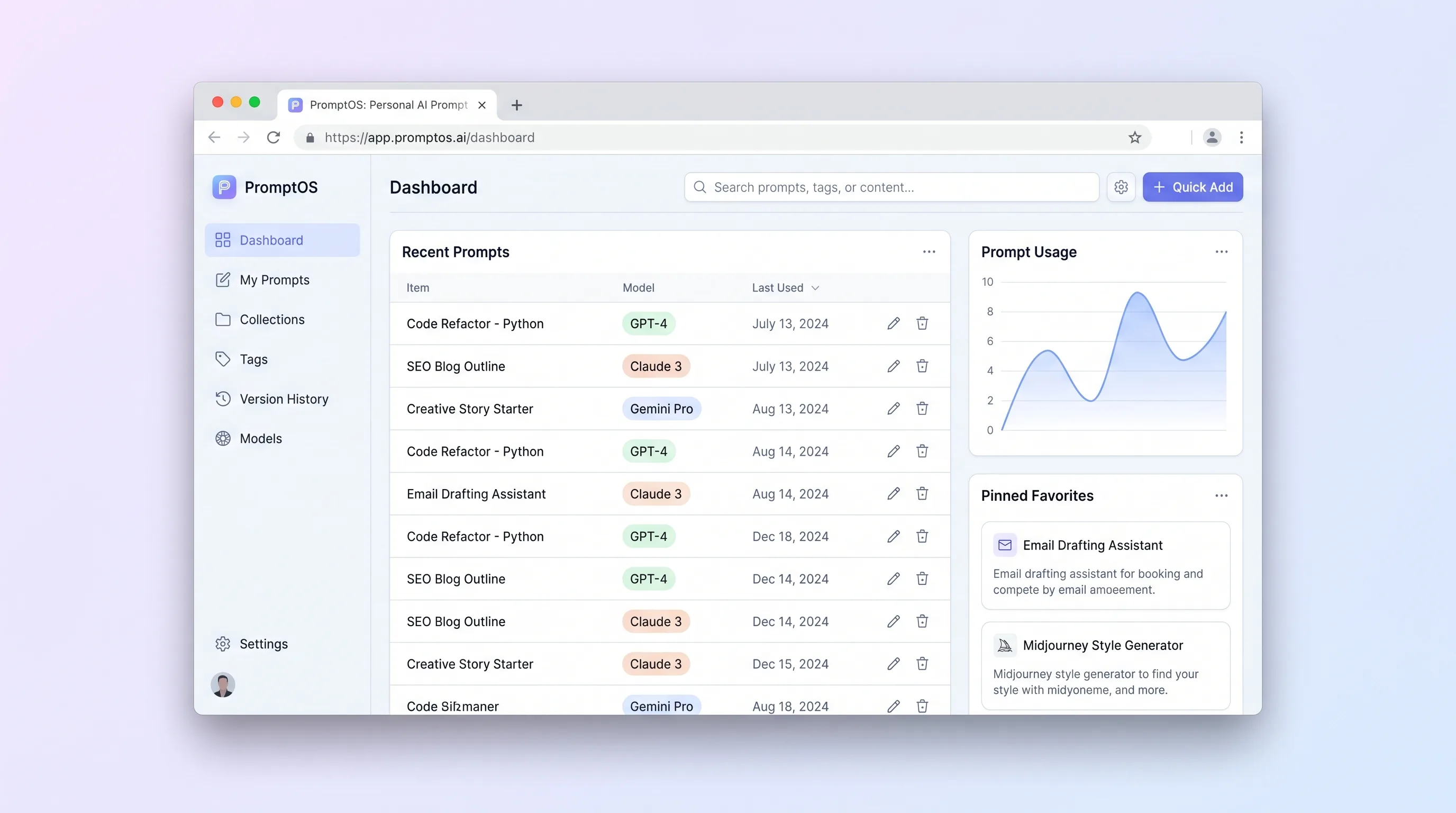
A private library for power users to save, tag, version, parameterize, and retrieve reusable prompts without depending on any model provider.
Internal ToolDeveloper & IT Operations
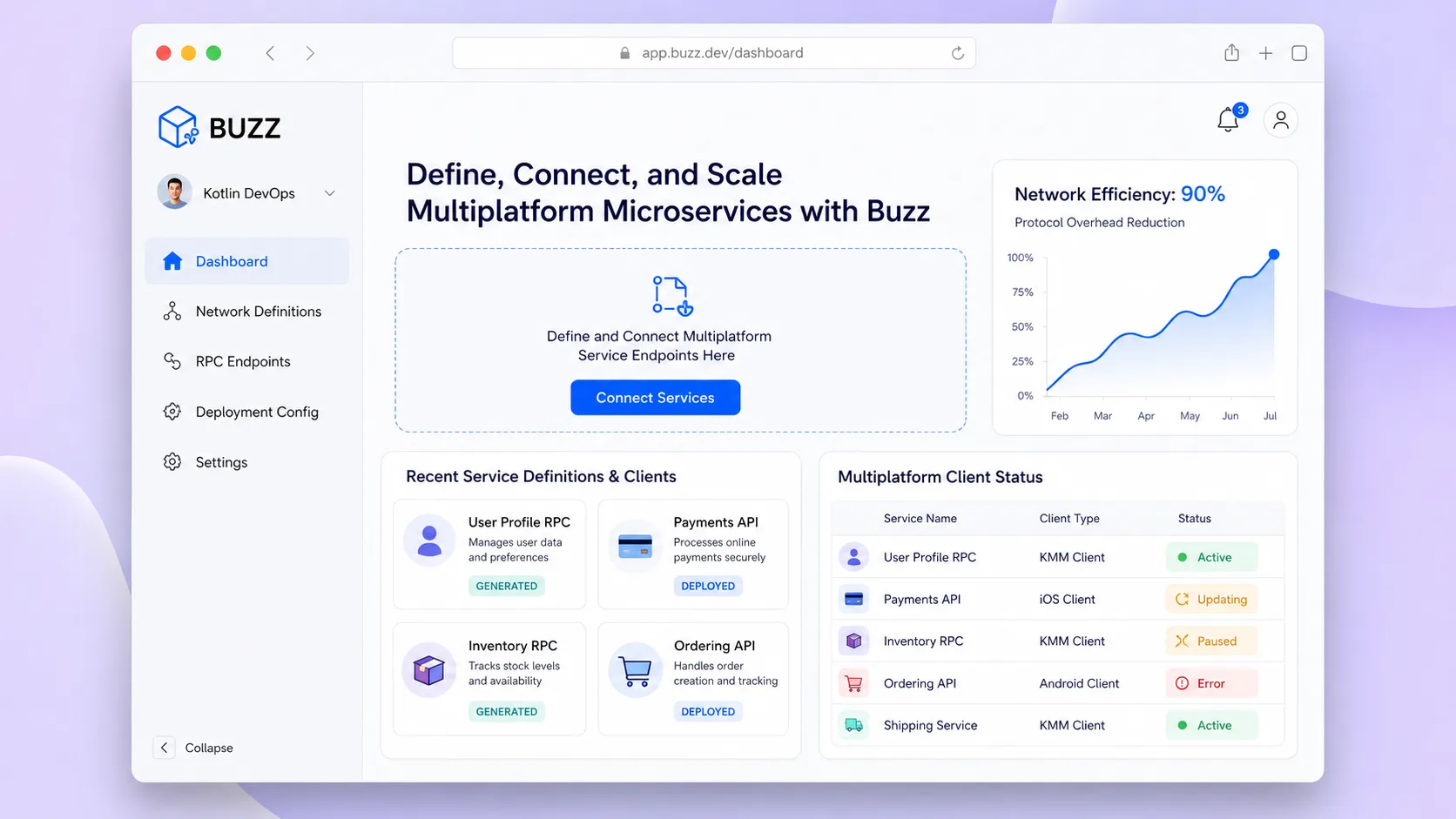
A self-hostable project workspace where humans and AI agents collaborate in signed rooms that unify conversation, code patches, workflow events, and approvals into one searchable, auditable event log.
Internal ToolReal Estate
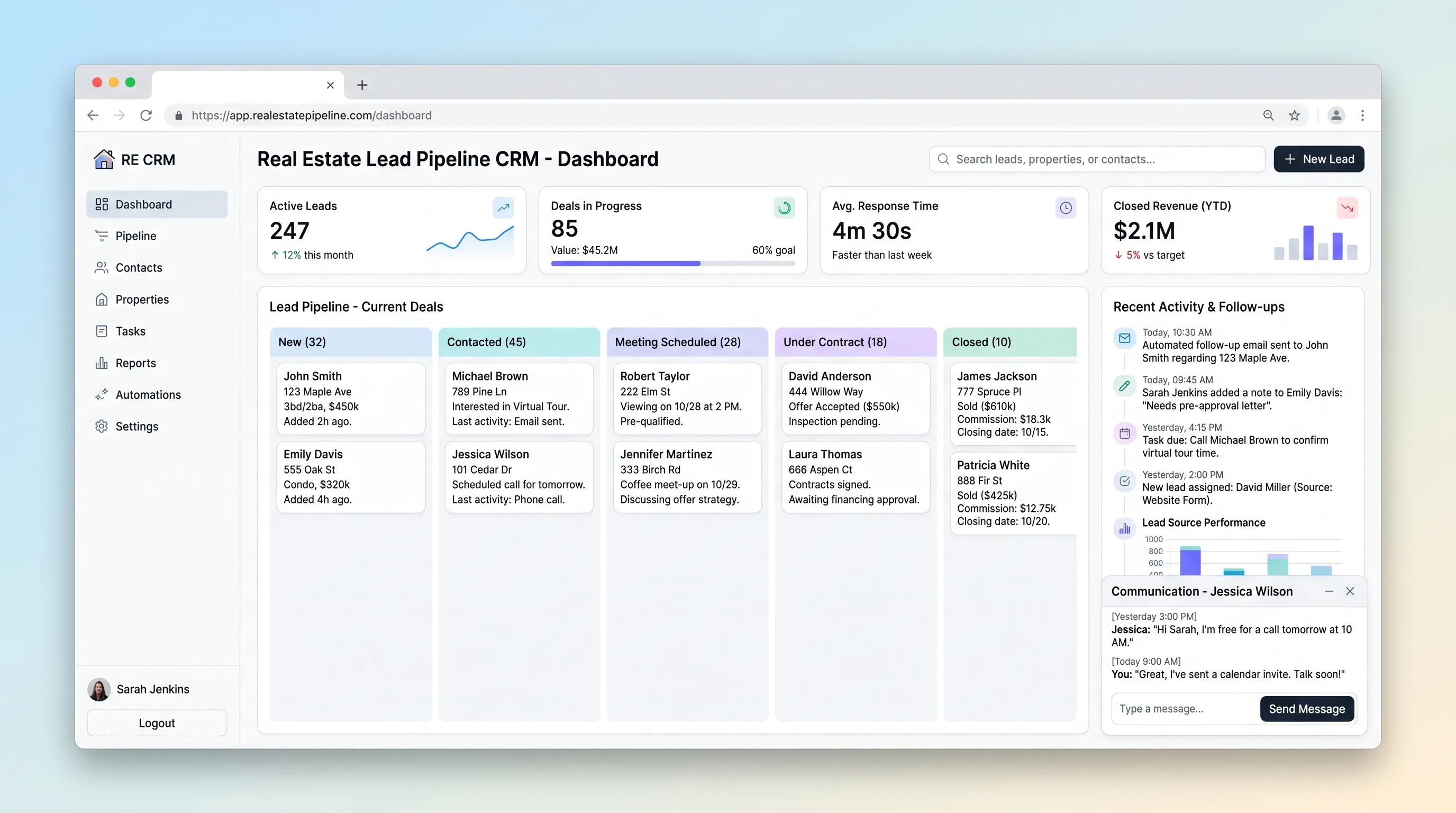
A focused CRM for agents to qualify property inquiries, schedule the next contact, move opportunities through deal stages, and see overdue follow-ups.